Best CRM for Talent Casting Agency: A Complete Guide for U.S. Agencies
A specialized CRM can connect these different areas so agents can move between talent, clients, and casting projects without constantly switching between systems.
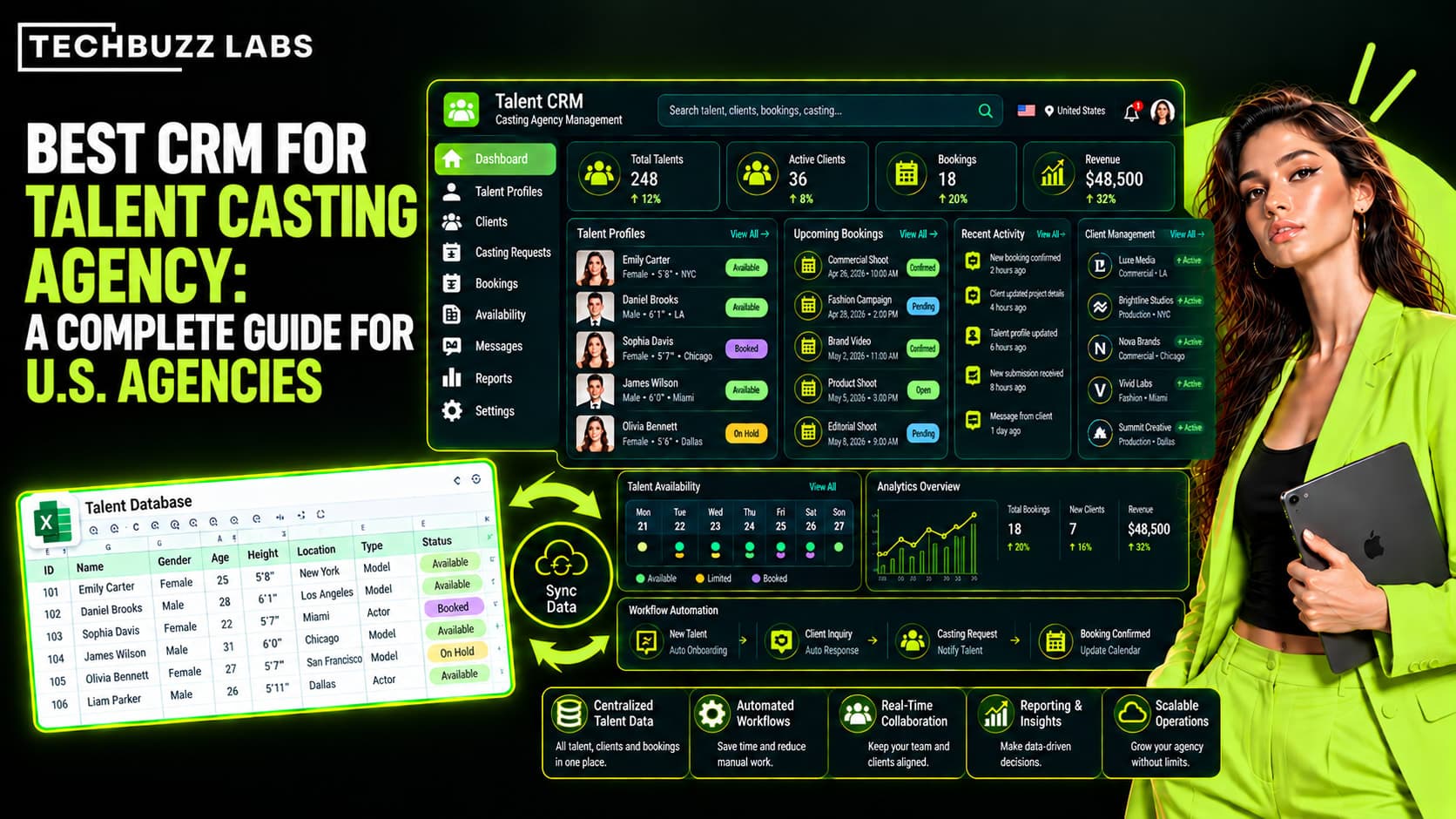
For talent casting agencies in the United States, managing talent is only one part of the job. Agencies also need to handle casting requests, client requirements, talent availability, submissions, feedback, bookings, and ongoing communication. When these activities are spread across spreadsheets, email threads, messaging apps, and separate tools, it can become difficult to maintain an organized workflow.
A CRM designed for talent casting agencies can bring these activities into a connected system. Instead of treating talent management, casting, and client relationships as separate processes, a specialized CRM can help agencies manage the complete journey from a casting request to a confirmed booking.
What Is a CRM for a Talent Casting Agency?
A CRM for a talent casting agency is software designed to organize relationships, talent information, casting opportunities, and client interactions in one centralized environment.
Traditional CRM systems are often built primarily around sales contacts and customer relationships. Casting agencies have additional requirements. They need detailed talent profiles, searchable databases, availability information, casting briefs, submissions, client feedback, and booking records.
Why U.S. Talent Casting Agencies Need a Specialized CRM
The casting process can involve multiple people and several stages. A client may send a brief with specific requirements, an agent may search hundreds of talent profiles, shortlisted talent must be checked for availability, submissions need to be sent, and client feedback must be tracked.
As the number of casting opportunities increases, manually managing every stage can create unnecessary administrative work.
A CRM provides a structured workflow where important information remains connected. This can make it easier for agencies to see what needs attention, which talent has been submitted, what clients have responded, and which opportunities are moving toward booking.
Essential Talent Management Features
A strong talent casting CRM should begin with the talent database.
Each talent profile can contain information such as professional details, measurements, skills, experience, portfolio information, availability, documents, previous bookings, and casting history.
Search and filtering are equally important. Agents should be able to narrow a large talent database using relevant criteria instead of manually reviewing every profile.
For example, an agency might need talent with specific experience, location, availability, skills, or physical characteristics for a particular casting brief. Advanced filtering can help agents create a more focused shortlist.
Managing Casting Briefs in One Place
Casting opportunities should have their own structured records.
A casting brief may include the client's requirements, project details, deadlines, location, role information, required talent characteristics, submission instructions, and current status.
Keeping this information inside the CRM allows agents to connect the casting brief directly with relevant talent profiles.
Instead of creating separate spreadsheets for each project, agencies can maintain casting opportunities within the same system used for talent management.
Connecting Talent Search With Client Requirements
One of the most important functions of a talent casting CRM is connecting what the client needs with the agency's available talent.
Suppose a U.S. production company requests several models for an upcoming campaign. The agency can review the casting requirements, search its talent database, create a shortlist, and review availability.
This creates a more organized process than manually searching through folders or unrelated databases.
The CRM can also preserve the relationship between the client request, selected talent, submissions, feedback, and eventual booking.
Availability Management
Talent availability can change quickly.
A model or performer may be available on one date but already committed to another project later in the week. If availability information is outdated, agents may accidentally submit unavailable talent.
A CRM can provide a centralized place to maintain availability information and connect it with casting opportunities.
When agents work from current information, they can spend less time confirming basic details and more time handling the actual casting process.
Submission and Client Feedback Tracking
After creating a shortlist, agencies need to submit talent to clients and monitor responses.
A CRM can help track which talent has been submitted for which opportunity, when the submission occurred, and what stage the client has reached.
Client feedback can also be connected to the relevant casting project and talent profiles.
This is particularly useful when an agency is handling multiple casting projects simultaneously. Agents can quickly understand whether a submission is waiting for feedback, has been shortlisted, rejected, or has progressed toward booking.
From Casting Decision to Booking
A casting CRM should not treat booking as a completely separate activity.
Once a client selects talent, the information should continue through the workflow. Booking details, dates, client information, project information, and talent records can remain connected.
This creates a continuous workflow:
Client Request → Casting Brief → Talent Search → Shortlist → Availability → Submission → Client Feedback → Selection → Booking
Keeping these stages connected can reduce duplicated data entry and make it easier for teams to understand the status of every opportunity.
Reporting and Operational Visibility
A growing agency also needs to understand what is happening across its casting operations.
CRM dashboards can help teams monitor active casting opportunities, submissions, bookings, pending client responses, and other operational information.
Over time, agencies can also use historical data to understand patterns such as frequently requested talent categories, active clients, booking activity, and stages where projects commonly slow down.
The purpose is not simply to collect data. The value comes from making that information easier to understand and use.
Customization Matters for Casting Agencies
Every talent casting agency has its own workflow.
Some agencies may focus heavily on commercial casting, while others may work with fashion models, actors, influencers, promotional talent, or multiple categories.
For this reason, agencies should evaluate whether their CRM can adapt to their actual processes.
Customization may include talent profile fields, casting stages, search filters, submission workflows, notifications, dashboards, integrations, and internal permissions.
A flexible system can allow an agency to build technology around its workflow instead of forcing every team member to work around limitations in the software.
How to Choose the Right CRM for a U.S. Talent Casting Agency
There is no single CRM that is automatically right for every agency. The appropriate choice depends on the agency's size, workflow complexity, talent database, client volume, budget, and growth plans.
Before choosing a platform, agencies should examine their existing casting process from beginning to end.
Ask questions such as:
How is talent information currently organized?
How quickly can agents find suitable talent?
How is availability updated?
How are casting briefs tracked?
How are submissions recorded?
How does the team track client feedback?
Can booking information remain connected to the original casting opportunity?
What reporting does management need?
Can the software adapt as the agency grows?
Answering these questions can help an agency identify the functionality it actually needs rather than choosing software based only on a long feature list.
How TechBuzzLabs Can Support Talent Casting Agencies
TechBuzzLabs develops custom software solutions that can be structured around the operational requirements of talent and casting agencies.
A custom CRM can connect talent profiles, casting opportunities, client requirements, availability, submissions, feedback, bookings, automation, and reporting within one workflow.
For agencies with specialized processes or requirements that standard CRM platforms do not fully support, a customized system can provide greater flexibility.
Final Thoughts
The best CRM for a talent casting agency is not simply the platform with the largest number of features. It should support the way the agency actually discovers talent, manages casting opportunities, communicates with clients, tracks submissions, and completes bookings.
For U.S. agencies, the key is creating a connected workflow where talent information, client requirements, casting projects, availability, feedback, and booking details can work together.
A well-structured CRM can give casting teams a clearer view of daily operations while reducing the need to manage important information across disconnected systems. As an agency grows, that organized foundation can become increasingly valuable for managing more talent, clients, and casting opportunities efficiently.