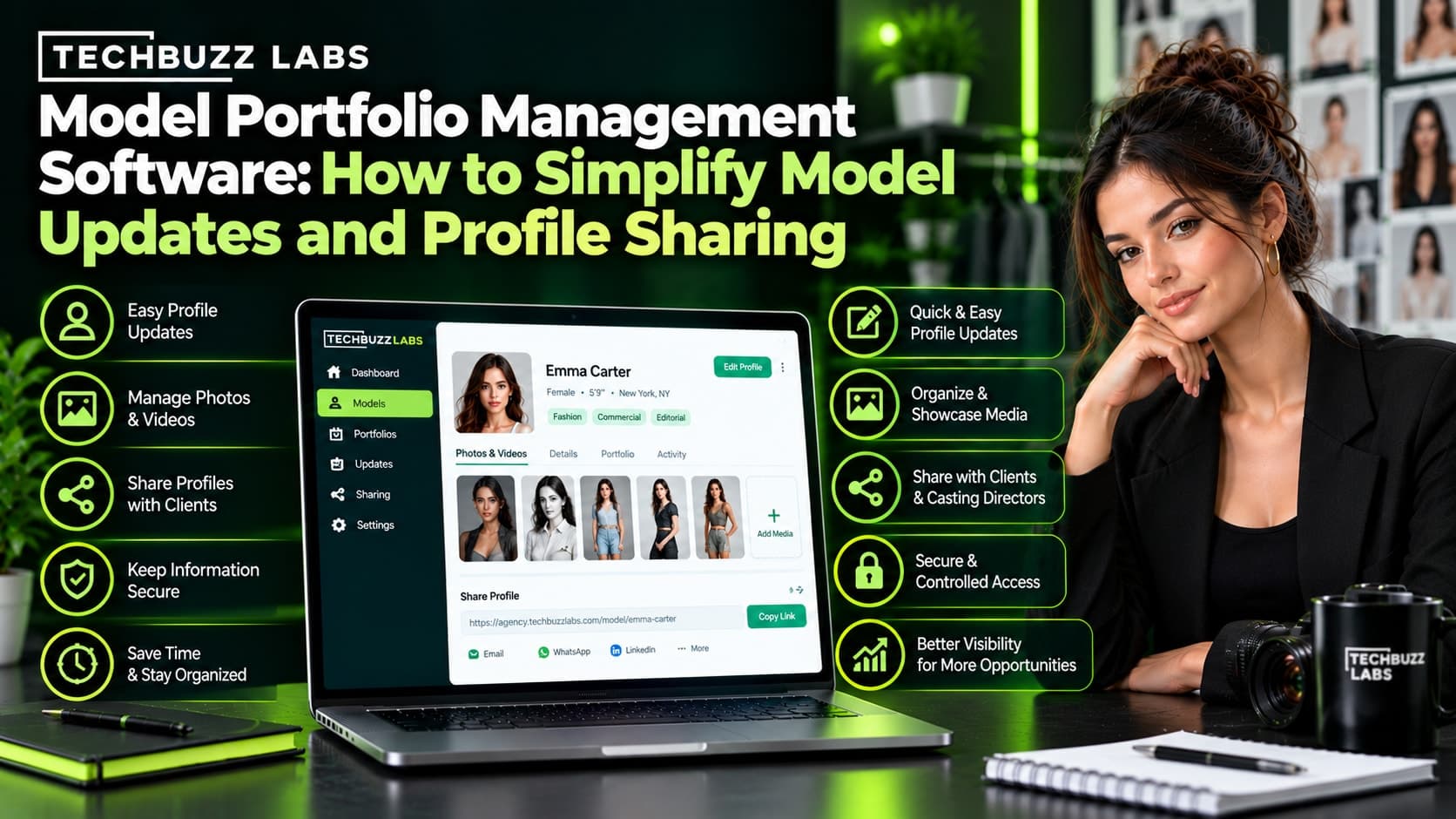
Custom Model Portfolio Management Software: Is It Worth the Investment?
But is investing in custom software actually worth it? The answer depends on the agency's size, operational challenges, budget, and long-term goals.

Managing a modeling agency involves much more than finding talent and arranging photoshoots. Agencies must organize model profiles, maintain updated portfolios, respond to casting requests, coordinate bookings, and manage client relationships. As an agency grows, handling these responsibilities through spreadsheets, emails, and disconnected applications can become increasingly difficult.
Custom model portfolio management software offers a way to bring these activities into one centralized platform. Unlike generic tools, custom software can be developed around an agency's specific workflows, talent categories, and business requirements.Understanding the potential benefits, costs, and limitations can help agency owners make a more informed decision.
What Is Custom Model Portfolio Management Software?
Custom model portfolio management software is a digital platform designed to help modeling agencies organize and manage their talent information. It can store model photographs, measurements, experience, contact details, availability, and other professional information in a structured database.
The main difference between custom and ready-made software is flexibility. A custom solution can be developed around the agency's existing processes rather than requiring the business to adjust every workflow to fit a standard product.
Depending on the agency's needs, the platform may include:
Centralized model profile management.
Portfolio photo and document storage.
Advanced talent search and filtering.
Model availability and booking management.
Casting submissions and client feedback tracking.
User roles and access permissions.
Reporting dashboards and activity tracking.
Integrations with other business systems.
Not every agency needs all these features. The right solution should focus on the operational problems the business actually wants to solve.
1. It Helps Agencies Manage Growing Talent Databases
As a modeling agency represents more talent, keeping information organized becomes increasingly important. Staff may need to search through hundreds of profiles to find models who match a client's requirements.
Managing this information manually can lead to duplicate records, outdated photographs, missing details, and wasted time.
Custom software can provide a centralized database where authorized team members can access model profiles and update information consistently.
For example, an agency managing fashion, commercial, fitness, and promotional talent may want separate categories and filters for each group. A custom platform can be designed to support these requirements.
This makes it easier for staff to locate suitable talent and maintain organized records as the agency expands.
2. It Can Streamline Casting and Booking Workflows
Casting and booking involve several connected activities. Agencies receive client briefs, identify suitable models, prepare submissions, collect feedback, confirm availability, and finalize bookings.
When these activities are managed through separate tools, important updates can be missed.
Custom model portfolio management software can connect these processes within one platform. Staff may be able to review portfolios, create candidate shortlists, track submissions, and manage booking statuses without constantly switching between applications.
For example, a casting team could move an opportunity through stages such as new request, talent selection, submitted, shortlisted, and confirmed.
This creates better visibility into ongoing projects and helps teams identify which tasks need attention.
3. It Reduces Repetitive Administrative Work
Agency employees often spend considerable time performing routine tasks, including updating model details, organizing images, preparing portfolios, checking availability, and following up on submissions.
These responsibilities are necessary, but repetitive manual processes can reduce the time available for client communication and business development.
A custom platform can simplify selected administrative tasks through centralized records, reusable templates, notifications, and workflow automation.
For example, staff may be able to generate consistent digital portfolio presentations from existing model profiles instead of preparing every document manually.
The actual time savings will depend on how well the software matches the agency's daily operations.
4. It Creates a More Professional Client Experience
Clients expect agencies to respond promptly and provide accurate talent recommendations. Disorganized submissions, outdated photographs, or incomplete model information can create a poor impression.
Custom portfolio software can help agencies prepare organized talent presentations and maintain more consistent records.
Depending on the features selected, agencies may also provide secure client access to selected profiles, allowing clients to review potential candidates more conveniently.
A more structured submission process can make it easier for clients to compare talent, share feedback, and communicate their decisions.
This can support stronger client relationships and a more professional agency image.
5. It Offers Flexibility as the Agency Grows
A ready-made software platform may work well when an agency has straightforward requirements. However, growing businesses sometimes need features that standard tools do not provide.
For example, an agency may expand into multiple locations, introduce new talent categories, or develop more complex approval processes.
Custom software can be planned around these changing requirements. New modules, integrations, user roles, and reporting features may be added as the business evolves.
This flexibility can be valuable for agencies that expect their operations to become more complex over time.
However, custom software still requires maintenance, technical support, and future development. Agencies should consider these ongoing responsibilities before making an investment.
6. What Does Custom Software Cost?
Cost is one of the most important considerations when evaluating custom model portfolio management software.
There is no single price because development costs depend on the project's scope and technical requirements. A basic platform with profile management and search features will generally require less development than a comprehensive system with booking management, client portals, automation, and third-party integrations.
Agencies should consider more than the initial development price. The total cost of ownership may include:
Planning and requirements analysis.
UI and UX design.
Software development and testing.
Hosting and infrastructure.
Security updates and maintenance.
Technical support.
Future improvements and integrations.
A practical approach is to start with essential features and expand the platform as the agency identifies additional needs. This can help control initial spending while creating room for future development.
7. Custom Software vs. Ready-Made Solutions
The right choice depends on the agency's requirements and available resources.
Ready-made software may be suitable for smaller agencies with standard workflows, limited budgets, and a need to get started quickly. It typically offers predefined features and may involve a subscription fee.
Custom software may be more suitable for agencies with specialized workflows, large talent databases, multiple teams, or specific integration requirements. It offers greater control over functionality but usually requires more planning, development investment, and ongoing maintenance.
Before choosing, agencies should compare the cost of each option over several years rather than focusing only on the initial price.
8. How to Decide Whether the Investment Is Worth It
Custom software is not automatically the best choice for every modeling agency. Before investing, business owners should evaluate their current challenges and estimate the potential operational benefits.
Consider these questions:
Does your agency manage a large or rapidly growing talent database?
Are employees spending too much time organizing portfolios manually?
Do casting and booking activities involve multiple disconnected tools?
Do standard software platforms lack important features?
Would centralized information improve team coordination?
Can the business support development and ongoing maintenance costs?
If several of these challenges apply, custom software may offer meaningful long-term value.
TechBuzz Labs can help businesses explore custom software solutions based on their operational requirements. For modeling and talent agencies, the development process should begin with understanding existing workflows, identifying essential features, and planning a platform that can support future growth.
Conclusion
Custom model portfolio management software can be a worthwhile investment for modeling agencies that need better control over talent information, casting activities, and booking operations. It can reduce repetitive administrative work, improve portfolio organization, support more efficient submissions, and provide flexibility as the business grows.
However, the decision should be based on actual business needs rather than the assumption that custom software is always better. Smaller agencies with simple workflows may find ready-made solutions more practical, while agencies with specialized requirements may benefit from a tailored platform.
By evaluating current challenges, development costs, maintenance needs, and long-term goals, agency owners can decide whether custom model portfolio management software is the right investment for their business.