The $300 Billion SaaS Market in 2026 Where the Real Opportunities Are for Small Builders
In 2026, the global SaaS market continues to grow at an extraordinary pace. Small startups and solo founders across the United States are entering industries that were previously dominated by massive software companies.
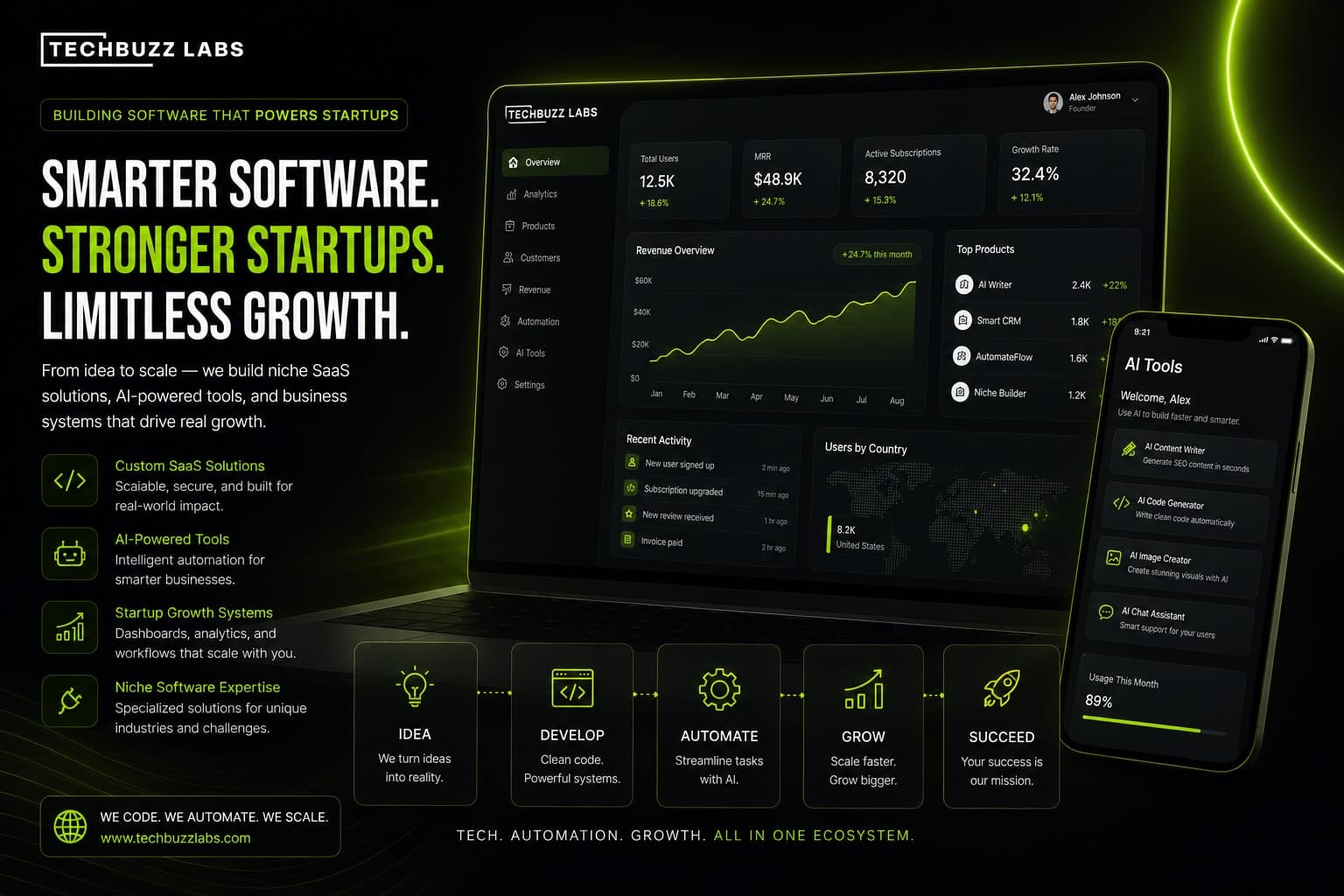
In 2026, the global SaaS market continues to grow at an extraordinary pace. Small startups and solo founders across the United States are entering industries that were previously dominated by massive software companies.
The reason is simple.
Modern development tools have reduced the barrier to entry dramatically.
No code platforms, AI automation, and cloud infrastructure now allow small teams to build profitable software products much faster than before.
But the biggest opportunities are no longer in generic software.
They are in niche operational problems.
Small builders are winning by creating focused SaaS products for specific industries instead of competing directly with enterprise platforms.
This is why vertical SaaS continues to grow rapidly.
Industries such as casting, healthcare, legal services, real estate, fitness, logistics, and local businesses all have unique workflows that generic software often fails to handle properly.
The second major opportunity is AI powered operational tools.
Businesses are looking for automation systems that improve productivity, reduce manual work, and organize workflows more efficiently.
The third opportunity is internal business applications.
Companies increasingly want custom dashboards, client portals, booking systems, and workflow automation tools built specifically around their operations.
Another major trend is lightweight SaaS products.
Founders are building smaller focused applications that solve one painful problem exceptionally well.
This reduces complexity while improving product market fit.
In 2026, distribution also matters more than ever.
The founders succeeding today combine software development with strong content marketing, SEO, and niche audience positioning.
The biggest misconception about SaaS is that startups need huge funding rounds to compete.
In reality, many profitable products now begin as lean MVPs built by small teams using modern tools.
The future of SaaS belongs to builders who understand specific industry problems deeply.
Technology alone is no longer enough.
Understanding workflows is the real advantage.