The Future of Modeling Agency Technology: CRM, Automation, and AI
This creates a more efficient workflow where information can move from one stage to another without requiring agents to repeatedly enter the same data.
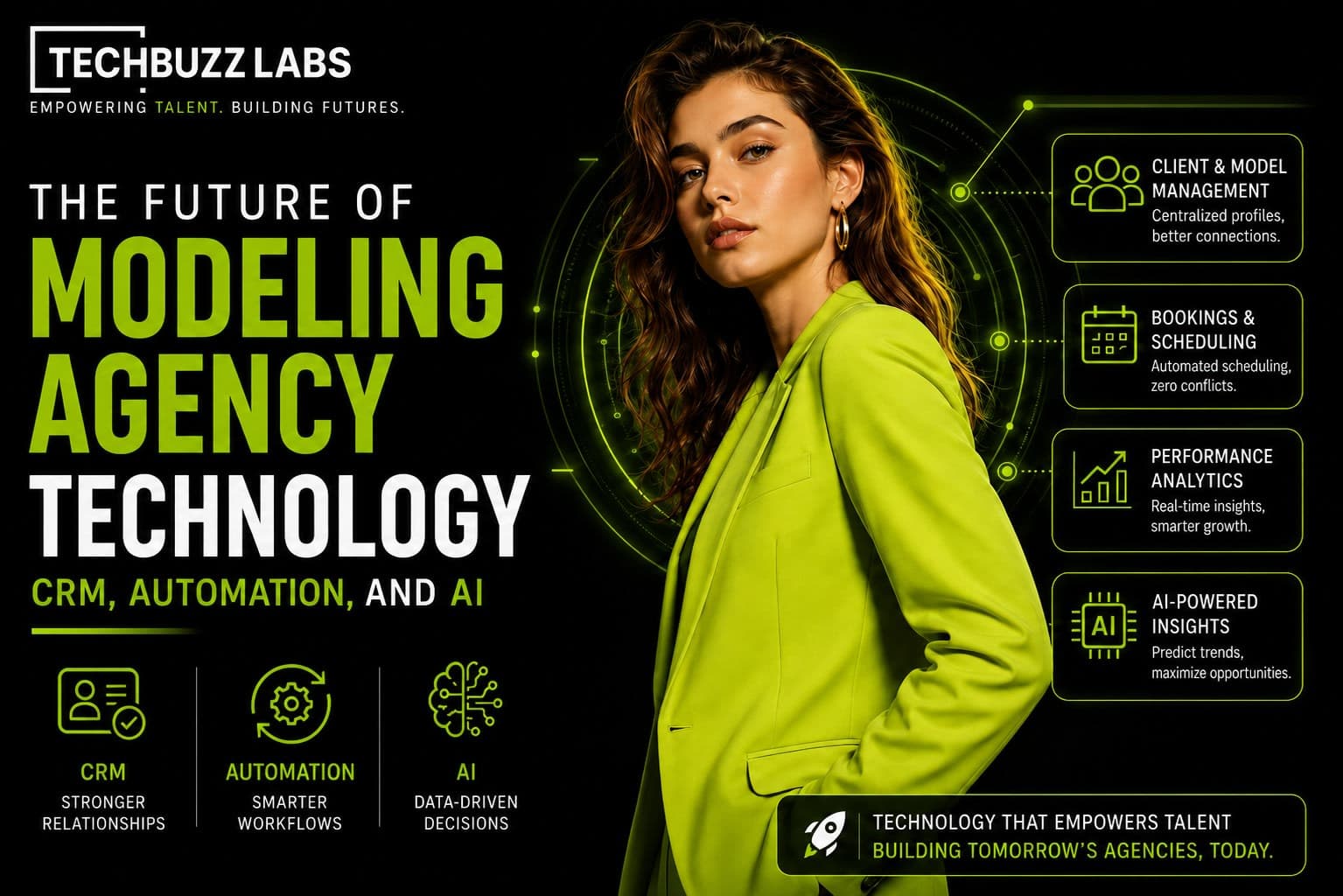
The modeling industry is changing rapidly as technology becomes a bigger part of how agencies discover talent, manage models, communicate with clients, and organize bookings. In the past, many modeling agencies relied heavily on spreadsheets, emails, phone calls, physical portfolios, and manual scheduling. While these methods can work for smaller agencies, they can become difficult to manage as an agency grows.
Today, CRM, automation, and artificial intelligence (AI) are creating new opportunities for modeling agencies to improve their workflows. For agencies in the USA, particularly those operating in competitive markets such as New York, Los Angeles, Miami, and Chicago, adopting the right technology could become an important part of long-term growth.
TechBuzzLabs recognizes the growing connection between technology and the modeling industry. As digital tools continue to evolve, agencies can use them to reduce administrative work while spending more time building relationships with models and clients.
The Shift Toward Digital Modeling Agencies
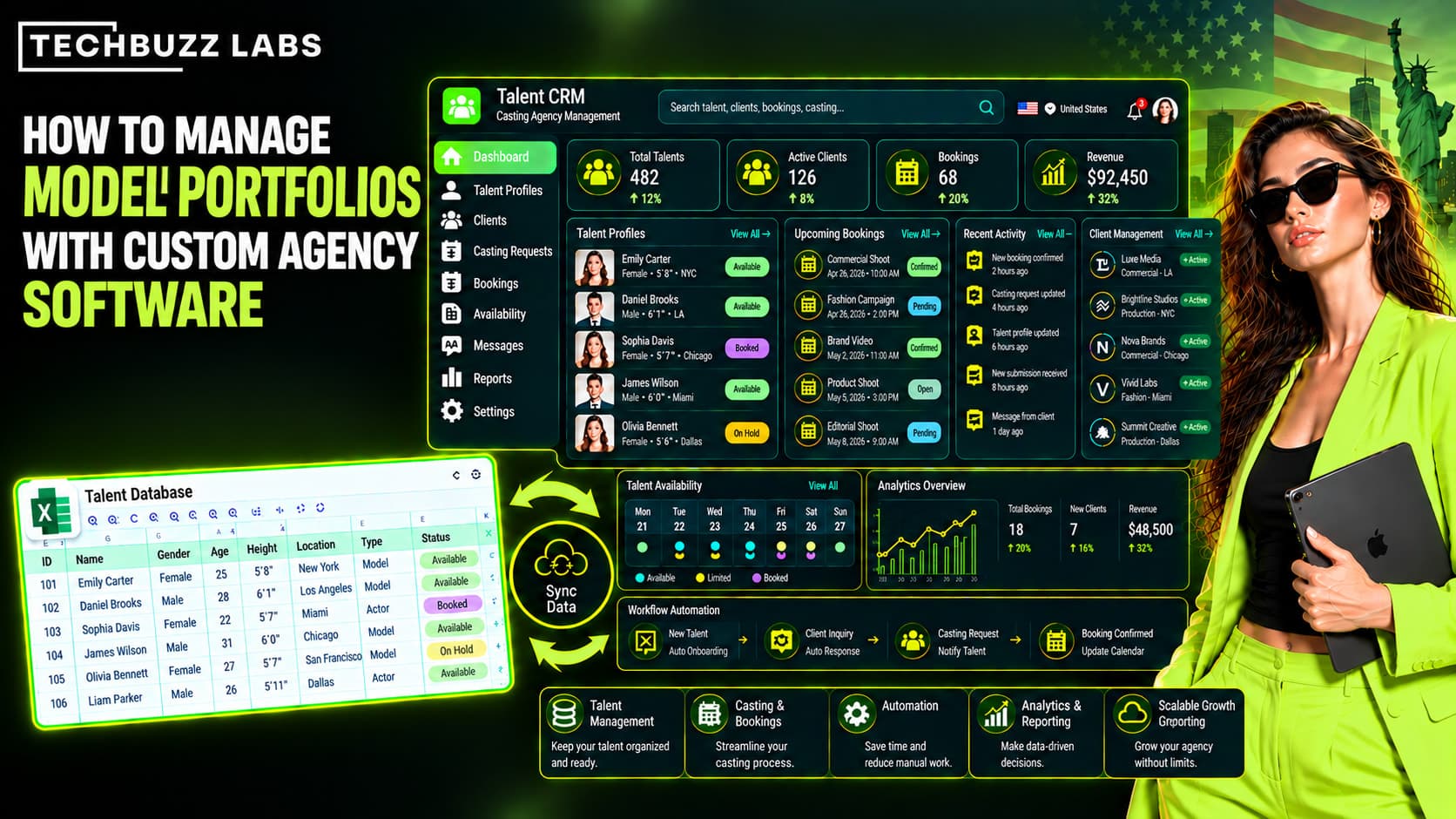
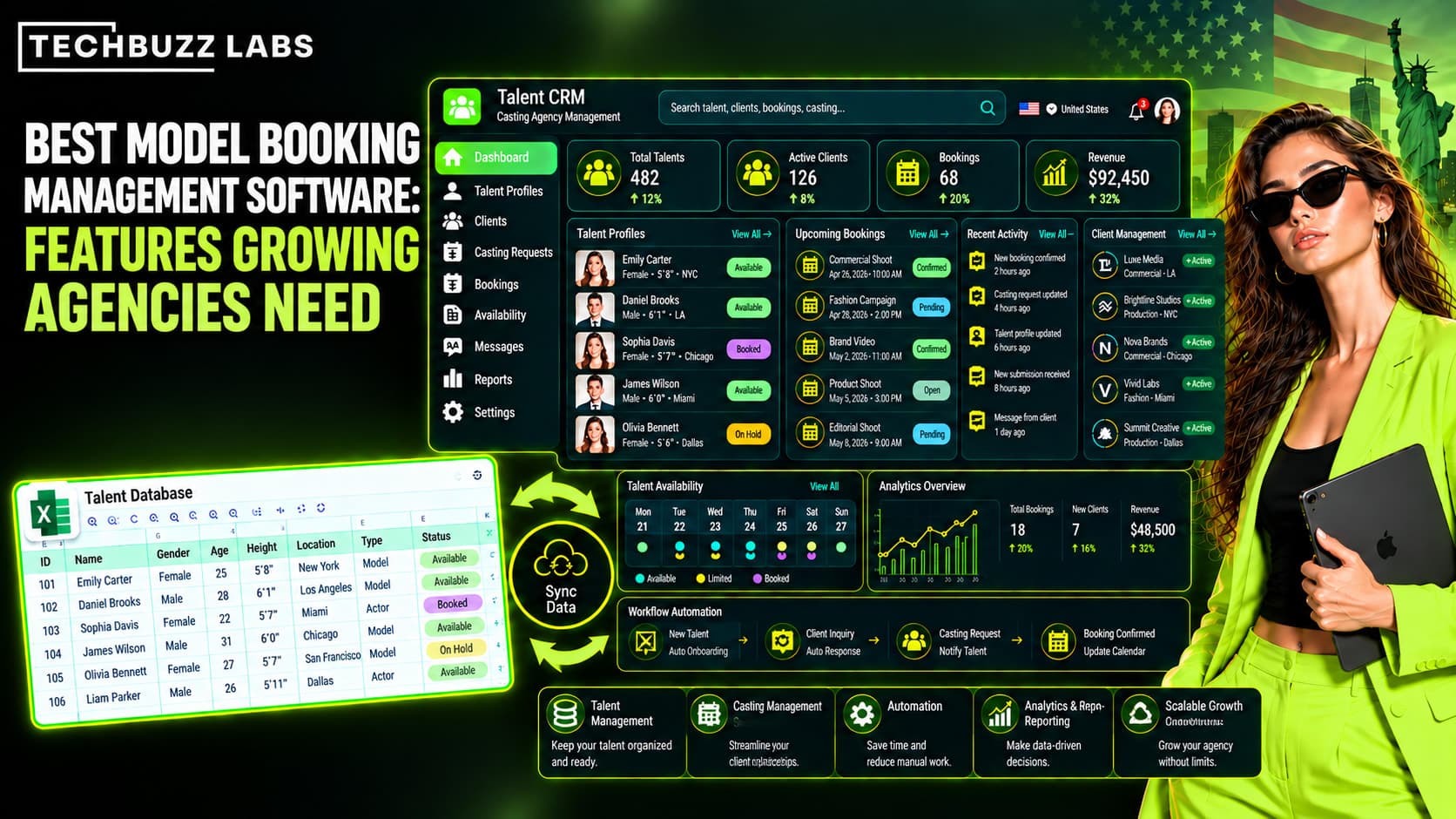
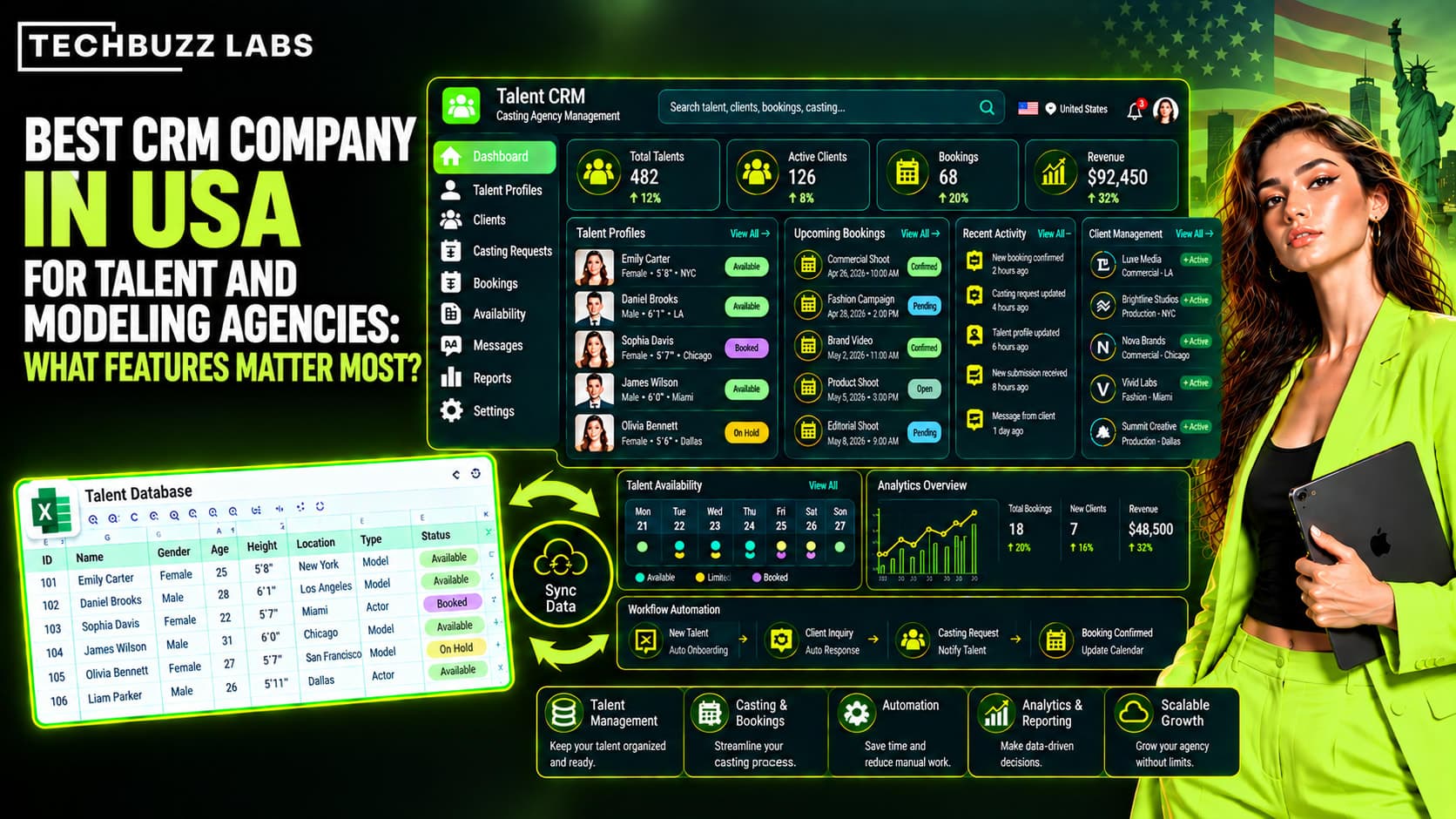
The future of modeling agency management is likely to be increasingly digital. Model profiles, portfolios, casting information, client records, availability, and bookings can all be managed through centralized platforms.
Instead of maintaining separate systems for different activities, agencies can connect these processes through specialized software.
For example, a model's profile could connect directly to casting opportunities, availability, client submissions, and booking records.
How CRM Technology Will Shape Agencies
CRM software is likely to remain one of the most important technologies for modern modeling agencies.
A modeling agency CRM can organize information about both talent and clients. Model profiles can contain photographs, measurements, experience, location, availability, and contact information, while client records can include communication history, project information, and previous bookings.
A centralized CRM allows agents to access this information quickly.
For U.S. agencies managing large talent databases, this can make it easier to identify suitable models for specific projects and maintain stronger client relationships.
Automation Will Reduce Repetitive Work
Automation is another major part of the future of modeling agency technology.
Agents perform many repetitive tasks every day, including sending casting invitations, checking availability, updating booking statuses, creating reminders, and following up with clients.
Automation can handle some of these routine activities based on predefined workflows.
For example, when a new casting is created, a system could notify selected models. Once submissions are sent to a client, the CRM could automatically create a follow-up reminder.
The purpose of automation is not to replace agents. Instead, it can give them more time to focus on creative decisions, talent development, negotiations, and client relationships.
AI Could Transform Talent Discovery
Artificial intelligence could have an even greater impact on how agencies search for talent.
Large agencies may have thousands of model profiles. Finding suitable talent manually can take considerable time, especially when clients have specific requirements.
AI-powered search and recommendation tools could help agents identify potentially suitable models by analyzing structured information such as location, availability, experience, skills, and project requirements.
For example, an agency could receive a request for commercial models available in Los Angeles for a particular campaign. An AI-assisted system could help narrow the database to profiles that meet the defined criteria.
However, AI should support professional casting decisions rather than replace them. Human agents remain essential for evaluating personality, professionalism, presence, and creative suitability.
AI and Client Matching
AI may also help agencies improve client relationships.
By analyzing organized CRM information, AI tools could potentially identify patterns in previous bookings and client preferences. Agents could use these insights when recommending talent for future campaigns.
For example, if a client frequently books models for e-commerce campaigns, the CRM could help agents quickly identify talent with relevant experience and availability.
This could make client responses faster and more personalized.
Virtual Casting Will Continue to Grow
Technology has already made remote communication easier, and virtual casting is likely to remain an important part of the industry.
Video calls, digital auditions, and online submissions allow agencies to evaluate talent without requiring every model to attend an initial in-person meeting.
This can be especially useful for agencies working across the United States.
A brand in Los Angeles may need talent from another state, and digital casting tools can make the initial selection process easier before an in-person meeting or shoot takes place.
Better Data and Business Intelligence
Future modeling agency platforms will likely provide more advanced analytics.
Instead of simply storing information, systems can help agencies understand how their business is performing.
Managers could potentially track metrics such as casting submissions, booking rates, client activity, revenue, and talent performance.
These insights can help agencies identify which clients generate the most business, which types of projects are most successful, and where workflow improvements are needed.
Data Security Will Become More Important
As agencies store more information digitally, data security and privacy will become increasingly important.
Modeling agencies may manage photographs, contact information, measurements, contracts, availability, and other professional records.
Future technology solutions will need strong security controls, access permissions, backups, and responsible data management.
Agencies should carefully evaluate how software providers store and protect information before adopting new technology.
Technology Will Support, Not Replace, Agents
One important point about the future of agency technology is that software is unlikely to replace the human side of modeling.
Successful agencies depend on relationships, communication, creativity, negotiation, and professional judgment.
CRM systems, automation, and AI can make information easier to manage and repetitive tasks easier to complete, but experienced agents will continue to play an essential role.
The most successful agencies may be those that combine technology with strong human expertise.
The Role of TechBuzzLabs
The growth of CRM, automation, and AI demonstrates how technology is becoming increasingly important in the modeling industry.
TechBuzzLabs focuses on the intersection of technology and modeling, where digital solutions can help agencies improve talent management, casting workflows, client relationships, and operational efficiency.
For agencies preparing for the future, understanding these technologies can help them identify opportunities to modernize their processes and create more scalable operations.
Conclusion
The future of modeling agency technology will likely be shaped by CRM systems, workflow automation, artificial intelligence, digital casting, and advanced analytics.
For modeling agencies in the USA, these technologies can help organize growing talent databases, improve client management, speed up casting, simplify bookings, and reduce repetitive administrative work.
However, technology should be viewed as a tool rather than a replacement for professional expertise. The combination of experienced agents and intelligent digital systems can create a more efficient and scalable agency model.
As the industry continues to evolve, agencies that embrace useful technology while maintaining strong relationships with models and clients will be better positioned to adapt to the future. With solutions and industry insights from technology-focused platforms such as TechBuzzLabs, modeling agencies can explore smarter ways to manage their operations and prepare for an increasingly digital industry.