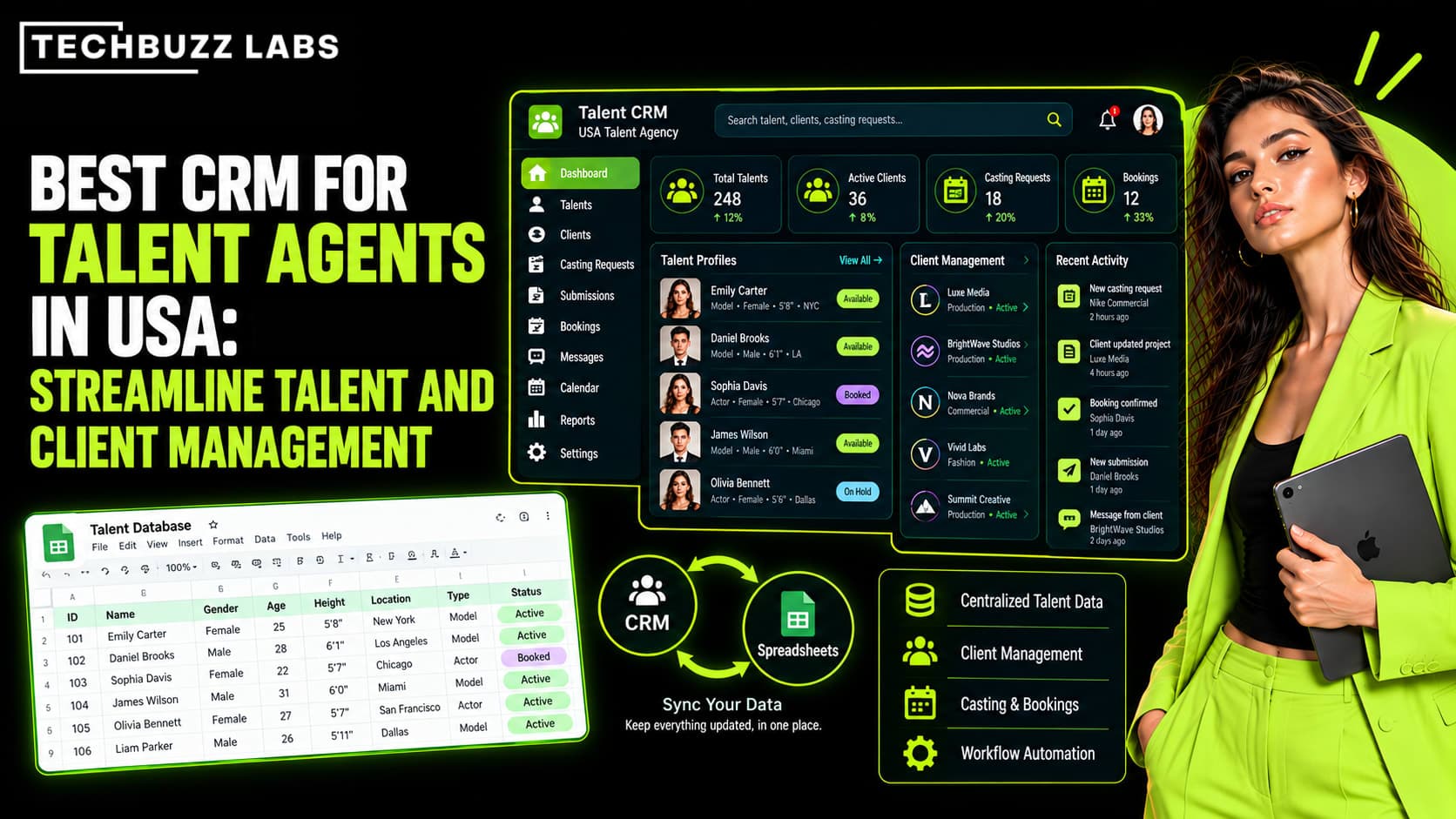
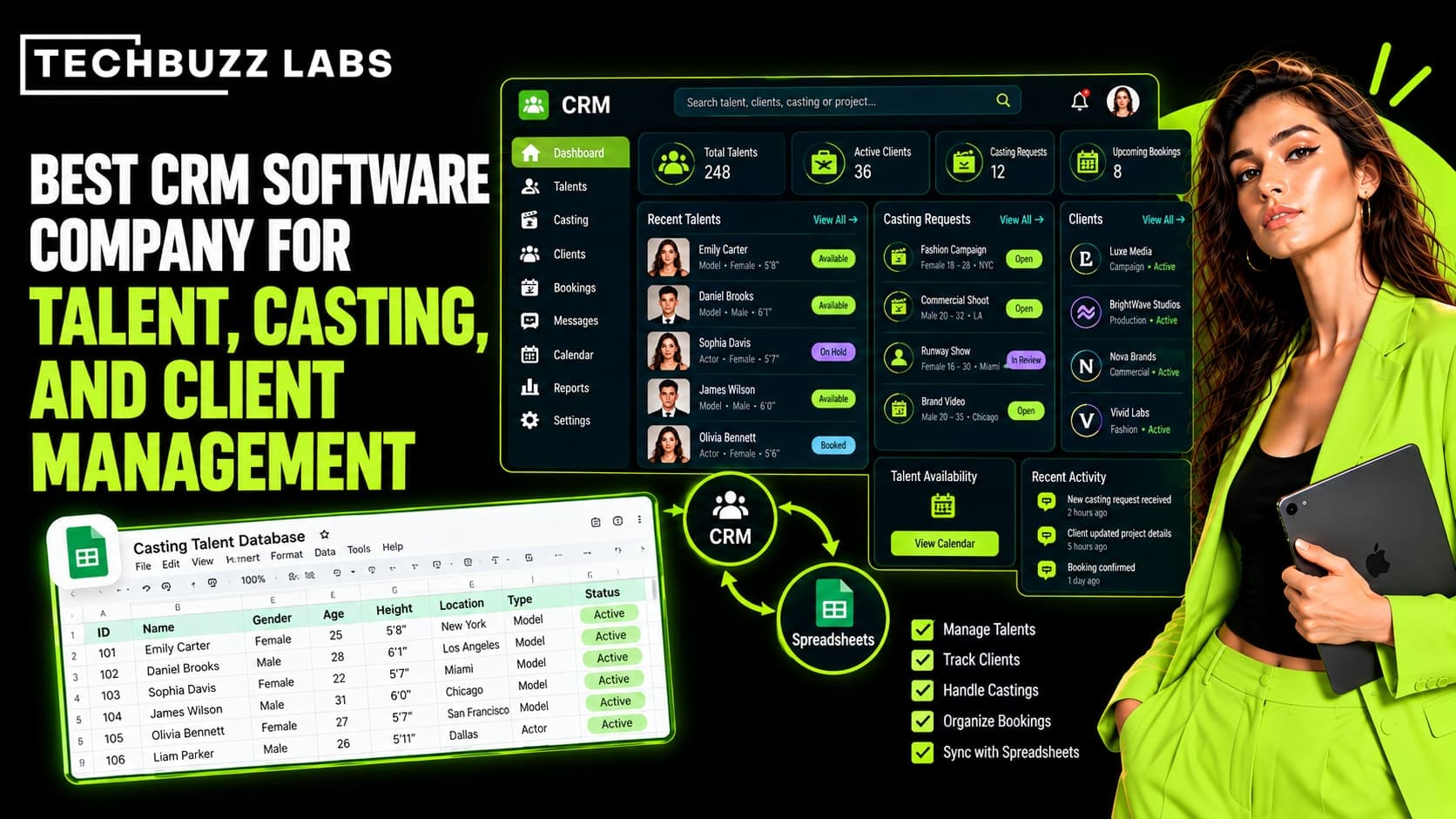
Best CRM for Talent Agents in USA: How Custom Software Supports Agency Growth
As the agency adds more talent, clients, agents, and casting opportunities, the amount of information increases rapidly. Agents may need to search through larger talent databases while simultaneously managing multiple active projects.
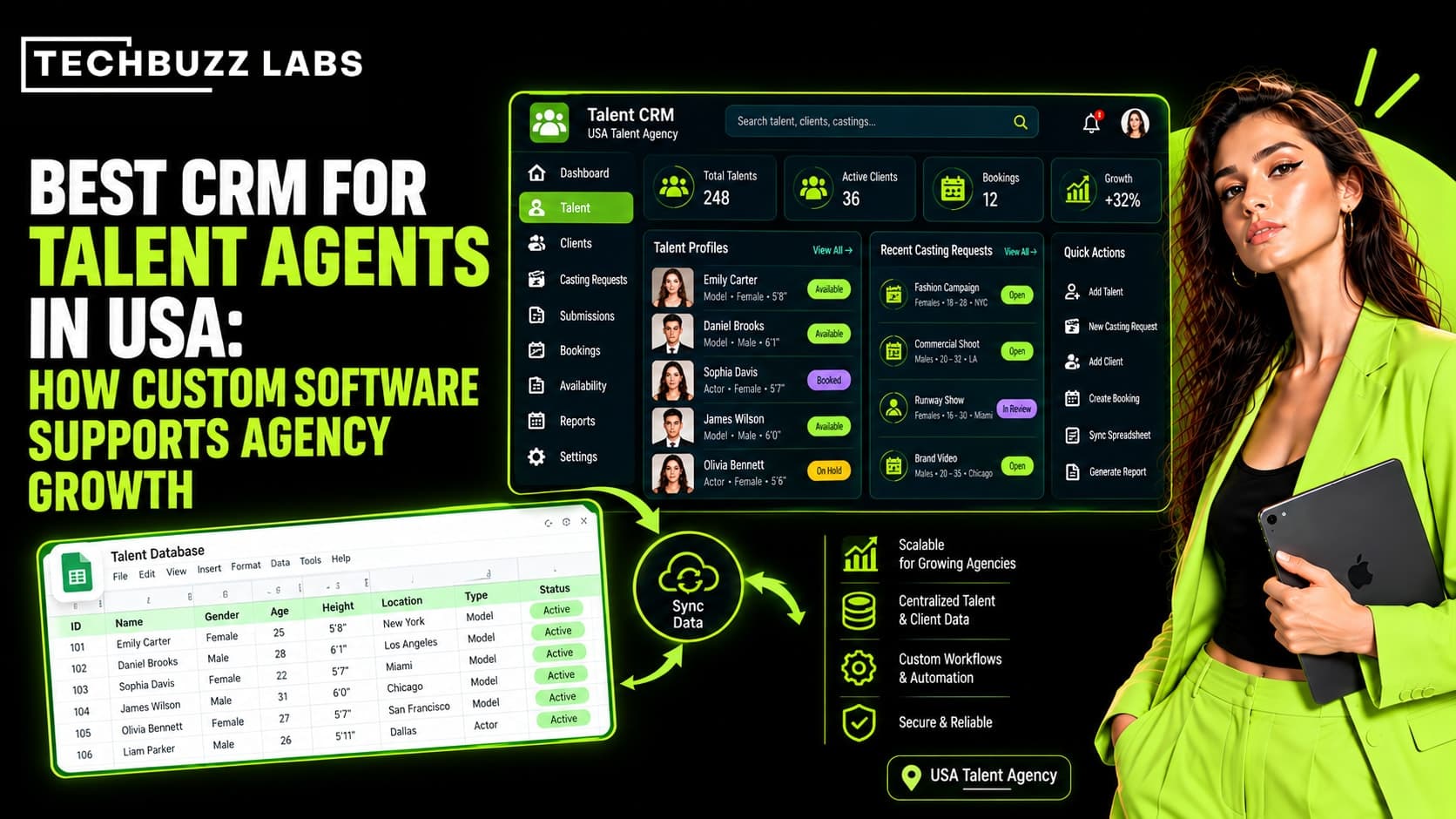
Talent agents in the USA manage a complex combination of relationships, opportunities, talent profiles, casting requests, availability, submissions, and bookings. As an agency grows, these activities can become increasingly difficult to coordinate through spreadsheets, email threads, messaging apps, and disconnected software.
A CRM for talent agents can bring these processes into a centralized system. However, not every agency operates in the same way. A growing talent agency may eventually need more flexibility than a standard CRM can provide.
This is where custom CRM software can become particularly useful. Instead of forcing agents to adapt their workflow to a generic platform, custom software can be designed around the agency's processes and growth objectives.
What Is a CRM for Talent Agents?
A CRM for talent agents is a software system that helps agencies organize relationships and information involving both talent and clients.
Unlike a conventional sales CRM, a talent-focused system may need to manage model or talent profiles, casting opportunities, availability, submissions, client requirements, communication, and bookings.
For a U.S. talent agency, the CRM can become a central operational system where agents can access information and coordinate activities across different projects.
A specialized CRM can connect talent profiles with casting opportunities, client requests, submissions, availability, communication records, and bookings.
Why Agency Growth Creates New CRM Requirements
A small talent agency may initially manage its operations with spreadsheets and email.
Growth can also create new coordination challenges.
One agent may receive a client request while another searches for talent. A third team member may handle availability, while someone else manages booking details.
Without a centralized system, information can become fragmented.
Custom CRM software can provide a shared operational environment where these activities remain connected.
Centralizing a Growing Talent Database
One of the first challenges agencies face during growth is managing talent information.
A growing roster can contain hundreds or thousands of profiles. Each profile may include photographs, portfolio information, location, experience, skills, measurements, availability, previous work, and other agency-specific information.
A custom CRM can structure this information according to how the agency actually searches and manages talent.
Instead of treating every person as a basic contact, the system can create detailed talent records that are directly connected to relevant casting and booking activity.
This turns the talent database into an operational resource rather than simply a collection of records.
Helping Agents Find Talent More Efficiently
When a client sends a casting request, agents need to identify suitable talent quickly.
A custom CRM can include search and filtering options based on the agency's actual casting requirements.
For example, an agency may want to filter talent according to location, category, experience, skills, availability, measurements, or other criteria.
The specific filters can be designed around the agency's business.
This can be especially useful for agencies operating across major U.S. markets such as New York, Los Angeles, Miami, Chicago, or Atlanta, where teams may manage large and diverse talent pools.
Connecting Clients With Talent
Agency growth is not only about increasing the talent roster. It also involves managing a larger client base.
Clients may have different preferences, project requirements, communication patterns, and booking histories.
A custom CRM can connect client records with casting projects, submitted talent, previous bookings, and communication history.
When a returning client sends a new request, agents can access relevant context without searching through multiple systems.
This creates a more connected relationship between client management and talent management.
Managing More Casting Opportunities
Growth often means handling more casting opportunities at the same time.
Each project may have different requirements, deadlines, locations, and talent preferences.
A custom CRM can provide a dedicated record for each casting opportunity and connect it with the relevant client and talent.
Agents can then track where each casting stands, which talent has been considered, who has been submitted, and what feedback has been received.
This creates greater visibility as the number of active projects increases.
Keeping Availability Connected to Casting
Availability becomes increasingly important as an agency grows.
A model can be suitable for a project but unavailable on the required dates. If availability information is outdated or stored separately, agents may waste time considering talent who cannot actually participate.
Custom CRM software can make availability part of the broader talent and casting workflow.
This allows agents to consider scheduling information while building shortlists and preparing submissions.
The result is a more connected process between talent records and active opportunities.
Supporting Agent Collaboration
As an agency expands, more employees may become involved in daily operations.
A centralized CRM allows authorized team members to access shared information instead of relying on individual spreadsheets or personal inboxes.
This can make handoffs easier.
For example, if one agent is unavailable, another team member can review the relevant client, casting, talent, and communication records without starting the process from the beginning.
Better information sharing can become increasingly important as teams grow.
Automating Repetitive Work
Growth can increase administrative work as well as revenue opportunities.
Agents may spend significant time sending reminders, requesting availability, updating statuses, organizing submissions, and performing other repetitive tasks.
Custom CRM software can automate selected activities according to the agency's workflow.
For example, the system could trigger reminders when a casting deadline approaches or create internal notifications when a client responds.
The purpose of automation is not to replace the agent. It is to reduce repetitive administration so agents can spend more time on relationships, talent development, and client service.
Using Agency Data for Better Visibility
A growing agency generates valuable operational data.
The CRM can potentially track casting activity, client requests, submissions, bookings, talent activity, and other workflow information.
Dashboards can turn this information into a clearer view of agency operations.
Managers may want to know which clients generate the most opportunities, where casting projects are slowing down, how many active submissions are awaiting responses, or which workflows require additional attention.
Organized data can therefore support operational planning as the agency grows.
Customization for Different Agency Workflows
Every talent agency has its own way of working.
One agency may focus primarily on fashion models, while another may represent commercial talent, actors, influencers, or multiple categories.
The agency may also have unique approval stages, booking processes, talent fields, or client workflows.
A custom CRM can be built around these requirements.
Instead of changing the agency's established process to fit generic software, the technology can be structured around the way agents actually work.
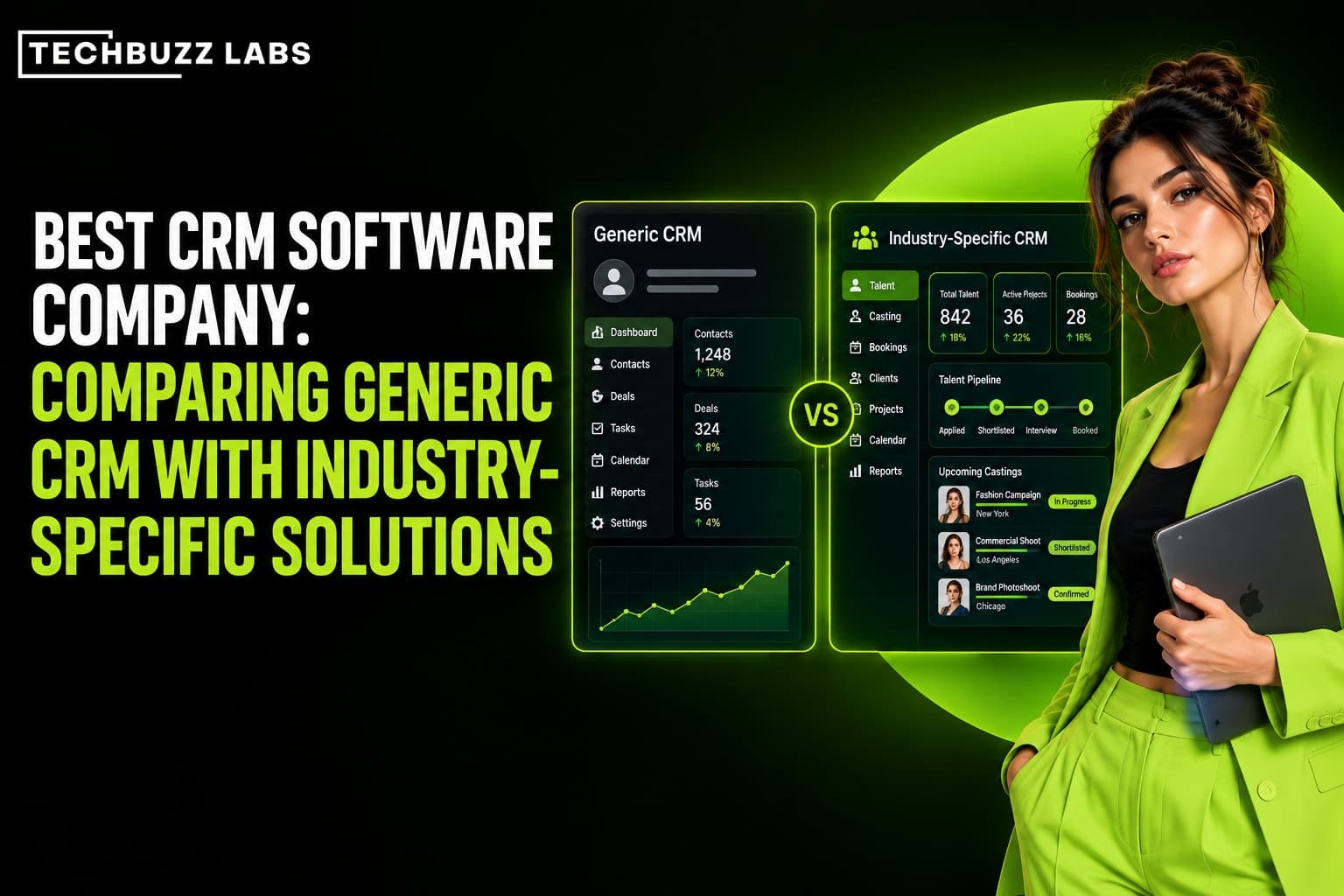
This is one of the key differences between a standard CRM and a custom CRM solution. TechBuzzLabs similarly describes custom CRM as an approach for agencies that need technology aligned with their specific operational requirements.
Scaling Into New Markets
Growth may eventually involve expanding beyond one city or region.
A talent agency could add new markets, additional teams, new talent categories, or more client relationships.
A CRM designed with scalability in mind can provide a common operational structure while allowing different teams or locations to work within the same system.
This can help maintain consistency as the organization becomes larger.
How TechBuzzLabs Supports Talent Agency Growth
TechBuzzLabs focuses on technology solutions for modeling and talent agencies, including CRM, casting management, talent management, workflow automation, and custom software.
Its custom approach can allow agencies to connect talent profiles, client management, casting opportunities, availability, submissions, and bookings around their specific workflows.
For agencies that have outgrown spreadsheets or generic systems, a customized platform can provide a more structured foundation for managing increasing operational complexity.
What Should Talent Agents Consider Before Choosing a CRM?
Before investing in CRM software, agencies should examine their current workflow and future plans.
Important questions include:
How many talent profiles does the agency manage? How many clients and casting opportunities are active? How many agents need access to the system? What information needs to be searchable? How is availability managed? How are submissions tracked? What happens after client approval? Which repetitive tasks could be automated?
Agencies should also consider scalability, security, integrations, reporting, user permissions, customization, and ongoing support.
The objective should be to choose technology that solves current operational challenges while providing room for future growth.
Final Thoughts
For talent agents in the USA, CRM software can become an important part of managing a growing agency.
A standard CRM may provide useful contact and relationship management, but agencies with complex casting and talent workflows may require a more specialized approach.
Custom CRM software can connect talent profiles, client relationships, casting opportunities, availability, submissions, bookings, automation, and reporting within a system designed around the agency's operations.
As the agency grows, this type of centralized technology can provide a stronger foundation for collaboration, operational visibility, and scalable workflow management.
For agencies evaluating the best CRM for talent agents in the USA, the key consideration should not simply be the number of features a platform offers. The more important question is whether the system can support the agency's current workflow while adapting to where the business is going next.