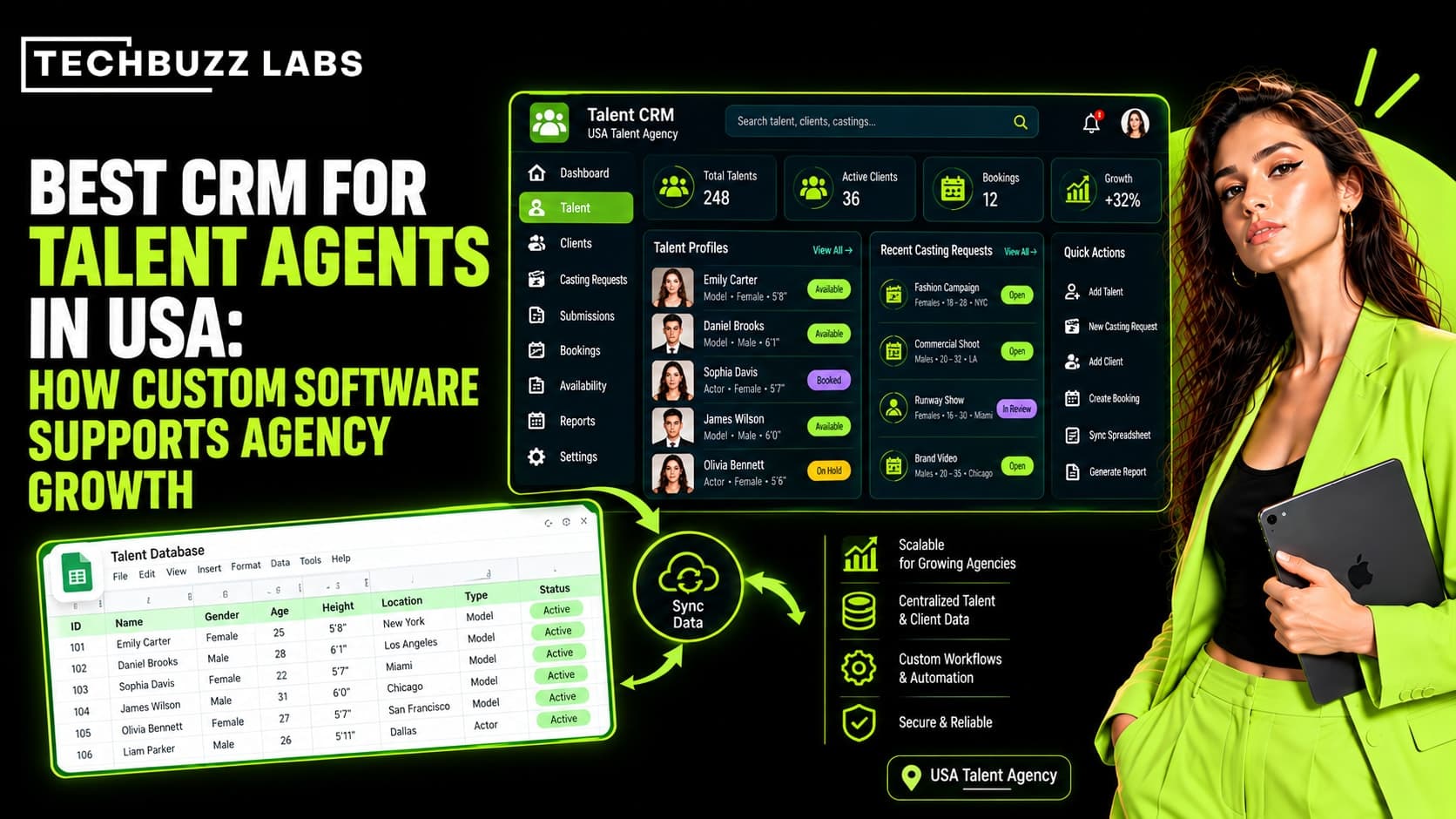
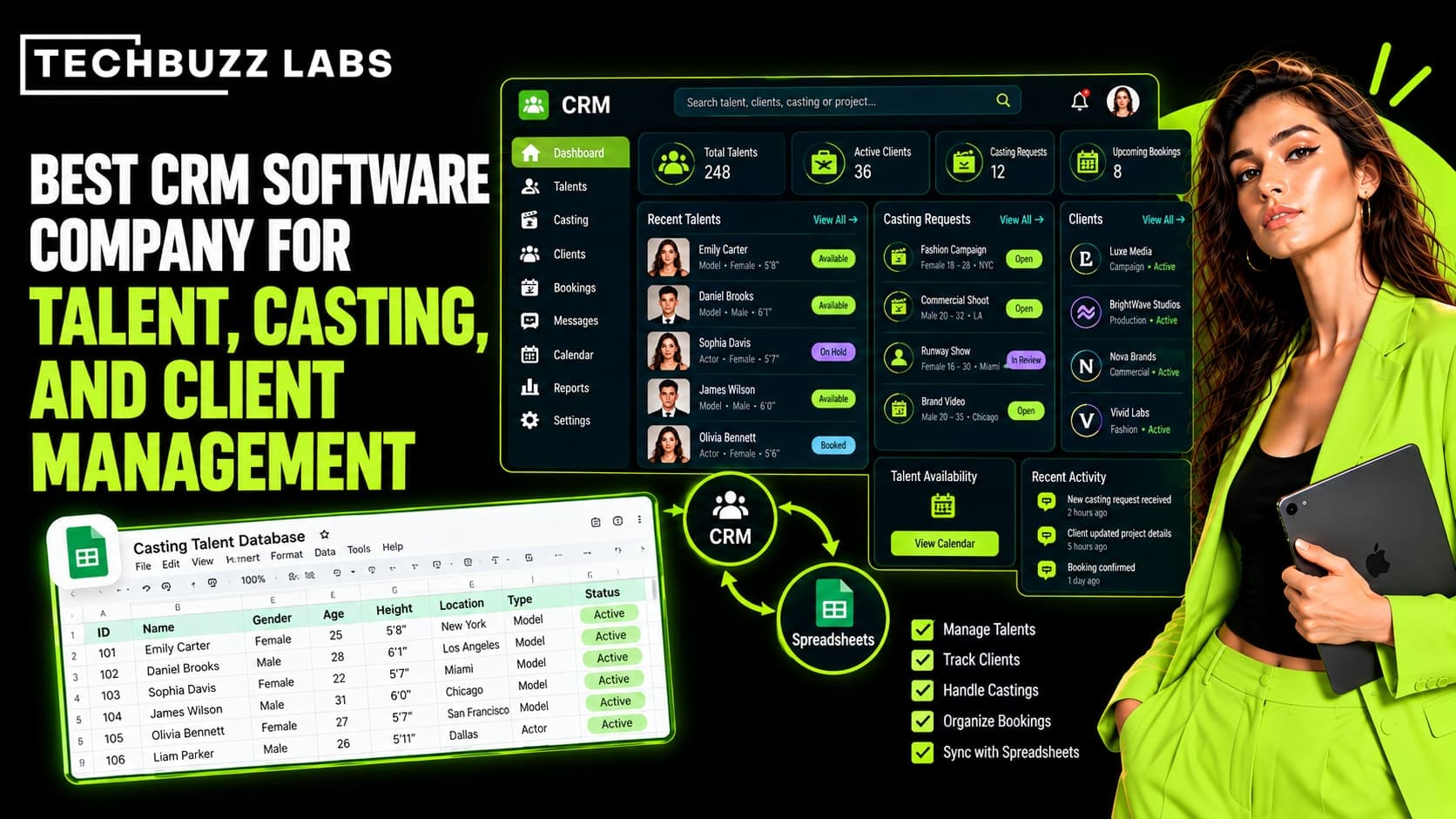
Best CRM for Talent Agents in USA: Streamline Talent and Client Management
An agent may manage hundreds of talent profiles while simultaneously working with clients who have different casting requirements. Each opportunity can involve talent searches, availability checks, submissions, feedback, and booking coordination.
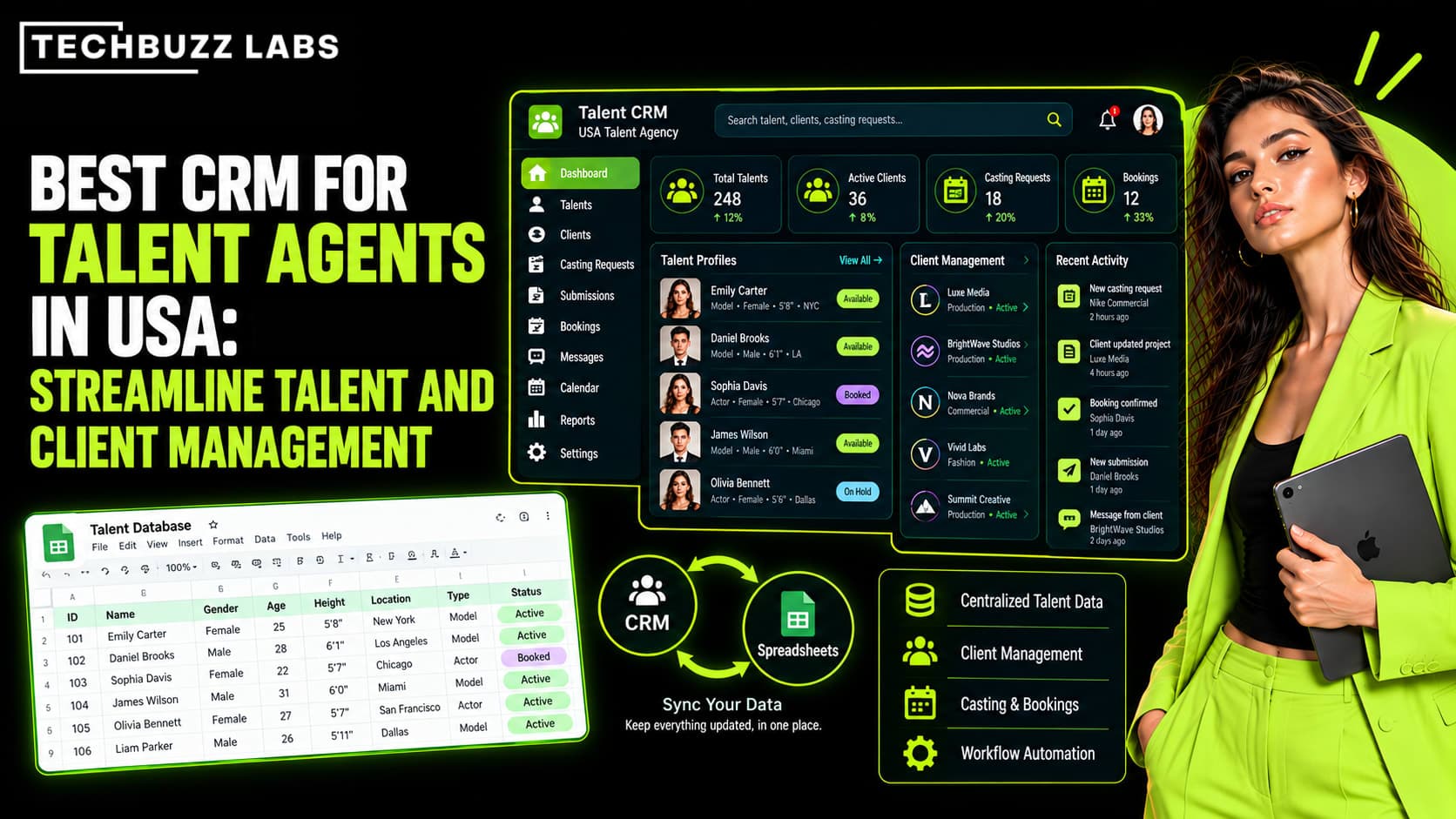
Talent agents in the USA manage two sides of an agency every day: talent and clients. They need to keep track of talent profiles, client requirements, casting opportunities, availability, submissions, communication, and bookings while making sure important information is accessible to the right team members.
As an agency grows, managing these activities through spreadsheets, emails, messaging apps, and separate databases can become increasingly difficult. A CRM for talent agents can bring these processes together and give agents a more organized way to manage relationships and daily operations.
The right CRM is not simply a place to store contact information. For a modern talent agency, it can become a central system for connecting talent management with client management and casting workflows.
What Does a CRM for Talent Agents Actually Manage?
A traditional CRM is usually built around leads, customers, sales pipelines, and communication.
Talent agencies have a different operational structure.
A specialized CRM can connect these activities so that talent and client information remains organized around the agency's actual workflow.
Instead of maintaining separate records for a client, casting request, and selected talent, the system can connect them through the same project.
Centralizing Talent Profiles
A growing talent agency needs a reliable way to manage its roster.
A talent profile can contain photographs, portfolio information, location, experience, skills, measurements, availability, previous work, and other professional details.
When this information is stored in a centralized CRM, agents can access updated profiles without searching through different folders or spreadsheets.
This becomes particularly useful when several agents are working with the same talent pool.
Rather than relying on individual files, the team can work from a shared source of information.
Making Talent Search More Efficient
Finding the right talent for a client is one of an agent's most important tasks.
Suppose a client needs commercial models in Los Angeles for a campaign with specific requirements. The agent needs to identify relevant talent quickly while considering factors such as location, experience, category, and availability.
A CRM with structured search and filtering can make this process easier.
Instead of reviewing profiles one by one, agents can narrow the database using relevant criteria and create a shortlist based on the client's requirements.
This can help turn a large talent database into a practical resource for everyday casting decisions.
Organizing Client Information
Talent management is only one side of agency operations.
Agents also need to understand their clients.
A client record can contain contact details, previous projects, casting requests, communication history, preferences, and booking information.
When a client returns with another opportunity, an agent can review the existing relationship before responding.
This provides context that may otherwise be scattered across emails and messages.
A centralized client record can therefore support more consistent communication and make it easier for different team members to understand the relationship.
Connecting Client Requests With Talent
One of the biggest advantages of a specialized CRM is the ability to connect clients with talent-related activities.
A client might send a casting brief containing requirements for a campaign. The agent can create the opportunity, search the talent database, build a shortlist, check availability, and prepare submissions.
The information stays connected to the same project.
This creates a workflow such as:
Client Request → Casting Brief → Talent Search → Shortlist → Availability → Submission → Client Feedback → Booking
Instead of managing each stage in a separate system, agents can follow the progress of the opportunity from one central location.
Managing Talent Availability
Availability can have a direct impact on whether a talent profile is suitable for a project.
A model might meet every requirement but already be booked on the requested dates.
If availability is maintained separately from the talent profile, agents may need additional communication before making a submission.
A CRM can connect availability with talent records and casting projects.
This gives agents more useful information when preparing shortlists and can help reduce unnecessary back-and-forth with talent.
Tracking Submissions and Feedback
After an agent submits talent to a client, the process continues.
The client may approve a candidate, reject a profile, request additional options, or ask for changes to the shortlist.
A CRM can provide clear statuses for these activities.
Agents can track which talent has been submitted, which profiles are awaiting feedback, which candidates have been approved, and which opportunities have moved toward booking.
This becomes increasingly valuable when an agency has many active casting projects at the same time.
Keeping Talent and Client History Connected
Historical information can be useful when managing future opportunities.
An agent may want to know which talent previously worked with a particular client, what type of project they worked on, or what requirements that client typically has.
When talent and client records are connected, this information can be easier to access.
For example, an agent working on a repeat client's new campaign could review previous bookings and relevant project information before preparing a new shortlist.
This provides context without requiring the agent to search through old conversations.
Automating Repetitive Tasks
Talent agents spend significant time on communication and administrative activities.
Depending on the agency's workflow, repetitive tasks can include availability requests, reminders, internal notifications, status updates, follow-ups, and other routine actions.
CRM automation can help reduce some of this administrative workload.
The goal is not to automate the agent's professional judgment. Talent selection, client relationships, negotiations, and other important decisions still require human involvement.
Instead, automation can handle predictable workflow steps and allow agents to focus on higher-value activities.
Improving Team Collaboration
As an agency grows, multiple people may work on the same client or casting opportunity.
Without centralized information, team members may have different versions of a talent profile or may not know what another agent has already communicated to the client.
A shared CRM can provide a common view of relevant information.
An agent taking over a project can review the client record, casting requirements, shortlisted talent, submissions, and current status without rebuilding the history from scratch.
This can make internal handoffs more organized.
Using CRM Data for Agency Visibility
A CRM can also help agency managers understand what is happening across their operations.
Dashboards and reports may provide information about active casting opportunities, submissions, client activity, bookings, pending tasks, and other workflow metrics.
This can help managers identify where work is accumulating.
For example, if many opportunities are waiting for client responses, the agency may need a stronger follow-up process. If availability confirmations are frequently delayed, that part of the workflow may need attention.
The value comes from turning everyday agency activity into information that can support operational decisions.
Why Customization Can Matter
Every talent agency has its own processes.
A modeling agency in New York may operate differently from a commercial talent agency in Los Angeles or an agency managing multiple talent categories across several U.S. markets.
Some agencies may need custom talent fields, specialized casting stages, unique client workflows, custom dashboards, or specific booking processes.
A customizable CRM allows these requirements to become part of the system instead of forcing agents to create workarounds.
This is where custom CRM development can be particularly useful for agencies with specialized operations.
How TechBuzzLabs Supports Talent and Client Management
TechBuzzLabs focuses on custom software solutions for talent and modeling agencies, including CRM, casting management, talent management, workflow automation, and client-related systems.
Its approach can connect talent profiles, client requests, casting opportunities, availability, submissions, and bookings within a centralized workflow.
For an agency that has outgrown spreadsheets or disconnected tools, a custom platform can be structured around the way its agents actually work.
Rather than simply adding another database, the goal is to create a connected system that supports the agency's complete operational process.
What Should Talent Agents Look for in a CRM?
Before selecting a CRM, talent agents should consider how well the platform supports their actual workflow.
Important areas include talent profile management, advanced search, client records, casting management, availability tracking, submissions, feedback, booking workflows, automation, reporting, user permissions, and customization.
Ease of use is equally important.
A CRM can contain many features, but if agents struggle to use the system, the technology may not provide its intended value.
Agencies should therefore evaluate how easily the CRM fits into everyday tasks rather than judging it only by the number of features advertised.
Final Thoughts
For talent agents in the USA, a CRM can provide a centralized way to manage both sides of the agency relationship: talent and clients.
Instead of keeping talent profiles, client information, casting requests, availability, submissions, and booking details in separate systems, a specialized CRM can connect these activities into one workflow.
The result can be better information visibility, easier collaboration, more organized casting operations, and less fragmented administration.
For agencies evaluating the best CRM for talent agents in USA, the key consideration is not simply whether a platform has standard CRM features. The more important question is whether it can support the complete relationship between talent, agents, clients, casting opportunities, and bookings.
A CRM designed around that workflow can provide a stronger technology foundation for agencies as their talent roster, client base, and casting activity continue to grow.