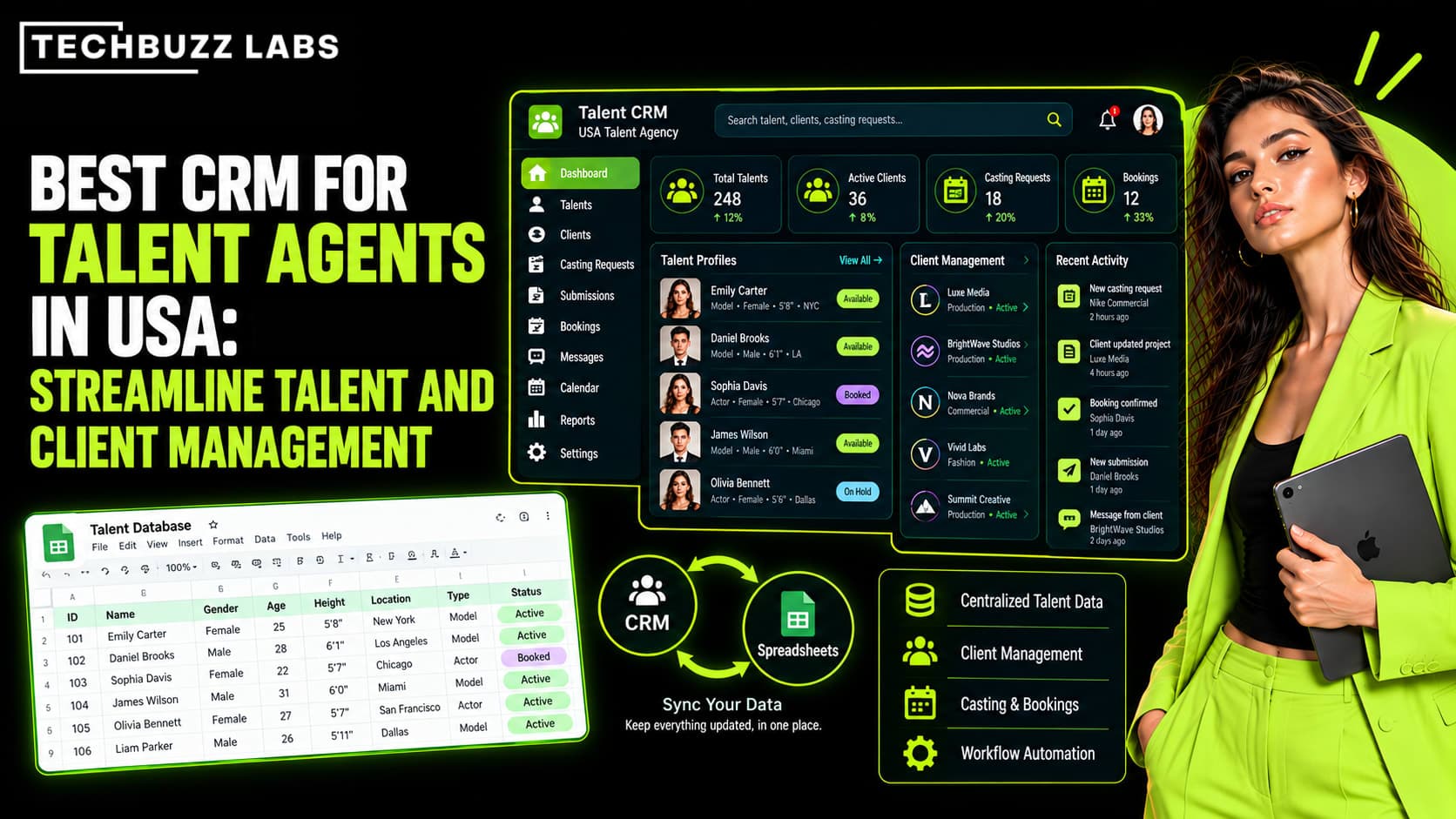
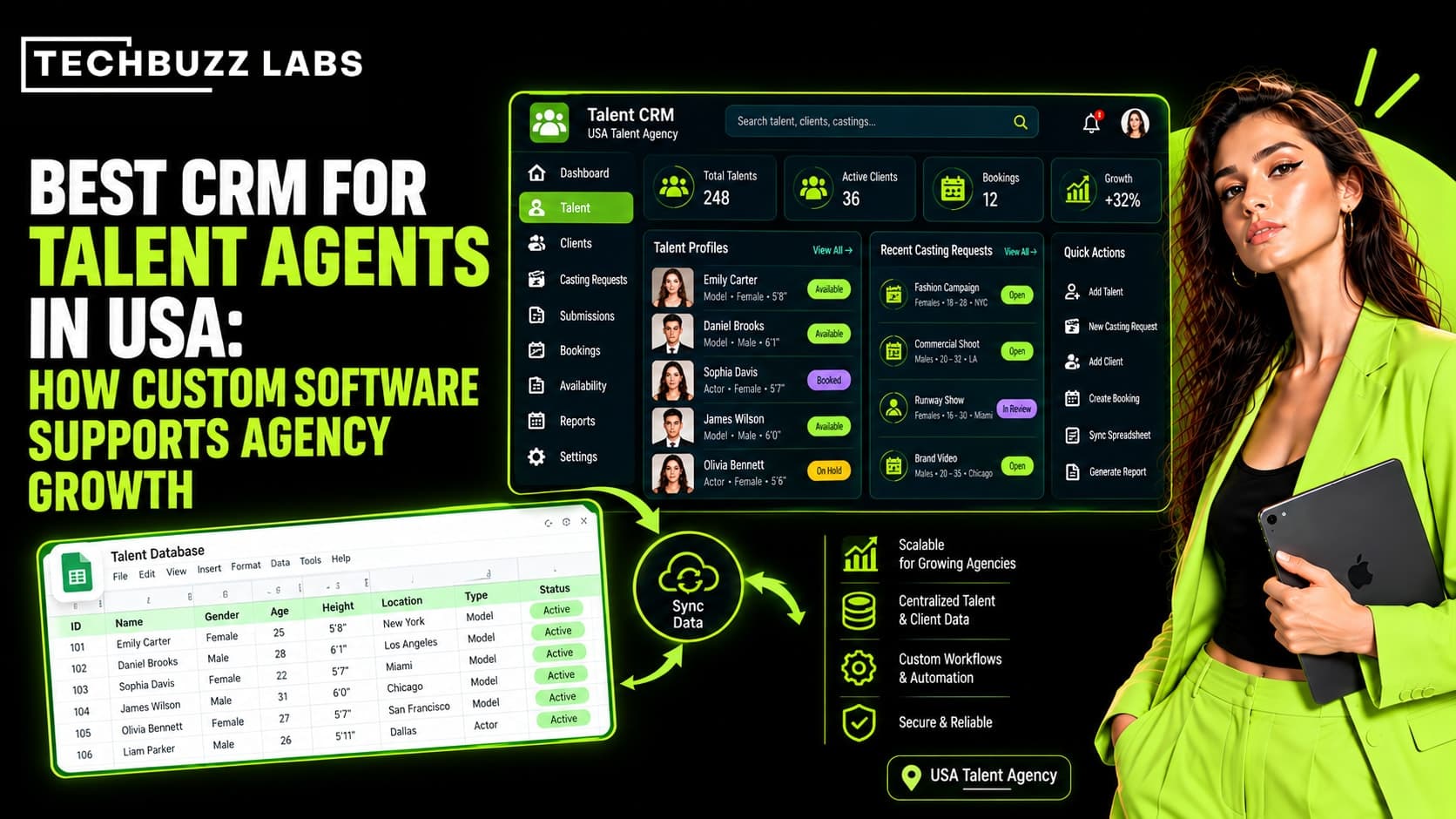
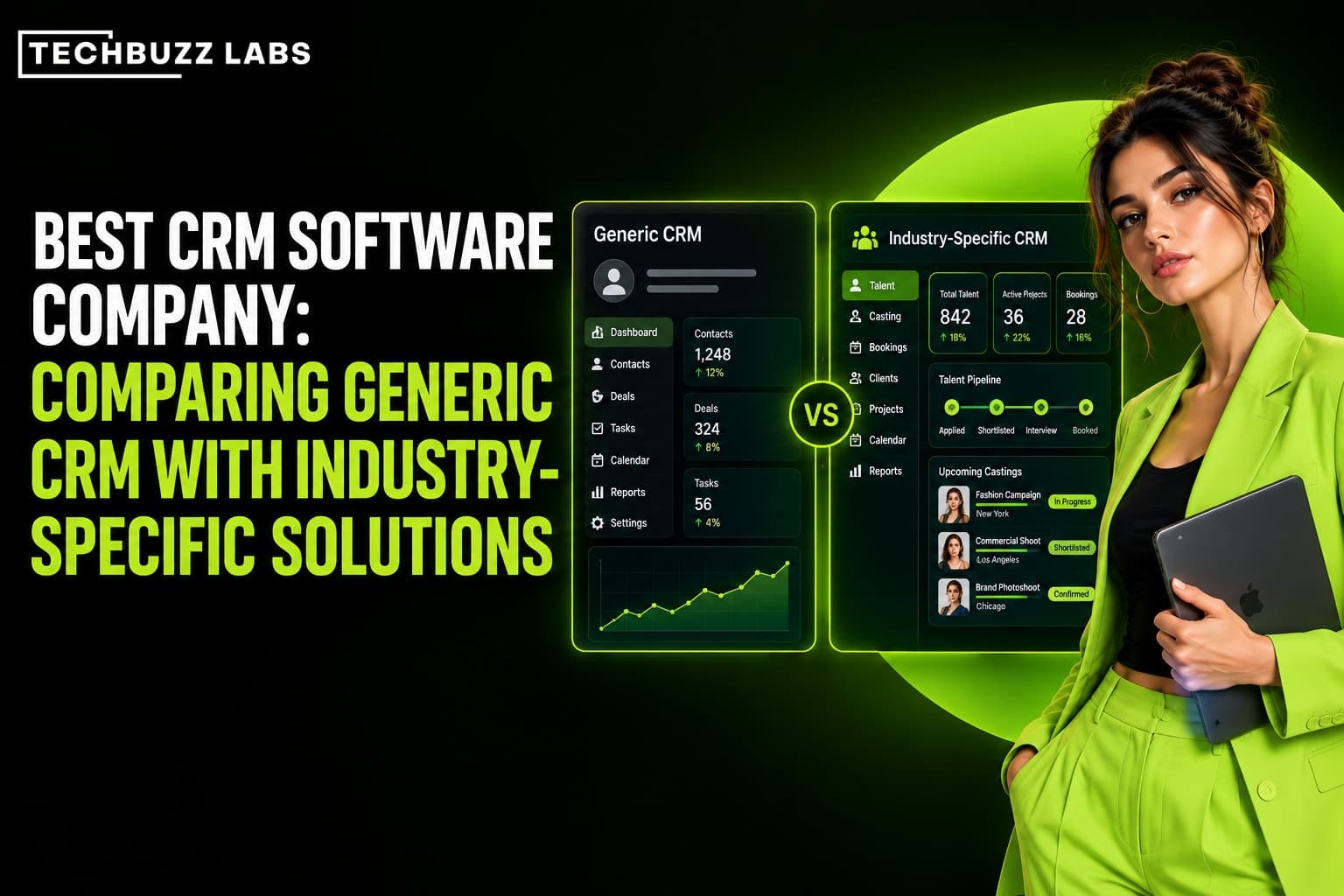
Best CRM Software Company for Talent, Casting, and Client Management
This makes the CRM more than a contact database. It becomes an operational system for managing the agency's relationships and activities.
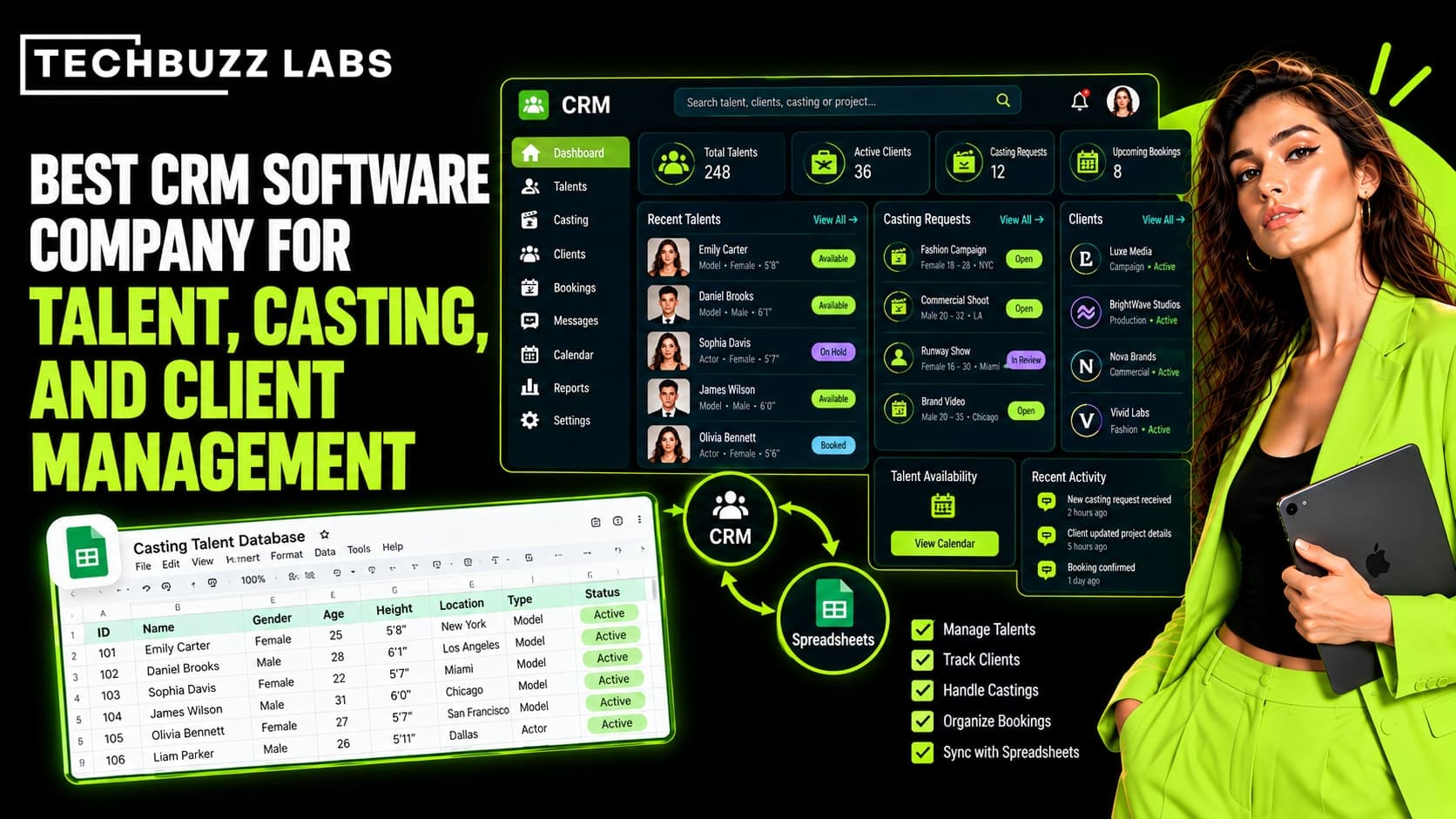
For modern talent and modeling agencies, managing talent and clients requires more than a basic contact management system. Agencies need to organize talent profiles, casting opportunities, client relationships, availability, submissions, bookings, and communication while keeping information accessible to the right team members.
This is why choosing the right CRM software company can be an important technology decision for a growing agency. A specialized CRM can connect talent management, casting operations, and client relationships within one centralized platform instead of forcing teams to work across spreadsheets, emails, messaging apps, and disconnected databases.
For agencies in the USA, particularly those managing large talent pools and multiple client projects, the right CRM can provide a structured foundation for daily operations.
What Is a CRM for Talent and Casting Agencies?
Traditional customer relationship management software is generally designed around businesses managing customers, sales opportunities, and communications.
Talent agencies have additional requirements.
Their CRM needs to manage two important sides of the business: talent and clients. At the same time, it needs to connect those relationships to casting opportunities and bookings.
A specialized agency CRM can connect model profiles, client requests, casting projects, availability, submissions, feedback, and bookings within a single workflow.
What Should a CRM Software Company Offer?
When evaluating a CRM software company, talent agencies should look beyond generic CRM features.
The platform should be capable of supporting the way an agency actually works. Important capabilities can include centralized talent management, advanced search, casting management, client relationship tools, availability tracking, submission management, booking workflows, automation, reporting, customization, and scalability.
The goal should be to create a connected workflow rather than add another disconnected application to the agency's technology stack.
Centralized Talent Management
A strong talent CRM should provide a centralized database for agency profiles.
A talent profile can include photographs, portfolio information, experience, skills, location, measurements, availability, previous bookings, and other professional information.
Centralizing this data makes it easier for agents to find the right talent when a new opportunity arrives.
As the roster grows, this becomes increasingly important. An agency managing hundreds or thousands of profiles needs a structured database rather than relying on individual spreadsheets or folders.
Advanced Talent Search and Filtering
A large database is only valuable if agents can quickly find relevant talent.
The CRM should provide search and filtering tools that allow agents to narrow profiles according to casting requirements.
For example, a client may need commercial models in Los Angeles with specific experience who are available on particular dates.
Instead of manually reviewing every profile, agents can use structured filters to identify suitable candidates and create a shortlist more efficiently.
This can help reduce search time while giving agents more organized access to the agency's talent pool.
Integrated Casting Management
Talent management and casting should not operate as completely separate processes.
When a client sends a casting request, the agency needs to capture project requirements, identify suitable talent, check availability, prepare submissions, and monitor the client's response.
A specialized CRM can connect these activities.
The workflow might move from:
Client Request → Casting Brief → Talent Search → Shortlist → Submission → Client Feedback → Selection → Booking
Keeping these stages connected helps teams understand the status of an opportunity without searching through multiple systems.
Client Relationship Management
Talent agencies also need strong client management capabilities.
Clients may include fashion brands, advertising agencies, production companies, photographers, retailers, entertainment businesses, and other organizations.
A centralized client record can store contact information, previous projects, communication history, preferences, casting activity, and booking history.
When a returning client sends a new request, agents can review previous interactions and project information before responding.
This provides useful context for managing ongoing business relationships.
Managing Talent Availability
Availability is one of the most important connections between talent management and casting.
A model may match a client's requirements but already have another booking during the requested dates.
A CRM should therefore make availability information easy to access alongside talent profiles and casting opportunities.
When availability is connected to the broader workflow, agents can make more informed decisions before submitting talent to clients.
This can also reduce unnecessary communication and prevent avoidable scheduling conflicts.
Submission and Client Feedback Tracking
Submitting talent is not the end of the casting process.
Agencies need to know what happens after submission.
A CRM can help teams track which talent was submitted, which profiles were reviewed, which candidates were shortlisted, and which received client approval.
Client feedback can also remain connected to the relevant casting project.
This is particularly useful when clients request additional options or changes to the original brief. Instead of rebuilding the project record, the team can continue working from the existing workflow.
Connecting Casting With Bookings
A modern talent CRM should also connect successful casting decisions with booking management.
Once a client selects a model or other talent, the agency may need to confirm dates, rates, schedules, usage requirements, and other project details.
If booking information is stored separately, agents may need to manually transfer information from the casting system.
A connected CRM can help maintain continuity between the original client request, submitted talent, final selection, and booking.
This creates a clearer record of the complete client and talent relationship.
Automation for Repetitive Agency Tasks
Automation can also play an important role.
Talent agencies perform many repetitive activities, including reminders, availability requests, notifications, follow-ups, status updates, and internal workflow tasks.
A CRM can automate selected administrative processes while leaving important decisions to agency professionals.
The objective is not to remove the human side of talent management. Instead, automation can reduce repetitive work so agents can spend more time on talent relationships, client communication, and business development.
Reporting and Agency Visibility
A CRM software company should also provide useful reporting and dashboards.
Managers may want to understand how many casting projects are active, how many submissions are awaiting responses, which clients are generating opportunities, and where projects are slowing down.
Structured CRM data can make these patterns easier to identify.
For example, agencies can analyze casting and booking activity to understand which types of opportunities generate results and where improvements may be needed. TechBuzzLabs has also highlighted how structured casting data can help agencies turn everyday activity into useful business insights.
Customization and Scalability
Every talent agency has a different workflow.
A fashion modeling agency may have different requirements from a commercial talent agency, casting company, or agency representing actors and influencers.
This makes customization important.
A CRM should ideally allow an agency to configure relevant fields, workflow stages, user permissions, dashboards, and processes around its actual operations.
Scalability is equally important. The system should be capable of supporting a growing talent database, additional clients, more users, and increasing casting activity.
Security and Data Management
Talent agencies manage valuable business and professional information.
Talent profiles, photographs, contact information, client records, project details, and availability all need to be handled responsibly.
When evaluating a CRM software company, agencies should consider access controls, user permissions, data management, backups, and other security-related capabilities.
Different employees may need different levels of access, so appropriate permissions can help agencies control how information is viewed and managed.
Why TechBuzzLabs Is Relevant
TechBuzzLabs focuses on technology solutions for modeling and talent agencies, including CRM, casting management, talent management, workflow automation, and connected agency systems.
Its approach focuses on bringing talent, clients, casting opportunities, availability, submissions, and bookings into a more centralized workflow.
For agencies that have outgrown spreadsheets and disconnected applications, this approach can provide a more structured way to manage daily operations.
TechBuzzLabs also offers a custom approach, allowing technology to be built around an agency's specific workflow rather than requiring every agency to operate in exactly the same way.
How to Evaluate a CRM Software Company
Before selecting a CRM provider, agencies should consider several practical questions.
Can the platform manage both talent and clients? Can agents search the talent database quickly? Does casting connect with talent profiles and availability? Can submissions and client feedback be tracked? Does the system support booking workflows? Can repetitive tasks be automated? Are reporting and dashboards available? Can the platform be customized as the agency grows?
Ease of use should also be considered.
A CRM may contain many features, but if agents find it difficult to use, adoption across the organization can become challenging. The best technology fit depends on the agency's workflow, team structure, requirements, and future plans.
Final Thoughts
The role of a CRM software company for talent agencies goes beyond providing a traditional customer database.
Modern agencies need technology that can connect talent, casting, clients, availability, submissions, communication, and bookings within a structured workflow.
A specialized CRM can help agencies organize growing talent pools, maintain better client information, reduce repetitive administrative tasks, and gain clearer visibility into active opportunities.
For talent and modeling agencies considering new technology, the key is to evaluate how well a CRM fits the complete agency workflow rather than focusing only on individual features.
TechBuzzLabs provides a technology-focused approach for agencies looking to connect talent management, casting, client management, and booking operations within a more centralized and scalable system.