How to Build a Booking System for Your Business Without Hiring Developers
In 2026, businesses across the United States are automating scheduling and bookings faster than ever. Customers expect convenience, instant confirmation, and smooth online experiences.
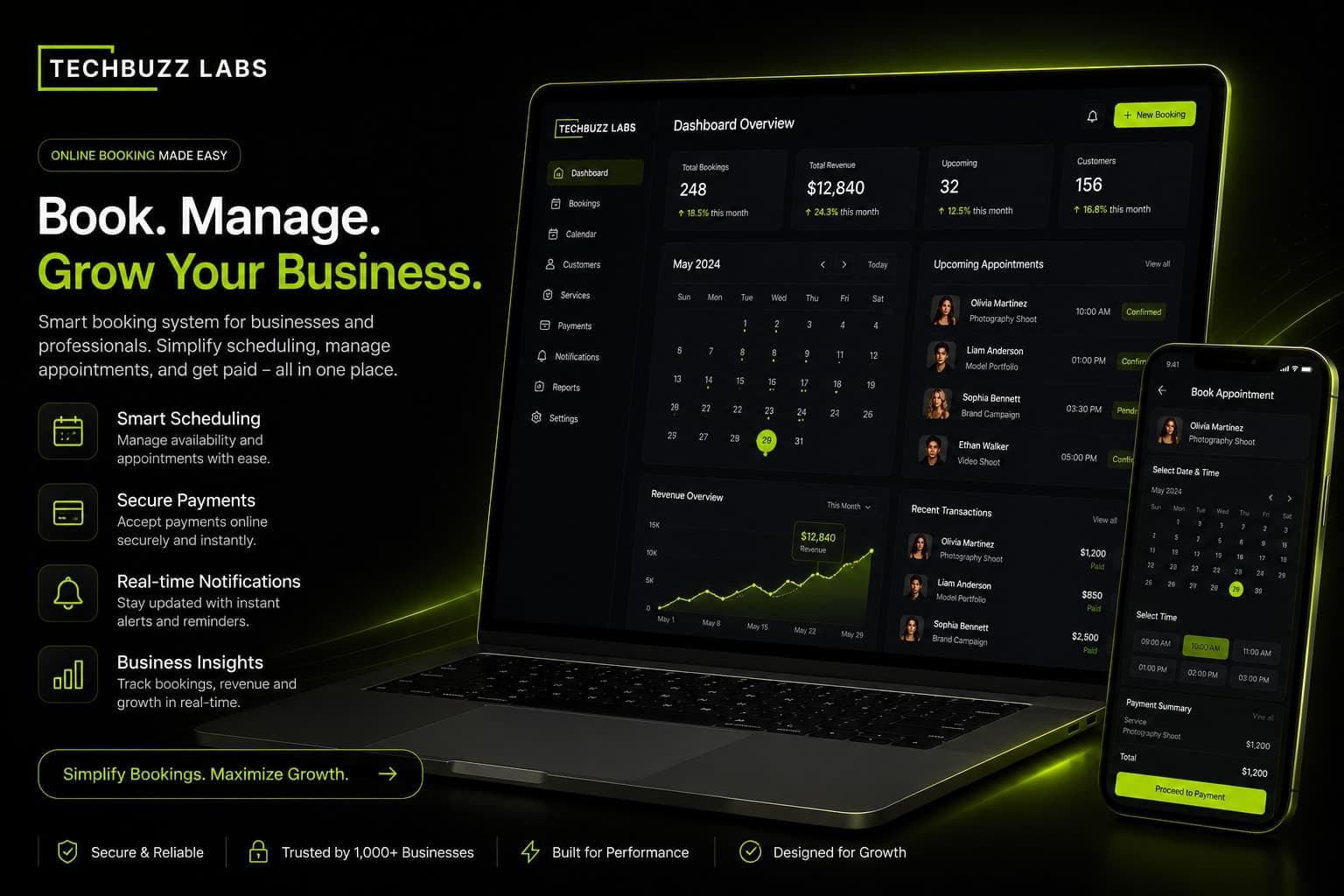
In 2026, businesses across the United States are automating scheduling and bookings faster than ever. Customers expect convenience, instant confirmation, and smooth online experiences.
For many small businesses, the challenge is not understanding the need for a booking system.
The challenge is cost.
Traditional software development can be expensive and time consuming. But modern no code tools have changed the landscape completely.
Today, businesses can build custom booking systems without hiring developers.
The first step is defining the workflow.
You need to understand how bookings move through your business. This includes appointment selection, customer details, confirmations, cancellations, and reminders.
The second step is choosing a no code platform.
Modern visual builders allow businesses to create booking systems using drag and drop interfaces instead of programming.
The third step is building the database.
Your booking system needs structured information such as customer profiles, service categories, availability, and booking history.
The fourth step is setting up automation.
A strong booking system should automatically send confirmations, reminders, and updates to customers. This improves customer experience while reducing manual work.
The fifth step is payment integration.
Businesses in the USA increasingly expect online payments during the booking process. Integrating payment tools simplifies operations and improves conversion rates.
Another important factor is mobile experience.
Most users now book services from smartphones. Your system must work smoothly on mobile devices.
One of the biggest advantages of no code development is speed.
Businesses can launch systems in weeks instead of months.
In 2026, small businesses no longer need large budgets to build professional systems.
The tools are more accessible than ever.
The businesses that adapt quickly are the ones improving efficiency and customer satisfaction.