How to Automate Your Sales Pipeline Using a Custom CRM Built on Bubble
In 2026, businesses across the United States are realizing that spreadsheets and disconnected tools are slowing down sales growth.
In 2026, businesses across the United States are realizing that spreadsheets and disconnected tools are slowing down sales growth. Companies handling leads manually often struggle with inconsistent follow ups, poor visibility, and lost opportunities.
This is why custom CRM systems built on Bubble are becoming increasingly popular.
Bubble allows businesses to create fully customized sales pipelines without traditional coding, making automation far more accessible for startups and growing teams.
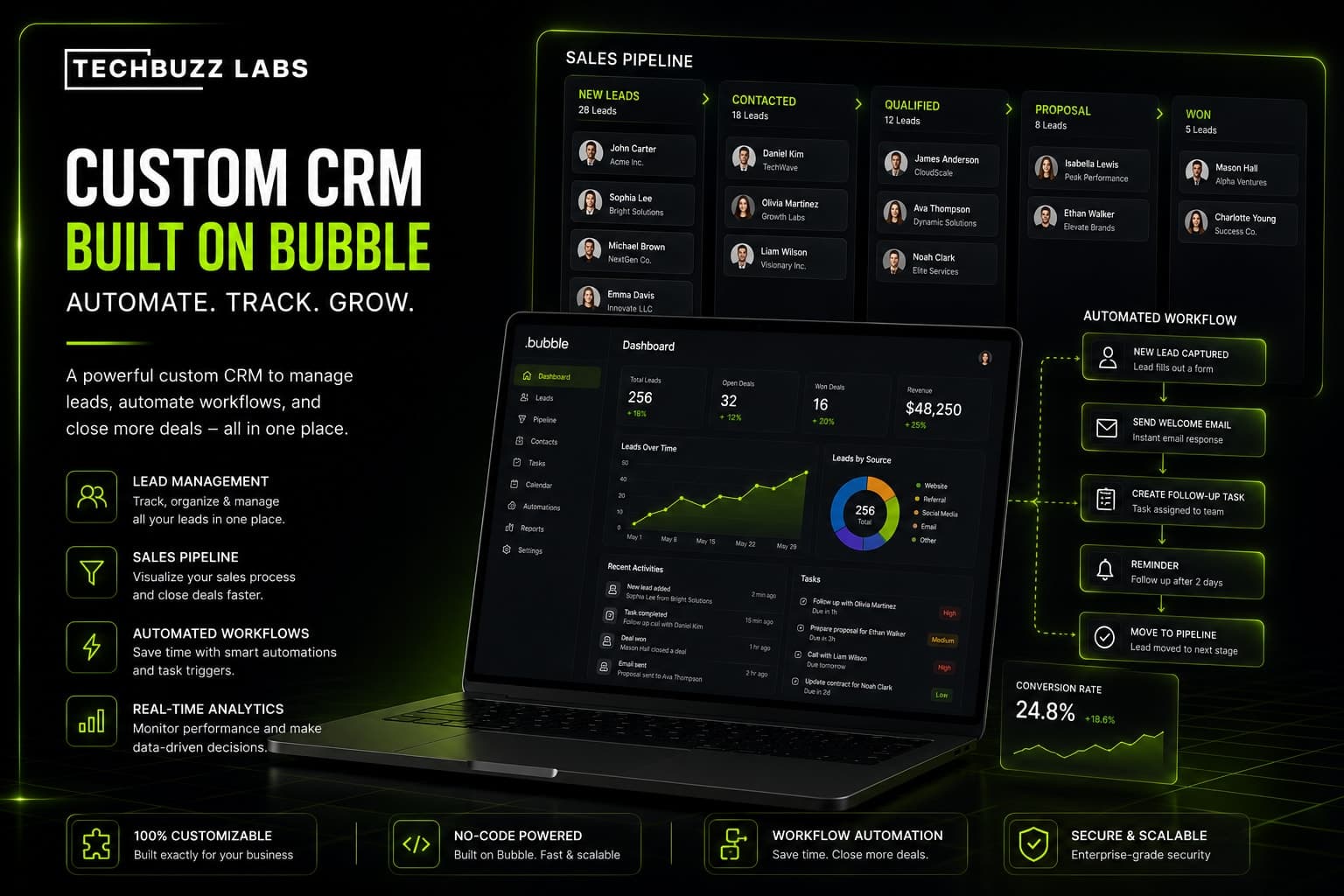
The first step in building an automated sales pipeline is mapping the customer journey.
Businesses need to define how leads enter the system, move through stages, and convert into customers.
The second step is creating a centralized CRM database.
This stores lead information, communication history, deal stages, and sales activity in one location.
The third step is automation.
Modern CRMs built on Bubble can automatically assign leads, trigger follow up emails, schedule reminders, and update deal statuses based on customer actions.
This dramatically reduces manual workload for sales teams.
The fourth step is pipeline visibility.
Dashboards help businesses track conversion rates, bottlenecks, and sales performance in real time.
Another major advantage is integration.
Bubble based CRMs can connect with forms, payment tools, calendars, and communication platforms to create a smoother workflow.
In 2026, speed and consistency are critical for sales growth.
Businesses that automate repetitive processes respond faster, follow up more consistently, and improve customer experience.
Custom CRM development is no longer limited to enterprise companies.
No code tools now allow startups and small businesses to build operational systems tailored specifically to how they sell.