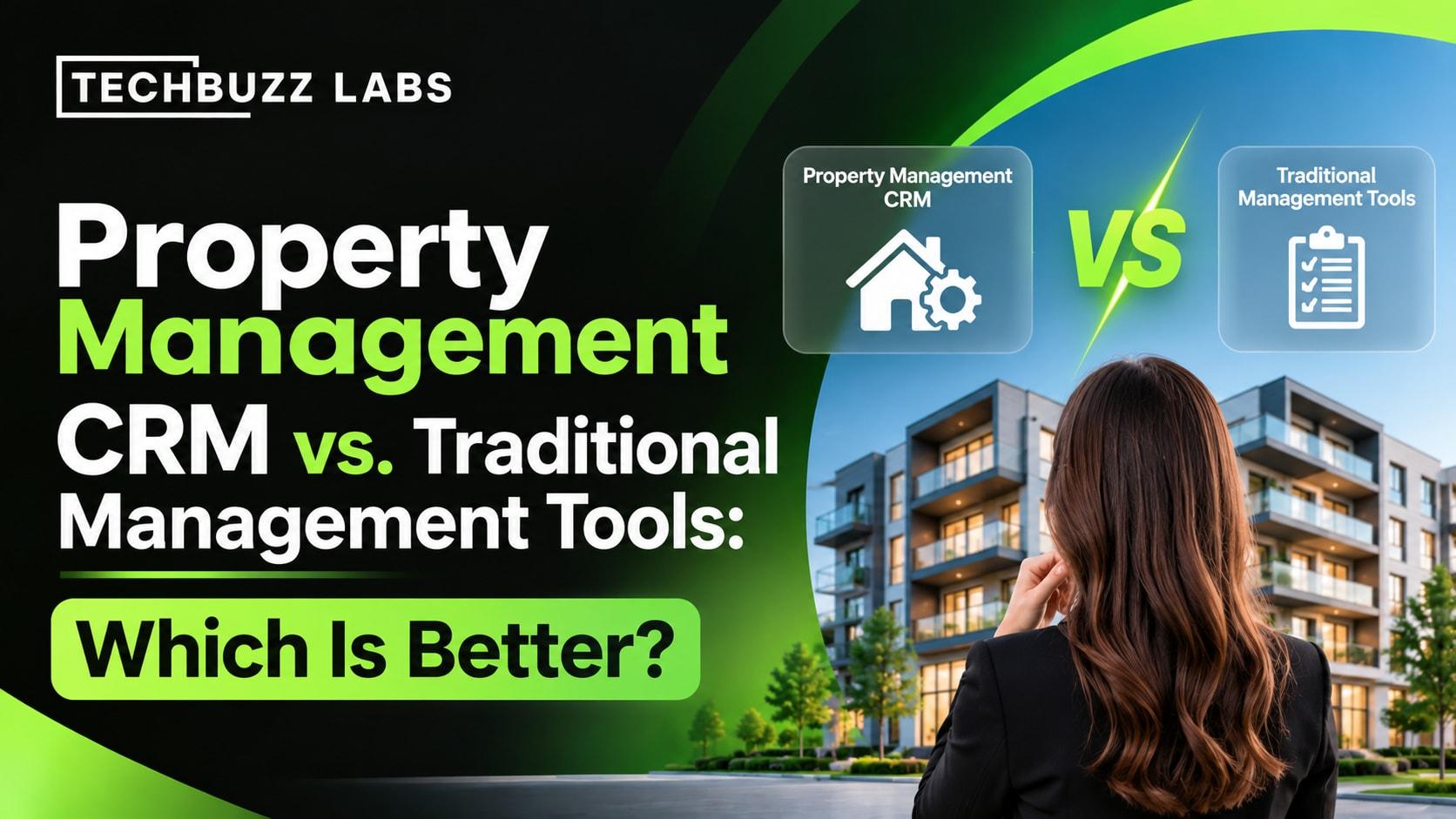
Property Management CRM vs. Traditional Management Tools: Which Is Better?
But which option is better for a growing real estate business? Let's compare property management CRM software with traditional management tools.
Managing rental properties requires coordination between tenants, property owners, maintenance teams, vendors, and employees. For real estate businesses in the United States, keeping everything organized becomes increasingly challenging as property portfolios expand.
Many property managers still rely on traditional tools such as spreadsheets, email, phone calls, and separate accounting applications. While these tools can handle basic administrative tasks, they often create problems when businesses need to manage multiple properties and large numbers of tenants.
Property management CRM software offers a more centralized approach. It combines property records, tenant communication, rental payments, maintenance workflows, and reporting into one platform.
What Are Traditional Property Management Tools?
Traditional property management tools are basic applications and manual systems used to manage rental operations.
These may include Excel or Google Sheets for tenant records, email for communication, accounting software for financial tracking, and phone calls for maintenance coordination.
Some businesses also use paper-based documents to manage lease agreements, payment records, and property information.
Although these tools are familiar and often inexpensive to start with, they usually operate independently. This means property managers must manually transfer information between applications and maintain multiple records.
What Is Property Management CRM Software?
Property management CRM software is a centralized digital solution designed specifically for managing real estate operations and customer relationships.
It helps property managers organize tenant information, property details, lease agreements, maintenance requests, rental payments, and business communications.
Instead of switching between different applications, employees can access essential information through a single system.
Modern CRM platforms may also include automated notifications, tenant portals, financial dashboards, lead management, and integrations with third-party applications.
Property Management CRM vs. Traditional Tools: Key Differences
Understanding the differences between these approaches can help real estate businesses choose the right solution.
1. Data Management and Organization
Traditional Tools:
Traditional systems often store information across multiple spreadsheets, documents, and email accounts. Employees may need to search through different files to find tenant details, lease information, or property records.
This can create duplicate records and increase the possibility of outdated information.
Property Management CRM:
A CRM centralizes property and tenant information in one organized database. Authorized employees can access rental histories, contact details, lease records, and maintenance information more easily.
Winner: Property Management CRM
Centralized data management is particularly valuable for companies managing multiple rental properties.
2. Tenant Communication
Traditional Tools:
Property managers generally communicate through phone calls, emails, and text messages. Although these methods work for basic conversations, tracking previous discussions can become difficult.
Important messages may get buried in inboxes or overlooked.
Property Management CRM:
CRM platforms can organize communication histories, automate notifications, and provide tenant portals. Residents can submit requests, access documents, and receive important updates.
Winner: Property Management CRM
A centralized communication system helps businesses provide more consistent tenant support.
3. Rent Collection and Payment Tracking
Traditional Tools:
Traditional payment management often involves manually recording transactions, checking bank statements, and sending payment reminders.
These processes can consume time and increase the risk of administrative mistakes.
Property Management CRM:
Modern platforms can integrate online payment systems, track rental transactions, send automated reminders, and monitor outstanding balances.
Property managers can review payment histories without manually updating multiple spreadsheets.
Winner: Property Management CRM
Automation and centralized financial records make rental payment management more efficient.
4. Maintenance Request Management
Traditional Tools:
Maintenance requests are often received through phone calls, emails, or messages. Managers must manually contact vendors, schedule repairs, and update tenants.
Without an organized tracking system, requests can be delayed or forgotten.
Property Management CRM:
A CRM can provide digital maintenance request forms, work order creation, vendor assignment, repair status tracking, and maintenance history.
This makes it easier to monitor service requests from submission to completion.
Winner: Property Management CRM
Organized maintenance workflows help improve response times and property management operations.
5. Automation and Productivity
Traditional Tools:
Most traditional management processes require employees to perform repetitive activities manually. Sending reminders, updating records, scheduling follow-ups, and preparing reports can take considerable time.
Property Management CRM:
CRM software can automate recurring tasks such as lease expiration reminders, rent notifications, maintenance updates, and lead follow-ups.
This reduces administrative workload and allows employees to focus on important business activities.
Winner: Property Management CRM
Automation becomes increasingly valuable as the number of properties and tenants grows.
6. Reporting and Business Insights
Traditional Tools:
Businesses using spreadsheets and separate applications often need to collect information manually before preparing reports.
This makes it harder to understand property performance and identify operational problems quickly.
Property Management CRM:
CRM dashboards can provide centralized reports about occupancy, rental income, outstanding payments, maintenance expenses, and tenant activity.
These insights help business owners make informed decisions and identify opportunities for improvement.
Winner: Property Management CRM
Better reporting provides greater visibility into business performance.
7. Cost and Implementation
Traditional Tools:
Basic spreadsheets, email applications, and standard office software may have relatively low initial costs. Small property managers with only a few units may find these tools sufficient.
Property Management CRM:
CRM platforms may involve subscription fees, implementation expenses, training, and integration costs. However, they can reduce manual work and the need for multiple disconnected applications.
Winner: Depends on Business Requirements
Traditional tools may be suitable for very small operations, while CRM software can offer greater long-term value for expanding businesses.
Comparison Table: CRM Software vs. Traditional Tools
FeaturesTraditional ToolsProperty Management CRMData managementMultiple filesCentralized databaseTenant communicationManualOrganized and automatedRent collectionManual trackingPayment integrationMaintenanceEmail and phoneDigital work ordersAutomationLimitedAdvanced workflowsReportingManual reportsCentralized dashboardsScalabilityLimitedDesigned for growthInitial costUsually lowerVaries by platformIntegrationsOften disconnectedMultiple integrations
Why Growing Real Estate Businesses Are Choosing CRM Software
As property management companies expand, their operational requirements become more complex. Managing additional tenants, properties, maintenance requests, and rental payments through disconnected tools can increase administrative pressure.
Property management CRM software helps businesses create standardized workflows and improve coordination between departments.
For US real estate businesses, these platforms can also support multi-location operations, centralized financial tracking, and more organized tenant communication.
The ability to access information remotely through cloud-based platforms makes CRM software particularly useful for property managers handling properties across different cities and states.
How Techbuzz Labs Helps Businesses Build Custom Property Management CRM Solutions
Not every real estate business operates in the same way. Some companies manage residential rentals, while others specialize in commercial buildings, property portfolios, or multi-location rental operations.
Techbuzz Labs helps businesses explore custom software development solutions based on their operational requirements.
A custom property management CRM can combine tenant management, property databases, lease tracking, rental payment workflows, maintenance coordination, and reporting into one centralized platform.
Businesses can also incorporate custom dashboards, automated notifications, role-based access, and integrations with accounting and payment applications.
Rather than depending entirely on disconnected traditional tools, companies can explore a centralized software solution that supports their existing processes and future expansion.
When Should You Switch From Traditional Tools to CRM Software?
Switching to property management CRM software becomes worth considering when your existing tools can no longer support daily operations efficiently.
Here are some common signs:
Your business manages multiple properties and locations.
Employees spend too much time updating spreadsheets.
Tenant communication is difficult to track.
Rent collection and payment monitoring require manual work.
Maintenance requests frequently need follow-ups.
Preparing financial and operational reports takes too long.
Your company plans to expand its property portfolio.
If several of these challenges sound familiar, a dedicated CRM platform may provide a more organized approach.
Conclusion
Both property management CRM software and traditional management tools have their place in the real estate industry. Traditional tools can be sufficient for small property portfolios with simple requirements and limited administrative workloads.
However, CRM software offers more advanced capabilities for managing tenants, properties, rental payments, maintenance requests, communication, and reporting.
For growing real estate businesses in the USA, a centralized CRM solution can improve productivity, reduce repetitive tasks, and support long-term expansion.
Whether you choose an existing CRM platform or explore custom development with Techbuzz Labs, the right solution should match your business needs and make property management easier as your company grows.