When Should You Switch From No Code to Custom Code An Honest Guide for 2026
In 2026, thousands of startups in the United States are launching products faster than ever using no code platforms. These tools have transformed how founders build MVPs, automate workflows, and test business ideas.
In 2026, thousands of startups in the United States are launching products faster than ever using no code platforms. These tools have transformed how founders build MVPs, automate workflows, and test business ideas.
But one important question continues to come up.
When should a startup move from no code to custom development?
The answer depends on growth, complexity, and business goals.
No code platforms are ideal for early stage development. They allow founders to validate ideas quickly without large engineering costs.
For MVPs, internal tools, marketplaces, and workflow apps, no code is often more than enough.
The biggest advantage is speed.
Founders can launch products in weeks instead of spending months on development.
However, no code platforms also have limitations.
As products grow, performance requirements increase. Complex workflows, advanced integrations, and large user bases may create challenges that require custom development.
One sign it may be time to switch is scalability issues.
If your platform struggles with speed, database performance, or growing traffic, custom infrastructure may become necessary.
Another sign is feature complexity.
If your product requires advanced backend logic, custom AI systems, or highly specialized functionality, traditional development offers more flexibility.
Cost is another factor.
In early stages, no code is far more affordable. But as businesses scale, long term platform costs can increase.
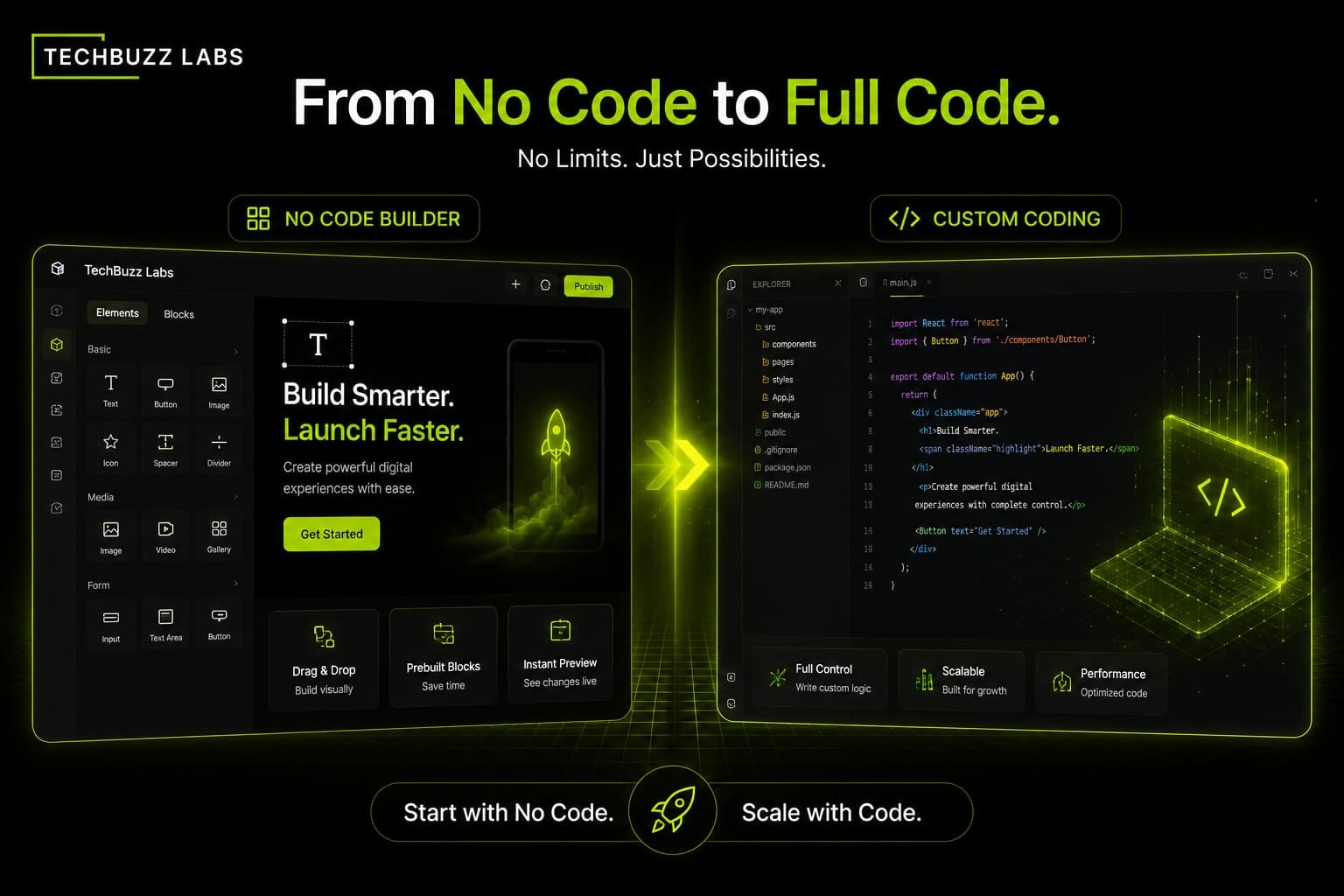
The smartest approach in 2026 is not viewing no code and custom code as opposites.
They are stages.
Many successful startups begin with no code, validate the market, generate revenue, and then gradually move critical systems into custom infrastructure.
The key is timing.
Switch too early and you waste resources.
Switch too late and growth becomes difficult.
The goal is building the right system for your current stage, not chasing trends.