Why 42% of Startups Fail and How Validating Your MVP First Changes Everything
Startup failure is not new. But in 2026, the reasons behind it are clearer than ever. Across the United States startup ecosystem, a large percentage of founders fail not because of poor execution, but because they build products that people do not need.
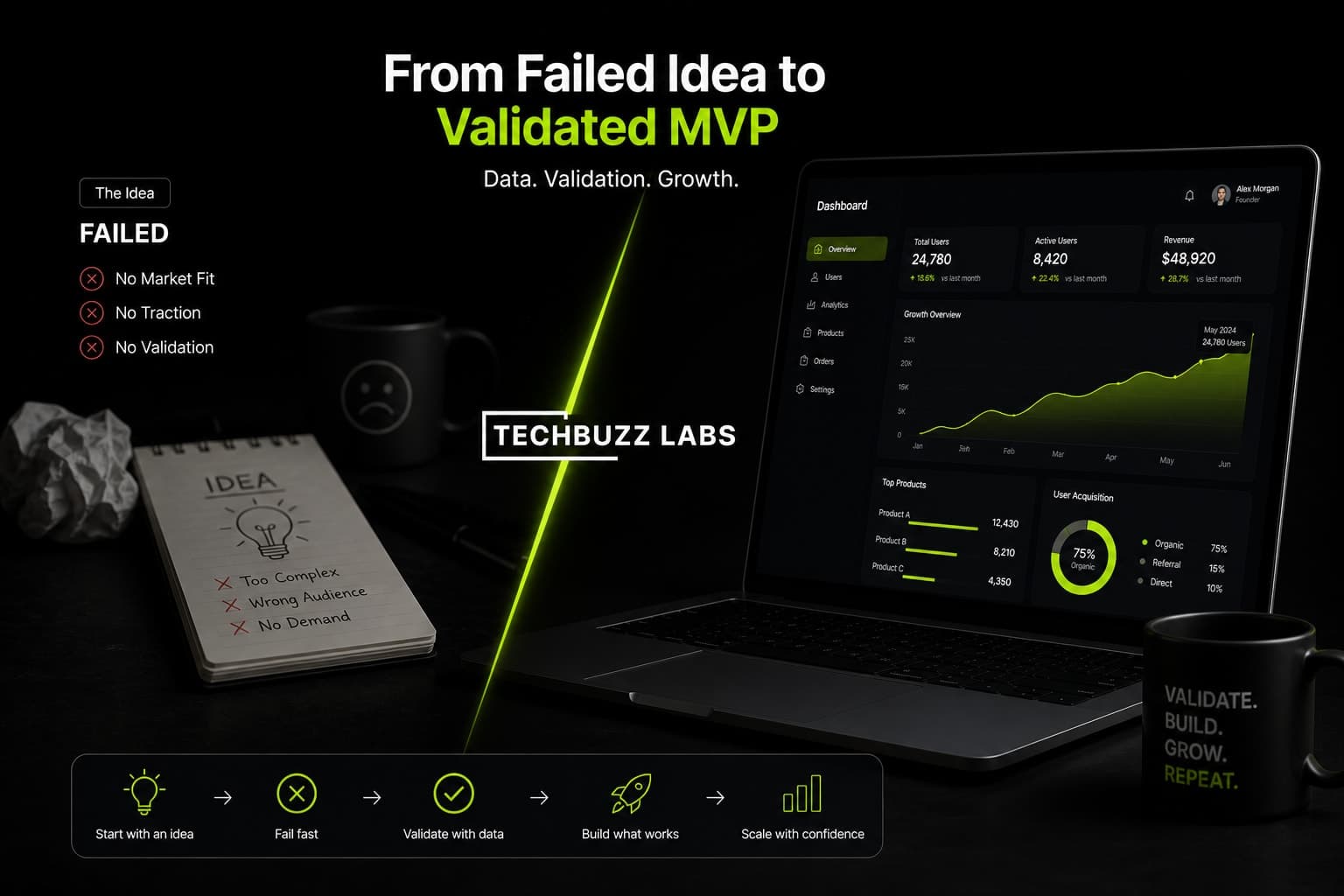
Startup failure is not new. But in 2026, the reasons behind it are clearer than ever.
Across the United States startup ecosystem, a large percentage of founders fail not because of poor execution, but because they build products that people do not need.
One of the most cited reasons for startup failure is lack of market demand. Many founders spend months developing a product without confirming whether users actually want it.
This is where MVP validation becomes critical.
An MVP is a minimum viable product designed to test a business idea with the least amount of effort and cost. The goal is not perfection. The goal is proof.
Validating your MVP means confirming that your idea solves a real problem for a specific audience.
The first step in validation is problem clarity. You need to define exactly what issue your product is solving and who experiences it. Vague ideas rarely succeed.
The second step is audience research. Look at how people currently solve this problem. Analyze competitors, read reviews, and study user behavior.
The third step is creating a simple landing page. This page should clearly explain your product and include a call to action such as joining a waitlist or requesting early access.
If users sign up, it indicates interest. If they do not, it shows that the idea needs adjustment.
Another effective method is pre selling. Offering early access or discounted pricing before the product is built is one of the strongest validation signals.
No code tools have made this process easier. Founders can now build prototypes, mockups, and basic workflows without writing code. This allows for faster testing and iteration.
The biggest advantage of validation is risk reduction. Instead of investing heavily in development, you test the idea first.
In 2026, successful founders in the USA are not the ones who build the fastest. They are the ones who validate the smartest.
A validated idea has direction, clarity, and a higher chance of success.