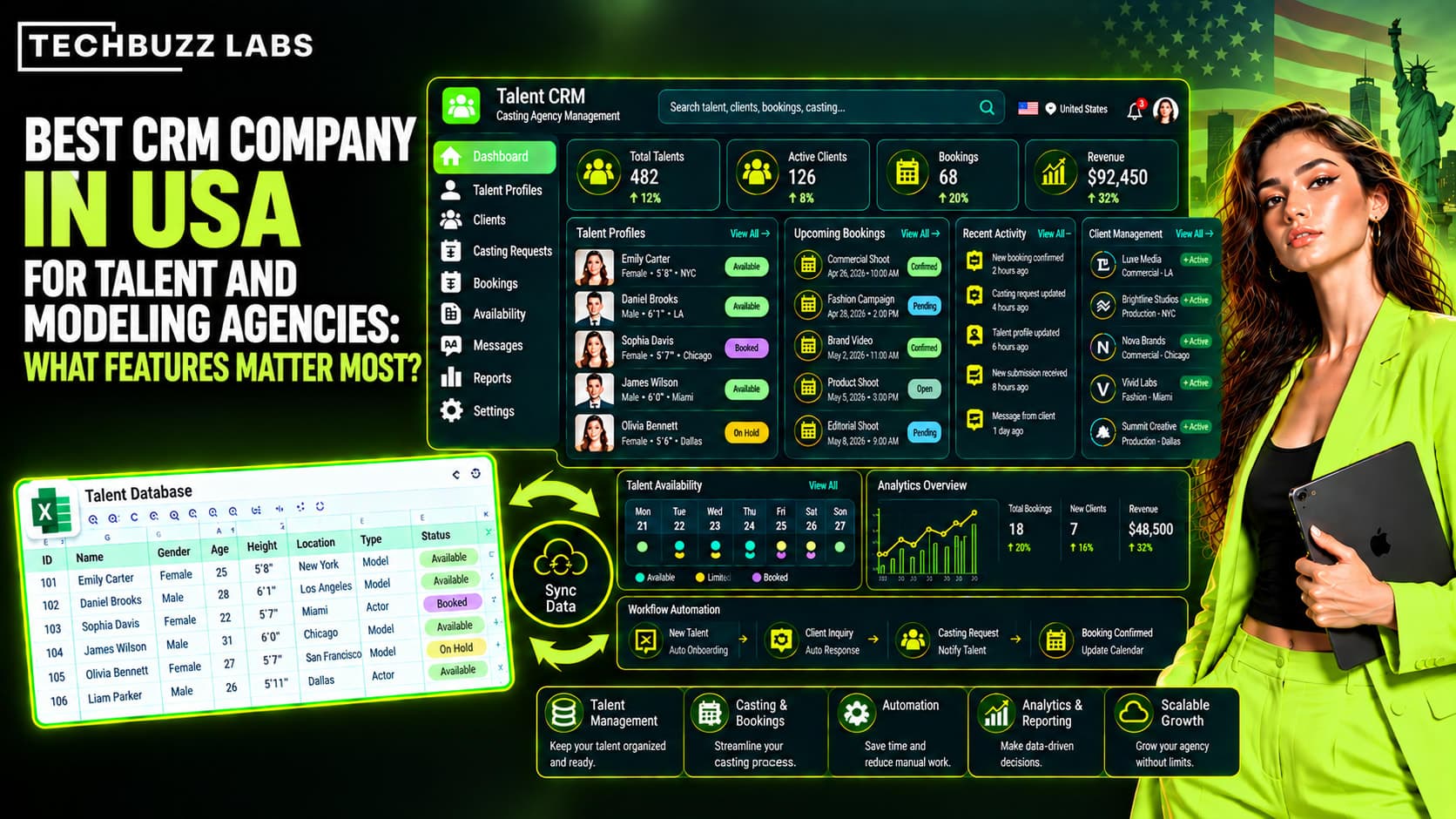
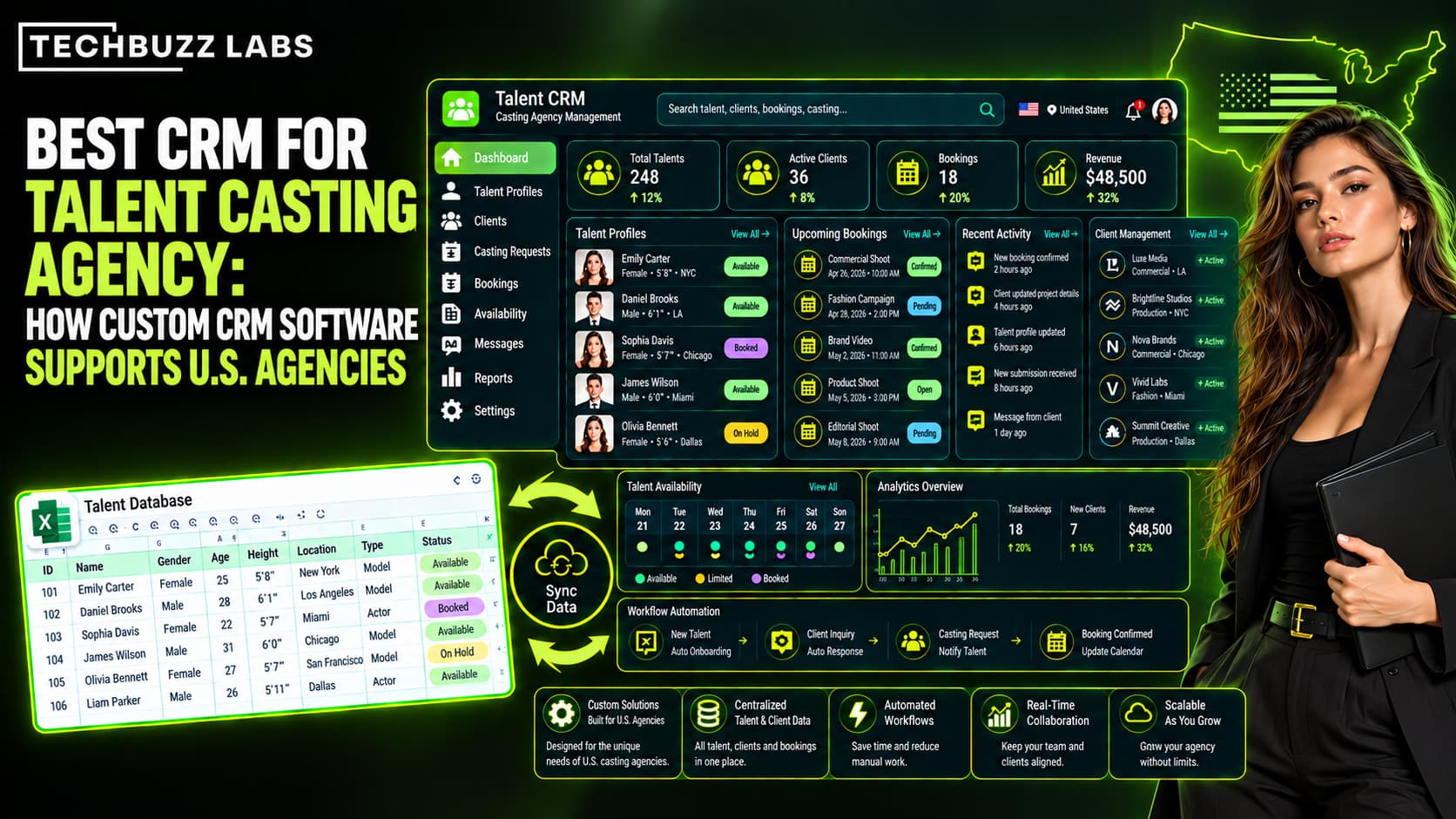
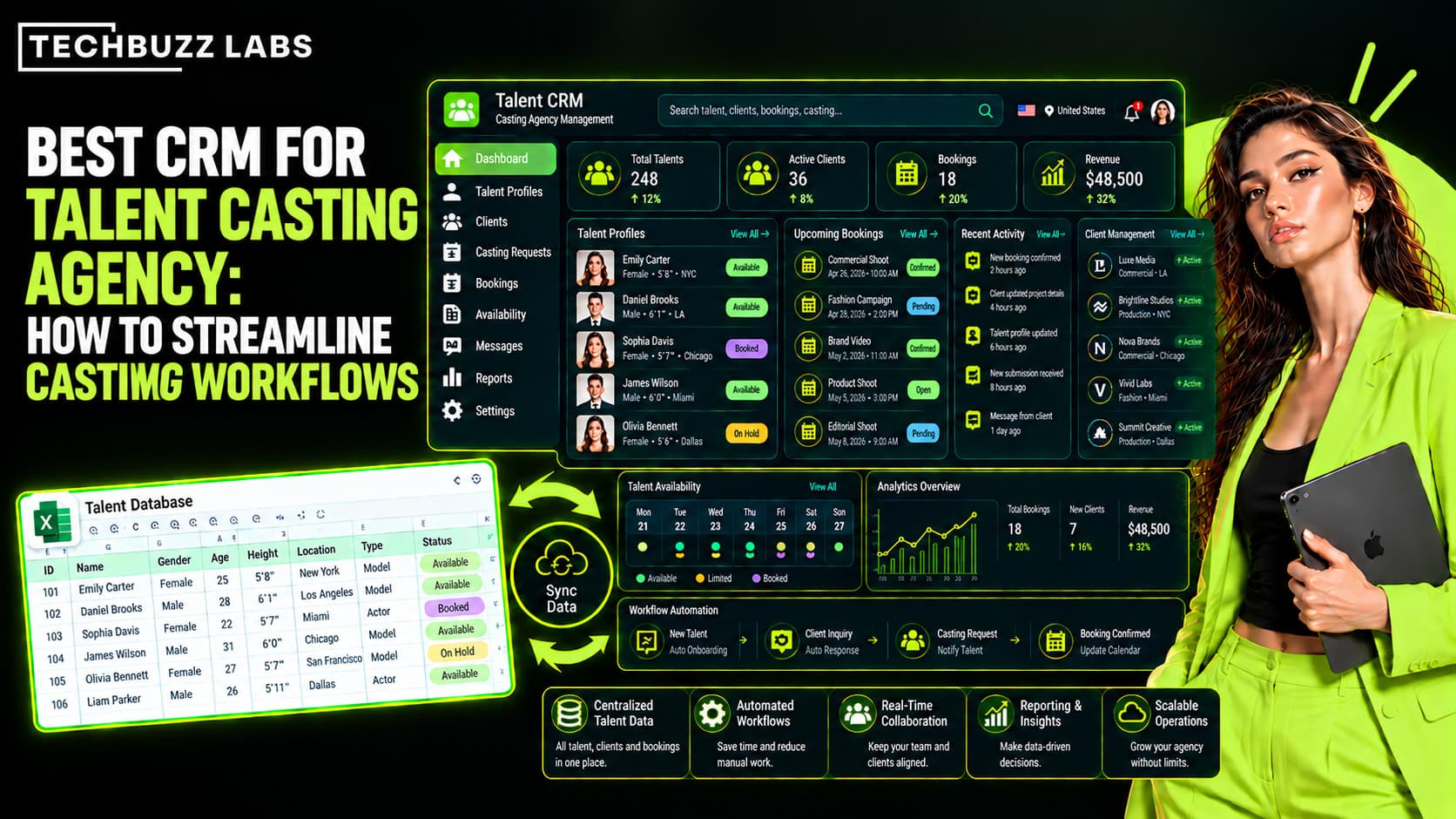
Best CRM for Modeling Agencies: Features Every Agency Needs
Instead of keeping information across spreadsheets, email threads, cloud folders, and messaging applications, an agency can use one centralized system to organize important information.
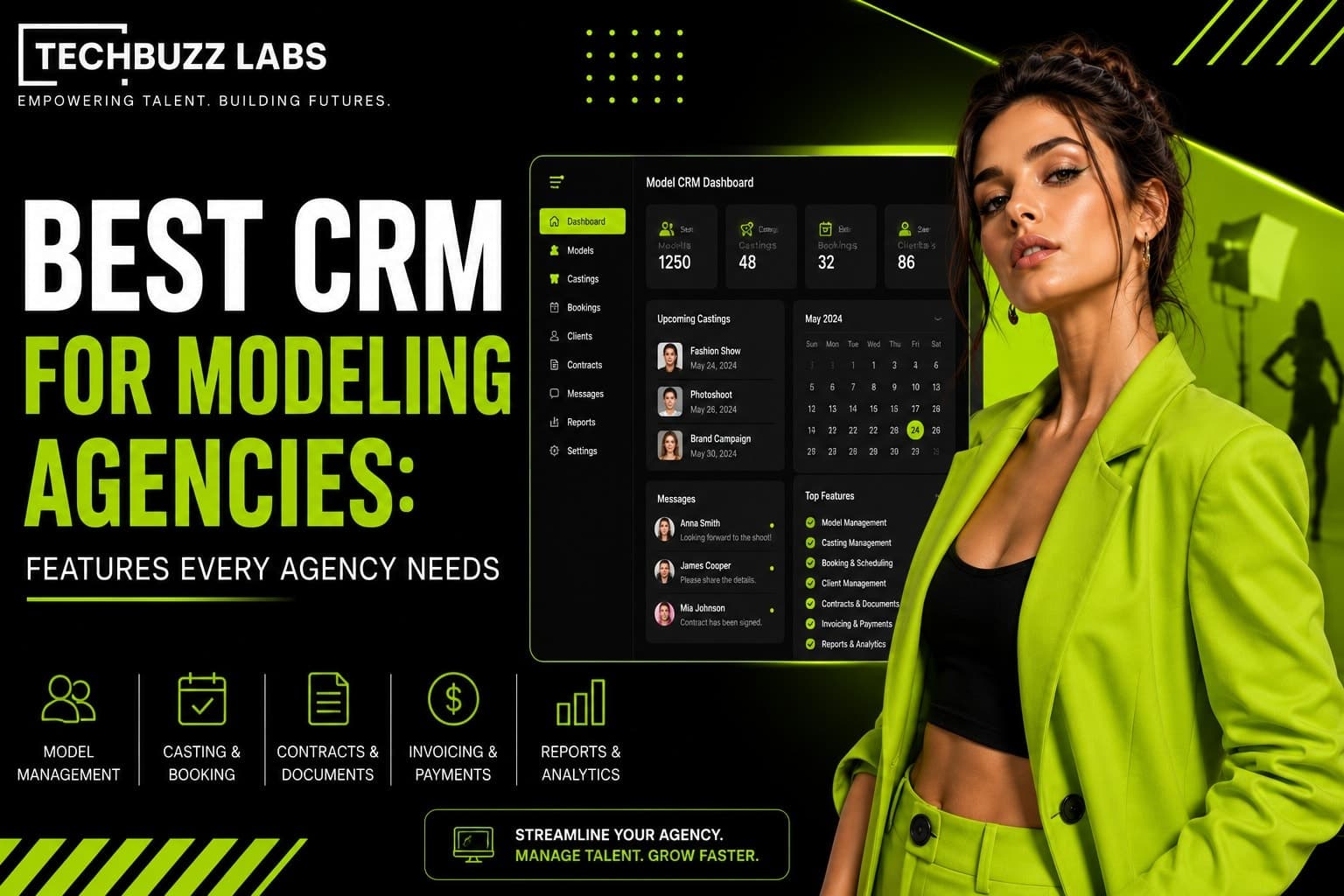
Managing a modern modeling agency involves much more than finding talented models. Agencies need to manage model profiles, client relationships, casting calls, bookings, schedules, communications, payments, and large amounts of data. As an agency grows, spreadsheets, emails, and disconnected systems can make these tasks increasingly difficult.
This is where a CRM for modeling agencies can make a significant difference. A specialized CRM system brings important agency information into one centralized platform, helping teams organize talent, clients, castings, and bookings more efficiently.
For modeling agencies in the USA, choosing the right CRM can improve daily operations, reduce administrative work, and create a more professional experience for both models and clients. TechBuzzLabs recognizes the growing importance of technology in the modeling and casting industry, making CRM solutions an important consideration for agencies looking to modernize their operations.
What Is a CRM for Modeling Agencies?
A CRM, or Customer Relationship Management system, is software designed to organize and manage relationships with clients and contacts. For modeling agencies, a CRM can go beyond traditional customer management by helping teams manage models, talent profiles, casting opportunities, bookings, and client requirements.
This makes it easier for agency staff to find the right model, track opportunities, communicate with clients, and monitor ongoing bookings.
1. Centralized Model Profiles
One of the most important features of a modeling agency CRM is centralized model management.
The system should allow agencies to create detailed profiles containing information such as:
Model photographs
Measurements
Skills
Experience
Location
Availability
Portfolio information
Contact details
Previous bookings
Having this information in one place makes it easier for agents and casting teams to identify suitable talent quickly.
2. Casting Management
Casting is one of the most important activities for modeling agencies. A good CRM should make it easy to create, organize, and track casting opportunities.
Agencies should be able to record client requirements, casting dates, locations, model selections, and application statuses.
Instead of manually searching through emails or spreadsheets, staff can use the CRM to quickly identify models who match a particular casting.
3. Booking Management
Once a model is selected, the CRM should help manage the booking process.
A useful system can track booking dates, clients, locations, project details, fees, and model availability. This reduces the risk of scheduling conflicts and helps agency staff maintain accurate records.
Booking management becomes especially important as an agency handles multiple clients and models simultaneously.
4. Client Relationship Management
Modeling agencies depend heavily on relationships with clients such as fashion brands, advertising agencies, photographers, retailers, and production companies.
A CRM should store client contact information, communication history, project details, and previous bookings.
This allows agents to understand their client relationships and follow up more effectively. Instead of searching through old emails, staff can quickly review previous interactions and identify potential future opportunities.
5. Communication and Follow-Ups
Effective communication is essential in the modeling industry.
A good CRM should help agencies track emails, messages, follow-ups, and important communications. Automated reminders can also help staff remember when to contact clients or models.
This can reduce missed opportunities and ensure that important conversations do not get lost among hundreds of messages.
6. Scheduling and Availability
Model availability can change frequently. A CRM should provide tools for tracking when models are available, booked, traveling, or unavailable.
A centralized calendar can help agents identify available models for upcoming assignments and avoid double-booking talent.
For larger agencies, scheduling features can save significant administrative time.
7. Search and Filtering Tools
Modeling agencies often need to find specific talent quickly. Advanced search and filtering features can make this process much easier.
For example, an agent might need to find models based on location, height, experience, skills, availability, or modeling category.
Instead of reviewing hundreds of profiles manually, the agency can use filters to narrow down suitable candidates.
8. Reporting and Analytics
Data can help modeling agencies understand how their business is performing.
A CRM with reporting features can provide insights into bookings, client activity, model performance, revenue, and casting activity.
These insights can help agency managers identify trends and make more informed business decisions.
9. Secure Data Management
Modeling agencies handle sensitive information, including contact details, contracts, photographs, measurements, and client information.
A professional CRM should provide appropriate security controls, user permissions, backups, and access management.
Agencies should also consider data privacy requirements when selecting software, particularly when working with models and clients across different states or countries.
10. Scalability
The best CRM for a modeling agency should be able to grow with the business.
A small agency may initially manage dozens of models and a limited number of clients. As the company expands, the CRM may need to support hundreds or thousands of profiles, multiple team members, more bookings, and increasingly complex workflows.
Choosing a scalable platform can prevent an agency from having to replace its entire system as it grows.
Why Modeling Agencies Need Specialized CRM Software
Generic CRM platforms can be useful for managing basic customer relationships, but modeling agencies often have specialized requirements.
They need to manage both clients and talent while coordinating castings, portfolios, bookings, availability, and project information.
A specialized modeling CRM can bring these processes together and reduce dependence on disconnected tools.
For technology-focused businesses and agencies, solutions highlighted by TechBuzzLabs can help demonstrate how modern software can support more organized and efficient modeling operations.
How to Choose the Right CRM
Before choosing a CRM, modeling agencies should evaluate their specific requirements.
Consider the number of models and clients you manage, the size of your team, your casting workflow, booking requirements, reporting needs, integrations, security features, and budget.
It is also important to choose software that employees can learn easily. A CRM with many features is not useful if the team finds it difficult to use.
Conclusion
The best CRM for modeling agencies is one that combines model management, client relationships, casting workflows, booking management, scheduling, communication, reporting, and secure data management in one organized platform.
For agencies in the USA, adopting the right CRM can reduce administrative work, improve communication, and make it easier to manage growing numbers of models and clients.
As the modeling industry becomes increasingly digital, technology is becoming an important part of agency management. With the right CRM strategy and solutions such as those associated with TechBuzzLabs, modeling agencies can create more efficient workflows while providing better service to models, clients, and creative partners.