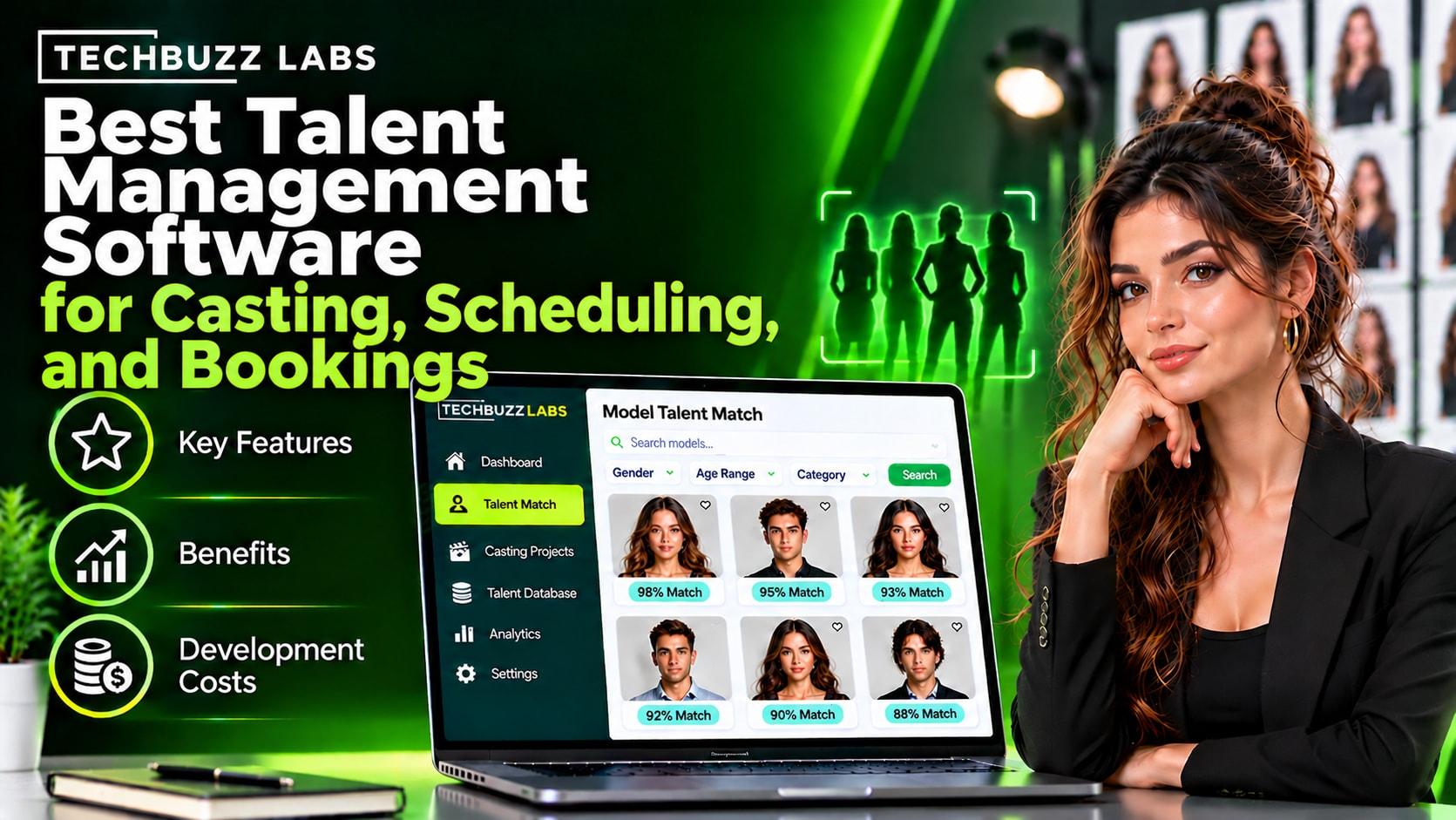
Best Talent Management Software for Casting, Scheduling, and Bookings
For modeling and talent agencies in the USA, choosing software that supports the complete agency workflow can improve organization, reduce repetitive administrative work, and make collaboration easier.
Managing a modeling or talent agency requires coordination across several important activities. Agents must maintain talent profiles, respond to client inquiries, organize casting opportunities, schedule auditions, check availability, and confirm bookings. When these responsibilities are handled through spreadsheets, emails, messaging apps, and separate calendars, everyday operations can become difficult to manage.
The best talent management software for casting, scheduling, and bookings brings these activities together in one centralized platform. It helps agencies organize their talent database, manage casting workflows, coordinate schedules, and maintain accurate booking records.
What Is Talent Management Software?
Talent management software is a digital platform that helps agencies organize the professionals they represent and manage the business activities connected to their work.
Depending on the solution, it may include talent profiles, digital portfolios, casting management, client communication, availability calendars, booking records, contracts, and reporting.
For example, when a fashion brand requests models for a campaign in New York, an agent can review the brief, search the talent database, prepare a shortlist, submit profiles, check availability, and coordinate confirmed bookings through connected workflows.
Instead of managing each activity separately, the agency can maintain a shared view of the project from the first inquiry to the final booking.
Essential Features of the Best Talent Management Software
Not every agency requires the same capabilities. However, software designed for casting, scheduling, and bookings should provide the following essential features.
1. Centralized Talent Database
A searchable talent database is the foundation of effective agency management. It allows agents to organize information about models, actors, performers, influencers, and other professionals in one place.
Useful profile details may include:
Contact information and location
Professional experience and skills
Portfolio photographs and videos
Relevant measurements or professional attributes
Availability and booking history
Contracts and representation details
Agents should be able to filter profiles by talent category, location, experience, and other relevant criteria. This makes it easier to identify suitable professionals when clients submit new requirements.
2. Casting and Submission Management
Casting management tools help agencies organize opportunities and track submissions from beginning to end.
Look for features that allow teams to create casting briefs, define selection criteria, shortlist talent, submit profiles, and record client feedback.
A typical workflow may look like:
New Casting Request → Talent Search → Shortlisting → Client Submission → Feedback → Approval → Booking
The ability to track each stage helps agents understand project progress and reduces the risk of missing important updates.
3. Audition and Scheduling Management
Scheduling is a major responsibility for agencies working with multiple clients and talent members. Auditions, fittings, photoshoots, rehearsals, and production dates all require careful coordination.
A suitable platform should offer shared calendars, appointment scheduling, availability tracking, and automatic reminders.
For agencies working with clients across the United States, time-zone support is also useful. It helps teams coordinate appointments between cities such as Los Angeles, New York, Chicago, and Miami.
4. Talent Availability Tracking
Before submitting or confirming a professional for a project, agents need to know whether that person is available.
Talent management software can provide shared availability calendars where authorized users can review upcoming commitments and update schedules.
Useful capabilities include:
Available and unavailable date tracking
Pending booking requests
Confirmed assignments
Schedule conflict alerts
Availability update notifications
These features help agents avoid preventable scheduling conflicts and make more informed decisions before confirming a booking.
5. Booking and Confirmation Management
Casting approval is only one part of the process. Agencies also need to manage confirmed assignments and the details associated with each project.
Booking management features should support project dates, locations, client details, talent assignments, rates, confirmation statuses, and related documents.
A connected booking record helps agents understand what has been agreed upon and gives the team a reliable reference throughout the project.
6. Client Relationship Management
Strong client relationships are important for agencies that regularly work with brands, photographers, production companies, and casting directors.
A built-in CRM can organize client contact information, previous projects, communication history, requirements, and feedback.
When a returning client submits a new request, agents can review previous preferences and project details before preparing recommendations. This supports more consistent communication and helps teams manage long-term business relationships.
7. Reporting and Workflow Automation
Reporting tools help agency managers monitor casting activity, booking progress, talent availability, and business performance.
Automation can also reduce repetitive tasks. For example, the platform may send reminders about upcoming auditions, notify agents when a client approves a submission, or alert teams when a booking requires confirmation.
The best automation features are those that support existing workflows without making the platform unnecessarily complicated.
How to Choose the Right Talent Management Software
Before selecting a platform, agencies should evaluate their operational requirements rather than comparing software based only on the number of features.
Consider your agency size: A boutique agency may need a searchable talent database, basic casting tools, and a booking calendar. A larger organization may require multiple user roles, client portals, advanced reporting, and integrations.
Evaluate usability: Agents should be able to find talent, update project statuses, and manage bookings without complicated navigation.
Check customization options: Look for software that supports your talent categories, booking stages, profile fields, and approval processes.
Review security: Talent databases may contain personal details, photographs, contracts, and confidential client information. Evaluate authentication, access permissions, encryption, backups, and data retention policies.
Plan for future growth: Consider whether the system can support additional talent profiles, employees, branches, clients, and projects as the agency expands.
Ready-Made Software vs. Custom Talent Management Software
Ready-made software can be a good starting point for agencies with standard requirements. It often provides predefined features and can be quicker to implement.
However, some agencies have specialized casting processes, unique talent categories, or client approval requirements that generic platforms may not fully support.
Custom talent management software offers greater flexibility because the system can be developed around the agency's actual workflows. It may combine talent profiles, casting submissions, availability tracking, client portals, booking management, and reporting in one tailored platform.
The decision depends on the agency's budget, complexity, expected growth, and willingness to manage ongoing software maintenance.
Why Consider TechBuzz Labs for Custom Talent Management Software?
Agencies that need more flexibility may consider working with a custom software development company rather than adapting their operations to a standard platform.
TechBuzz Labs provides custom talent management software solutions for casting and modeling agencies. Its platform offering covers talent profiles, availability management, casting opportunities, client requests, submissions, booking workflows, and reporting. <Cite refs={["turn296217search0","turn296217search1"]}/>
A tailored system can help agencies replace disconnected spreadsheets and communication channels with a more organized workflow. Depending on project requirements, agencies can also explore branded client portals, digital comp card generation, notifications, and AI-assisted talent matching.
Before starting development, agencies should define their essential features, user roles, integrations, budget, ownership expectations, and post-launch support requirements.
Conclusion
The best talent management software for casting, scheduling, and bookings should connect the major activities involved in running an agency. A centralized talent database, casting pipeline, audition calendar, availability tracking, booking management, and client relationship tools can help teams work with more accurate information and better coordination.
For modeling and talent agencies in the USA, the right solution depends on roster size, project volume, client expectations, and internal workflows. Ready-made platforms may meet standard needs, while custom software can provide additional flexibility for agencies with specialized requirements.
By choosing a platform that supports the complete journey from casting request to confirmed booking, agencies can build more organized operations and create a stronger foundation for future growth.