Custom Talent Management Software for Multi-Location Talent Agencies
Instead of relying on disconnected tools, agencies can develop a platform that connects employees, talent members, clients, and management teams while supporting location-specific workflows.
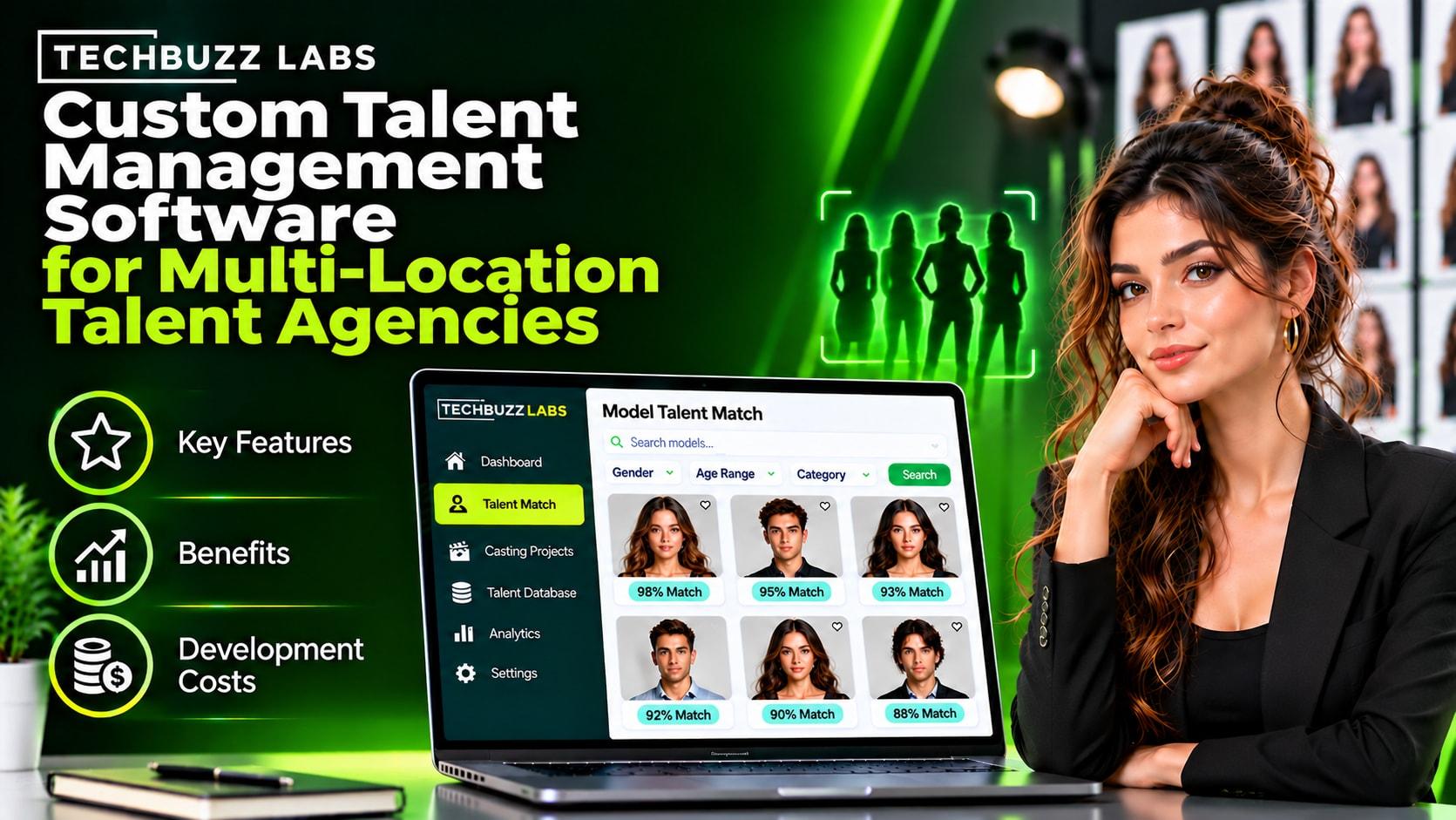
Running a talent agency across multiple locations creates operational challenges that a single-office business may not experience. Agency teams must coordinate talent profiles, client relationships, casting requests, auditions, schedules, and bookings across different cities. When each office uses separate spreadsheets, communication tools, or management systems, keeping information consistent becomes difficult.
For growing modeling agencies, acting agencies, and entertainment businesses in the USA, custom talent management software for multi-location talent agencies can provide a centralized way to manage operations across different branches.
Why Multi-Location Talent Agencies Need Custom Software
A multi-location agency may have offices in New York, Los Angeles, Miami, Chicago, or other markets. Each branch may work with different clients, talent categories, and casting opportunities.
Without a connected system, common challenges include:
Duplicate or outdated talent records
Difficulty sharing talent between offices
Conflicting booking schedules
Inconsistent client communication
Limited visibility into branch performance
Delays in casting approvals
Difficulty maintaining consistent business processes
For example, a client in Los Angeles may need models who are available for a campaign in New York. If the two offices maintain separate databases, agents may struggle to identify suitable talent and coordinate availability.
Custom software can connect these activities through shared information and clearly defined permissions.
Essential Features of Custom Talent Management Software
A successful platform should support both centralized management and the individual needs of each branch. The following features can help multi-location agencies coordinate their operations.
1. Centralized Talent Database
A centralized talent database allows authorized employees across different offices to access consistent talent information.
Each profile can include:
Contact details and location
Professional experience and skills
Photographs, videos, and digital portfolios
Relevant measurements or professional attributes
Availability and booking history
Representation and contract information
Assigned agent or office
For instance, an agent in Miami may search the shared database for performers represented by the agency's New York office. With appropriate access permissions, the agent can review suitable profiles without requesting information manually.
Centralization reduces duplicate records and makes talent information easier to maintain.
2. Multi-Branch User and Access Management
Not every employee should have access to every agency record. A multi-location platform should support role-based permissions and branch-level access.
Possible user roles include:
Super administrators: Manage the overall platform, branches, and system settings.
Branch managers: Oversee employees, talent records, and projects within their locations.
Agents: Manage assigned talent, casting opportunities, and bookings.
Booking coordinators: Handle schedules, confirmations, and project updates.
Talent members: Update their own profiles and availability.
Clients: Access approved submissions or project information through a dedicated portal.
This structure allows agencies to maintain centralized oversight while giving local teams the access they need.
3. Location-Based Talent Search
Finding the right professional for a project often depends on location, availability, experience, and other client requirements.
Custom talent management software can include advanced search filters that help agents identify talent by:
City, state, or preferred working location
Talent category
Professional experience
Skills and qualifications
Availability dates
Portfolio attributes
Previous project experience
For example, when a production company requests actors for a commercial in Chicago, agents can filter the database for suitable professionals who are available in or near the required location.
Location-based search can also help agencies identify talent from other branches when local options are limited.
4. Centralized Casting and Submission Management
Different offices may manage separate casting projects, but management teams often need visibility across the entire organization.
A shared casting management system can help agencies create project briefs, assign responsibilities, shortlist talent, submit profiles, and track client feedback.
A typical workflow may look like:
Client Request → Project Assignment → Talent Search → Shortlisting → Client Submission → Approval → Booking
Branch managers can monitor project progress, while authorized agents can coordinate submissions and update statuses.
This reduces the risk of duplicated work and makes cross-office collaboration easier.
5. Shared Scheduling and Booking Management
Scheduling becomes more complicated when an agency manages talent across multiple cities and time zones.
A centralized booking calendar can display auditions, fittings, confirmed projects, travel requirements, and availability.
Useful capabilities include:
Shared branch calendars
Talent availability tracking
Booking confirmation records
Audition and fitting schedules
Conflict alerts
Time-zone-aware scheduling
Automated reminders
For example, if a model is being considered for two projects in different cities, agents can review the existing schedule before confirming another booking.
A shared calendar also helps managers understand upcoming commitments across all locations.
6. Centralized Client Relationship Management
Multi-location agencies may work with the same national brands, production companies, and casting directors across several branches.
A centralized CRM can organize client contacts, communication history, project requirements, feedback, and previous bookings.
It can also help prevent different offices from contacting the same client without knowing about an existing conversation.
With suitable permissions, agents can access relevant client history and maintain more consistent communication.
7. Branch-Level Reports and Analytics
Agency owners need visibility into how individual offices and the overall business are performing.
A custom platform can provide dashboards and reports covering:
Active talent profiles by branch
New client inquiries
Casting projects and submissions
Confirmed bookings
Pending approvals
Talent availability
Branch-level business activity
Booking and revenue trends
These reports help management compare workflows, identify bottlenecks, and understand where additional resources may be needed.
Custom Software vs. Generic Talent Management Platforms
Ready-made talent management platforms may provide standard databases, casting tools, and booking features. They can be suitable for agencies with straightforward operations.
However, multi-location businesses may require more specialized functionality, such as shared talent pools, branch-specific permissions, cross-office bookings, consolidated reporting, and customized approval processes.
Custom software allows an agency to define how different branches work together. It can also support integrations with existing accounting, communication, calendar, and document management systems.
The main consideration is investment. Custom development requires detailed planning, testing, maintenance, and a suitable budget. Agencies should compare these costs with the operational limitations and ongoing subscription expenses of ready-made solutions.
How to Build a Custom Platform for Multiple Locations
A successful development project should begin with a clear understanding of how each branch operates.
Step 1: Review existing workflows. Identify how each office manages talent, clients, casting, and bookings. Document both shared processes and branch-specific requirements.
Step 2: Define user roles. Establish access permissions for administrators, managers, agents, coordinators, talent members, and clients.
Step 3: Design the shared database. Plan how talent profiles, client records, projects, and bookings will connect across locations.
Step 4: Prioritize essential features. Start with talent management, branch access, search, casting, scheduling, and booking functionality.
Step 5: Develop and test the platform. Test cross-branch access, data accuracy, scheduling, security, and mobile usability before launch.
Step 6: Train teams and improve the system. Introduce the platform gradually, collect employee feedback, and add advanced capabilities as business needs evolve.
How TechBuzz Labs Can Support Custom Talent Management Development
Multi-location talent agencies often need software that reflects their organizational structure rather than forcing every branch to follow a generic workflow.
TechBuzz Labs works with modeling and talent agencies exploring custom software solutions for talent databases, casting management, client portals, scheduling, booking coordination, and agency operations.
A tailored platform can connect multiple branches through shared talent records and centralized reporting while maintaining location-specific access and workflows.
Before development begins, agencies should define project requirements, integrations, security expectations, development milestones, ownership terms, and ongoing maintenance responsibilities. A phased approach can help prioritize essential functionality and manage the investment.
Conclusion
Managing a talent agency across multiple locations requires consistent information, reliable communication, and effective coordination between branches. Separate databases and disconnected applications can make it harder to manage talent, casting opportunities, client relationships, and bookings.
Custom talent management software provides an opportunity to connect these operations through a centralized platform. Features such as shared talent databases, branch-level permissions, location-based search, casting management, booking calendars, and consolidated reporting can support more organized agency operations.
For growing talent agencies in the USA, the right platform should balance centralized control with the flexibility each location needs. By planning carefully and developing around real business workflows, agencies can build a system that supports expansion without making daily operations unnecessarily complicated.