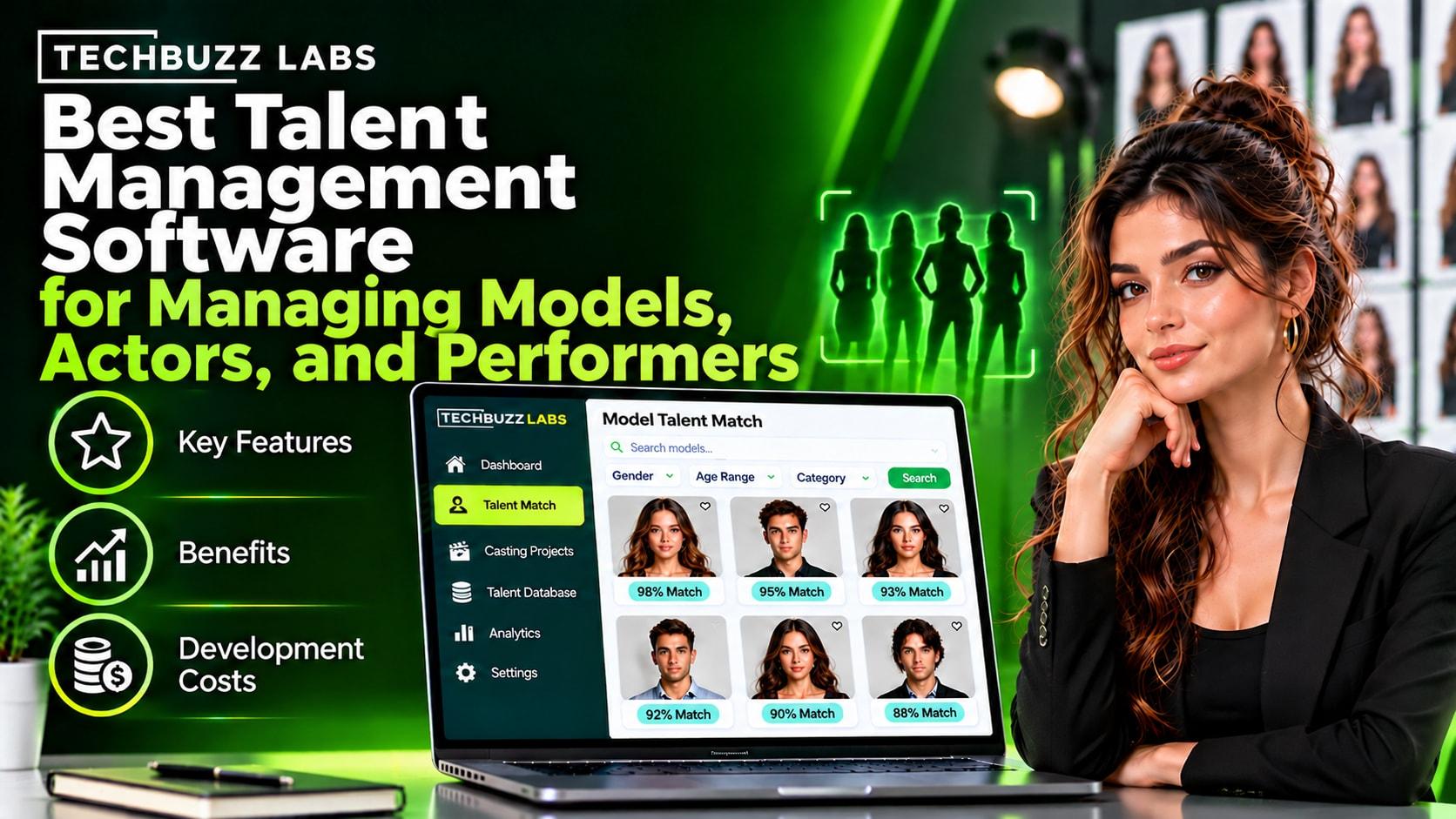
Best Talent Management Software for Managing Models, Actors, and Performers
This guide explains the essential features agencies should look for when choosing talent management software for models, actors, and performers.
Managing models, actors, and performers requires more than maintaining a list of names and contact details. Talent agencies must organize professional profiles, manage portfolios, coordinate auditions, track availability, handle bookings, and maintain strong client relationships.
As an agency grows, these responsibilities can become difficult to manage through spreadsheets, emails, and separate applications. Important information may become outdated, booking schedules can overlap, and agents may spend valuable time searching for suitable talent.
The best talent management software helps agencies bring these activities together in one organized platform. In 2026, agencies are increasingly looking for solutions that combine talent database management, casting workflows, digital portfolios, booking coordination, and automation.
What Is Talent Management Software for Models, Actors, and Performers?
Talent management software is a digital platform that helps agencies organize the people they represent and manage their professional activities.
For modeling agencies, it may focus on model profiles, measurements, photographs, portfolios, and availability. For acting agencies, it may include acting experience, showreels, headshots, audition records, and casting submissions. Agencies representing performers may also need skills, performance categories, schedules, and project histories.
A specialized platform connects these records with client requests, casting projects, and booking operations.
Unlike general HR software, agency-focused talent management systems are designed around representing talent and coordinating professional opportunities.
Essential Features of the Best Talent Management Software
Choosing the right platform requires understanding the features that support everyday agency operations.
1. Centralized Talent Database Management
A centralized talent database is the foundation of effective agency management. It allows agents to store and access important information without switching between different applications.
Look for features such as:
Detailed talent profiles and contact information
Professional experience and skills
Talent categories and custom profile fields
Photographs, videos, and documents
Location and availability information
Previous projects and booking history
For example, an agency representing models, actors, and commercial performers can organize each group into relevant categories while maintaining individual profiles.
This makes it easier for employees to locate information and keep records consistent.
2. Digital Portfolio and Media Management
Portfolios are essential when presenting talent to brands, casting directors, production companies, and other clients.
The software should support image and video uploads, profile updates, portfolio categorization, and controlled sharing.
For models, portfolios may include professional photographs, digitals, and relevant measurements. Actors may need headshots, showreels, acting credits, and demo videos. Other performers may require performance clips, specialist skills, or previous production experience.
Organizing these materials within individual talent profiles helps agencies prepare professional presentations more efficiently.
3. Advanced Talent Search and Filtering
Finding the right person for a project can become time-consuming when an agency represents hundreds or thousands of professionals.
Advanced search tools allow agents to filter talent according to specific project requirements.
Useful filters may include:
Talent type and professional category
Location and travel preferences
Skills and experience
Portfolio type
Availability
Previous project experience
For example, a production company looking for an actor with commercial experience and a particular skill set should be able to narrow the agency's database without reviewing every profile manually.
4. Casting and Audition Management
Casting management is especially important for agencies representing actors and performers.
A suitable platform should help teams create casting projects, organize submissions, track audition stages, and manage client feedback.
Important capabilities include:
Casting brief management
Audition scheduling
Submission tracking
Callback and shortlist management
Self-tape and video organization
Client approval tracking
Connecting these activities helps agents understand each project's progress and reduces the need to manage separate spreadsheets for every casting opportunity.
5. Booking and Availability Management
Talent availability can change frequently, particularly when agencies coordinate multiple projects.
Booking management tools help agents track assignments, schedules, confirmations, and potential conflicts.
Look for shared calendars, availability tracking, booking status updates, scheduling reminders, and project timelines.
For example, before confirming an actor for a commercial production, an agent can review recorded availability and existing bookings. This makes coordination easier and helps reduce scheduling problems.
6. Client Relationship Management
Talent agencies depend on strong relationships with brands, photographers, casting directors, production companies, and other clients.
A platform with built-in CRM features can organize client contact details, inquiries, communication history, project requirements, and feedback.
Connecting client records with casting and booking activities also makes it easier for employees to review previous interactions and respond to new opportunities.
7. AI-Powered Matching and Workflow Automation
AI-assisted matching can help agencies identify potential candidates based on project requirements and information stored in talent profiles.
For example, a commercial casting project may require performers with specific experience, skills, location preferences, and availability. Matching tools can help agents narrow the search and identify relevant profiles.
Workflow automation can also support booking reminders, submission notifications, profile updates, and client follow-ups.
These features should assist agents rather than replace professional judgment. Agencies should evaluate how recommendations are generated and how personal information is protected.
How to Choose the Right Software for Your Agency
Not every agency needs the same platform. A modeling agency may prioritize portfolios and measurements, while an acting agency may need audition tracking and showreel management.
Before selecting a solution, consider the following factors:
Industry suitability: Does the software support models, actors, performers, or the specific talent categories your agency represents?
Ease of use: Can agents and administrators navigate the system without extensive training?
Customization: Can you configure profiles, search filters, and workflows around your business requirements?
Scalability: Will the platform support more talent profiles, employees, clients, and projects as your agency grows?
Security: Does it provide role-based permissions, secure authentication, backups, and appropriate data protection controls?
Total cost: Compare subscription fees, implementation, training, integrations, storage, and maintenance expenses.
Requesting a demonstration and testing realistic agency workflows can help you understand whether a platform is suitable before committing.
Ready-Made vs. Custom Talent Management Software
Ready-made software can be a practical choice for agencies that need standard features and want to get started quickly. These platforms generally offer pre-built tools for profile management, scheduling, casting, and communication.
However, some agencies have specialized workflows that existing platforms cannot fully support.
Custom talent management software provides greater flexibility because features can be developed around the agency's specific requirements. A tailored platform might combine model portfolios, actor showreels, performer profiles, audition management, booking operations, client portals, and reporting.
For agencies with complex operations or growing databases, custom development may offer a better fit. The decision should account for initial development costs, maintenance, integrations, and long-term business requirements.
How TechBuzz Labs Supports Talent Agency Software Development
For agencies that need more flexibility than standard platforms provide, TechBuzz Labs helps businesses explore custom software development solutions designed around their operational needs.
A tailored talent management platform can bring together talent profiles, digital portfolios, casting submissions, client communication, booking management, and workflow automation.
Whether an agency represents models, actors, or different types of performers, the development process can focus on the features that support its actual operations.
Starting with clear requirements and essential functionality helps agencies avoid unnecessary complexity while creating a platform that can support future growth.
Final Thoughts
The best talent management software for managing models, actors, and performers should make it easier to organize professional profiles, manage portfolios, coordinate casting projects, track availability, and handle bookings.
Agencies should prioritize industry-specific functionality, advanced search, client management, automation, security, and scalability when evaluating different solutions.
Ready-made platforms can support standard requirements, while custom software may be more appropriate for agencies with specialized workflows.
Ultimately, the right platform should help agents spend less time managing disconnected information and more time building talent relationships, serving clients, and developing new opportunities.