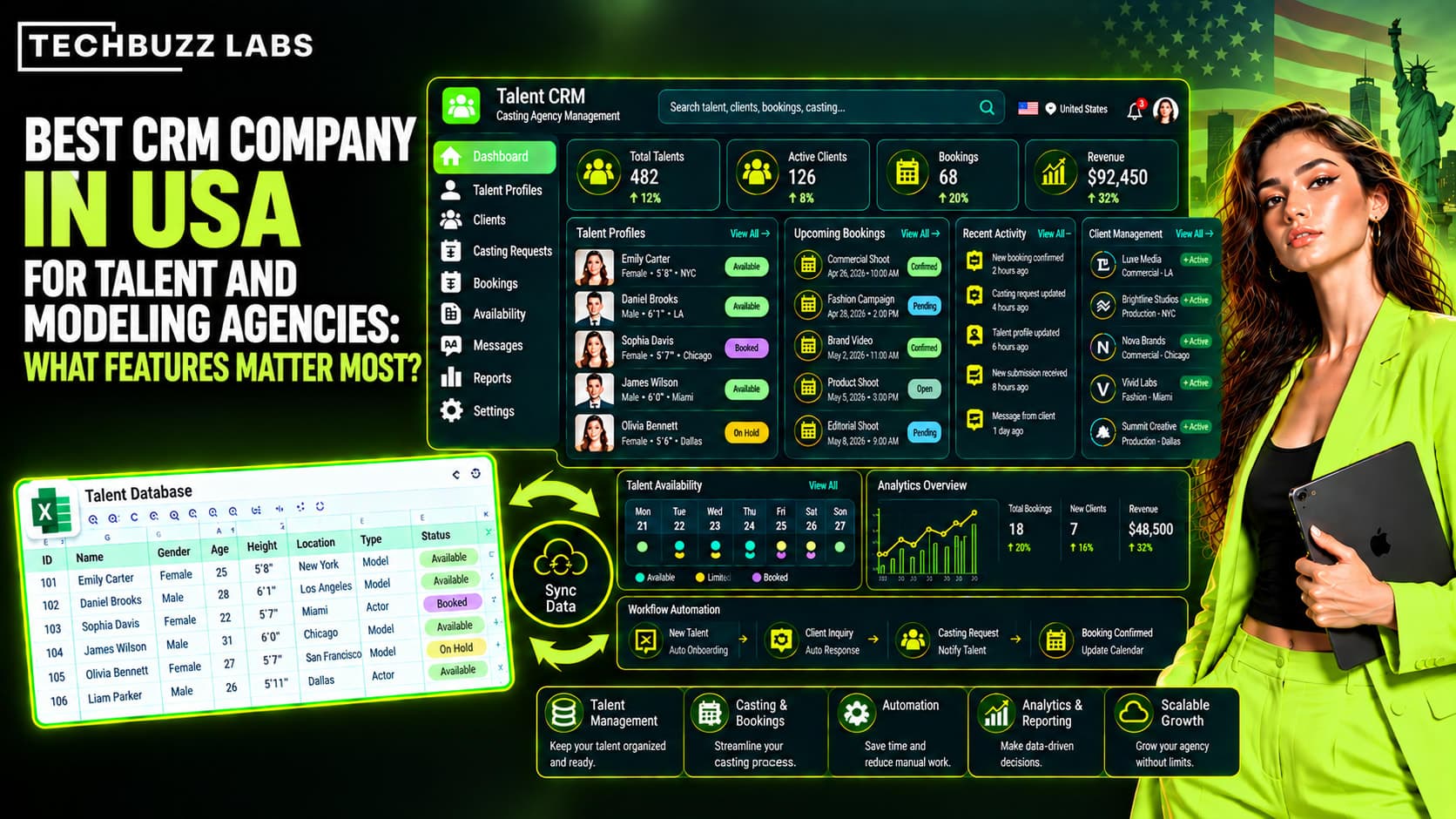
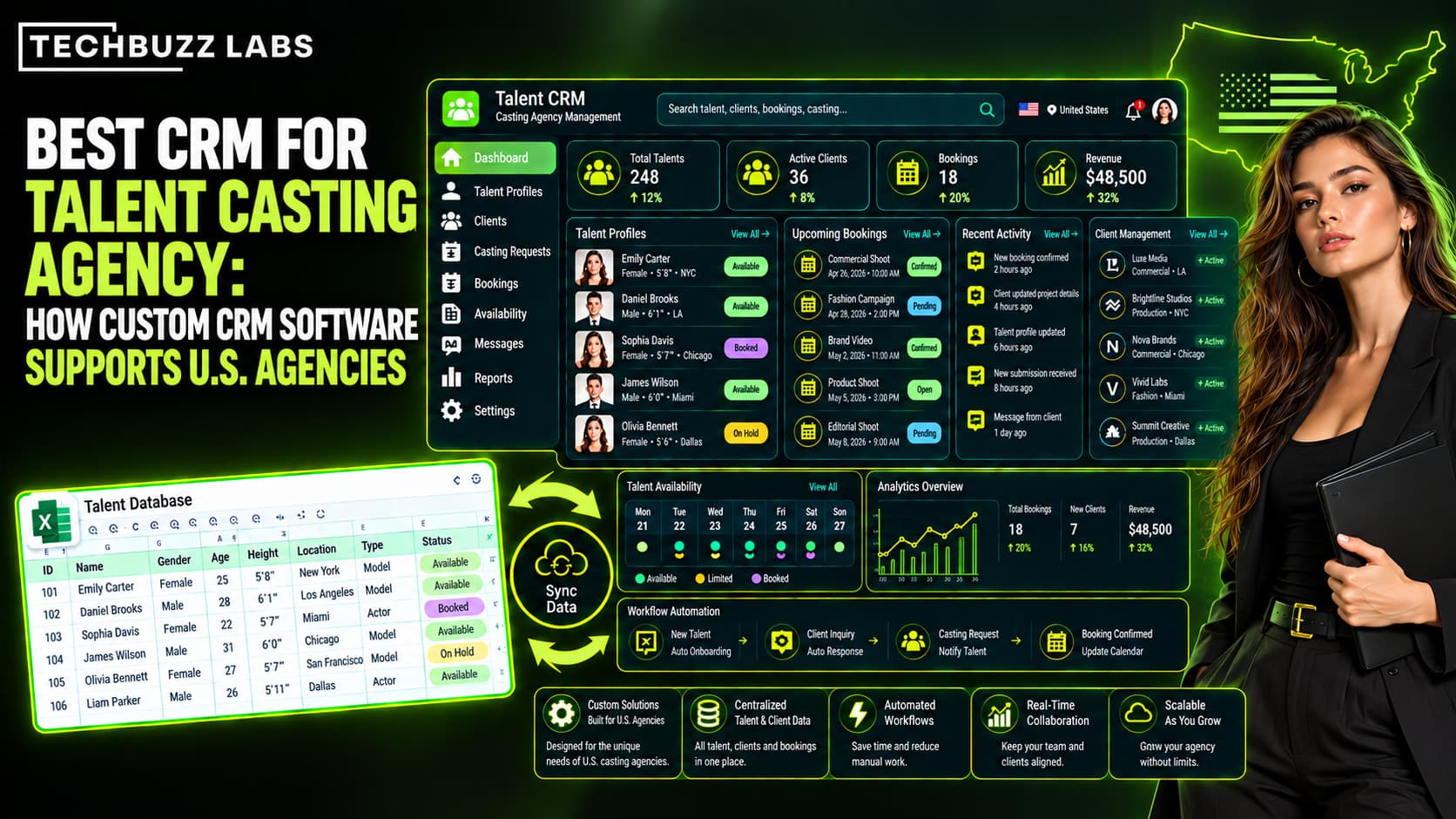
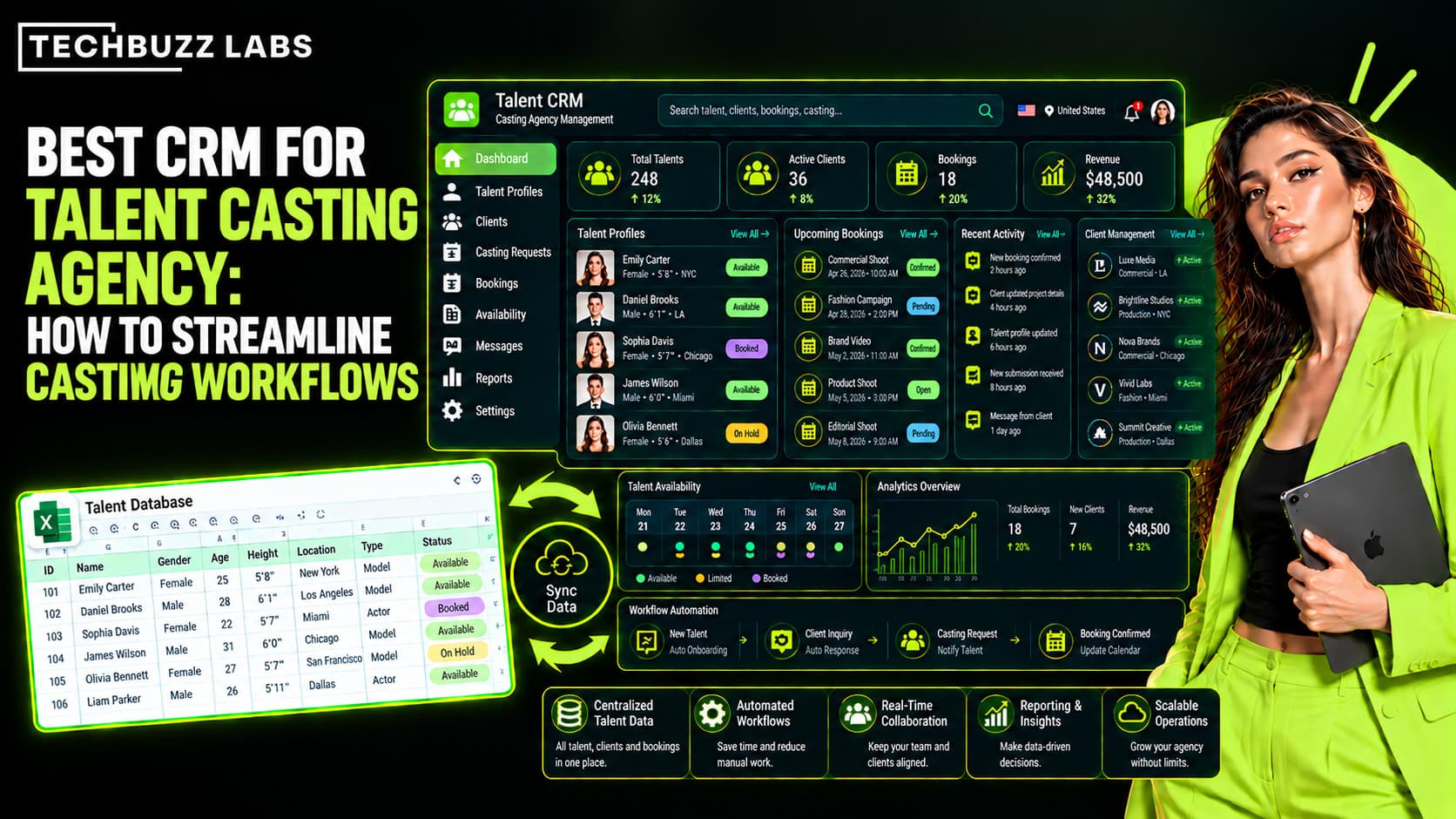
From Spreadsheets to CRM: Modernizing Modeling Agency Operations
Spreadsheets also provide limited automation. Tasks such as casting reminders, client follow-ups, availability checks, and booking updates often need to be completed manually.
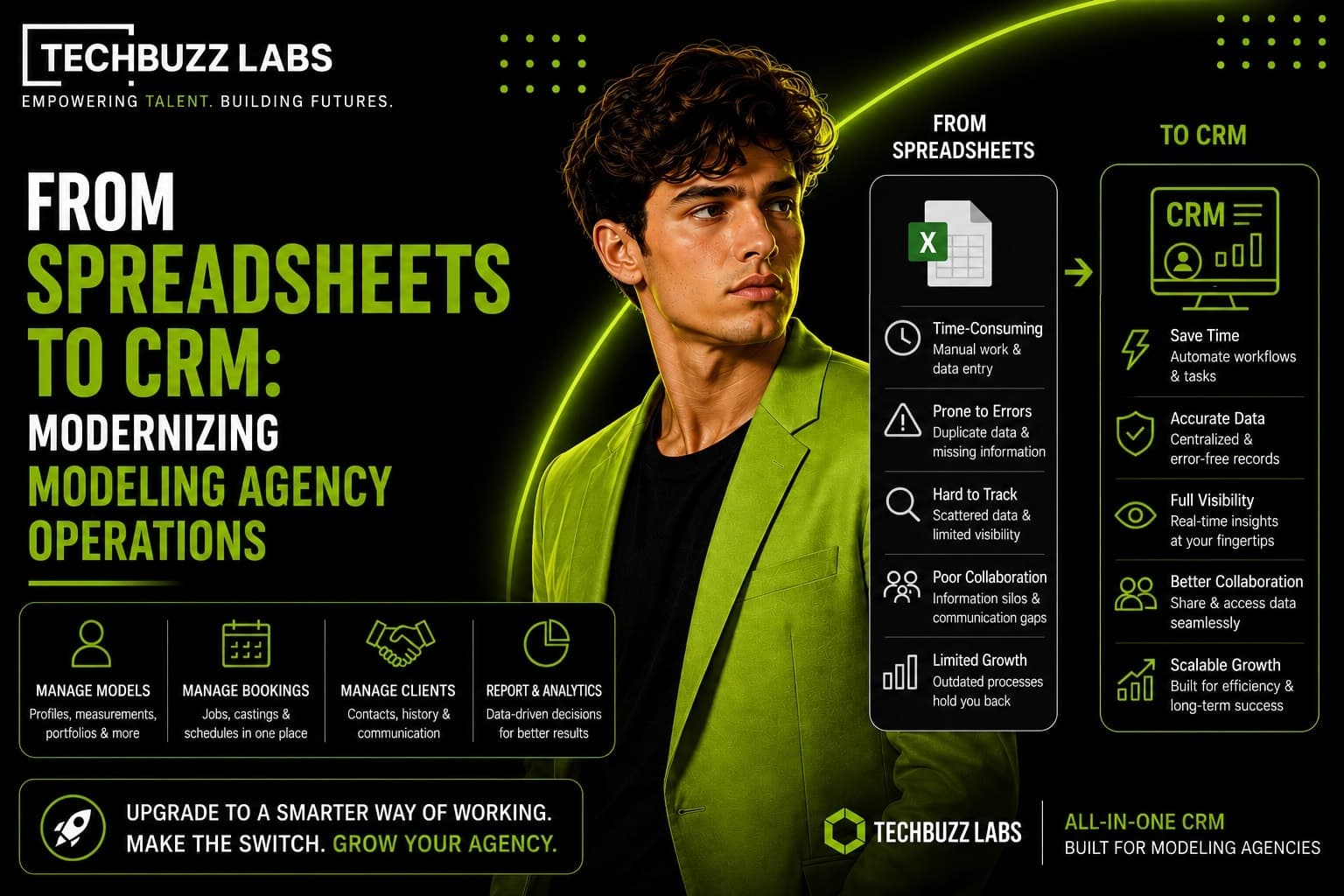
For many modeling agencies, spreadsheets are the starting point for managing models, clients, castings, and bookings. They are inexpensive, familiar, and easy to set up. However, as an agency grows, spreadsheets can become difficult to maintain. Multiple files, duplicate information, outdated records, and manual updates can slow down everyday operations.
Moving from spreadsheets to CRM software can give modeling agencies a more organized way to manage their growing operations. A modern CRM can connect model profiles, client relationships, casting opportunities, bookings, schedules, and communications in one centralized system.
For modeling agencies in the USA, this transition can be particularly valuable in competitive markets such as New York, Los Angeles, Miami, and Chicago. TechBuzzLabs recognizes the growing importance of technology in the modeling industry and how digital solutions can help agencies improve efficiency and prepare for future growth.
Why Do Modeling Agencies Use Spreadsheets?
Spreadsheets are often attractive to new or smaller agencies because they are simple and affordable. An agency might create separate spreadsheets for model information, client contacts, casting opportunities, availability, and bookings.
For a small operation with a limited number of models, this approach may work reasonably well.
The problem begins when the agency grows.
More models mean more profiles to update. More clients create more communication records. More castings create additional deadlines and submissions. Eventually, agents may spend more time maintaining spreadsheets than managing talent and developing client relationships.
The Problems With Spreadsheet-Based Management
One major problem is duplicate information.
A model's contact details may appear in several different spreadsheets. If the information changes, employees have to remember to update every version. Missing even one file can result in outdated information.
Another issue is limited collaboration. When multiple team members work with the same data, it can be difficult to know which information is the most current.
Spreadsheets also provide limited automation. Tasks such as casting reminders, client follow-ups, availability checks, and booking updates often need to be completed manually.
As the agency grows, these limitations can create unnecessary administrative work.
What Is a Modeling Agency CRM?
A CRM, or Customer Relationship Management system, is software designed to organize business relationships and operational information.
For modeling agencies, a specialized CRM can go beyond traditional customer management. It can help manage model profiles, client records, casting calls, portfolios, bookings, schedules, communications, and availability.
Instead of keeping each category in a separate spreadsheet, agencies can connect the information within one centralized platform.
For example:
Model → Casting → Client → Booking
These relationships allow agents to see how different parts of the agency's operations are connected.
Centralizing Model Profiles
One of the first advantages of moving to a CRM is centralized talent management.
Instead of storing photographs, measurements, contact information, experience, and availability across different files, agencies can maintain comprehensive model profiles.
Agents can search and filter the database based on relevant criteria.
For example, if a client needs commercial models in Los Angeles who are available on specific dates, an agent can use the CRM to narrow the talent database rather than manually checking multiple spreadsheets.
This can make the casting process considerably more efficient.
Improving Client Management
Client information is another important part of agency operations.
A CRM can store information about brands, photographers, advertising agencies, retailers, production companies, and other clients.
Agents can also record communication history, previous projects, booking information, and follow-up activities.
When a client returns with a new project, the agent can review previous interactions and understand the relationship before making recommendations.
This can help agencies provide a more consistent and professional client experience.
Streamlining Casting Management
Casting is often one of the most time-sensitive agency activities.
A CRM can organize casting requirements, project details, deadlines, model submissions, client feedback, and selection status.
Instead of creating a new spreadsheet for every casting, agents can manage projects within a centralized workflow.
A typical process might look like:
New Casting → Talent Search → Model Submission → Client Review → Selection → Booking
Having clearly defined stages helps agents understand exactly where each opportunity stands.
Automating Repetitive Tasks
CRM software can also automate certain repetitive activities.
For example, an agency could create automated reminders for casting deadlines, client follow-ups, booking confirmations, or model availability checks.
Automation can reduce the amount of time agents spend performing routine tasks.
The goal is not to remove the human element from modeling. Instead, automation gives agents more time to focus on talent development, client relationships, negotiations, and creative decisions.
Better Booking and Scheduling
Managing model availability through spreadsheets can become challenging when multiple projects overlap.
A CRM can connect availability with casting and booking information, helping agents identify potential scheduling conflicts.
Booking records can contain information such as dates, locations, clients, project details, rates, and status.
For agencies managing large rosters across multiple U.S. markets, centralized scheduling can provide much better visibility.
Better Reporting and Business Insights
Another major advantage of CRM software is access to organized business data.
Managers can potentially track casting activity, booking rates, client performance, project history, and other operational metrics.
For example, an agency could analyze which clients generate the most bookings or which types of projects produce the strongest results.
These insights can help managers make better decisions about business development and resource allocation.
How to Successfully Move From Spreadsheets to CRM
Moving to a CRM should be planned carefully.
Start by identifying the information currently stored in spreadsheets. Separate important data from outdated or duplicate records.
Next, determine which workflows need improvement. These may include model management, casting, client communication, scheduling, or bookings.
Choose a CRM that supports the agency's current requirements while also allowing room for future growth.
Training is another important step. Agents and employees should understand how to use the new system and why consistent data entry matters.
Finally, establish clear rules for maintaining accurate and updated information.
The Role of TechBuzzLabs
The transition from spreadsheets to CRM reflects the broader digital transformation of the modeling industry. TechBuzzLabs focuses on the connection between technology and modern modeling operations, including CRM, casting management, automation, and talent management solutions.
For agencies looking to modernize, technology should not simply replace spreadsheets. The goal should be to create a connected workflow that makes information easier to manage and more useful to the entire team.
Conclusion
Moving from spreadsheets to CRM can help modeling agencies modernize their operations and manage growth more effectively.
A CRM can centralize model profiles, client information, casting opportunities, bookings, schedules, and communications while reducing duplicate data and repetitive administrative work.
For modeling agencies in the USA, adopting a structured CRM can make it easier to respond quickly to clients, find suitable talent, manage bookings, and understand business performance.
Spreadsheets may remain useful for certain tasks, but they are not always designed to handle the complexity of a growing modeling agency. By adopting the right CRM and implementing organized data-management processes, agencies can build a more efficient, scalable, and technology-driven operation.
With the continued growth of digital tools and solutions highlighted by TechBuzzLabs, modern modeling agencies have an opportunity to move beyond manual processes and create smarter workflows for the future.