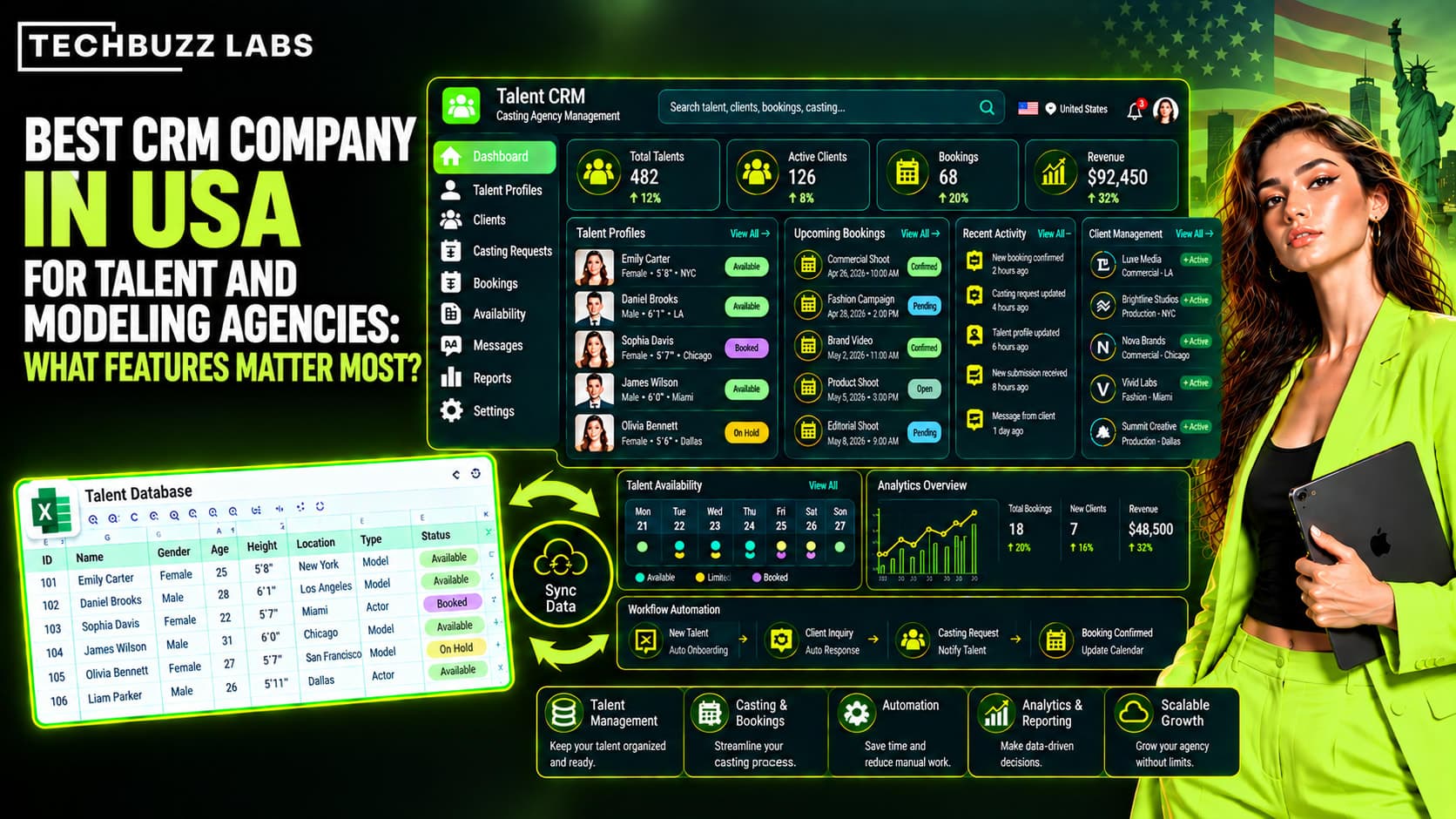
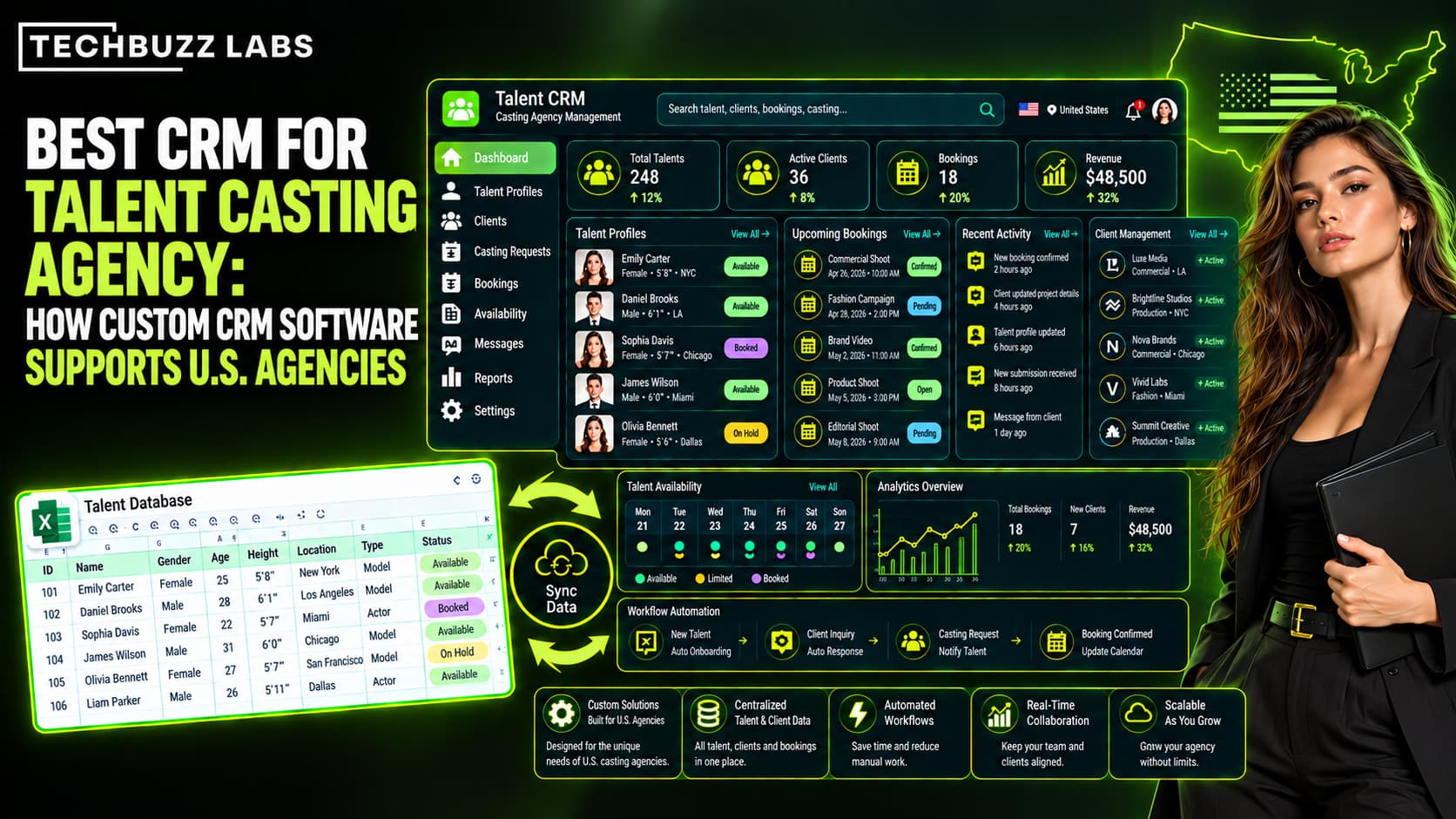
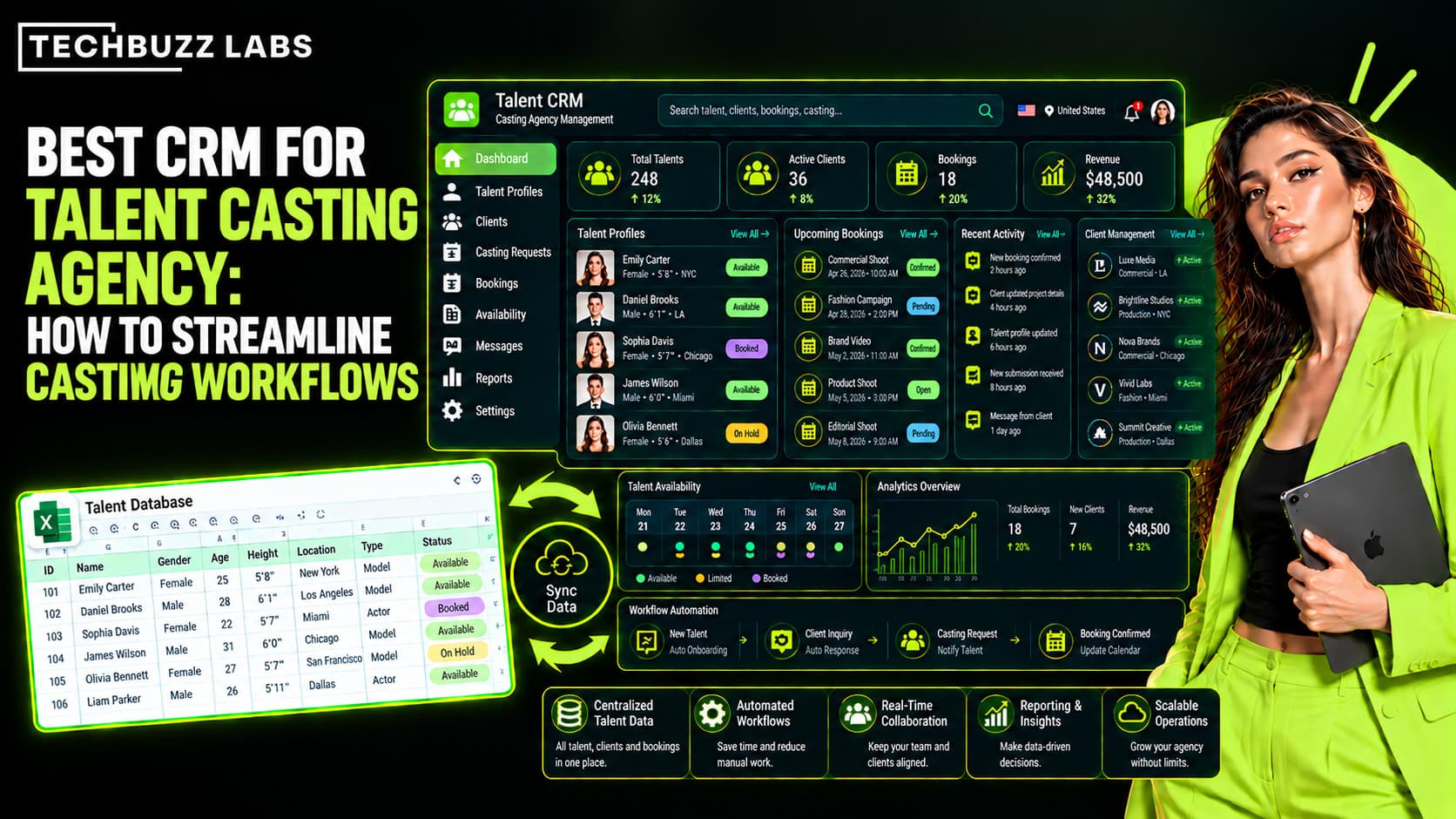
How CRM Data Management Can Improve Modeling Agency Performance
For a modeling agency, this may include data about models, clients, casting opportunities, bookings, communications, availability, and projects.
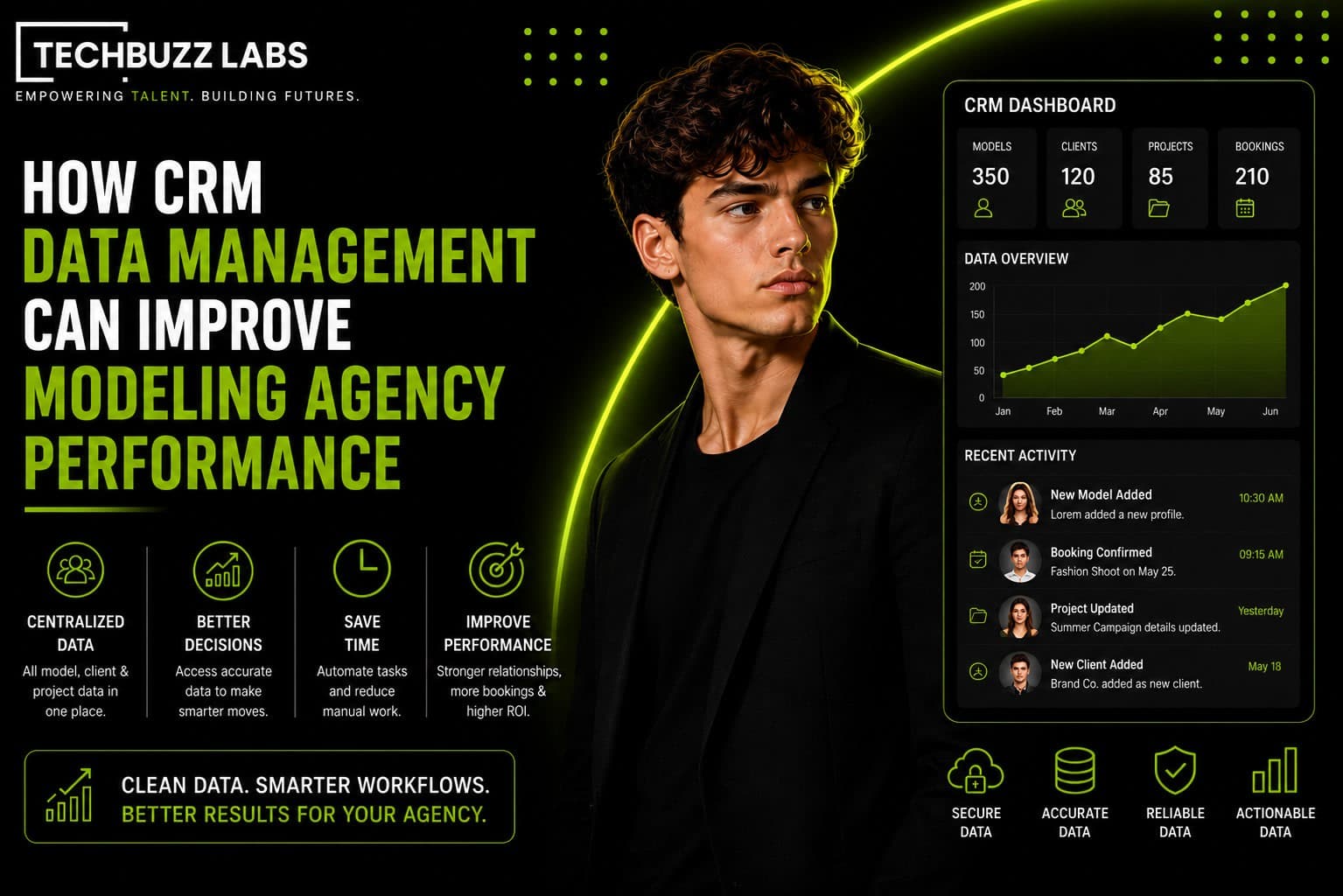
Modeling agencies manage a large amount of information every day. From model profiles and portfolios to client contacts, casting calls, bookings, schedules, and communication records, keeping everything organized is essential for efficient operations. As an agency grows, relying on spreadsheets, email threads, and disconnected files can make data management increasingly difficult.
This is where CRM data management can make a significant difference. A well-organized CRM system can centralize agency information, reduce repetitive administrative work, improve communication, and provide useful insights into business performance. For modeling agencies in the USA, effective CRM data management can also help teams respond faster to clients and manage growing talent databases more efficiently.
TechBuzzLabs recognizes the growing importance of technology in the modeling industry. Modern CRM systems can provide agencies with the digital infrastructure needed to manage talent, clients, castings, and bookings in a more organized way.
What Is CRM Data Management?
CRM data management refers to how an agency collects, stores, organizes, updates, and uses information within its CRM system.
Instead of keeping this information in separate locations, a CRM can connect it within one centralized system.
For example, a model profile can be connected to previous castings, bookings, client interactions, and availability. This gives agents a more complete view of the model's professional history.
1. Centralizing Model Information
One of the biggest benefits of CRM data management is centralized model information.
An agency may manage hundreds or thousands of models, each with different photographs, measurements, skills, experience, locations, and availability.
Without a structured system, agents may spend significant time searching through spreadsheets and folders.
A CRM can keep these details in organized profiles, allowing authorized team members to quickly access updated information.
For agencies operating in U.S. markets such as New York, Los Angeles, Miami, and Chicago, centralized talent information can make it easier to respond to opportunities across different locations.
2. Improving Client Management
Client relationships are a major part of agency performance.
A CRM can store information about brands, photographers, advertising agencies, retailers, production companies, and other clients.
Agents can record previous projects, communications, booking history, preferences, and important notes.
When a client contacts the agency about a new project, agents can review previous interactions before making recommendations.
This can help create more personalized communication and strengthen long-term business relationships.
3. Faster Casting Decisions
Casting often requires agencies to respond quickly.
A client may need models with specific characteristics, experience, availability, or location. Searching through an unorganized database can delay the submission process.
With structured CRM data, agents can use filters and search tools to identify potentially suitable talent more quickly.
For example, an agent could search for models in Los Angeles who are available for specific dates and have relevant commercial experience.
This can reduce the time needed to create a shortlist.
4. Better Booking Management
CRM data management can also improve the transition from casting to booking.
When a model is selected, the agency needs to track project dates, client information, location, rates, availability, and booking status.
A connected CRM can link this information to both the model and client records.
This creates a clearer workflow and helps agents monitor bookings without maintaining separate systems for every project.
5. Reducing Duplicate and Outdated Data
Poor data quality can create major problems for agencies.
A model's phone number may change, a client contact may move to another company, or a model's availability may be updated. If the same information exists in multiple spreadsheets, some records may remain outdated.
A centralized CRM can reduce duplication and provide a primary location for important information.
Agencies should still establish clear processes for regularly reviewing and updating records.
6. Automating Repetitive Tasks
Good CRM data can also support workflow automation.
For example, agencies can create automated reminders for client follow-ups, casting deadlines, model availability checks, and booking confirmations.
When information is properly structured, the CRM can use it to trigger relevant actions.
This reduces repetitive administrative work and allows agents to focus more on talent development and client relationships.
7. Improving Team Collaboration
Modeling agencies often have multiple agents and employees working with the same talent and clients.
If information is stored in individual spreadsheets or personal notes, team members may not have access to the latest information.
A centralized CRM creates a shared source of information for authorized employees.
An agent taking over a client relationship can review previous communication and project history instead of starting from scratch.
This can improve continuity and reduce internal communication problems.
8. Using Data to Measure Performance
CRM data can also help agency managers understand business performance.
Instead of relying only on assumptions, agencies can analyze information such as casting submissions, booking rates, client activity, and project history.
For example, managers might identify which clients generate the most bookings or which types of projects produce the strongest results.
These insights can help agencies make more informed decisions about business development and resource allocation.
9. Supporting Future AI Tools
Well-organized CRM data can provide a strong foundation for AI-powered agency tools.
AI systems may eventually help agencies search large talent databases, identify potential matches, summarize client information, or identify patterns in booking activity.
However, AI recommendations should support rather than replace professional casting decisions. Human agents remain important for evaluating personality, professionalism, creative suitability, and client relationships.
10. Supporting Agency Growth
Perhaps the biggest advantage of effective CRM data management is scalability.
A small agency may be able to manage information manually, but the same approach becomes increasingly difficult as the agency adds more models, clients, and projects.
A structured CRM provides a foundation that can grow with the business.
For U.S. modeling agencies looking to expand into additional markets, better data management can make operations easier to coordinate and maintain.
The Role of TechBuzzLabs
Technology is becoming increasingly important in modern modeling agency management. TechBuzzLabs focuses on the intersection of technology and the modeling industry, including CRM systems, casting management software, automation, and digital talent management.
For agencies considering a technology upgrade, improving data management is an important starting point. A CRM should not simply store information; it should help the agency use that information to improve workflows and make better decisions.
Conclusion
CRM data management can significantly improve modeling agency performance by creating a centralized and organized system for managing models, clients, castings, bookings, and communications.
Better data can help agencies respond faster to clients, reduce duplicate information, improve collaboration, automate repetitive tasks, and understand business performance through meaningful insights.
For modeling agencies in the USA, investing in structured CRM data management can provide a strong foundation for growth in an increasingly digital industry. With the right technology and processes, agencies can spend less time managing information manually and more time building successful relationships with talent and clients.
As the modeling industry continues to adopt CRM, automation, and AI technologies, platforms and industry-focused technology resources such as TechBuzzLabs can help agencies understand how digital solutions can support smarter and more efficient operations.