How Custom Talent Management Software Improves Agency Operations
For modeling agencies, casting companies, and talent businesses, a tailored platform can improve organization, reduce manual work, and create a more connected operational environment.
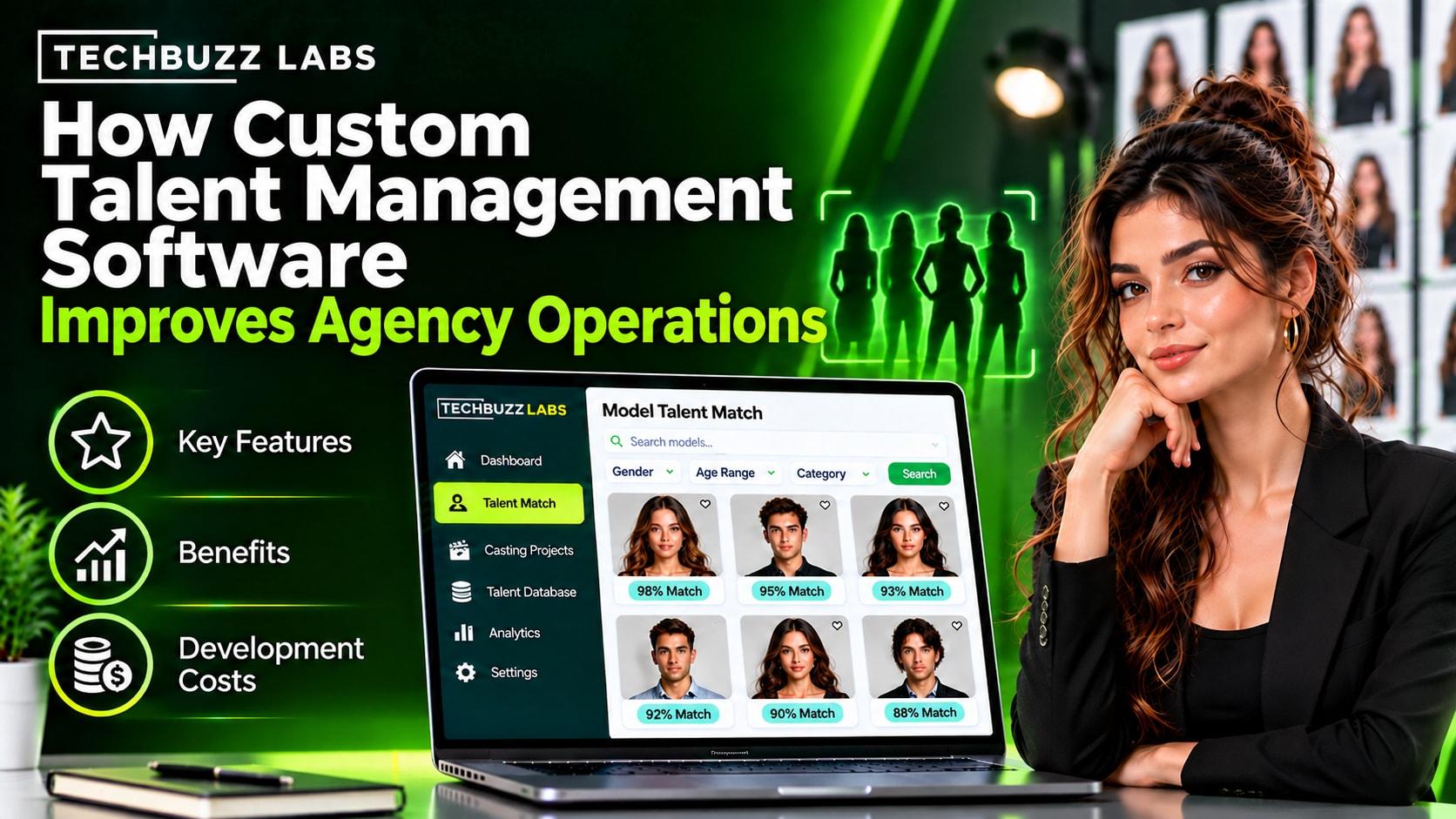
Managing a talent agency involves more than finding models, actors, and other professionals for client projects. Agencies must maintain talent databases, organize portfolios, coordinate casting requests, manage bookings, communicate with clients, and keep daily operations running smoothly.
As an agency grows, these responsibilities become increasingly difficult to manage through spreadsheets, emails, and disconnected applications. Information may become outdated, employees may spend too much time on repetitive tasks, and important project updates can get lost.
Custom talent management software offers a practical way to address these challenges. Unlike standard platforms with predefined features, custom software is developed around an agency's specific requirements and workflows.
What Is Custom Talent Management Software?
Custom talent management software is a digital platform designed and developed to support the specific operations of an agency.
It can combine different business activities, including talent profile management, portfolio storage, casting coordination, booking management, client communication, and reporting.
Instead of adapting every process to a ready-made platform, agencies can select features that match their actual working requirements.
For example, a modeling agency may need advanced model search filters, digital portfolio management, availability tracking, and client shortlisting tools. A casting agency may require more detailed submission workflows and project approval features.
Custom development makes it possible to prioritize these requirements within one connected system.
1. Centralizes Agency Data and Talent Information
One of the biggest operational challenges for growing agencies is managing information across multiple platforms.
Talent details may be stored in spreadsheets, portfolio photographs in cloud storage, client records in CRM tools, and booking updates in email conversations.
This fragmented approach makes it harder for employees to find accurate information.
Custom talent management software can bring these records together in a centralized database.
Depending on agency requirements, the system can store:
Talent profiles and contact information
Professional experience and skills
Portfolio photographs and videos
Measurements and relevant categories
Availability and booking history
Client information and project records
Internal notes and documents
A centralized database helps employees access relevant information faster and reduces unnecessary duplication.
2. Automates Repetitive Administrative Tasks
Administrative work can consume a considerable amount of time in talent and modeling agencies.
Employees may repeatedly update profiles, send booking reminders, follow up on submissions, notify talent about project changes, and prepare routine reports.
Custom software can automate many of these activities according to the agency's workflow.
For example, the system can be configured to:
Send booking confirmation notifications
Remind talent about upcoming assignments
Notify agents when profiles are updated
Track submission status changes
Schedule client follow-up reminders
Generate selected operational reports
Automation helps reduce repetitive work and allows employees to focus more on client relationships, talent development, and business opportunities.
3. Improves Casting and Talent Selection
Finding suitable talent for a client project can become difficult when an agency manages hundreds or thousands of profiles.
Manual searches require agents to review individual records and compare candidates against project requirements.
Custom talent management software can include advanced search and filtering features based on the agency's selection criteria.
For example, agents may filter profiles by:
Talent category and professional skills
Location and experience
Portfolio type
Availability
Relevant project history
Other client-specific requirements
Some platforms can also incorporate AI-assisted matching to suggest potentially suitable candidates based on available profile information.
These tools can help narrow the search, but final casting decisions should still involve professional evaluation and client requirements.
4. Simplifies Model Portfolio Management
For modeling agencies, portfolio management is an essential part of daily operations.
Clients often need updated photographs, videos, experience details, and other professional information before selecting models for campaigns.
A custom platform can provide dedicated portfolio management features that allow authorized employees to upload, organize, edit, and share portfolio materials.
Agencies can also create different portfolio categories for fashion, commercial, lifestyle, fitness, and other modeling assignments.
This makes it easier to prepare relevant talent presentations for different clients without repeatedly collecting information from separate sources.
5. Strengthens Client Communication and Relationship Management
Strong client relationships are essential for agencies that work with brands, photographers, production companies, casting directors, and advertising businesses.
When communication is spread across multiple applications, employees may struggle to track previous conversations, project requirements, and client feedback.
Custom talent management software can include CRM functionality to organize client information and communication records.
Useful features may include:
Centralized client profiles
Inquiry and lead tracking
Previous project history
Client preferences and requirements
Submission feedback records
Follow-up reminders
By connecting client records with casting and booking workflows, agencies can improve coordination and maintain a clearer history of business interactions.
6. Makes Booking and Scheduling More Organized
Booking management becomes more complicated as an agency handles multiple projects, clients, and talent schedules.
A custom platform can include booking calendars, availability tracking, project timelines, and confirmation workflows.
For example, when a client requests several models for a commercial campaign, agents can review candidate availability, coordinate submissions, and track booking confirmations within the same system.
Depending on the requirements, the software can also provide automated reminders and alerts for schedule changes.
This helps employees manage assignments more consistently and reduces the risk of avoidable scheduling conflicts.
7. Supports Better Team Collaboration
In larger agencies, different employees may handle talent recruitment, casting, booking, client communication, and administration.
When information is not shared properly, teams can experience duplicated work, missed updates, and confusion about project responsibilities.
Custom software can provide shared dashboards, task tracking, project status updates, and role-based access permissions.
For example, an agent can update a talent submission while a booking coordinator reviews the project status. Authorized employees can access the latest information without depending on repeated email updates.
This creates a more coordinated working environment and helps managers maintain visibility across agency operations.
8. Provides Customized Reports and Business Insights
Agency managers need reliable information to understand business performance and identify areas that require improvement.
Custom talent management software can include dashboards and reporting features based on the agency's priorities.
Possible reports include:
Total talent profiles and active records
Casting submissions and selection progress
Booking activity and project status
Client inquiry trends
Talent availability
Employee workload
Revenue-related operational data, where supported
These insights can help managers identify bottlenecks, evaluate workflows, and make better business decisions.
9. Scales With Agency Growth
A software platform that works for a small agency may become restrictive when the business expands.
Growing agencies may need additional users, larger talent databases, new portfolio categories, more complex booking workflows, and integrations with other applications.
Custom software can be designed with future requirements in mind.
Agencies can begin with essential functionality and introduce additional modules as their operations develop.
However, scalability should be planned carefully during development. Database architecture, infrastructure, security, and maintenance all influence how effectively the platform can support future growth.
How TechBuzz Labs Helps Agencies Build Custom Software
Choosing the right development partner is important when building a platform around specialized agency operations.
TechBuzz Labs helps businesses explore custom software development solutions based on their operational requirements.
For modeling and talent agencies, a tailored platform can combine talent database management, digital portfolios, casting workflows, client relationship management, booking operations, automation, and reporting.
The process should begin with understanding existing business operations, identifying workflow challenges, defining essential features, and planning a solution that supports both current needs and future expansion.
Rather than adding unnecessary functionality, the focus should remain on developing software that solves practical operational problems.
Final Thoughts
Custom talent management software can improve agency operations by connecting important business activities within one organized platform.
From centralized talent databases and portfolio management to automated workflows, casting coordination, booking management, and reporting, a tailored solution can help agencies reduce manual work and improve team collaboration.
For growing modeling agencies, talent agencies, and casting companies, custom development can provide flexibility that standard platforms may not offer.
The best approach is to identify your agency's biggest operational challenges, prioritize the features that address them, and build a system that supports efficient daily operations and long-term business growth.