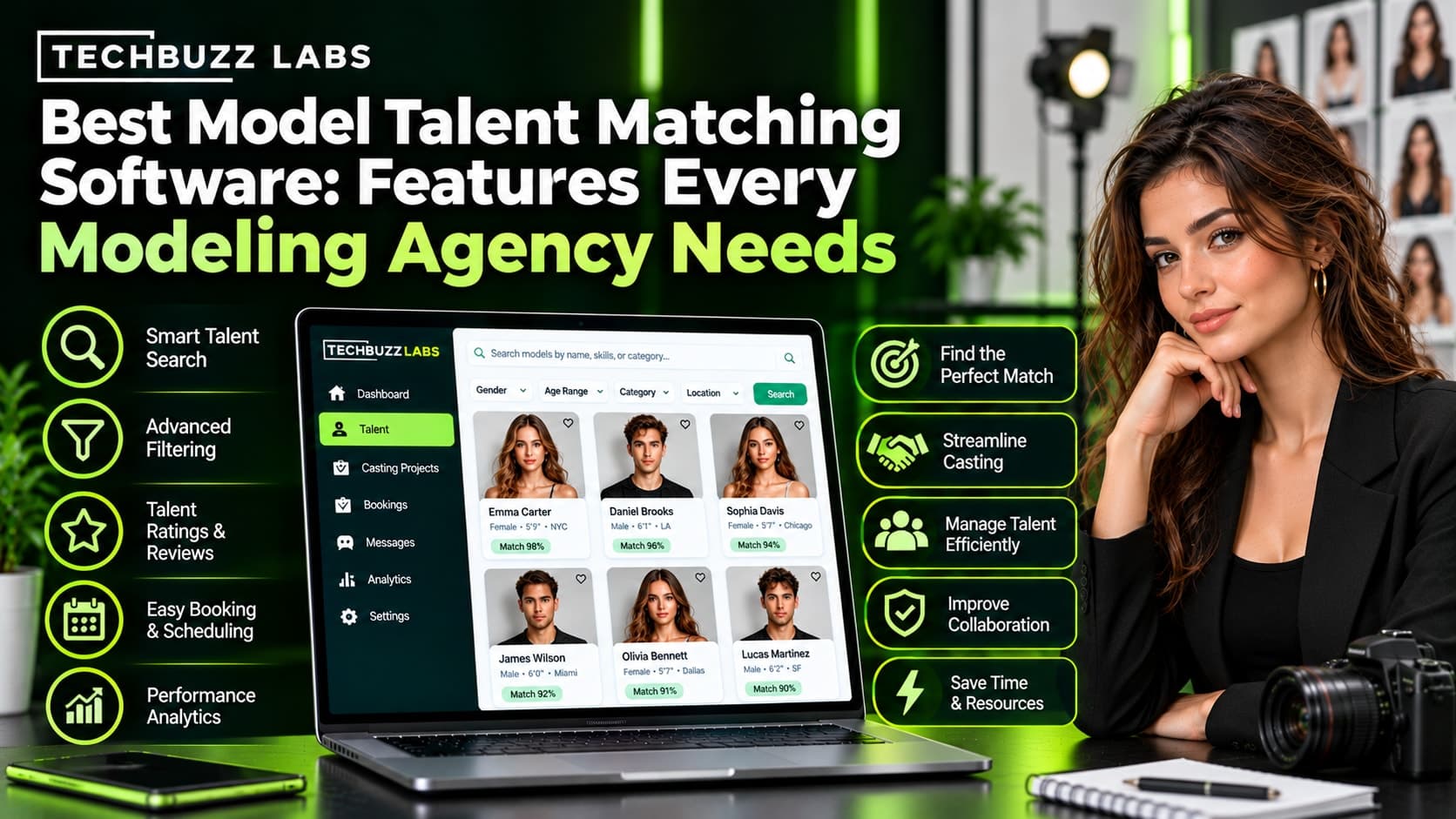
How Model Talent Matching Software Improves Casting and Booking Workflows
For modeling agencies in the United States, where clients may expect quick responses and accurate talent recommendations, an efficient digital workflow can make a meaningful difference.
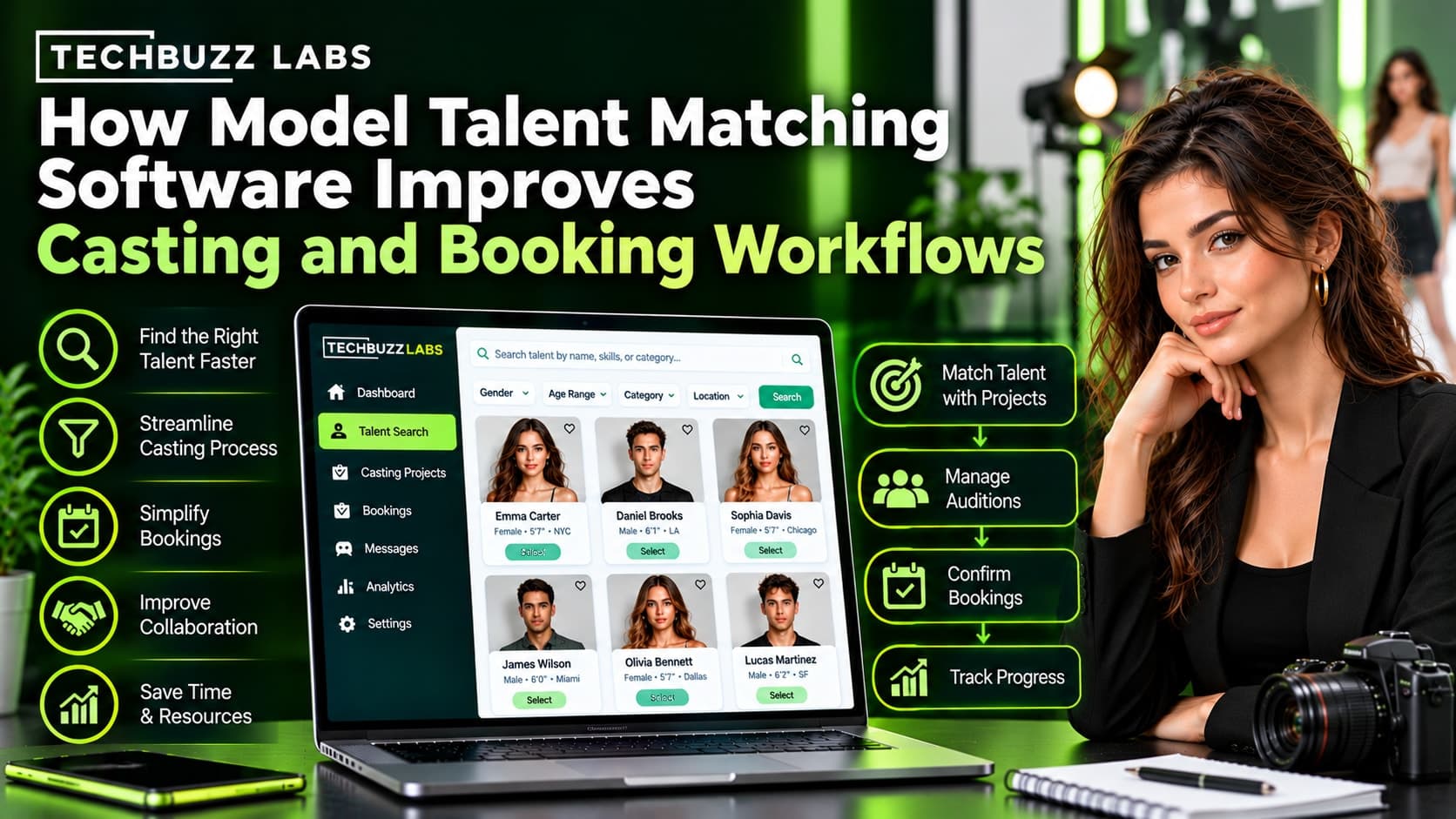
Modeling agencies handle multiple responsibilities every day, from managing talent profiles and reviewing casting requests to coordinating client submissions and confirming bookings. When an agency represents a large number of models, finding the right person for each project can become complicated. Searching through spreadsheets, email attachments, and separate portfolio folders often creates unnecessary delays.
Model talent matching software helps simplify these activities by connecting talent profiles with casting requirements and booking information. It gives agency teams a more organized way to search for suitable models, review portfolios, track submissions, and manage project progress. Here's how model talent matching software improves the casting and booking process.
1. Organizes Talent Information in One Centralized Database
A successful casting process begins with accurate talent information. Agencies need access to model photographs, measurements, experience, skills, locations, contact details, and availability.
When this information is stored across different systems, staff may waste time searching for updated records. They may also encounter duplicate profiles or outdated portfolio images.
Model talent matching software creates a centralized database where authorized employees can access and manage model information.
For example, an agency representing fashion, fitness, commercial, and promotional models can organize each category within the same platform. Staff can review relevant details without switching between multiple applications.
A well-organized database makes talent discovery faster and supports more consistent agency operations.
2. Speeds Up Model Search and Candidate Selection
Casting teams often receive briefs with specific requirements. A client may need models in a particular location, with relevant experience, certain skills, or availability during a defined period.
Searching through hundreds of profiles manually can slow down the selection process.
Talent matching software uses search and filtering features to help teams narrow down candidates based on available profile information.
Common search criteria may include:
Modeling category and specialty.
Location and travel preferences.
Relevant professional experience.
Skills and qualifications.
Recorded availability.
Portfolio and profile status.
For example, if a brand needs commercial models for a campaign in Los Angeles, the casting team can filter its database using relevant project requirements and review a more focused list of candidates.
This reduces unnecessary profile reviews and helps agents prepare suitable shortlists more efficiently.
3. Helps Match Client Requirements With Suitable Talent
Finding a model is not simply about choosing someone from a database. The selected candidate must fit the creative direction and practical requirements of the project.
Model talent matching software can help agencies compare casting briefs with information stored in talent profiles.
Some platforms also provide AI-assisted recommendations that identify potential candidates based on structured criteria such as experience, location, skills, and availability.
These recommendations can help casting teams discover relevant profiles more quickly. However, professional review remains essential. Agents should evaluate portfolio quality, creative suitability, and the client's expectations before making final recommendations.
Using technology to support talent discovery can make the process more organized without removing the human judgment that is important in casting.
4. Makes Digital Portfolio Review Easier
A model's portfolio is an important part of the casting decision. Clients often want to see professional photographs, digitals, previous campaigns, and other relevant work before selecting talent.
When portfolio materials are scattered across folders and email attachments, preparing submissions becomes time-consuming.
Digital portfolio management allows agencies to organize photographs and profile details within a centralized system.
Staff can review model images, compare candidates, and select portfolio materials that match a project's creative direction.
For instance, a fashion campaign may require editorial photographs, while a lifestyle advertising project may benefit from a different selection of portfolio images.
Organized digital portfolios help agencies present talent professionally and make it easier for clients to review candidates.
5. Streamlines Casting Submissions and Client Feedback
After identifying suitable models, agencies must prepare submissions and send them to clients. The process may involve creating presentations, sharing profile links, recording submission dates, and following up on decisions.
Model talent matching software can connect candidate profiles with individual casting opportunities.
Depending on the platform, staff may be able to:
Create candidate shortlists.
Organize profiles by casting project.
Share digital portfolios with clients.
Track submitted candidates.
Record client comments and decisions.
Monitor approval and rejection statuses.
This makes it easier to understand which models have been submitted and which opportunities still require attention.
A centralized submission process also reduces the need to search through old email conversations for important project updates.
6. Improves Model Availability and Booking Coordination
A model may match a client's requirements but still be unavailable for the requested dates. Agencies need to consider scheduling before confirming a candidate.
Without organized availability records, staff may contact models individually just to determine whether they can accept an assignment.
Software that connects talent profiles with booking calendars and availability records can make this process easier.
For example, an agency managing a commercial photoshoot in New York can review suitable profiles and check recorded availability before sending a shortlist to the client.
Booking coordination features may also help teams monitor confirmed assignments, scheduling changes, and potential conflicts.
This supports more accurate recommendations and reduces unnecessary back-and-forth communication.
7. Improves Communication Between Agency Teams and Models
Casting and booking workflows involve agents, managers, models, clients, and production teams. Each group needs relevant updates at different stages.
When communication is spread across multiple channels, it can become difficult to maintain a clear record of decisions.
A digital platform can centralize important project information, including submission statuses, booking notes, availability updates, and follow-up tasks.
Depending on its features, the software may also provide notifications and reminders for pending actions.
For example, agents can identify when a client has not responded to a submitted shortlist or when a model needs to confirm availability.
Better communication helps teams coordinate responsibilities and keep models informed about project progress.
8. Reduces Repetitive Administrative Tasks
Manual casting and booking processes often involve repetitive work. Staff may repeatedly enter model information, prepare similar portfolio presentations, update spreadsheets, and send follow-up messages.
These tasks can take time away from talent development and client relationship management.
Model talent matching software can reduce some of this workload through reusable profile records, templates, automated notifications, and structured workflows.
For example, instead of collecting the same basic information every time a model is considered for a project, staff can access the existing profile and select relevant details for a new submission.
The level of automation depends on the platform, but even small improvements can make daily operations more manageable.
9. Provides Better Visibility Into Casting Performance
Agency managers need to understand how effectively their teams handle casting requests and bookings.
Reporting and dashboard features can help track information such as:
Number of active casting opportunities.
Candidate submissions and selection statuses.
Confirmed and completed bookings.
Pending client responses.
Profile update activity.
Team workload and project progress.
These insights can help managers identify workflow delays and understand where improvements may be needed.
For growing US modeling agencies, better operational visibility can support more informed planning and resource allocation.
10. Supports Agency Growth With Custom Software
Ready-made talent matching platforms can be suitable for agencies with standard requirements. However, businesses with specialized processes may need additional functionality.
An agency managing multiple talent categories, locations, client types, and booking workflows may benefit from a system designed around its specific operations.
Custom software can connect model portfolio management, talent search, casting submissions, availability tracking, client communication, and booking management in one platform.
TechBuzz Labs helps businesses explore custom software solutions based on their operational requirements. For modeling and talent agencies, a tailored platform can reduce disconnected processes and provide a more consistent way to manage talent and client projects.
Before investing, agencies should identify their most important workflow challenges and prioritize features that provide practical value.
Conclusion
Model talent matching software can improve casting and booking workflows by organizing talent information, simplifying profile searches, supporting candidate selection, and connecting submissions with booking activities.
Features such as centralized databases, advanced filters, digital portfolios, availability tracking, client feedback management, and workflow automation can reduce manual effort and improve coordination.
For US modeling agencies managing growing talent databases and multiple client projects, the right software can create a more organized and responsive operation. Whether an agency chooses a ready-made platform or custom software, the best solution is one that supports its real casting and booking requirements while keeping professional judgment at the center of talent selection.