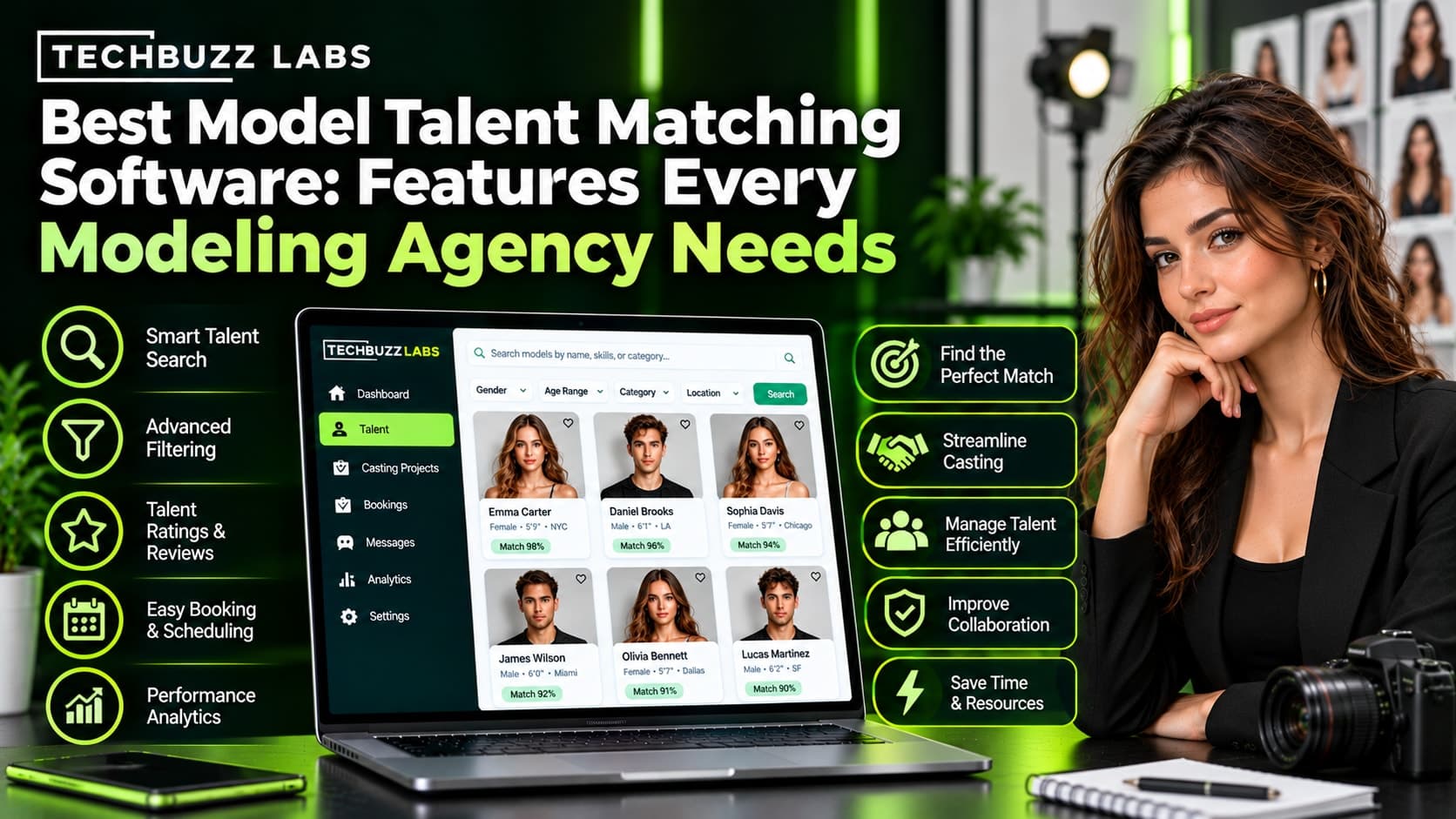
Best Model Talent Matching Software: Features Every Modeling Agency Needs
For modeling agencies across the United States, the right software can improve talent discovery, reduce repetitive administrative work, and support more organized casting and booking operations.
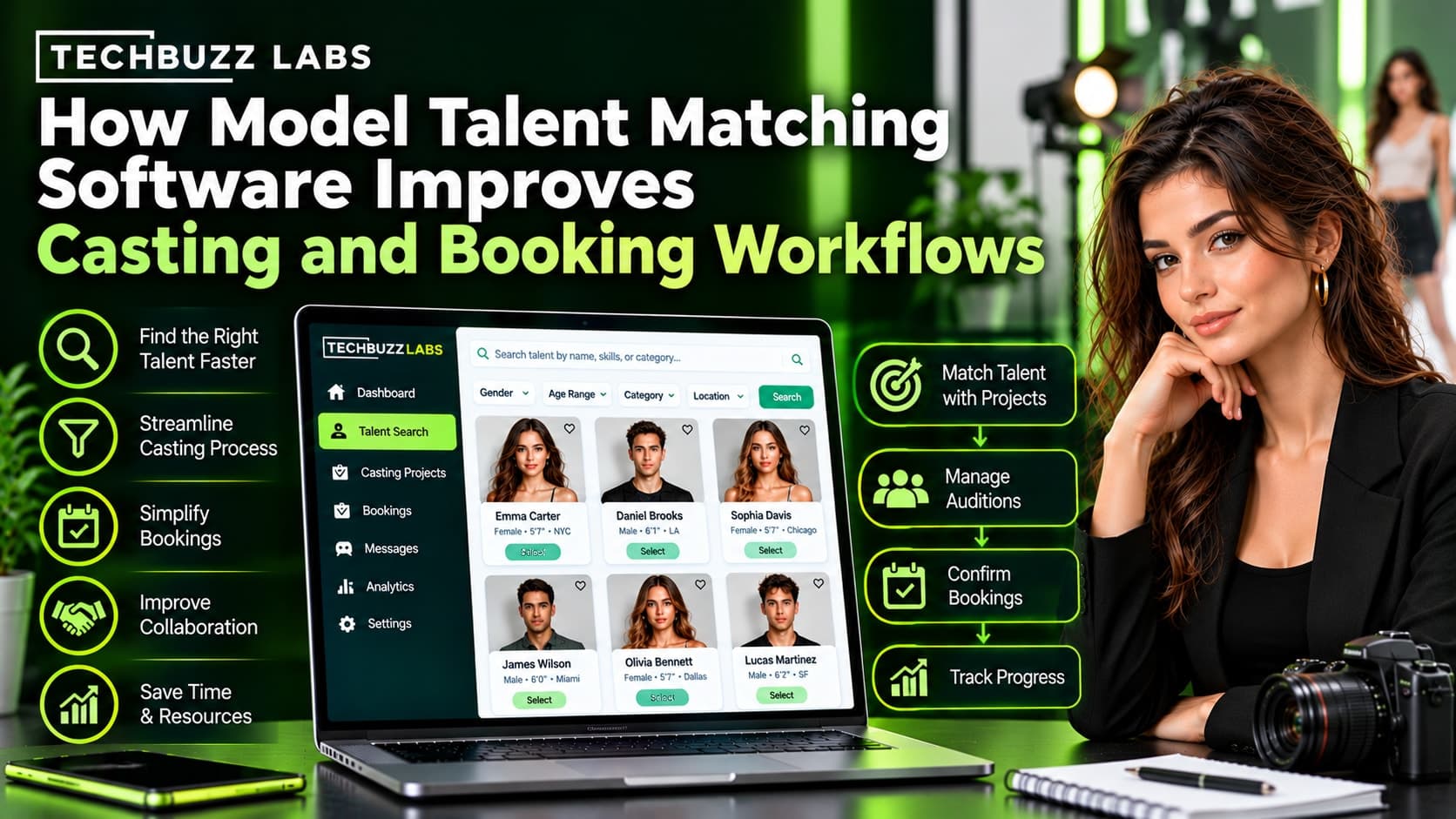
Finding the right model for a casting project can be challenging, especially when a modeling agency manages a large talent roster and handles multiple client requests. Every project has different requirements. A fashion campaign may need experienced runway models, while a commercial photoshoot may require talent with specific skills, availability, and a particular portfolio style.
Searching through spreadsheets, folders, and outdated profile documents can slow down the selection process. Model talent matching software helps agencies organize talent information, search profiles, compare candidates, and connect casting requirements with suitable models.
What Is Model Talent Matching Software?
Model talent matching software is a digital platform that helps agencies identify models who meet the requirements of casting projects. It typically connects a searchable talent database with model portfolios, experience records, availability information, and casting workflows.
Instead of reviewing every profile manually, casting teams can use search filters and matching tools to create relevant candidate lists.
Depending on the platform, common capabilities include:
Centralized model and talent profiles.
Advanced search and filtering.
Digital portfolio and image management.
Casting brief management.
Candidate shortlists and submissions.
Availability and booking tracking.
Client communication and feedback.
Reporting and workflow automation.
The goal is to make talent selection more organized while allowing agents to retain control over final casting decisions.
1. Centralized Talent Database Management
A centralized talent database is one of the most important features of any model talent matching platform.
Modeling agencies often manage extensive information about each person they represent. This may include photographs, measurements, location, contact details, professional experience, skills, and previous assignments.
When these details are scattered across different applications, finding accurate information becomes difficult.
A centralized database stores relevant records in one place. Agency staff can access profiles, review portfolio materials, and update information without searching through multiple folders.
For example, an agency representing fashion, fitness, and commercial models can organize talent into different categories while keeping all records accessible through one system.
This structure becomes particularly valuable as an agency's roster grows.
2. Advanced Search and Filtering Capabilities
Searching for suitable models should not require reviewing every profile individually.
Advanced search and filtering allow casting teams to narrow down talent based on project requirements. Depending on the software, filters may include:
Modeling category and specialty.
Location and travel preferences.
Professional experience.
Relevant skills.
Recorded availability.
Profile status and portfolio information.
Imagine a client requesting commercial models for a campaign in Los Angeles. The agency could filter its database by location, relevant experience, and availability before reviewing the most suitable portfolios.
Effective search functionality saves time, but its quality depends on accurate and consistently updated profile information.
3. AI-Assisted Talent Matching
AI-assisted matching is becoming an important consideration when agencies evaluate modern talent management platforms.
These features can help compare casting requirements with structured information stored in model profiles. A system might suggest potential candidates based on experience, location, skills, availability, and other relevant criteria.
For example, when an agency receives a brief for a fitness advertising campaign, AI-assisted recommendations may help identify profiles that match the project's recorded requirements.
However, automated recommendations should support professional judgment rather than replace it. Casting teams still need to review portfolios, understand the client's creative direction, and assess whether a candidate is appropriate for the assignment.
Agencies should also evaluate how recommendations are generated and whether the system handles personal information responsibly.
4. Digital Portfolio and Image Management
A model's portfolio is central to the casting process. Clients often want to review professional photographs, digitals, previous campaigns, and other relevant work before making a selection.
The best model talent matching software should make these materials easy to organize and access.
Useful portfolio features include:
Organized image and media libraries.
Easy photo uploads and replacements.
Digital portfolio presentations.
Profile information and experience records.
Shareable portfolio links.
Access permissions for sensitive materials.
For example, an agent working on a fashion campaign may prepare a selection of relevant editorial images rather than sharing an entire collection of unrelated photographs.
Organized portfolios help agencies present talent professionally and make candidate comparisons easier for clients.
5. Casting Brief and Submission Management
Talent matching is only one part of the casting process. Agencies also need to manage client requirements, submissions, feedback, and selection decisions.
Casting management features allow staff to connect model profiles with individual project opportunities.
A platform may support casting briefs, submission deadlines, candidate shortlists, status tracking, and client feedback records.
Teams can organize opportunities through stages such as:
New casting request.
Requirements reviewed.
Talent selected.
Profiles submitted.
Client feedback received.
Final candidates approved.
Booking confirmed.
This structured approach helps agencies monitor active opportunities and reduces the risk of losing important updates in email conversations.
6. Real-Time Availability and Booking Management
A model may be an excellent match for a project but unavailable on the required dates. That is why availability tracking should be connected to talent matching.
Look for software that allows agency staff to review scheduling information alongside model profiles. Booking records, calendar integrations, availability updates, and project histories can help teams make more informed recommendations.
For instance, if a client needs talent for a three-day photoshoot in New York, the agency can review suitable profiles and check recorded availability before preparing a shortlist.
This reduces unnecessary communication and helps prevent avoidable scheduling conflicts.
7. Client Collaboration and Communication Tools
Modeling agencies work with brands, photographers, production companies, casting directors, and other industry professionals. Clear communication is essential when multiple people are involved in a selection process.
Client collaboration tools can make it easier to share candidate profiles, collect feedback, and track decisions.
Depending on the platform, agencies may have access to secure portfolio links, client review pages, submission notes, notifications, and communication histories.
These features help keep project information organized and make it easier for teams to understand what has happened at each stage of a casting opportunity.
8. Reporting and Workflow Automation
As agencies expand, managers need visibility into how their casting and booking operations are performing.
Reporting features may help monitor submission activity, booking progress, active projects, profile completeness, and team workloads.
Workflow automation can also reduce repetitive tasks. For example, the system might send reminders about pending client feedback, notify staff when a profile needs updating, or prompt agents to follow up on an outstanding submission.
Agencies should prioritize useful automation rather than adding features that make everyday work more complicated.
9. Security, Permissions, and Scalability
Model portfolios and personal information should be handled carefully. Agencies should evaluate the software's security practices, access controls, backup procedures, and data management options.
Different users may need different levels of access. Agency managers, booking agents, models, and external clients should only be able to view or update information appropriate to their roles.
Scalability is equally important. The platform should be able to support a growing talent database, additional staff members, and more complex workflows without requiring an entirely new system.
How to Choose the Best Model Talent Matching Software
Before investing in a platform, modeling agencies should evaluate their current processes and identify the problems they want to solve.
Consider these questions:
Can the software manage your current and future talent roster?
Does it offer flexible search and filtering?
Can staff organize and share portfolios easily?
Does it connect casting submissions with booking records?
Can it support your client communication process?
Are security and user permissions clearly defined?
Does the pricing fit your agency's budget?
Can the system integrate with your existing tools?
Some agencies may find ready-made platforms sufficient. Others with specialized requirements may benefit from custom software developed around their workflows.
TechBuzz Labs helps businesses explore custom technology solutions for talent and modeling agencies. A tailored platform can bring model profiles, talent search, casting submissions, client management, and booking operations together in one organized system.
The best approach is to begin with essential requirements, evaluate available solutions, and invest in features that address genuine operational challenges.
Conclusion
The best model talent matching software should do more than help agencies search through model profiles. It should connect talent information with portfolios, casting briefs, availability, client feedback, and booking activities.
Centralized databases, advanced filtering, AI-assisted recommendations, digital portfolio management, and secure client collaboration can make talent selection more efficient.
For US modeling agencies managing growing rosters and multiple casting projects, choosing the right platform can support better organization and smoother workflows. By focusing on practical features and long-term business needs, agencies can build a more effective process for finding the right models for every casting opportunity.