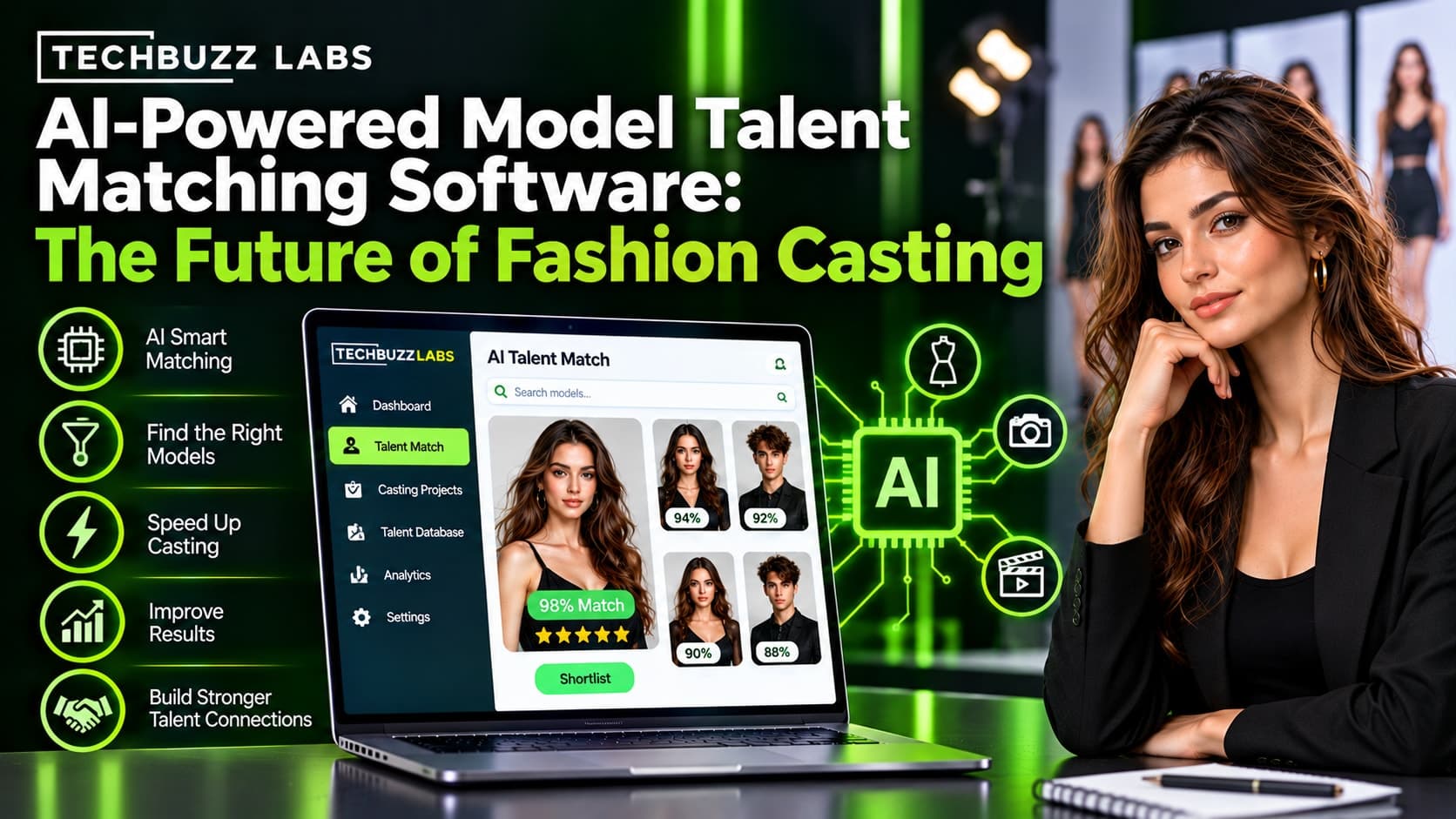
AI-Powered Model Talent Matching Software: The Future of Fashion Casting
Although AI cannot replace the experience and creative judgment of professional casting teams, it can become a valuable tool in modern fashion casting.
The fashion industry is constantly evolving, and technology is changing how modeling agencies discover talent, manage portfolios, and organize casting projects. Traditionally, finding the right model involved reviewing hundreds of portfolios, contacting talent individually, and comparing candidates against client requirements. While this approach can work, it becomes increasingly time-consuming as agencies manage larger talent databases and multiple campaigns.
AI-powered model talent matching software offers a more efficient approach. By using artificial intelligence to analyze structured talent information and compare it with casting requirements, these platforms can help agencies identify potentially suitable candidates faster.
For fashion modeling agencies in the United States, where casting projects often involve tight deadlines and specific creative expectations, AI-assisted technology can improve talent discovery and support more organized workflows. What Is AI-Powered Model Talent Matching Software?
AI-powered model talent matching software is a digital platform that uses artificial intelligence and data analysis to help agencies identify models who may fit specific casting projects.
Traditional talent databases primarily depend on manual searches and predefined filters. AI-assisted platforms can go further by analyzing multiple pieces of structured information and generating candidate recommendations based on project requirements.
Depending on the system, information used for matching may include:
Modeling category and professional experience.
Skills and relevant qualifications.
Location and travel preferences.
Recorded availability.
Portfolio information and project history.
Client-defined casting requirements.
Some platforms may also support image organization or image-based search. Agencies should understand exactly how these features work and what information they process before using them.
The purpose is to make talent discovery more efficient while keeping final selection decisions under human control.
1. Faster Talent Discovery for Fashion Campaigns
Fashion agencies frequently receive casting requests for runway shows, editorial shoots, commercial campaigns, and brand promotions. Each opportunity can have different requirements.
Searching through a large talent database manually may delay submissions, particularly when clients expect several suitable options within a short period.
AI-powered matching can help narrow down the available profiles by comparing project requirements with relevant information in the talent database.
For example, if a fashion brand needs models for an editorial campaign in New York, the system may recommend candidates based on location, experience, availability, and other recorded criteria.
Casting teams can then review the suggested profiles instead of starting every search from scratch.
2. Smarter Matching Based on Casting Requirements
Every casting brief contains details that influence talent selection. These may include the campaign's creative direction, modeling category, location, schedule, required skills, and experience.
AI-assisted software can help organize these requirements and compare them with model profiles.
For example, an agency handling a sportswear campaign may need models with relevant fitness or athletic modeling experience. A matching platform could prioritize profiles containing those details.
The quality of recommendations depends on the accuracy and relevance of the information stored in the system. Agencies should also ensure that their matching criteria are appropriate for the actual project rather than relying on assumptions or irrelevant personal characteristics.
3. Better Organization of Digital Model Portfolios
A model's portfolio is one of the most important resources in fashion casting. It allows clients to review professional photographs, previous assignments, and relevant experience.
When agencies store portfolio images across different folders and applications, finding the right material can become difficult.
AI-powered portfolio management features may help organize images, categorize digital assets, and make relevant portfolio materials easier to locate.
For example, an agency may organize editorial, runway, commercial, and lifestyle photographs separately. Casting teams can then select portfolio materials that align with the creative direction of a particular campaign.
AI-assisted organization can support this process, but agencies should review automated categorization and ensure that portfolio information remains accurate.
4. Reduced Manual Work for Casting Teams
Casting professionals often spend considerable time reviewing profiles, preparing candidate lists, updating records, and coordinating submissions.
AI-powered talent matching software can reduce some of this repetitive work by helping staff identify relevant profiles and organize casting information.
Depending on the platform, automation may support:
Candidate recommendations.
Profile categorization.
Casting shortlist preparation.
Submission status tracking.
Notifications and follow-up reminders.
Portfolio organization.
These capabilities allow agency employees to spend more time evaluating talent, understanding client expectations, and building relationships.
The goal is not to remove casting professionals from the process. It is to give them better tools to manage routine tasks.
5. Improved Casting Shortlists and Client Presentations
After identifying potential candidates, agencies must present their selections to clients. This usually involves reviewing portfolios, comparing profiles, and preparing organized submissions.
AI-assisted matching can help casting teams create an initial list of relevant candidates. Staff can review those recommendations, remove unsuitable profiles, and prepare a final shortlist.
Some platforms also support digital portfolio presentations and secure profile sharing.
For a fashion brand reviewing candidates for a campaign, an organized shortlist can make it easier to compare experience and portfolio materials.
Human review remains important because creative suitability cannot always be determined through structured data alone.
6. More Efficient Availability and Booking Coordination
Finding a suitable model is only part of the casting process. Agencies must also confirm whether candidates are available for the required dates and location.
AI-assisted matching platforms can become more useful when connected to booking and availability records.
For example, if a client requests models for a photoshoot in Los Angeles, the platform may help identify profiles that meet the project's requirements and have suitable availability recorded.
Integrated booking features can also help teams track confirmed assignments, scheduling changes, and pending responses.
This reduces unnecessary communication and supports more reliable booking coordination.
7. More Personalized Client and Talent Management
Different fashion clients have different expectations. Some may regularly request editorial models, while others focus on commercial campaigns, runway projects, or lifestyle advertising.
A well-designed talent management platform can maintain project histories, client preferences, and previous submission records.
AI-assisted tools may use relevant historical information to help staff identify patterns and organize future searches. For example, an agency may be able to review which types of portfolios were previously shortlisted for a particular client.
However, previous decisions should not automatically determine future recommendations. Every casting project deserves an independent review based on its current requirements.
8. Responsible AI and Fair Casting Practices
AI can make talent discovery more efficient, but agencies should consider how automated recommendations are generated.
Poorly designed systems may produce inaccurate recommendations or reinforce unfair patterns in historical data. Fashion agencies should avoid relying on sensitive personal characteristics or automated judgments that are not relevant to a casting brief.
Responsible implementation should include:
Clear and job-relevant matching criteria.
Accurate and regularly updated profile information.
Appropriate access controls for personal data.
Human review of AI-generated recommendations.
Regular checks for inaccurate or unfair outcomes.
Transparency about how candidate recommendations are used.
AI should support fair and informed casting decisions, not make final judgments about a model's suitability without professional oversight.
9. Why Custom AI Model Talent Matching Software Matters
Ready-made platforms may provide useful matching and portfolio management features. However, some agencies have specialized workflows that require more flexibility.
A growing fashion modeling agency may need custom talent categories, advanced search rules, client portals, booking integrations, and reporting tools. A tailored platform can be designed around these specific requirements.
Custom AI-powered software can combine model portfolio management, talent search, casting submissions, availability tracking, and booking operations in one centralized system.
TechBuzz Labs helps businesses explore custom software solutions designed around their operational needs. For modeling and talent agencies, a customized platform can provide a foundation for integrating AI-assisted matching with existing agency workflows.
Before starting development, agencies should identify their most important challenges, define appropriate matching criteria, and decide which AI features offer genuine business value.
Conclusion
AI-powered model talent matching software is creating new opportunities for fashion modeling agencies to improve talent discovery and organize casting operations. By helping teams search profiles, compare project requirements, organize portfolios, and manage submissions, AI-assisted platforms can reduce repetitive work and support faster decision-making.
However, successful fashion casting still depends on professional experience, creative understanding, and fair evaluation. AI should serve as a supporting tool rather than a replacement for human judgment.
For US modeling agencies planning to modernize their operations, investing in the right talent matching technology can help create a more organized and scalable casting process. The future of fashion casting will likely combine intelligent software with the creativity and expertise of experienced industry professionals.