How Talent Agencies Can Improve Client Response Times With CRM Software
A delayed response can happen for several reasons. An agent may need to search through a large talent database, check model availability, gather portfolio information, contact team members, and prepare a submission before responding.
In the fast-moving U.S. talent and modeling industry, responding quickly to clients can make a significant difference. Brands, advertising agencies, production companies, photographers, and other businesses often work with tight deadlines when searching for talent. When an agency takes too long to respond, a client may move forward with another agency or lose interest in an opportunity.
For modern talent agencies, CRM software can help reduce these delays by bringing talent profiles, client information, casting opportunities, availability, submissions, and bookings into one centralized system. Instead of searching through spreadsheets, emails, and separate folders, agents can access the information they need more quickly.
TechBuzzLabs focuses on technology solutions for modeling and talent agencies, including CRM, casting management, talent management, and workflow automation. These tools can help agencies create a more organized workflow and respond to clients more efficiently.
Why Client Response Time Matters
Client response time is an important part of agency service. When a client sends a casting request, they may expect the agency to provide suitable talent within hours rather than days.
A delayed response can happen for several reasons. An agent may need to search through a large talent database, check model availability, gather portfolio information, contact team members, and prepare a submission before responding.
When these tasks are handled manually, even a simple request can take significant time.
CRM software can organize many of these processes so agents can move from a client request to a relevant response more efficiently.
1. Keep Client Information in One Place
A CRM allows agencies to maintain centralized client records.
These records can include contact information, previous projects, communication history, preferences, and booking activity.
When a client submits a new request, agents can quickly review the relevant information instead of searching through old emails or documents.
Having client history available in one place also helps agents provide more personalized responses.
2. Create a Searchable Talent Database
One of the biggest factors affecting response time is the ability to find suitable talent quickly.
A modern CRM can organize model profiles containing photographs, portfolio materials, experience, skills, location, category, and other relevant information.
Agents can use search and filtering tools to narrow the talent pool according to a client's requirements.
For example, if a brand needs commercial models in Los Angeles for an upcoming campaign, an agent can search for relevant talent rather than manually reviewing every profile.
This can significantly reduce the time required to prepare a shortlist.
3. Connect Talent Profiles With Availability
Finding a suitable model is only the first step.
Agents also need to determine whether the talent is available for the project.
When availability is stored separately, agents may have to contact models individually before responding to the client.
CRM software can connect talent profiles with availability information, allowing agents to consider scheduling when creating a shortlist.
This can help reduce unnecessary back-and-forth communication and make responses more accurate.
4. Manage Casting Requests Efficiently
A CRM can also organize incoming casting requests.
Agents can record project details such as client requirements, dates, location, talent category, deadlines, and casting status.
Instead of keeping these details across different email threads, the information can be associated with a single casting record.
This makes it easier for agents to understand what the client needs and determine what action should happen next.
A typical workflow might be:
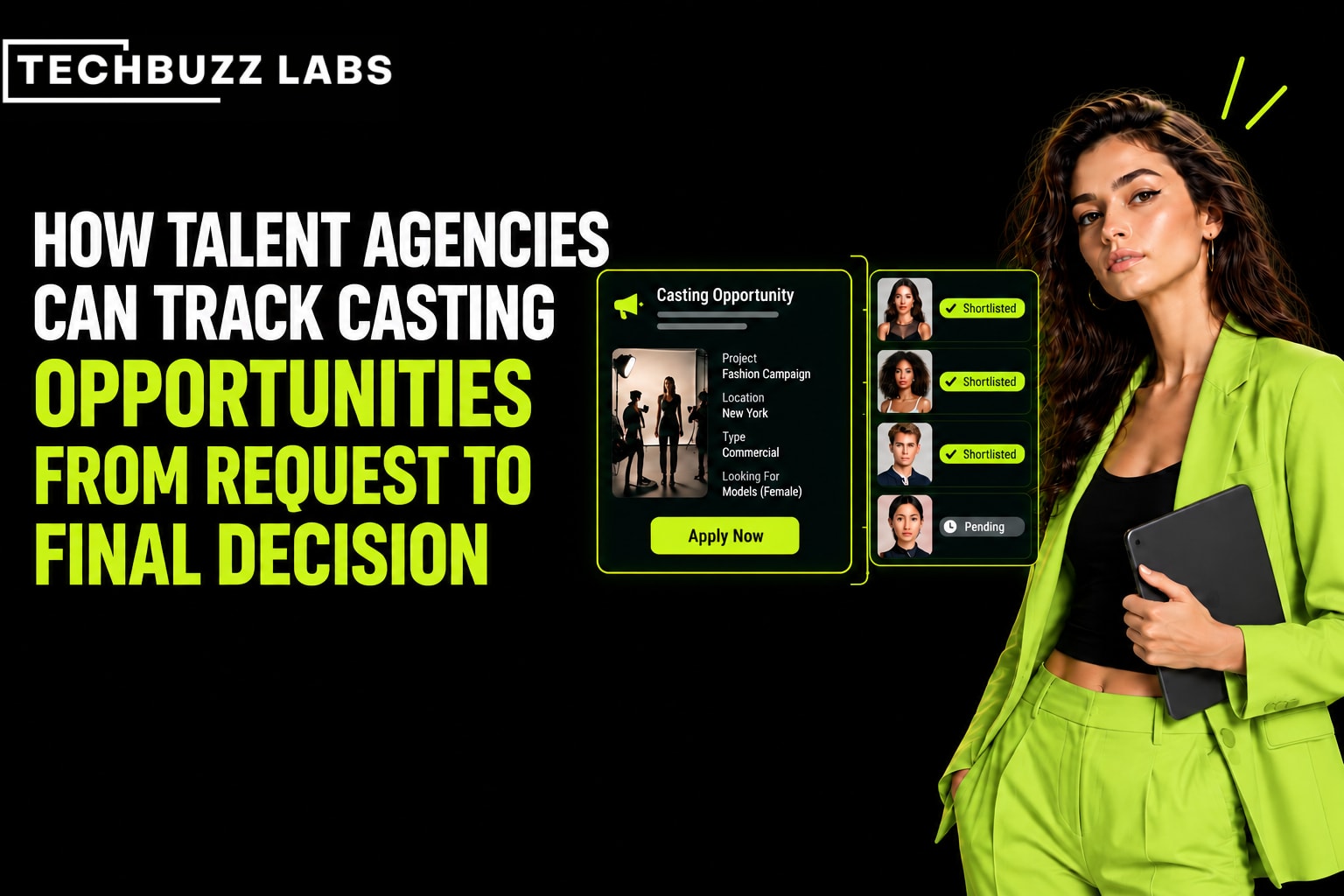
Client Request → Talent Search → Availability Check → Submission → Client Feedback → Booking
Keeping these stages connected can improve workflow visibility and response speed.
5. Simplify Talent Submissions
Preparing talent submissions can take considerable time when information is scattered across multiple systems.
Agents may need to collect photographs, portfolio links, experience, measurements, and other details before sending options to a client.
With CRM software, these details can already be connected to each talent profile.
Agents can select suitable models and associate them with the relevant casting opportunity.
This can reduce duplicate data entry and allow agents to prepare professional submissions more quickly.
6. Use Templates for Faster Communication
CRM systems can help agencies standardize certain types of communication.
Agents may regularly send messages related to casting requests, talent availability, submissions, follow-ups, and booking confirmations.
Reusable templates can reduce the time required to write routine messages from scratch.
However, templates should still allow agents to personalize communication based on the client and project.
The goal is to make routine communication faster without making client interactions feel generic.
7. Automate Follow-Ups
Not every client responds immediately after receiving a submission.
Without a structured follow-up system, agents may forget to contact clients again.
CRM software can provide reminders and automated workflows for appropriate follow-ups.
For example, an agent could receive a reminder to check on a casting after a specific period.
This helps agencies maintain consistent communication without relying entirely on memory or manual calendars.
8. Track Every Client Interaction
A centralized CRM can maintain a history of client interactions.
Agents can see previous messages, casting requests, submissions, and bookings associated with a client.
This can help prevent repeated questions and unnecessary communication.
For example, if a client previously explained the type of talent they prefer, the agent can review that information before responding to a new request.
Better context can lead to more relevant and efficient responses.
9. Improve Team Collaboration
Client response times can also suffer when multiple agents are working on the same account.
If one agent receives a request but another agent has the relevant talent information, communication between team members can create delays.
A centralized CRM allows authorized team members to access shared information.
An agent can see the current status of a casting, which talent has been contacted, whether submissions have been sent, and what feedback has been received.
This makes it easier for team members to continue work when another agent is unavailable.
10. Prioritize Time-Sensitive Requests
Not every client request has the same urgency.
A CRM can help agencies organize opportunities according to deadlines, project dates, client priorities, or casting status.
Agents can then focus their attention on requests that require immediate action.
For example, a casting deadline tomorrow may need to be handled before a project with a submission deadline several weeks away.
Prioritization can help agencies manage their workload without allowing urgent opportunities to get lost among routine tasks.
11. Measure Response Performance
CRM software can also provide useful operational data.
Agencies can analyze information related to casting activity, client interactions, submissions, and bookings.
Over time, managers may identify where delays occur in their workflow.
For example, if talent searches are consistently taking too long, the agency may need to improve database organization or filtering. If client follow-ups are frequently delayed, automation or reminders may help.
Using data allows agencies to improve response times systematically rather than simply asking agents to work faster.
How TechBuzzLabs Can Support Modern Agency Workflows
TechBuzzLabs focuses on technology solutions for modeling and talent agencies, including CRM, casting management, talent management, and workflow automation.
For agencies managing large talent pools and multiple client relationships, centralized technology can connect the information needed to respond to casting requests more efficiently.
Instead of managing talent profiles, client information, casting requests, availability, submissions, and bookings through disconnected systems, agencies can create a more unified workflow.
This can help agents spend less time searching for information and more time communicating with clients and managing talent.
Best Practices for Faster Client Responses
CRM software can improve efficiency, but agencies should also establish clear internal processes.
Teams should keep talent profiles updated, regularly review model availability, maintain accurate client records, define casting workflows, and establish clear responsibilities for incoming requests.
Agents should also prioritize accuracy. Responding quickly is valuable, but sending unsuitable talent or incorrect availability information can damage a client relationship.
The best approach is to combine speed with relevance and accuracy.
Conclusion
For modern U.S. talent agencies, faster client response times can support stronger relationships and help agencies compete for time-sensitive opportunities.
CRM software can improve response times by centralizing client information, organizing talent profiles, connecting availability with casting, simplifying submissions, automating follow-ups, and improving team collaboration.
Instead of spending valuable time searching through spreadsheets and disconnected systems, agents can access the information they need from a centralized platform.
As modeling and talent agencies continue to manage larger rosters and more complex client demands, CRM technology can become an important part of an efficient agency workflow.
With solutions from TechBuzzLabs, agencies can explore a more connected approach to CRM and talent management, helping them respond to clients faster while keeping casting, talent, and booking operations organized.