How CRM Software Helps Talent Agencies Manage Client Briefs More Efficiently
A typical brief may include the project type, shoot dates, location, number of talent required, preferred characteristics, experience, skills, availability, rates, and other specifications.
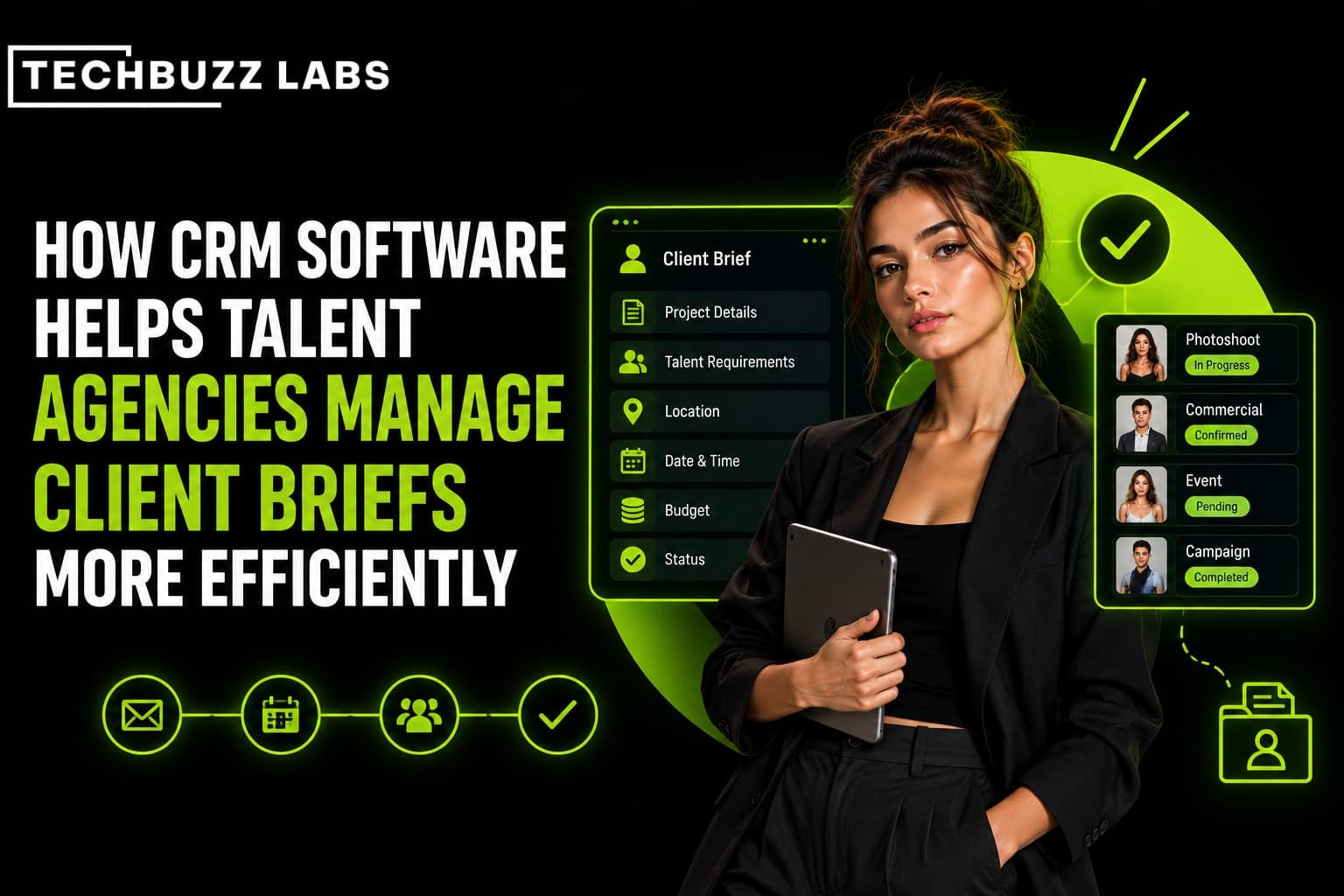
For talent agencies, a client brief is the starting point for finding the right talent for a project. A brief may include information about the campaign, talent requirements, location, dates, budget, skills, appearance, experience, usage rights, and other important details. When agencies receive multiple briefs at the same time, keeping track of every requirement can become challenging.
For talent agencies across the USA, particularly those working with advertising agencies, production companies, fashion brands, entertainment businesses, and corporate clients, CRM software can make brief management more organized. By connecting client information, project requirements, talent profiles, availability, submissions, and booking workflows, a CRM can help agents move from receiving a brief to presenting suitable talent more efficiently.
What Is a Client Brief?
A client brief is a collection of requirements that explains what a client needs for a specific project. For a talent agency, this might involve finding one or more models, actors, influencers, performers, or other professionals.
The more detailed the project, the more important it becomes to organize this information properly. If important requirements are buried in an email or spread across different documents, agents may miss details during the talent selection process.
Why Managing Client Briefs Can Be Difficult
Talent agencies often receive briefs through different channels. Some arrive through email, while others may come through phone calls, forms, messaging platforms, or direct client communication.
When these requests are managed manually, agents may need to copy information into spreadsheets or create separate notes for each project. As the number of briefs increases, this can result in duplicate data entry, missed follow-ups, and difficulty determining which projects are still active.
A CRM can provide a centralized location where client briefs can be recorded and tracked from the beginning.
Centralizing Client Brief Information
One of the biggest advantages of CRM software is centralized information.
Instead of keeping client requirements across emails, documents, and spreadsheets, agents can create a structured project record within the CRM. Important brief details can be stored in clearly defined fields, making them easier to review and update.
When another team member takes over a project, they can access the same information without asking the original agent to explain everything again.
This creates greater visibility across the agency.
Turning a Brief Into a Talent Search
Once a client brief is recorded, the next step is finding suitable talent.
A CRM connected to a centralized talent database can help agents search profiles based on the requirements in the brief. Depending on the agency's system, agents may be able to filter talent by location, experience, skills, measurements, availability, or other relevant criteria.
This can be particularly useful for U.S. agencies managing large talent rosters.
Instead of manually reviewing hundreds of profiles, agents can narrow the database down to talent who are more closely aligned with the client's requirements.
Checking Talent Availability
A strong talent match is only useful if the person is available for the project.
CRM software can connect talent profiles with availability information, allowing agents to consider scheduling as part of the selection process.
For example, if a client needs talent for a two-day campaign in Los Angeles, the agent can identify suitable profiles and then check whether those models are available for the required dates.
This can reduce unnecessary communication and help agents avoid submitting talent who cannot participate.
Tracking Brief Status
Client briefs can move through several stages before becoming bookings.
An agency may receive a brief, review the requirements, search for talent, create a shortlist, submit profiles, receive client feedback, revise the shortlist, and eventually confirm a booking.
A CRM can track these stages through project statuses.
Agents can quickly see whether a brief is new, being worked on, awaiting client feedback, shortlisted, confirmed, or closed. This makes it easier to prioritize active projects and identify briefs that require attention.
Managing Client Feedback
Client feedback can sometimes involve multiple rounds of changes.
A client may ask for additional talent, adjust the project requirements, request different experience levels, or change the shoot dates.
Keeping this feedback connected to the project record helps agents understand what has changed. Rather than searching through multiple email conversations, they can review the latest project information in one place.
This can make revisions faster and reduce the possibility of working from outdated requirements.
Improving Team Collaboration
Large talent agencies often have multiple agents and coordinators working on different projects.
Without a centralized system, it can be difficult for team members to understand who is responsible for a particular brief or what has already been completed.
CRM software can provide task assignments, project statuses, internal notes, notifications, and communication records. This gives team members greater visibility into ongoing client requests.
A shared system can also make it easier for agents to step in when another team member is unavailable.
Automating Repetitive Brief Management Tasks
Many activities associated with client briefs are repetitive.
Agents may need reminders to follow up with clients, notify team members about changes, update project statuses, or check whether submissions have received feedback.
CRM automation can handle some of these routine activities.
For example, a system could create a follow-up reminder when a client has not responded to a submission. It could also notify the responsible agent when a project's status changes.
Automation does not replace the agent's role. Instead, it helps reduce administrative tasks that can otherwise consume valuable time.
Keeping Client History Connected
A client brief should not exist in isolation from the client's previous activity.
CRM software can connect new briefs with client records, previous projects, booking history, and communication information.
When a repeat client sends a new request, agents can review previous projects to understand their preferences and working patterns. This can help the agency provide a more informed and personalized response.
How TechBuzzLabs Can Help
TechBuzzLabs focuses on developing custom technology solutions for talent and casting agencies. A custom CRM can be designed to connect client briefs with talent profiles, availability, casting, submissions, bookings, and other agency workflows.
For U.S. talent agencies managing a growing number of client requests, this type of centralized platform can help teams organize briefs and move projects through the workflow more efficiently.
A custom solution also allows an agency to define how briefs are captured, which fields are required, how projects are assigned, what notifications are triggered, and how talent is searched.
TechBuzzLabs can also incorporate automation and AI applications where they provide practical value to a specific agency workflow.
Conclusion
Managing client briefs efficiently is essential for talent agencies that want to respond quickly and deliver suitable talent to clients. As the number of projects increases, relying on emails, spreadsheets, and disconnected tools can make the process unnecessarily complicated.
CRM software can centralize client briefs, connect them with talent databases, track availability, manage submissions and feedback, and provide visibility throughout the booking process.
For talent agencies across the USA, a specialized or custom CRM can create a more organized approach to client brief management. By building technology around their actual workflow, agencies can improve efficiency while creating a stronger foundation for managing clients, talent, and bookings as the business grows.