How CRM Dashboards Can Give Modeling Agencies Better Operational Visibility
This makes the dashboard more than a reporting tool. It can become a central workspace for understanding the agency's daily activity.
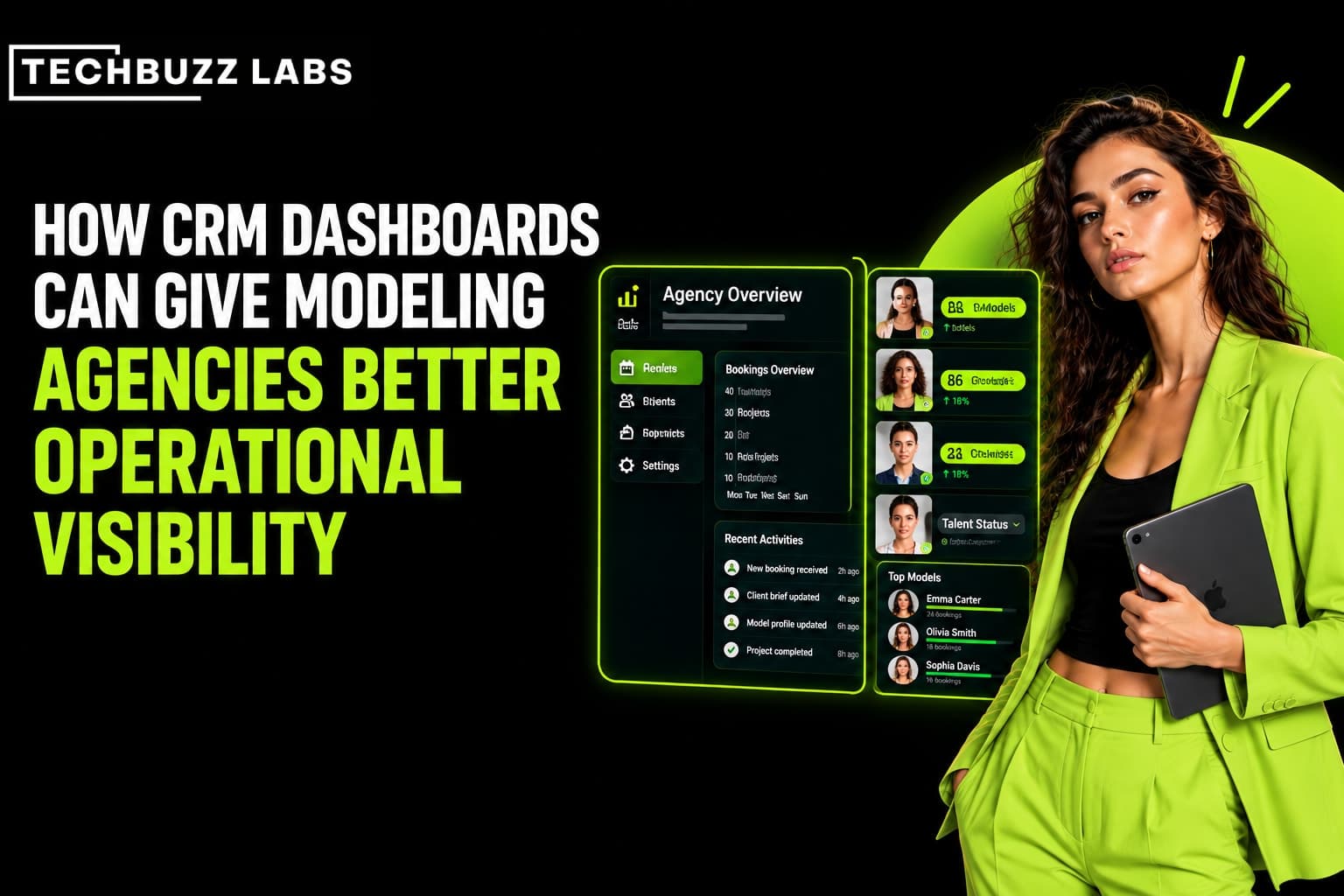
Modeling agencies manage a large amount of information every day, from model profiles and availability to casting requests, client communication, submissions, and bookings. As an agency grows, keeping track of all these activities can become difficult when information is spread across spreadsheets, emails, messaging apps, and separate tools. CRM dashboards for modeling agencies can give modeling agencies a centralized view of their operations, helping teams understand what is happening across talent, clients, castings, and bookings.
For agencies working in competitive U.S. markets such as New York, Los Angeles, Miami, Chicago, and San Francisco, having better operational visibility can make it easier to respond quickly and keep daily workflows organized. A well-designed CRM dashboard brings important information together so agency teams can make decisions based on current data rather than relying on scattered updates.
What Is a CRM Dashboard for a Modeling Agency?
A CRM dashboard is a visual interface that displays important agency information in one place. Instead of opening multiple systems to check casting opportunities, model availability, client requests, or booking activity, team members can use a dashboard to see key operational information at a glance.
For a modeling agency, the dashboard might show active castings, pending submissions, upcoming bookings, available models, client requests, follow-ups, and other important workflow information. The exact dashboard depends on how the agency operates and what information its team needs most frequently.
Seeing Active Casting Opportunities More Clearly
Casting opportunities can move quickly. An agency may receive several briefs from different clients while its team is simultaneously managing existing submissions and auditions.
A CRM dashboard can organize these opportunities according to their current status. Team members can quickly identify new requests, castings that need talent submissions, opportunities awaiting client feedback, and projects that have reached the booking stage.
This visibility helps prevent opportunities from being overlooked. Instead of searching through emails or spreadsheets, agents can review the current casting pipeline from a centralized dashboard.
Monitoring Model Availability
Model availability is an important part of agency operations. A client may need specific talent for a particular date, but an otherwise suitable model may already be booked.
A CRM dashboard can provide a clearer view of availability information alongside casting and booking activity. Agencies can identify which models are available, which are already committed, and which may require an availability confirmation.
When availability data is connected to other agency information, agents can spend less time manually checking different records before responding to client requests.
Understanding Booking Activity
Bookings represent an important stage in the agency workflow, and managers need to understand what has been confirmed and what still requires attention.
A CRM dashboard can display upcoming bookings, current booking statuses, schedules, and related client information. This can help teams identify upcoming work and prepare for projects before they begin.
For agencies managing many models and clients simultaneously, having booking information visible in one place can also make workload planning easier.
Tracking Client Requests and Follow-Ups
Client relationships involve more than individual bookings. Agencies may receive repeated requests, send talent options, answer questions, and follow up on pending decisions.
A CRM dashboard can help teams monitor these activities. For example, an agency could identify client requests that have not yet received a response or submissions that are waiting for feedback.
This type of visibility can improve response management. Agents can prioritize tasks based on urgency instead of relying entirely on memory or manually checking communication channels.
Measuring Agency Performance
Operational visibility is not only about knowing what is happening today. CRM dashboards can also help agency managers understand broader performance patterns.
A dashboard might show the number of casting opportunities received, submissions made, auditions scheduled, bookings completed, or clients actively working with the agency. Over time, these metrics can help managers identify which parts of the workflow are performing well and where improvements may be needed.
For example, if an agency receives many casting requests but converts relatively few into bookings, management may want to examine the submission process, talent matching, response times, or client feedback.
Identifying Workflow Bottlenecks
One of the biggest benefits of operational visibility is the ability to identify bottlenecks.
Suppose an agency consistently has a large number of submissions waiting for client responses. A dashboard can make that pattern visible. Similarly, if certain casting requests remain unresolved for longer than others, managers can investigate why.
Without centralized reporting, these problems can remain hidden because individual team members may only see their own tasks. A dashboard provides a broader view of the agency's workflow.
Improving Team Coordination
Modeling agencies often have multiple agents, bookers, coordinators, and managers working with the same talent and clients. When information is not centralized, different team members may have different understandings of a project's current status.
A CRM dashboard can provide a shared operational view. Team members can see relevant updates and understand which tasks have already been completed and which still need attention.
This can reduce duplicated work and make handoffs between team members more organized.
Using Real-Time Information for Faster Decisions
Operational visibility becomes particularly valuable when information changes frequently. Model availability can change, casting deadlines can approach, clients can update requirements, and bookings can be confirmed throughout the day.
A connected CRM system can keep dashboard information aligned with the underlying agency data. This allows teams to make decisions using current information rather than outdated spreadsheets or manually compiled reports.
For example, an agent responding to a client request can review talent information, availability, and relevant booking details before recommending models.
Custom Dashboards for Different Agency Roles
Not every employee needs to see the same information. An agent may need to focus on talent availability and casting opportunities, while a manager may be more interested in booking performance, client activity, and overall workflow metrics.
Custom CRM platforms can therefore provide dashboards designed around specific roles. This allows each team member to focus on the information most relevant to their responsibilities.
TechBuzzLabs takes a custom approach to business systems, allowing technology to be designed around an agency's existing workflow rather than forcing the agency to completely change its processes. For modeling and talent agencies, this can make it possible to connect talent management, casting, client requests, availability, and booking workflows within one system.
Turning Agency Data Into Actionable Information
A CRM dashboard is most useful when it helps an agency take action. Simply displaying numbers does not automatically improve operations. The information needs to help teams decide what should happen next.
For example, a dashboard could highlight casting opportunities approaching their deadlines, client requests requiring responses, models whose availability needs confirmation, or bookings that require follow-up.
This turns agency data into an operational tool rather than simply a reporting screen.
Conclusion
As modeling agencies grow, operational visibility becomes increasingly important. Managing talent, castings, clients, submissions, availability, and bookings across disconnected systems can make it difficult to understand the complete picture.
CRM dashboards can bring these activities together and provide agencies with a clearer view of their daily operations. By tracking casting opportunities, model availability, bookings, client requests, follow-ups, and performance metrics, agencies can identify bottlenecks, improve coordination, and make faster decisions.
For modern modeling agencies, the goal is not simply to collect more data. It is to make that data easier to understand and act upon. A well-designed CRM dashboard can provide the operational visibility agencies need to manage growing talent pools and increasingly complex workflows more efficiently.