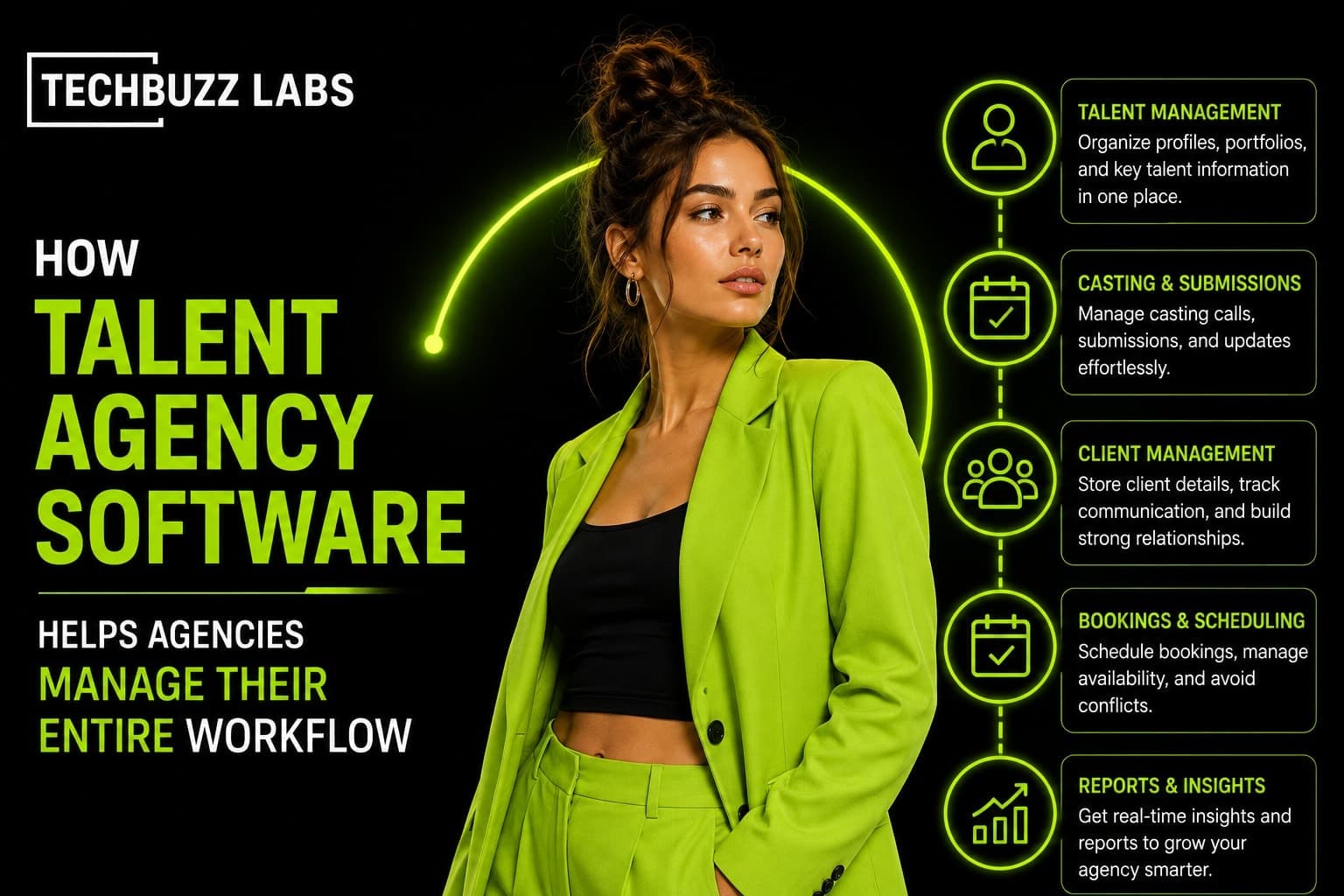
How Talent Agency Software Helps Agencies Manage Their Entire Workflow
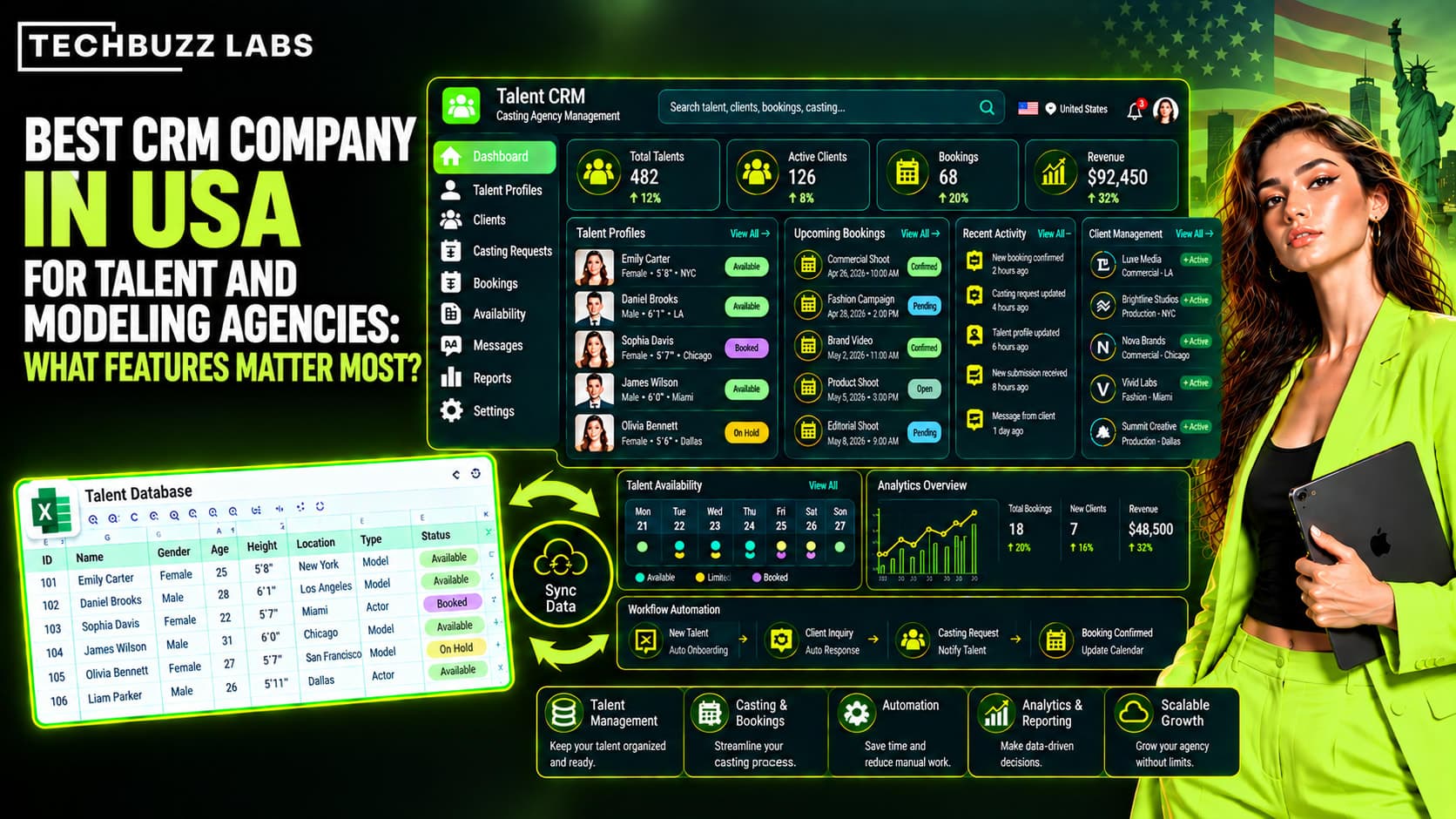
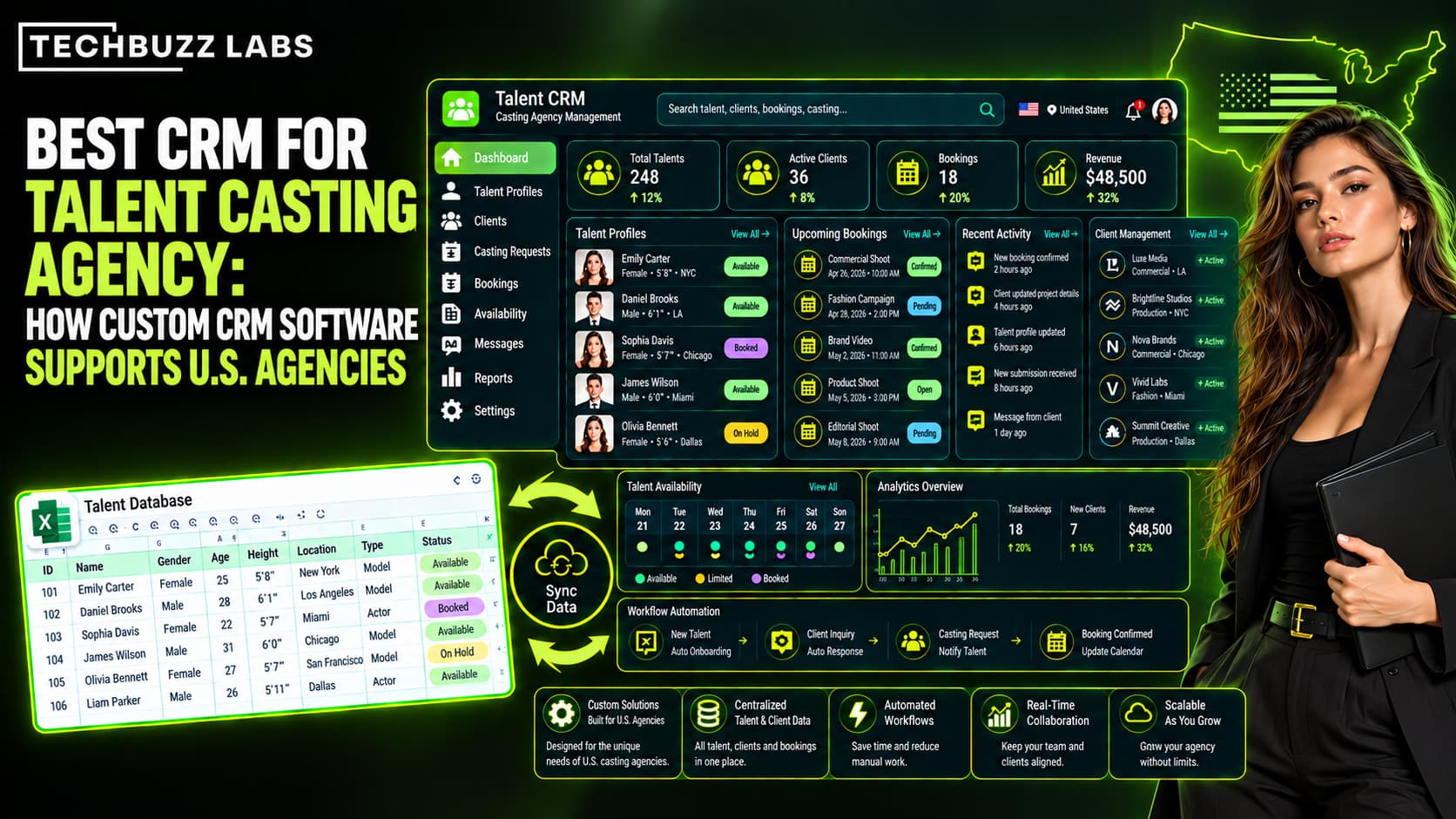
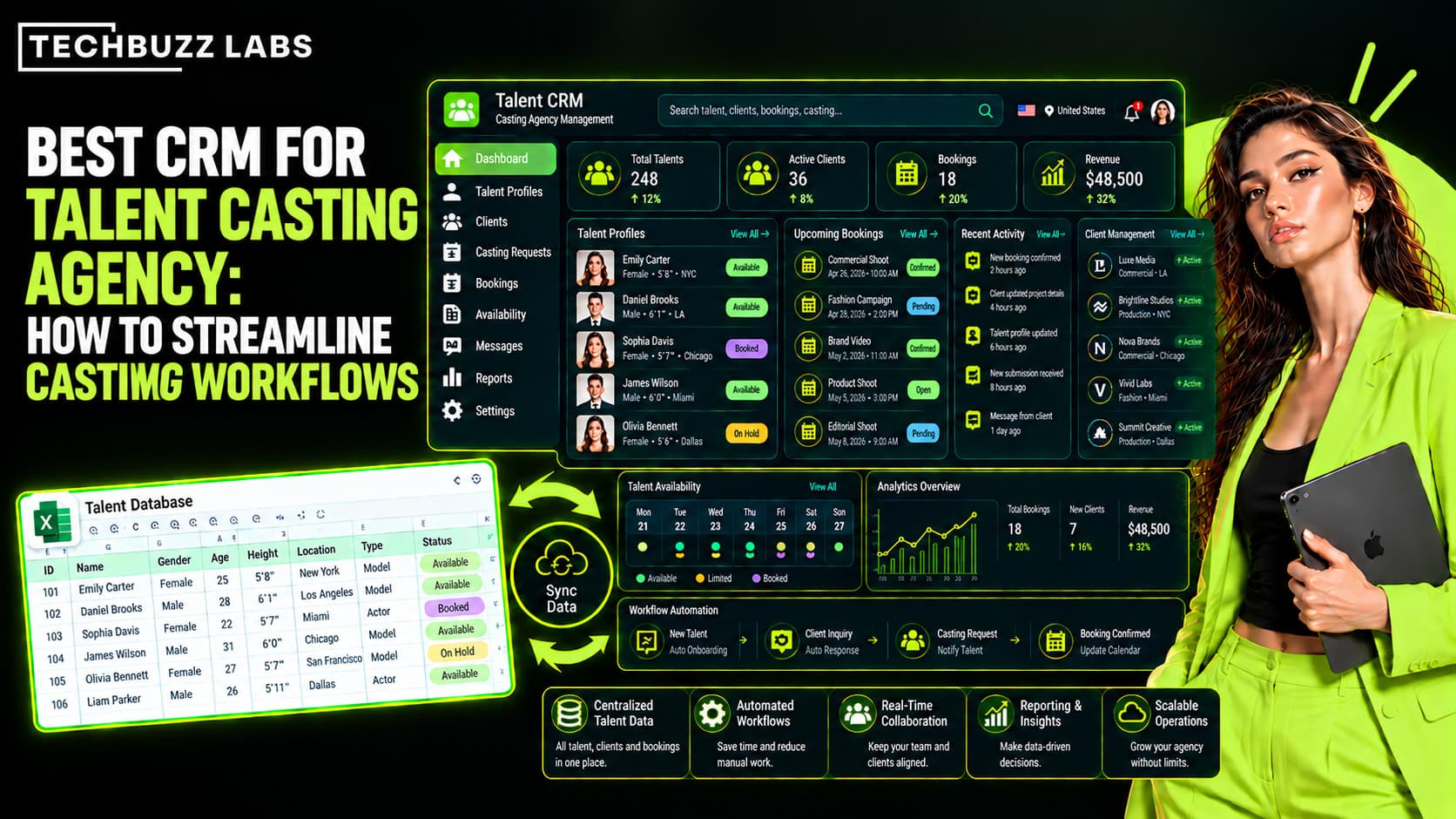
Depending on the platform, it may include talent profiles, portfolio management, casting management, CRM functionality, client communication, availability tracking, scheduling, bookings, reporting, and automation.
The U.S. talent industry is fast-moving, and agencies often manage many activities at the same time. From discovering new talent and maintaining profiles to handling casting requests, communicating with clients, checking availability, and managing bookings, every stage requires accurate information and efficient coordination.
As an agency grows, managing these activities through spreadsheets, email threads, shared folders, and messaging applications can become increasingly difficult. Talent agency software provides a centralized way to connect these processes and create a more organized workflow.
For agencies operating in major U.S. markets such as New York, Los Angeles, Miami, Chicago, and Atlanta, modern software can help teams manage larger talent pools while reducing repetitive administrative work. TechBuzzLabs focuses on technology solutions for modeling and talent agencies, helping businesses build more connected digital workflows.
What Is Talent Agency Software?
Talent agency software is a digital platform designed to help agencies manage talent and the business processes surrounding talent representation.
The main advantage is that these functions can work together rather than operating as separate systems.
For example, an agent can receive a client request, search the talent database, check availability, submit suitable profiles, track client feedback, and manage the final booking through connected workflows.
1. Centralizing Talent Profiles
A talent agency's database is one of its most important assets.
Each model or talent may have information such as photographs, portfolio materials, measurements, experience, skills, location, contact details, and availability.
When this information is stored in spreadsheets and separate folders, agents may spend considerable time searching for the right information.
Talent agency software can create centralized digital profiles. Agents can access and update information from one system, making it easier to maintain accurate records.
As the agency grows, centralized profiles can become increasingly valuable.
2. Managing Talent Discovery and Onboarding
Talent management begins before the first booking.
Agencies need to review applications, evaluate potential talent, collect professional information, organize portfolios, and complete onboarding processes.
A digital system can help standardize these steps.
New talent can be added to the database with structured information, making it easier for agents to review and categorize them.
This creates a consistent process and helps ensure that important information is not overlooked during onboarding.
3. Simplifying Casting Management
Casting is often one of the most time-sensitive parts of an agency's workflow.
When a client sends a casting request, agents need to understand the requirements and quickly identify suitable talent.
Talent agency software can connect casting opportunities with the agency's talent database.
Agents can search using relevant criteria such as location, experience, category, skills, and availability.
Instead of manually reviewing hundreds of profiles, agents can create a more targeted shortlist and move toward submissions faster.
4. Managing Client Relationships
Talent agencies need to maintain strong relationships with clients, including brands, production companies, photographers, advertising agencies, and other businesses.
A CRM component within talent agency software can organize client information and communication history.
Agents can track previous projects, bookings, preferences, and important interactions.
When a client returns with a new opportunity, the agency can quickly review previous activity and provide a more informed response.
This can help improve consistency and strengthen long-term client relationships.
5. Tracking Talent Availability
Availability is critical when matching talent with opportunities.
A model may be ideal for a project but unavailable on the required dates.
When availability is managed manually, agents may need to contact multiple people individually before confirming who is free.
Talent agency software can connect availability with casting and booking information.
This allows agents to check schedules before making submissions and can help reduce potential conflicts.
For U.S. agencies working across multiple cities and markets, centralized availability management can make coordination easier.
6. Streamlining Talent Submissions
Once agents identify suitable talent, they need to present those profiles to the client.
A manual process may involve collecting photographs, measurements, experience, and other information from different sources.
With centralized software, agents can access existing talent profiles and associate them with a casting opportunity.
This can reduce duplicate data entry and make submissions faster.
It can also create a more consistent presentation of talent across different client projects.
7. Connecting Casting With Bookings
A successful casting eventually needs to become a booking.
Once a client selects talent, agents may need to confirm dates, locations, rates, contracts, usage details, and other project information.
When casting and booking functions are connected, the agency can move information from one stage to another without repeatedly entering the same details.
A connected workflow can look like:
Talent Profile → Casting → Submission → Client Approval → Booking
This can improve visibility and reduce administrative bottlenecks.
8. Automating Repetitive Tasks
Agency teams often spend significant time on routine tasks.
These may include sending casting notifications, requesting availability, creating reminders, following up with clients, confirming bookings, and updating project statuses.
Automation can help reduce the amount of manual work involved in these activities.
For example, an agency could create automated reminders for important casting deadlines or follow-up tasks.
The purpose of automation is not to replace agents. Instead, it allows professionals to spend more time on talent development, client relationships, negotiations, and strategic decisions.
9. Improving Team Collaboration
As an agency grows, multiple team members may work on the same models, clients, and projects.
When information is stored in separate spreadsheets or personal notes, team members may not have access to the latest updates.
A centralized system allows authorized employees to work from shared information.
An agent can review a model's profile, casting activity, availability, client feedback, and booking status without relying on another employee to provide updates.
This can improve internal communication and reduce delays.
10. Using Data to Improve Agency Performance
Modern talent agency software can also help agencies understand their operations through reporting and analytics.
Managers can potentially review casting activity, submission numbers, booking rates, client performance, and other operational metrics.
This information can reveal patterns that may otherwise be difficult to identify.
For example, an agency may discover which clients generate the most bookings or which types of casting opportunities have the highest success rates.
Using organized data can support better strategic decisions and help agencies identify areas where their workflows can be improved.
How TechBuzzLabs Supports Modern Talent Agencies
TechBuzzLabs focuses on technology solutions for modeling and talent agencies, helping businesses move from disconnected tools toward centralized digital workflows.
For agencies that have outgrown spreadsheets, shared folders, and manual processes, technology can bring talent profiles, availability, casting opportunities, bookings, and client requests into one organized environment.
A customized technology approach can also allow agencies to build workflows around their specific operational requirements rather than forcing every business to follow the same process.
By combining talent management, CRM capabilities, casting workflows, automation, and modern technology, agencies can create a stronger foundation for growth.
Conclusion
Talent agency software can help agencies manage their entire workflow by connecting talent management, casting, client relationships, availability, submissions, and bookings in one centralized system.
For agencies in the USA, this can lead to faster responses, more organized talent databases, improved team collaboration, fewer scheduling issues, and reduced administrative work.
The biggest benefit is not simply replacing spreadsheets with software. It is creating a connected workflow in which information can move efficiently from talent discovery to casting and ultimately to the final booking.
As the U.S. talent industry continues to evolve, agencies that adopt efficient digital systems can be better positioned to manage growing talent pools and increasing client demands. With technology solutions from TechBuzzLabs, modeling and talent agencies can explore smarter ways to centralize operations, automate repetitive tasks, and build scalable workflows for long-term growth.