How to Build a Custom Talent Management Platform for Your Agency
For modeling and talent agencies in the USA, the key to successful development is understanding what the platform needs to accomplish before deciding how to build it.
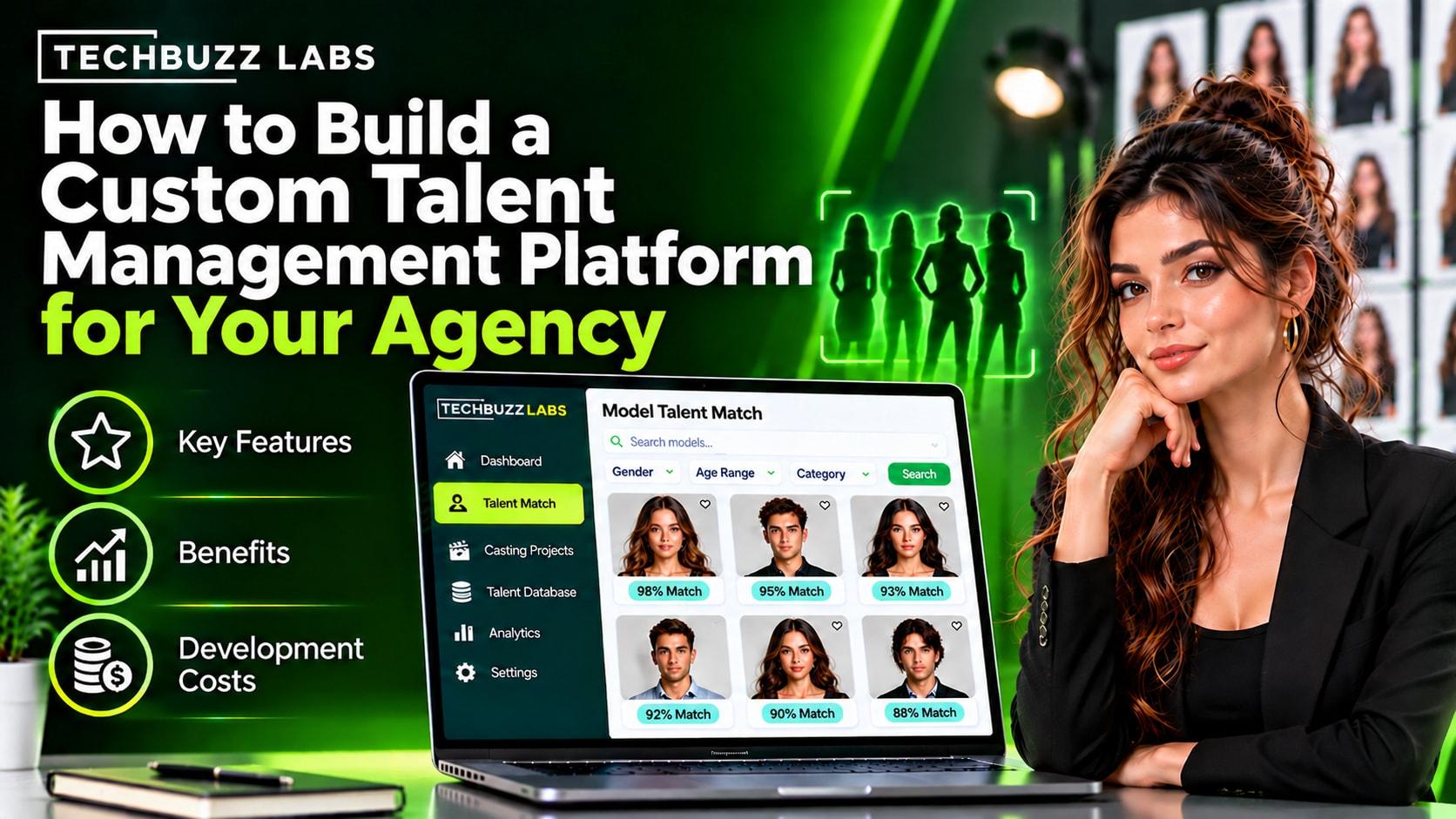
Managing models, actors, influencers, and other professionals requires more than maintaining a spreadsheet of names and contact details. Talent agencies must organize portfolios, respond to casting requests, track availability, coordinate bookings, communicate with clients, and keep talent information updated. When these activities are spread across different tools, daily operations can become difficult to manage.
A custom talent management platform gives agencies the opportunity to bring these processes together in one system. Instead of adapting every operation to generic software, agencies can build a platform around their specific requirements, team structure, and business goals.
1. Define Your Agency's Requirements
Start by identifying the operational challenges your agency wants to solve. Building software without understanding existing workflows can result in unnecessary features, higher development costs, and a system that employees find difficult to use.
Review how your agency currently handles:
Talent registration and profile updates
Portfolio and digital comp card management
Client inquiries and casting briefs
Talent searches and submissions
Availability checks and booking schedules
Contracts, invoices, and payments
Communication and follow-ups
For example, a modeling agency may need detailed measurements, portfolio photographs, and location-based talent searches. An acting agency may prioritize audition information, performance experience, and video reels.
Documenting these differences helps establish a clear development plan.
2. Choose the Essential Platform Features
Once you understand your workflows, decide which features should be included in the platform. A successful system should make everyday agency tasks easier rather than simply offer a large collection of tools.
Centralized Talent Profiles
Create a central database where authorized employees can access complete talent profiles. Depending on the agency's requirements, profiles may include:
Contact information and location
Professional experience and skills
Photographs, videos, and portfolios
Measurements or relevant professional details
Availability and booking history
Representation and contract information
Centralized profiles reduce the need to search through multiple files and applications when responding to a client request.
Advanced Search and Filtering
Talent search is one of the most important features for agencies managing large rosters. Develop filters that help agents find suitable professionals based on category, location, experience, skills, availability, and other relevant criteria.
For example, when a client requests models for a fashion campaign in New York, an agent should be able to narrow the database using the campaign's requirements and quickly create a shortlist.
Casting and Submission Management
The platform should provide a structured process for managing casting opportunities. Agents should be able to create casting briefs, identify suitable talent, submit profiles, track client feedback, and update selection statuses.
A clear pipeline might include:
New Request → Talent Search → Shortlist → Submitted → Client Review → Approved → Booked
This makes it easier for teams to understand the progress of each project.
Booking and Availability Management
Add booking calendars and availability tracking to help agents coordinate schedules. The system should display confirmed bookings, pending requests, and unavailable dates.
Automated alerts can also notify relevant team members when a booking is confirmed, a schedule changes, or an action requires attention.
Client Relationship Management
A built-in CRM can help agencies organize client profiles, communication history, project requirements, inquiries, and booking records.
Keeping this information connected to casting and booking workflows gives agents a clearer view of client relationships.
3. Design Separate User Roles and Permissions
Not everyone using the platform needs access to the same information.
For example, administrators may need access to system settings and reports, while agents may manage talent profiles, casting requests, and bookings. Talent members may only need to update their profiles and availability. Clients may require a portal to review submitted talent and approve selections.
Create role-based permissions before development begins. This helps protect confidential information and ensures that users see the tools relevant to their responsibilities.
4. Plan the Platform's Design and Technology
The platform should be easy to navigate for employees, clients, and talent members. A complicated interface can reduce adoption, even when the software includes useful features.
Consider the following design requirements:
A clear dashboard showing important tasks and updates
Simple navigation between talent, casting, and booking sections
Responsive layouts for desktop, tablet, and mobile devices
Easy-to-use profile editing and document uploads
Clear notifications and status indicators
The technical architecture also matters. Developers should consider database structure, hosting, file storage, application performance, backups, and future integrations.
The right technology stack depends on the platform's complexity, expected usage, budget, and maintenance requirements. It is not necessary to choose the most complicated technology; choose an approach that can reliably support the agency's needs.
5. Include Security and Data Protection
Talent management platforms may store personal details, photographs, contracts, payment information, and other confidential business records. Security should therefore be part of the development plan from the beginning.
Important measures include:
Secure user authentication
Role-based access controls
Encryption for sensitive data
Secure file uploads and storage
Regular backups
Activity logs for important changes
A defined data retention and deletion policy
Agencies operating in the United States should also review applicable privacy, contractual, and data protection requirements based on the information they collect and the locations where they operate.
6. Integrate the Tools Your Agency Already Uses
Your agency may already rely on email platforms, calendars, accounting applications, document storage, or communication tools. A custom platform can potentially connect these systems through available APIs and integrations.
For example, calendar integration can help coordinate booking schedules, while accounting integrations may simplify the transfer of invoice information.
Before building integrations, identify which connections are essential. Confirm technical compatibility, licensing requirements, and ongoing maintenance costs so that integrations do not create unnecessary complexity.
7. Develop and Launch the Platform in Phases
Building every feature at once can increase project complexity and delay the launch. A phased development approach allows agencies to prioritize essential functionality and improve the system based on real user feedback.
A practical development roadmap may look like this:
Phase 1: Planning and design
Document requirements, map workflows, define user roles, and prepare the interface design.
Phase 2: Core development
Build talent profiles, database management, search, and user authentication.
Phase 3: Workflow development
Add casting management, talent submissions, client approvals, availability tracking, and booking calendars.
Phase 4: Testing and launch
Test features, permissions, mobile responsiveness, integrations, and data accuracy. Train employees and introduce the platform to users.
Phase 5: Continuous improvement
Monitor performance, collect feedback, fix issues, and introduce additional features as agency requirements evolve.
8. Work With an Experienced Custom Software Development Partner
Choosing the right development partner is an important part of building a reliable platform. Look for a team that understands agency operations, can translate business requirements into technical specifications, and provides support after launch.
TechBuzz Labs focuses on custom software solutions for talent, casting, and modeling agencies. Agencies exploring a tailored platform can consider its approach to connecting talent databases, casting pipelines, client portals, availability tracking, and booking management within one system.
Before starting a project, discuss the development scope, milestones, budget, source-code ownership, documentation, security practices, and ongoing maintenance. A clearly defined agreement helps both parties understand what will be delivered.
How Much Does It Cost to Build a Custom Talent Management Platform?
The development cost depends on the number of features, complexity of workflows, user roles, integrations, design requirements, and ongoing support.
A basic platform with talent profiles, search, and availability tracking will generally require less development effort than a comprehensive system with client portals, automated casting workflows, AI-assisted matching, reporting, and advanced integrations.
Agencies should request a detailed project estimate that separates initial development from hosting, third-party services, maintenance, and future enhancements. This provides a more realistic understanding of the total investment.
Conclusion
Building a custom talent management platform requires careful planning, a clear understanding of agency workflows, and the right development strategy. From centralized talent profiles and advanced search to casting, client management, booking automation, and reporting, every feature should support a real business requirement.
For growing modeling and talent agencies in the USA, a tailored platform can create a more connected way to manage daily operations. By starting with essential features, prioritizing security, and developing in phases, agencies can build a practical system that supports current needs while leaving room for future growth.
The goal is not simply to create another software application. It is to develop a platform that helps your agency manage talent, serve clients, and coordinate bookings more effectively.