How to Build a Model Submission Workflow That Saves Your Team 10 Hours a Week
In 2026, casting and modeling agencies across the United States are under more pressure than ever. Brands expect faster submissions, clients expect professional communication, and talent expects instant updates.
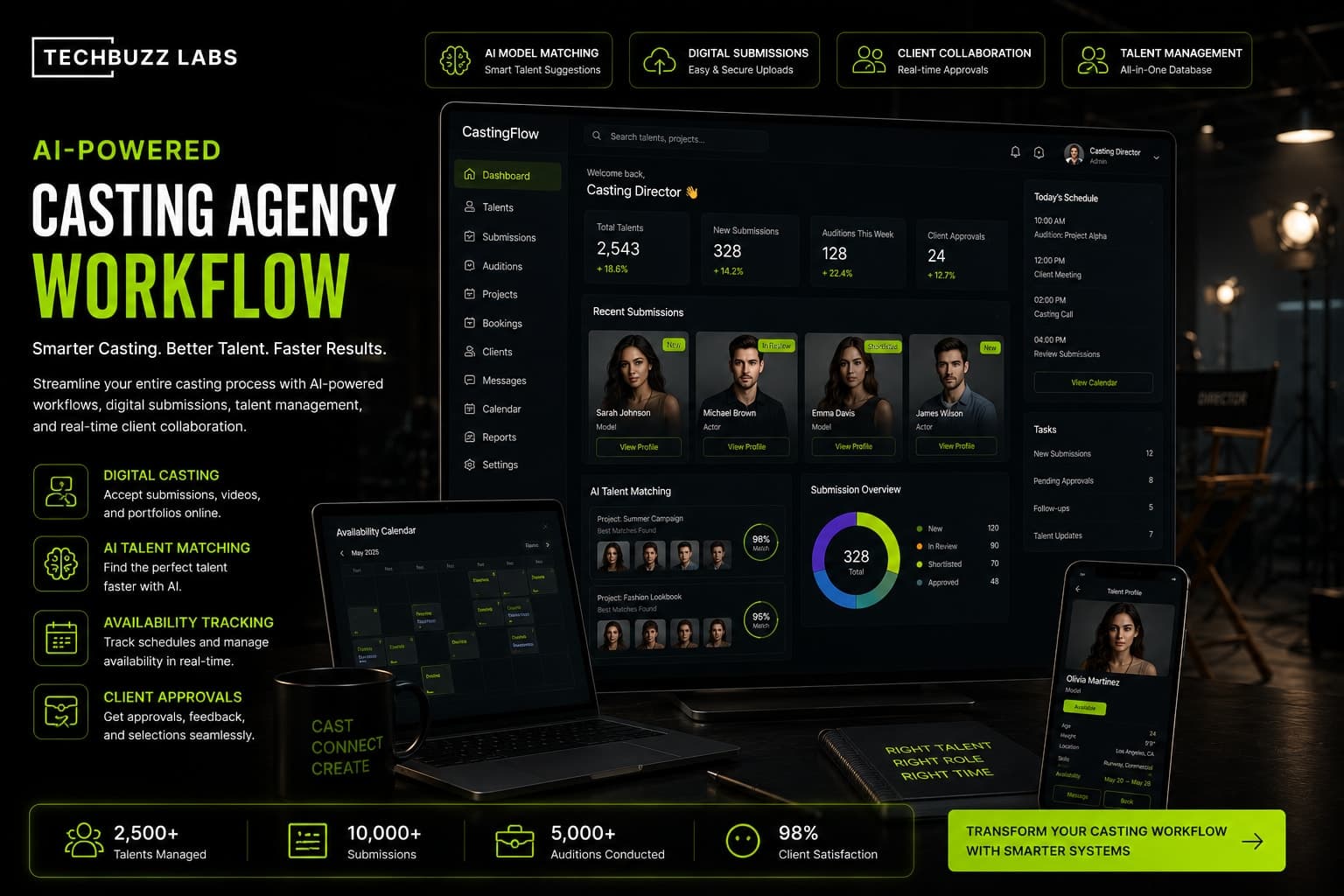
In 2026, casting and modeling agencies across the United States are under more pressure than ever. Brands expect faster submissions, clients expect professional communication, and talent expects instant updates. At the same time, agency teams are handling larger talent databases, more digital submissions, and tighter campaign deadlines.
The problem is not always workload.
The real problem is workflow.
Many agencies are still managing model submissions through spreadsheets, WhatsApp messages, scattered folders, emails, and manual coordination. What seems manageable at first becomes operational chaos as agencies grow.
This is why modern agencies are now investing heavily in structured model submission workflows.
The agencies winning bigger clients today are usually not the ones with the biggest teams.
They are the ones with the smartest operational systems.
Why Model Submission Workflows Matter
A model submission workflow is the process your agency uses to receive casting requests, shortlist talent, prepare packages, send submissions, collect approvals, and manage updates.
When this process is disorganized, agencies lose time constantly.
Common problems include:
Searching portfolios manually
Checking availability through messages
Rebuilding talent packages repeatedly
Missing client updates
Sending outdated profiles
Managing feedback across multiple apps
Following up manually
These issues slow down operations and create unnecessary stress for coordinators.
More importantly, they affect client experience.
Brands notice when workflows feel disorganized.
How Agencies Lose Hours Every Week
One of the biggest operational bottlenecks is manual talent organization.
Many agencies store portfolios in folders without searchable structure. Teams waste time locating measurements, campaign photos, self tapes, or contact details.
Another major issue is availability tracking.
Without centralized systems, coordinators repeatedly contact talent individually to confirm schedules.
This creates delays during urgent campaigns.
Agencies also lose time building talent packages manually every time a client requests submissions.
Without automation, coordinators repeat the same administrative tasks daily.
Across a full week, these small inefficiencies add up to massive operational waste.
Modern agencies are solving this with centralized workflow systems.