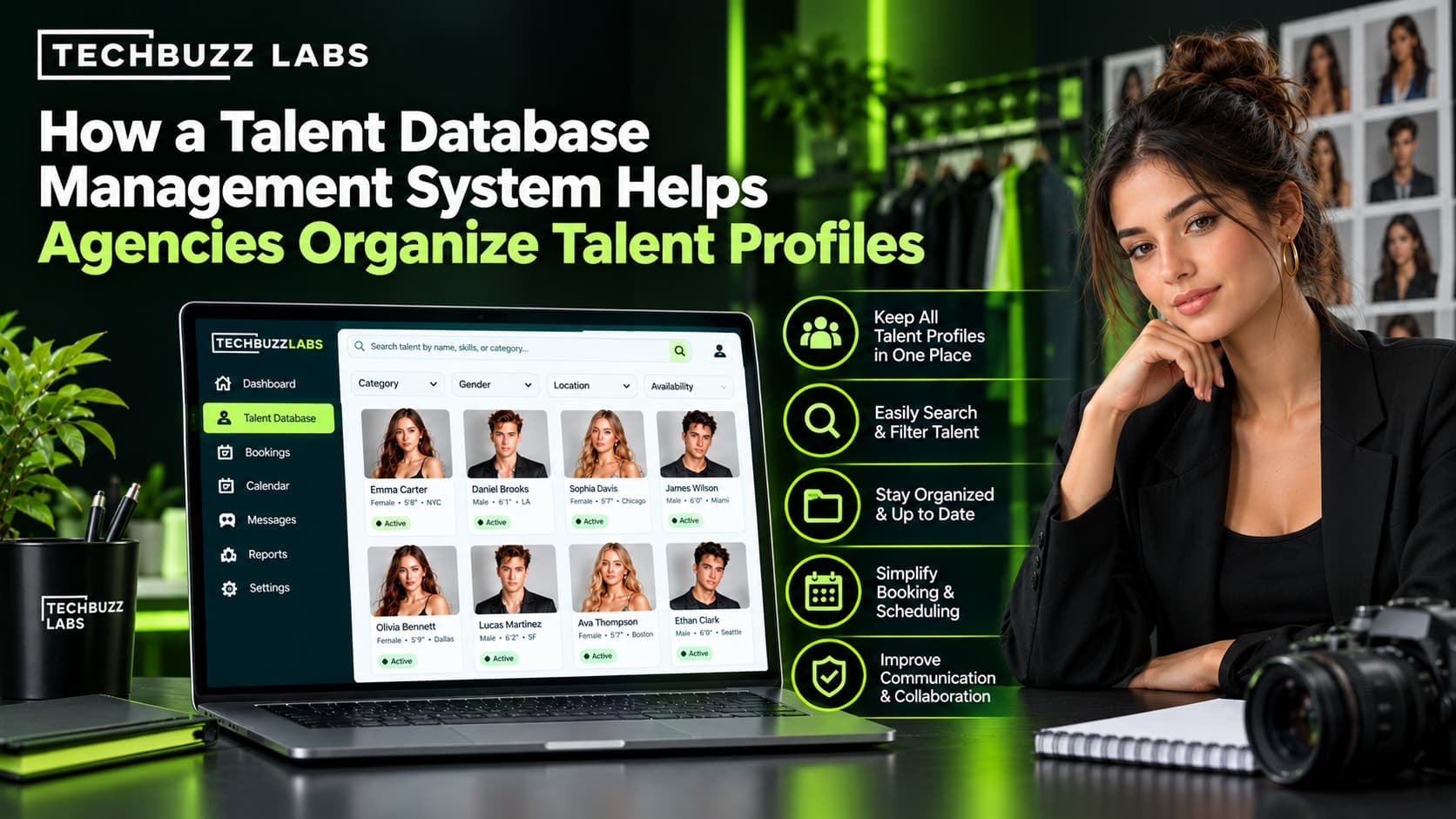
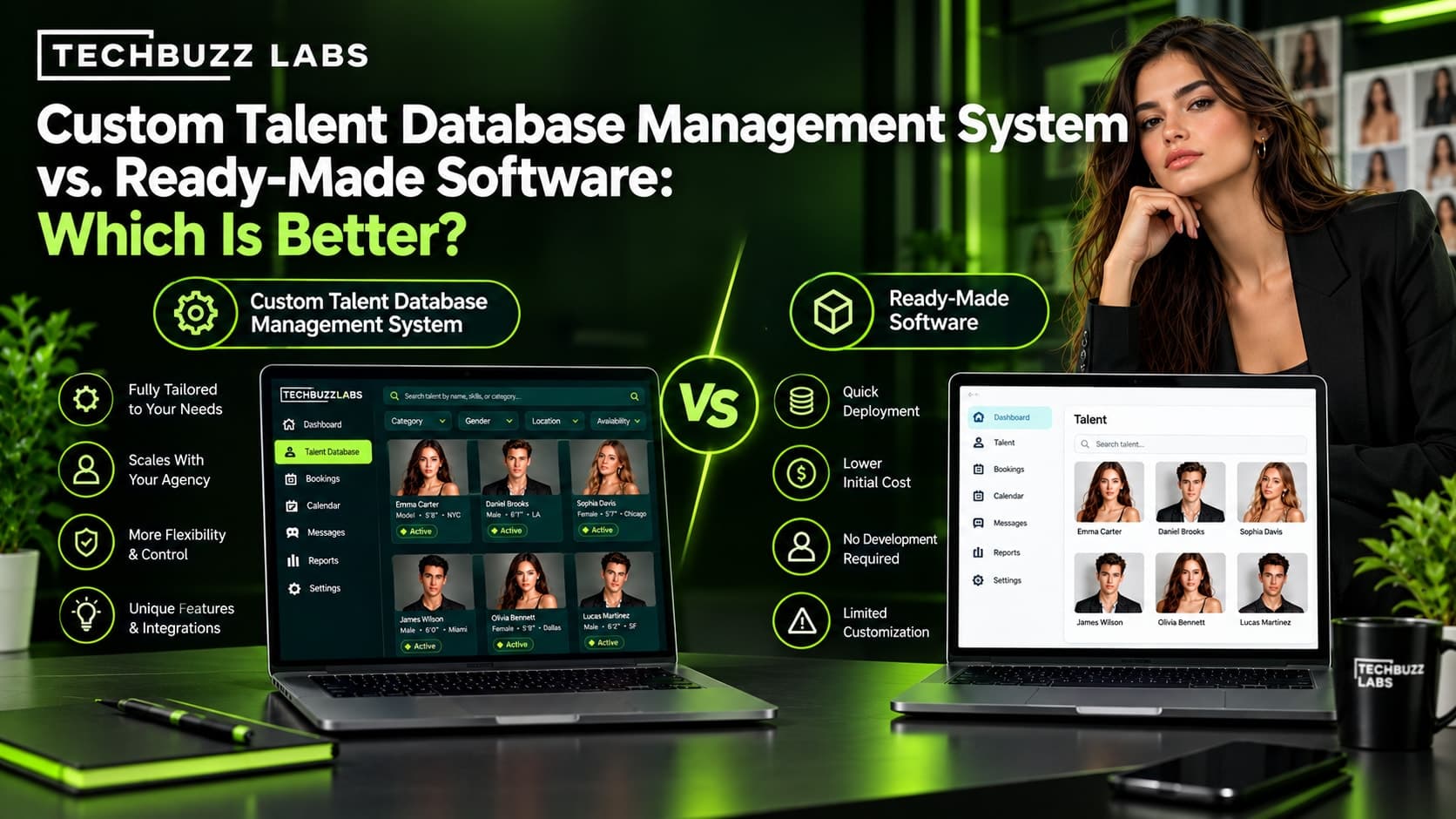
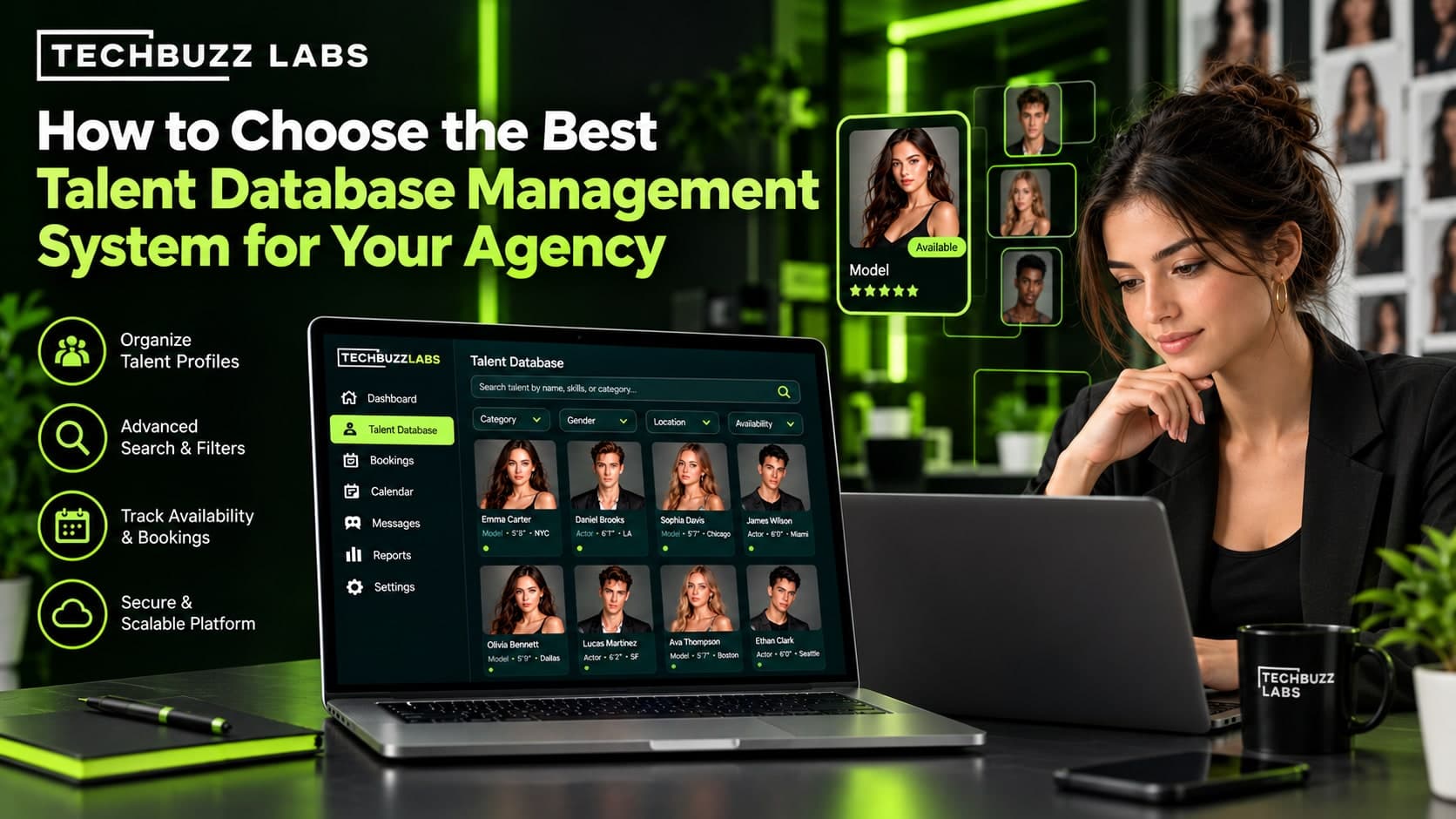
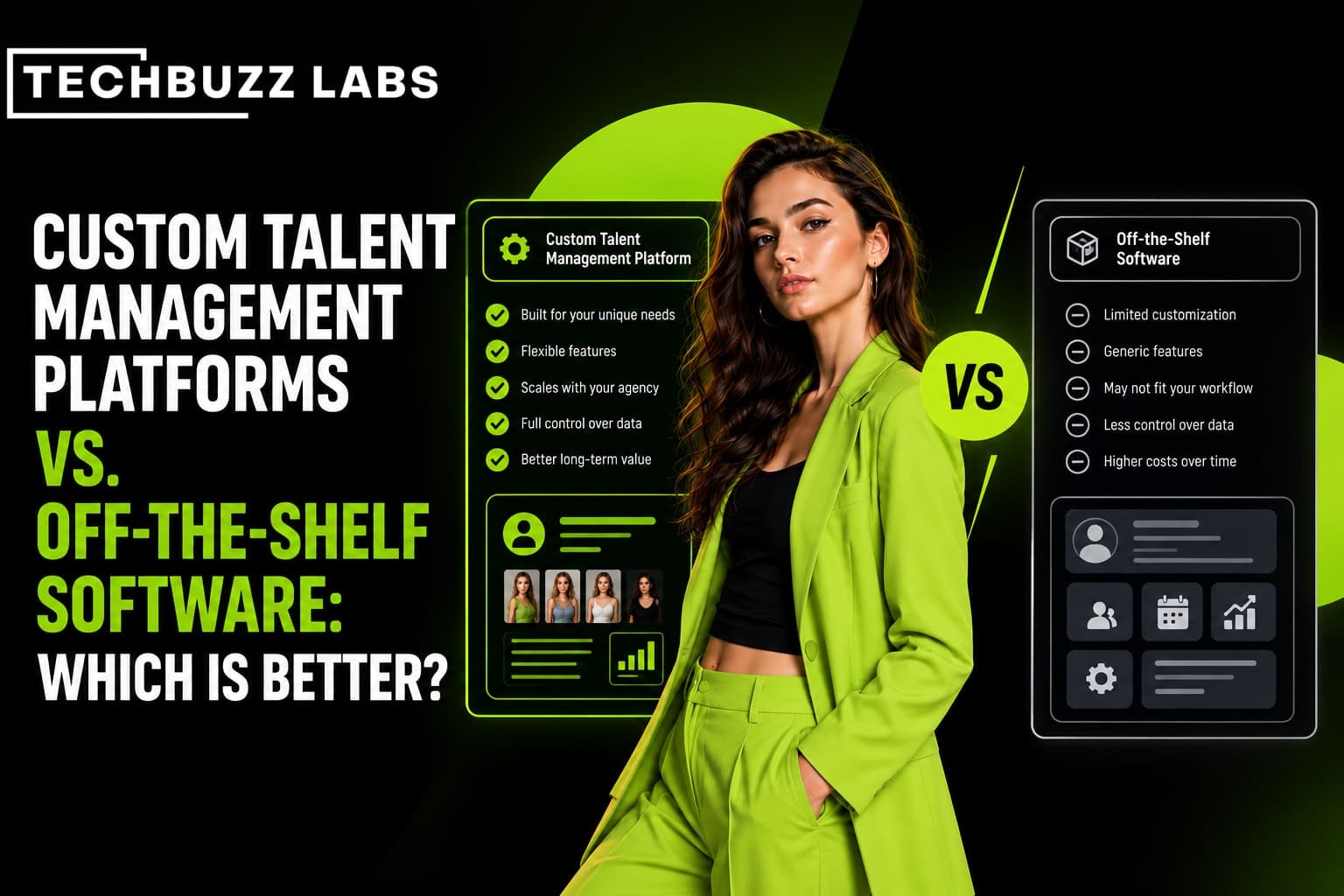
Custom Talent Management Platforms vs. Off-the-Shelf Software: Which Is Better?
Instead of selecting from a fixed list of features, the agency can define how talent profiles should work, how casting requests should be processed, how availability should be managed, and how bookings should move through different stages.
Talent agencies rely on technology to manage models, actors, influencers, clients, castings, availability, bookings, and communication. As an agency grows, choosing the right software becomes an important business decision. Some agencies choose off-the-shelf talent management software because it is ready to use, while others consider custom talent management platforms that can be designed around their specific workflows.
For talent and modeling agencies in the USA, there is no single solution that works for every business. The better option depends on the agency's size, workflow, budget, operational challenges, and long-term goals. Understanding the differences between custom and off-the-shelf software can help agency owners make a more informed decision.
What Is Off-the-Shelf Talent Management Software?
Off-the-shelf software is a pre-built platform designed to serve a broad range of businesses. These systems usually come with standard features that agencies can start using shortly after signing up.
Depending on the platform, features may include talent profiles, client management, casting, availability tracking, booking management, scheduling, communication, and reporting.
The main advantage is convenience. Agencies do not have to build the system from the ground up, and many platforms provide a predictable subscription model.
For a small or newly established agency with relatively straightforward requirements, an off-the-shelf solution may provide enough functionality to organize daily operations.
What Is a Custom Talent Management Platform?
A custom talent management platform is developed specifically around the needs of an individual agency.
Custom development can also connect multiple agency processes within one system. Talent management, client relationships, casting, submissions, bookings, reporting, automation, and other workflows can be designed to work together.
This approach can be particularly useful for established agencies that have complex processes or find that standard software does not fully match the way their teams operate.
Flexibility and Customization
The biggest difference between the two approaches is flexibility.
Off-the-shelf software generally provides features that are designed for a broad market. Agencies may be able to configure certain settings, but they usually have to work within the platform's existing structure.
Custom platforms provide considerably more flexibility. An agency can determine which fields should appear in talent profiles, what information clients should see, how approval processes work, and which actions should trigger notifications or automation.
For example, a U.S. talent agency representing models, actors, and commercial talent may require different workflows for each category. A custom platform can be designed to accommodate those differences.
Managing Talent Data
Talent data is one of the most important parts of agency operations.
Both off-the-shelf and custom systems can centralize talent profiles, but the difference is how much control an agency has over the structure of those profiles.
A custom platform can be designed around the exact information an agency needs to collect and search. This may include professional experience, location, measurements, skills, portfolio information, availability, representation details, and booking history.
Advanced search and filtering can also be tailored to the agency's specific casting requirements.
Connecting Casting and Booking Workflows
An agency's workflow does not stop at managing talent profiles.
A client request may move through several stages, including casting, talent search, availability checks, submissions, client feedback, selection, and booking.
Off-the-shelf software may already support many of these processes, but agencies may have limited control over how the stages connect.
With custom development, the entire workflow can be designed around the agency's preferred process. This can reduce repetitive data entry and allow information to move from one stage to another more efficiently.
Integration With Existing Tools
Another important consideration is integration.
Agencies may already use accounting software, calendars, email platforms, communication tools, storage systems, or other business applications.
Off-the-shelf platforms may offer integrations with popular tools, which can make implementation easier. However, an agency may eventually encounter limitations if its preferred software is not supported.
Custom development can provide more flexibility when an agency needs specialized integrations or wants different systems to communicate in a particular way.
Cost and Time Considerations
Off-the-shelf software generally has a lower initial cost because the platform has already been developed. Agencies can often begin using it quickly through a subscription.
Custom software typically requires a larger initial investment because the system is designed and developed specifically for the agency.
However, agencies should consider long-term value rather than comparing only the initial price. If an off-the-shelf platform requires employees to maintain workarounds, duplicate information, or use additional tools, the total operational cost can increase over time.
Custom development may make more sense when technology is becoming a core part of the agency's operations.
Scalability and Future Growth
A software platform should support an agency's future rather than only its current needs.
An agency may start with a small talent roster and a few clients but eventually expand into multiple cities or add new types of talent.
Off-the-shelf platforms can be suitable when their existing features scale with the agency. However, agencies may face limitations if their future requirements go beyond what the platform supports.
A custom talent management platform can be designed with future expansion in mind, allowing additional users, locations, workflows, integrations, and functionality to be added as the business grows.
Automation and AI
Modern agencies are also exploring automation and AI to improve efficiency.
Off-the-shelf platforms may include predefined automation or AI features. These can be useful when they match the agency's needs.
Custom platforms provide an opportunity to build automation around specific business processes. Agencies may want automated notifications, follow-up workflows, talent search assistance, internal alerts, or AI-supported recommendations.
The important consideration is whether the technology solves a real operational problem rather than simply adding advanced features for their own sake.
How TechBuzzLabs Can Help
TechBuzzLabs focuses on developing custom technology solutions for talent and casting agencies. Its approach allows agencies to build systems around their specific workflows instead of relying entirely on generic software.
For U.S. modeling and talent agencies, a custom platform can connect talent profiles, client management, casting, availability, submissions, bookings, automation, and other operational processes.
TechBuzzLabs can also support agencies interested in incorporating AI applications into their workflows. This gives agencies the flexibility to build technology that addresses current operational challenges while allowing room for future development.
Which Option Is Better for Your Agency?
Off-the-shelf software can be a practical choice for agencies that need standard functionality, want to launch quickly, and have relatively simple workflows.
Custom talent management platforms may be a better option for agencies with complex operations, large talent databases, multiple locations, specialized workflows, or long-term technology requirements.
The right decision should be based on the agency's actual needs. Before choosing a platform, agency owners should identify their biggest operational problems and determine whether an existing solution can solve them without excessive workarounds.
Conclusion
The choice between custom talent management platforms and off-the-shelf software depends on the agency's requirements, resources, and growth plans.
Off-the-shelf software offers convenience, faster implementation, and standard features. Custom platforms offer greater flexibility, deeper workflow control, and the ability to build technology around the agency's specific operations.
For growing talent and modeling agencies in the USA, custom development can be especially valuable when existing software no longer fits the way the business operates. A customized solution from a provider such as TechBuzzLabs can help agencies create a connected platform for managing talent, clients, castings, availability, and bookings while providing a foundation for future growth.