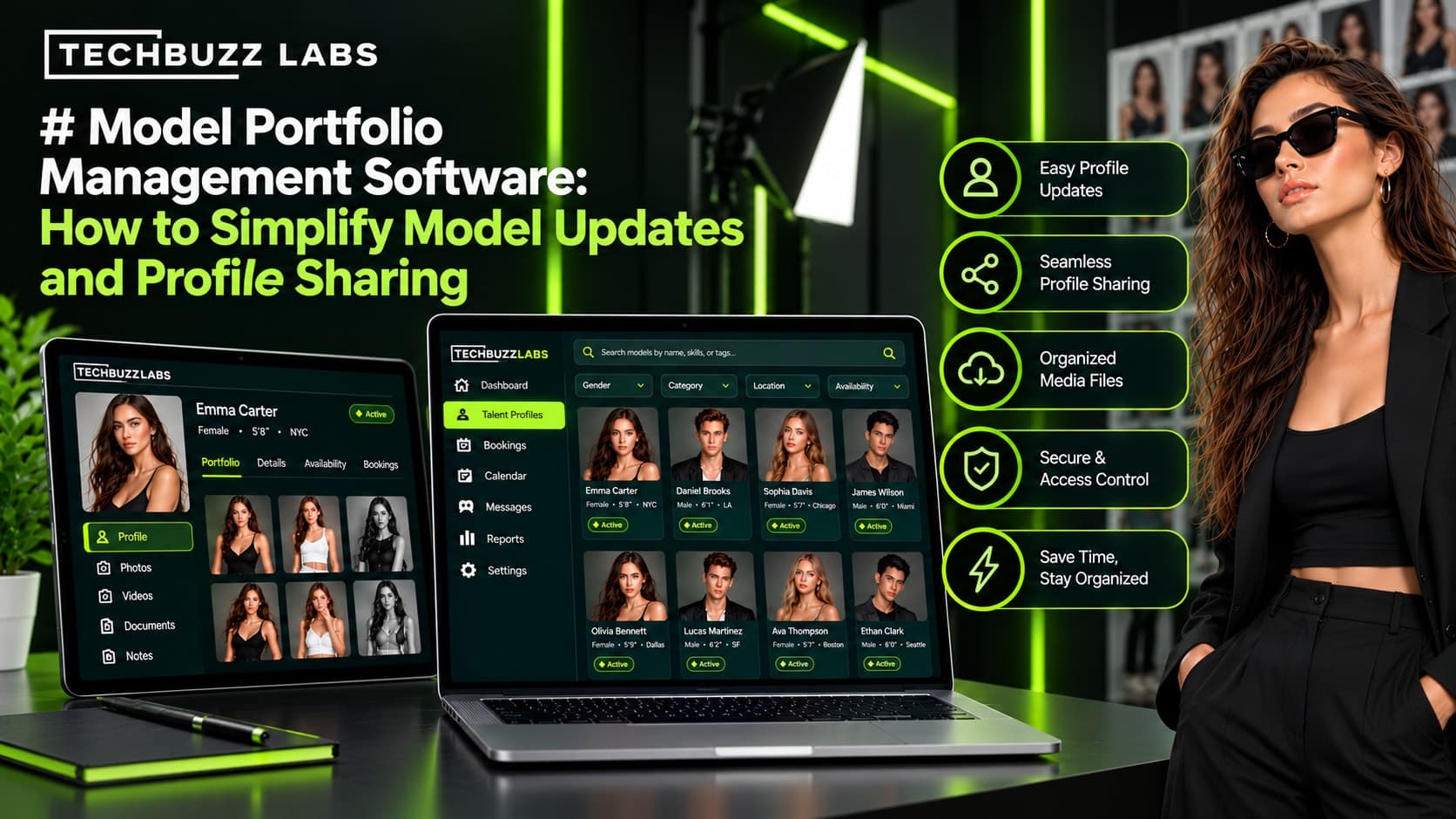
Model Portfolio Management Software for Growing Agencies: Key Features and Benefits
For modeling agencies across the United States, selecting the right software can help reduce administrative work and improve day-to-day coordination.
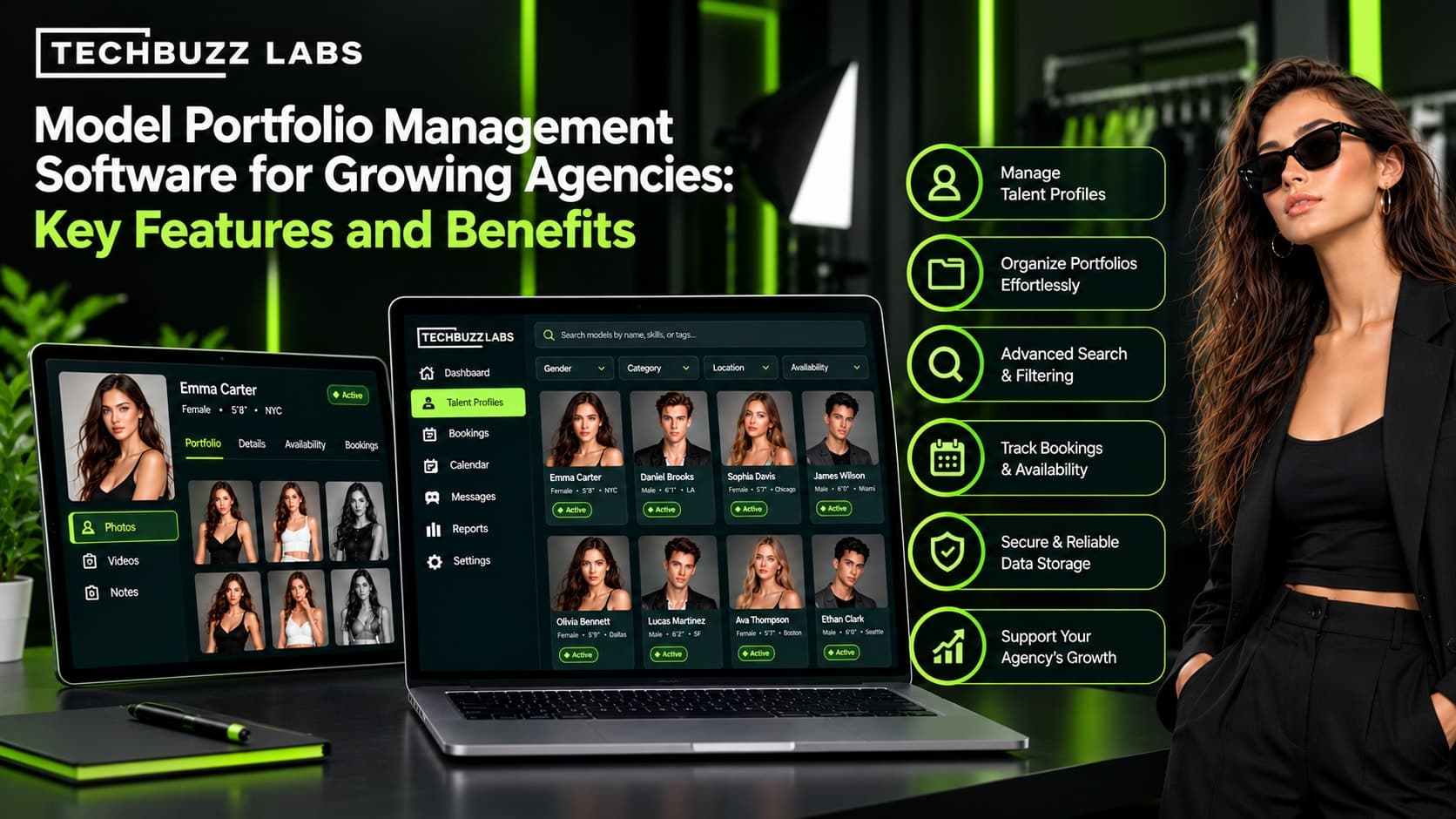
As a modeling agency grows, managing talent portfolios becomes more complicated. What starts as a simple collection of photographs and spreadsheets can quickly turn into hundreds of model profiles, image galleries, client submissions, and booking records. Without an organized system, agents may struggle to find the right talent, update outdated information, and respond to client requests efficiently.
Model portfolio management software helps growing agencies organize model information in one centralized platform. By combining digital profiles, image management, search tools, and portfolio sharing, agencies can create a more consistent process for managing talent and supporting business growth.
What Is Model Portfolio Management Software?
Model portfolio management software is a digital solution that helps agencies create, organize, update, and share model profiles. Depending on the platform, it may include professional photographs, measurements, experience, skills, contact information, digital comp cards, and portfolio links.
More advanced solutions may connect portfolios with casting management, client relationship management (CRM), submission tracking, and booking workflows.
Instead of searching through separate folders, emails, and spreadsheets, agents can access relevant talent information through a single system.
Key Features Growing Modeling Agencies Should Look For
1. Centralized Model Profiles
A centralized database is the foundation of effective portfolio management. Each model should have a structured profile containing the information the agency needs to represent and submit talent professionally.
Useful profile fields may include:
Professional photographs and digitals
Relevant experience, skills, and credits
Contact information and representation details
Location and availability
Portfolio links and approved comp cards
Casting submissions and booking history
Centralized profiles help teams work from consistent information rather than maintaining multiple versions of the same record.
2. Image and Digital Asset Management
Photographs are among the most important assets a modeling agency manages. A portfolio may contain headshots, editorial images, commercial work, lifestyle photographs, and other approved materials.
Look for software that supports organized image galleries, practical previews, clear update dates, and straightforward uploading. Some systems may also help agents group selected images for different clients or campaigns.
Agencies should evaluate storage capacity, image quality, backups, access permissions, and the process for replacing outdated photographs.
3. Advanced Search and Filtering
As a talent roster expands, manually reviewing every model profile becomes inefficient. Search and filtering tools allow agents to narrow the database according to relevant project requirements.
Depending on the system, filters may include location, experience, availability, professional skills, and portfolio category.
For example, if a U.S. advertising client needs talent for a commercial campaign in California, an agent can search for suitable profiles and review a shortlist instead of opening every record individually.
Search quality depends on accurate data, so agencies should establish consistent rules for maintaining profile information.
4. Digital Comp Cards and Portfolio Sharing
Agencies frequently share portfolios with brands, photographers, casting directors, and production companies. Software that simplifies this process can help teams prepare presentations without repeatedly assembling files by hand.
Useful features may include digital comp cards, shareable portfolio links, client-specific shortlists, and downloadable presentations.
Access controls are equally important. Agencies should be able to manage who can view shared portfolios and protect information that should not be publicly available.
5. Casting and Booking Integration
Portfolio management becomes more valuable when it connects with the agency's wider operations.
A connected platform may allow agents to move from a client brief to talent search, portfolio submission, feedback tracking, and booking coordination without repeatedly transferring information between tools.
This can improve visibility across the workflow and help team members understand the status of each opportunity.
6. User Permissions and Data Security
Growing agencies may have bookers, talent managers, administrators, and external clients who require different levels of access.
Role-based permissions can help ensure that users only see or edit information relevant to their responsibilities. Agencies should also assess backup procedures, secure sharing, data retention, and applicable privacy requirements.
Because portfolios include photographs and personal information, clear permissions and responsible data handling are essential.
Benefits of Portfolio Management Software for Growing Agencies
Save Time on Routine Administration
Centralized information and reusable portfolio materials can reduce the need to search through emails, folders, and spreadsheets. Agents can spend more time evaluating opportunities and communicating with clients.
Improve Portfolio Accuracy
A structured update process makes it easier to identify outdated photographs or incomplete profiles. Current information helps agencies prepare submissions more confidently.
Support Better Client Service
When an agency can find relevant talent and share portfolios efficiently, it can respond to client requests with less unnecessary delay.
Make Team Collaboration Easier
A shared database helps authorized team members access consistent records, reducing confusion caused by duplicate files and disconnected systems.
Prepare for Future Growth
A scalable platform can help an agency manage a larger roster, additional team members, and more complex workflows as the business expands.
Custom Software vs. Ready-Made Solutions
Ready-made portfolio platforms may suit agencies with straightforward needs and limited customization requirements. Custom agency software may be worth exploring when an agency needs specialized profile fields, tailored permissions, unique reporting, or direct connections between portfolios, casting, and bookings.
However, custom development involves planning, implementation, testing, and ongoing maintenance. Agencies should compare total costs, usability, integration requirements, support, and scalability before making a decision.
How TechBuzz Labs Can Help
TechBuzz Labs works in the technology space serving businesses that need software and workflow solutions. Modeling agencies evaluating their options can explore whether a customized platform would help connect model profiles, client records, casting submissions, and booking information.
The starting point should be a clear assessment of existing challenges. Identify which tasks take the most time, where information becomes inconsistent, and which integrations would deliver practical value.
Conclusion
Model portfolio management software can help growing modeling agencies organize talent information, manage photographs, share profiles, and connect portfolio activity with wider agency workflows.
Prioritize centralized profiles, image management, advanced search, secure sharing, integration options, and scalability. The best solution is the one that fits your agency's actual processes and can continue to support its needs as the business grows.