Signs Your Modeling Agency Needs a CRM System
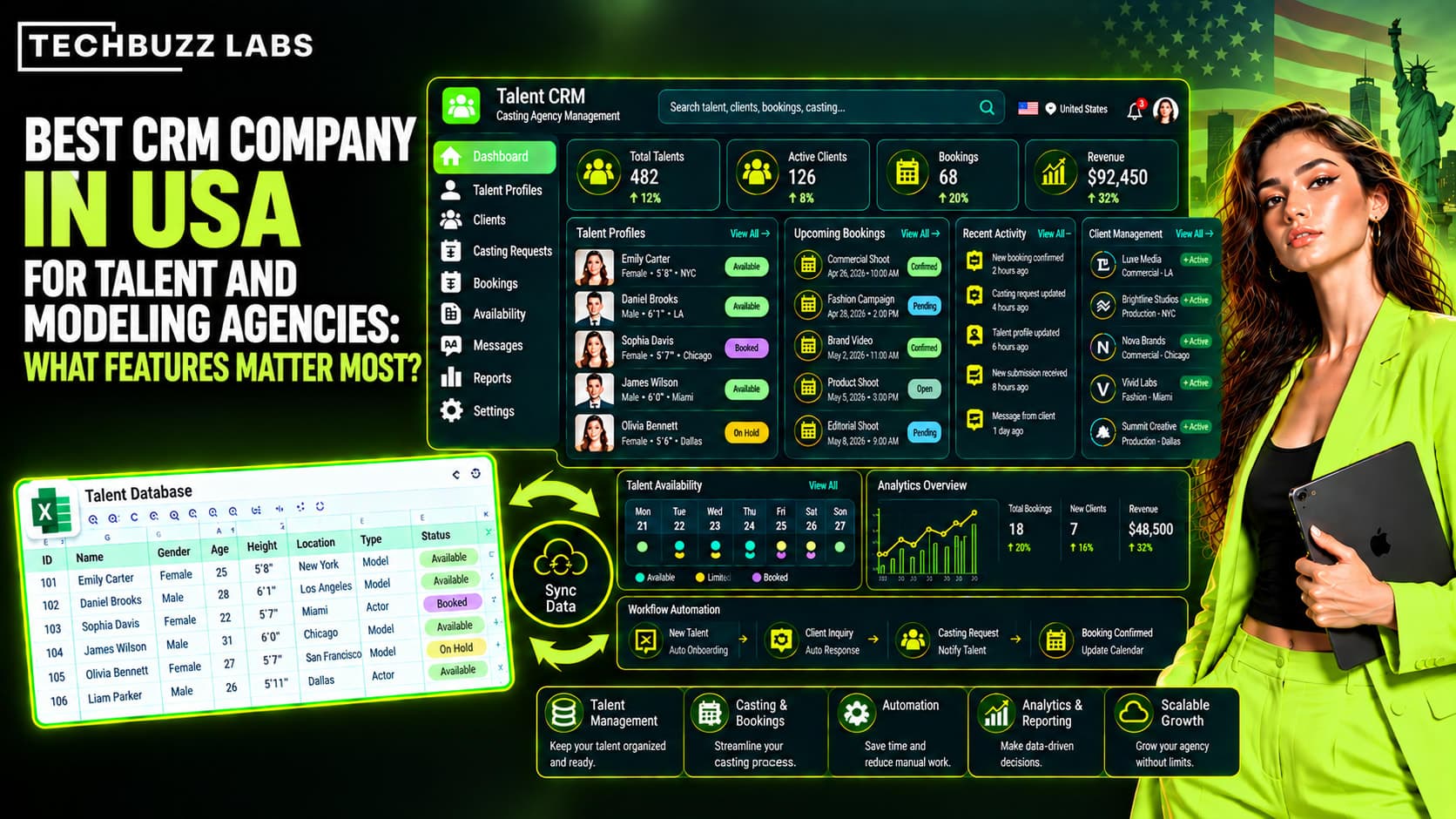
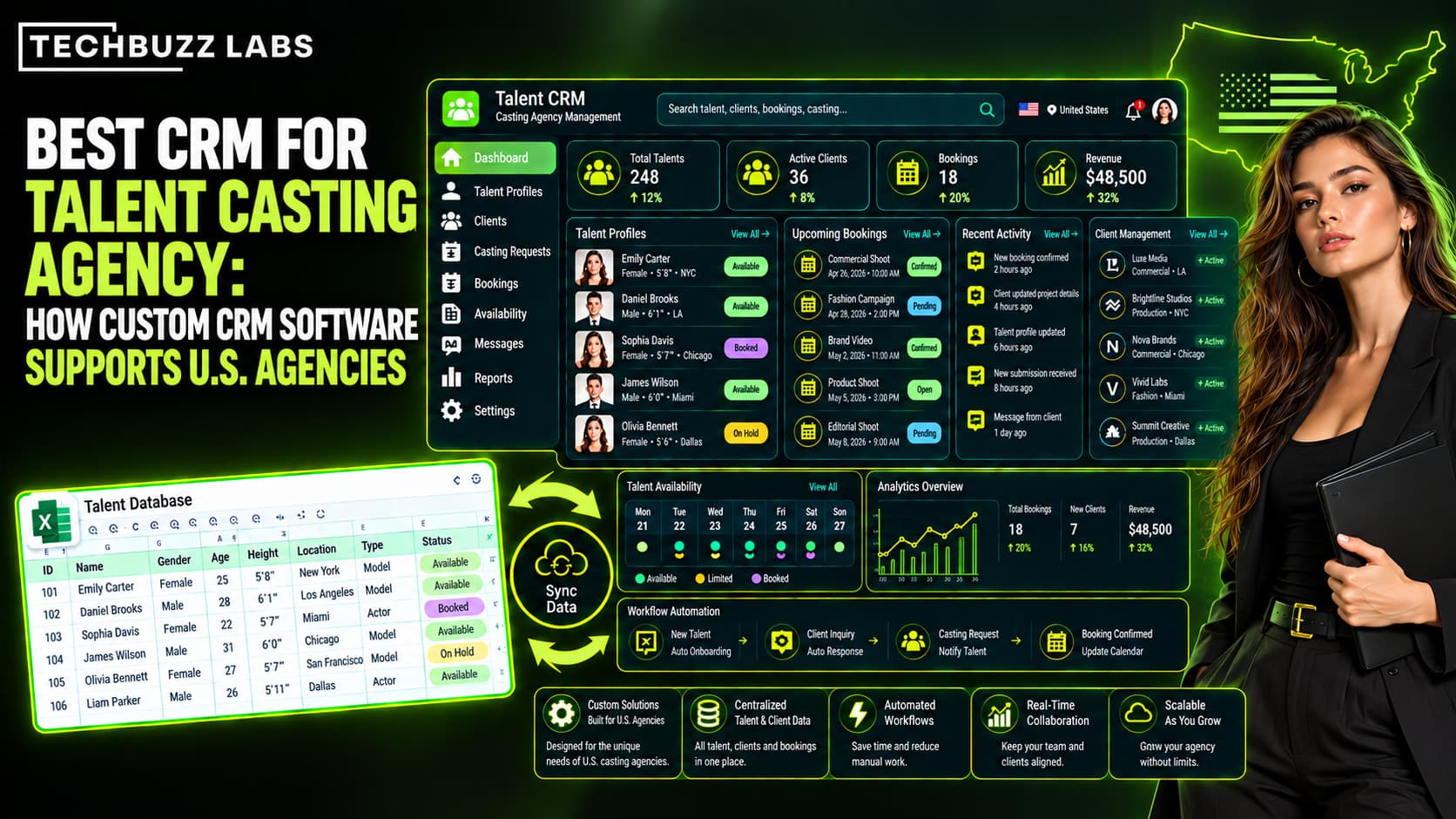
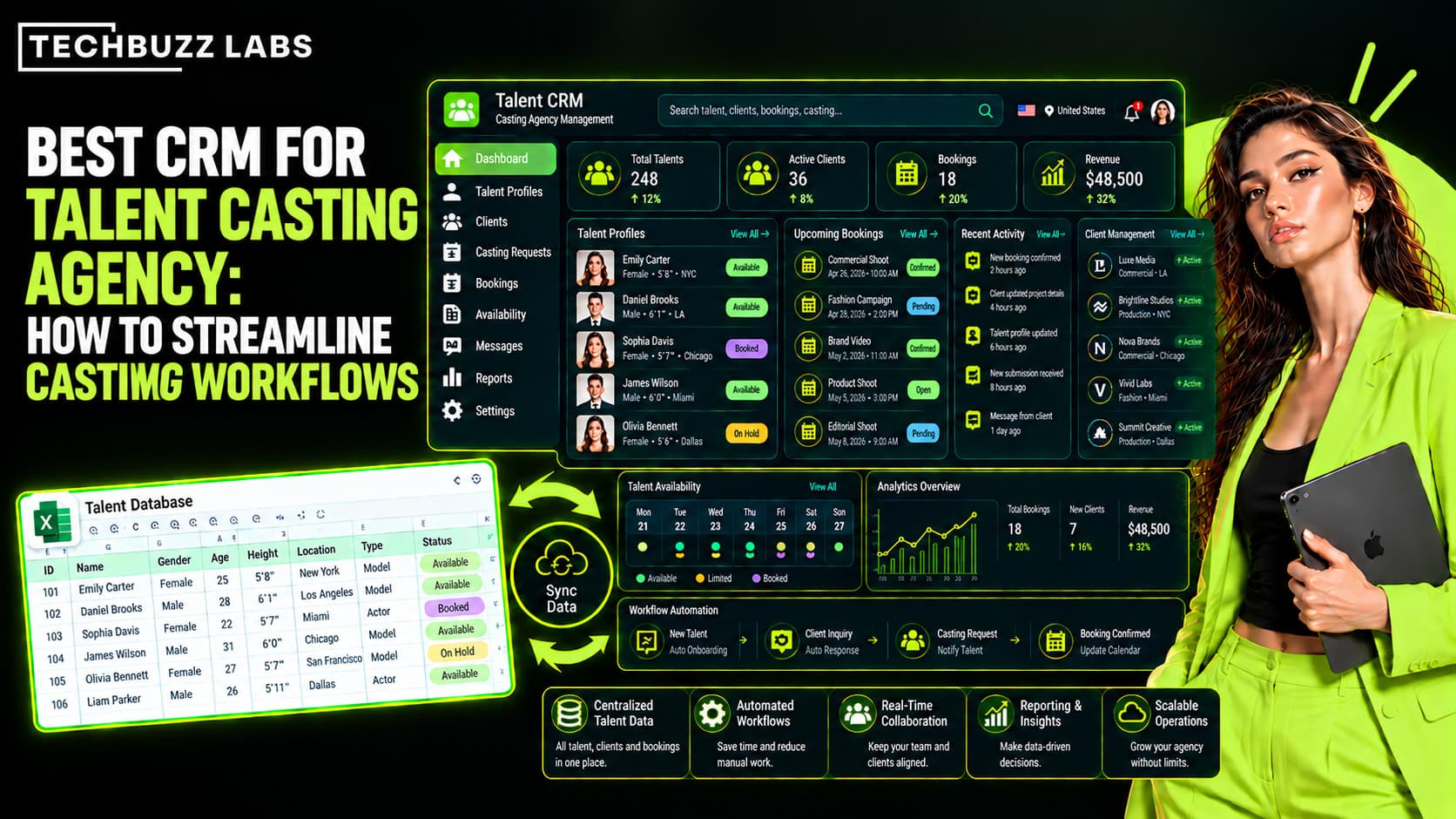
A CRM can bring model profiles, contact information, availability, bookings, and other important records into one centralized platform.
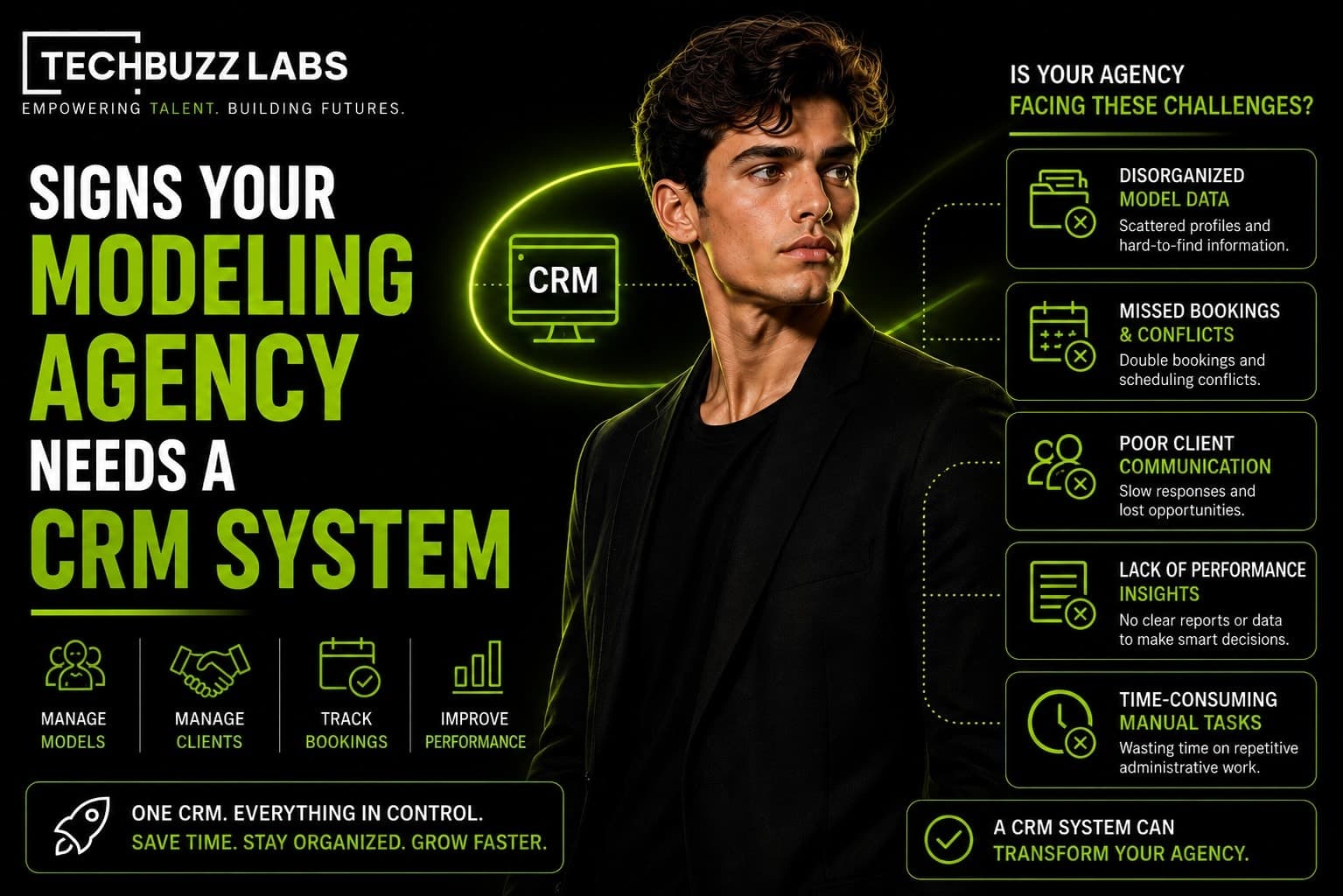
Running a modeling agency requires careful management of talent, clients, castings, bookings, schedules, and communications. When an agency is small, spreadsheets, email accounts, and folders may seem sufficient. However, as the agency grows, these tools can quickly become difficult to manage.
For modeling agencies in the USA, especially those working in competitive markets such as New York, Los Angeles, Miami, and Chicago, having an organized system can make a significant difference. A CRM system for modeling agencies can centralize important information, automate repetitive tasks, and help agents manage relationships more effectively.
TechBuzzLabs understands the growing role of technology in the modeling industry. If your agency is experiencing some of the signs below, it may be time to consider moving from manual processes to a dedicated CRM system.
1. You Are Managing Models Through Multiple Spreadsheets
One of the clearest signs that your agency has outgrown its current system is having multiple spreadsheets for different types of information.
You might have one spreadsheet for model profiles, another for availability, another for bookings, and additional files for clients or casting calls. As the number of records increases, keeping everything updated becomes difficult.
This makes it easier for agents to find accurate information without searching through multiple files.
2. You Keep Losing Track of Client Conversations
Client relationships are extremely important for modeling agencies. Brands, photographers, advertising agencies, retailers, and production companies may contact agents about different projects throughout the year.
If communication is spread across emails, phone calls, messaging applications, and personal notes, it can become difficult to remember previous conversations.
A CRM can keep client information and communication history organized. Agents can quickly review previous projects, inquiries, follow-ups, and bookings before contacting a client.
This can help create a more consistent and professional client experience.
3. Casting Calls Are Becoming Difficult to Manage
As your agency grows, you may receive more casting requests than your team can comfortably manage manually.
Each casting may have different requirements, deadlines, locations, and client preferences. Agents need to identify suitable models, check availability, send submissions, and track the client's response.
A CRM with casting management features can help organize these stages in one workflow.
Instead of relying on separate spreadsheets and email threads, agents can track each casting from the initial request through model submission and final selection.
4. Your Team Spends Too Much Time Searching for Information
Agents should spend their time developing talent and building client relationships—not searching through files.
If employees regularly ask each other for model photographs, measurements, contact information, booking dates, or client details, your agency may have an information-management problem.
A centralized CRM allows authorized team members to access the same information from one system.
Advanced search and filtering can also help agents quickly find models based on factors such as location, availability, experience, or modeling category.
5. You Are Missing Follow-Ups
A missed follow-up can mean a missed business opportunity.
Agents may need to follow up with clients after sending model submissions, contact models about casting opportunities, confirm booking details, or remind clients about upcoming projects.
When these tasks are managed manually, they can easily be forgotten.
CRM systems can create reminders and automated workflows that help agents stay on top of important follow-ups.
Automation does not have to replace personal communication. Instead, it can ensure that routine tasks do not fall through the cracks.
6. Double Bookings Are Becoming a Problem
Model availability can change quickly. A model might be available when a casting request arrives but become unavailable after accepting another booking.
If availability is tracked through separate spreadsheets or messages, scheduling conflicts can occur.
A CRM can connect model availability with casting and booking information. This gives agents better visibility into schedules and can help reduce the risk of double bookings.
For agencies managing large rosters across different U.S. cities, centralized scheduling can be particularly useful.
7. Your Agency Is Growing Quickly
Growth is a positive sign, but it can also expose weaknesses in your existing systems.
An agency representing 20 models may be able to manage information manually. An agency representing hundreds or thousands of models has very different organizational requirements.
As the number of models, clients, castings, and bookings increases, manual processes become harder to maintain.
A scalable CRM can provide a structured foundation for growth and help your agency handle increasing workloads without adding unnecessary administrative complexity.
8. Your Team Is Repeating the Same Tasks
Repetitive administrative work can consume a significant amount of an agent's day.
Entering the same client information into multiple files, sending repetitive casting notifications, updating booking statuses, and creating follow-up reminders are examples of tasks that can often be streamlined.
CRM automation can reduce repetitive work by connecting different stages of the agency workflow.
This allows employees to spend more time on higher-value activities such as talent development, client acquisition, and relationship management.
9. You Cannot Easily Measure Agency Performance
Another sign that your agency needs a CRM is difficulty understanding business performance.
Do you know which clients generate the most bookings? Which types of castings produce the best results? How many submissions turn into bookings? Which models are receiving the most opportunities?
If answering these questions requires manually combining information from several spreadsheets, your reporting system may need improvement.
A CRM can organize business data and provide reports that help managers understand trends and make better decisions.
10. Your Current System Is Holding Back Your Team
Perhaps the biggest sign is simply that your current system feels like a constant obstacle.
If your team spends more time maintaining spreadsheets than managing talent, or if employees struggle to find accurate information, it may be time for a change.
The right CRM should simplify your workflow rather than add unnecessary complexity. Before choosing a platform, consider features such as model management, client relationship management, casting management, booking tools, scheduling, communication, reporting, automation, and data security.
How TechBuzzLabs Fits Into Modern Agency Management
Technology is becoming an important part of how modern modeling agencies operate. TechBuzzLabs focuses on the relationship between technology and the modeling industry, including solutions such as CRM systems, casting management software, and model management platforms.
For agencies considering digital transformation, understanding where technology can remove bottlenecks is an important first step. The goal should not simply be to adopt new software, but to create a more efficient workflow that benefits agents, models, and clients.
Conclusion
A modeling agency may not need a CRM system from day one. However, certain warning signs indicate that manual processes are no longer enough.
If you are dealing with multiple spreadsheets, lost client conversations, missed follow-ups, casting-management challenges, scheduling conflicts, repetitive tasks, or rapid growth, a CRM for your modeling agency could provide the organization your team needs.
For U.S. modeling agencies, the right CRM can centralize talent and client information, streamline casting and booking workflows, improve communication, and provide useful business insights.
As the modeling industry continues to become more digital, adopting the right technology can help agencies work more efficiently while allowing their teams to focus on what matters most: building strong talent and lasting client relationships.