Best CRM for Fashion Model Agency: How CRM Automation Reduces Manual Agency Work
An agent might enter the same model information into multiple files, send similar availability requests, update casting statuses, create follow-up reminders, and communicate project updates to different team members.
Running a fashion modeling agency involves a large amount of administrative work behind every successful casting and booking. Agents may need to update model profiles, organize client requests, check availability, prepare submissions, send reminders, track feedback, and maintain booking records throughout the day.
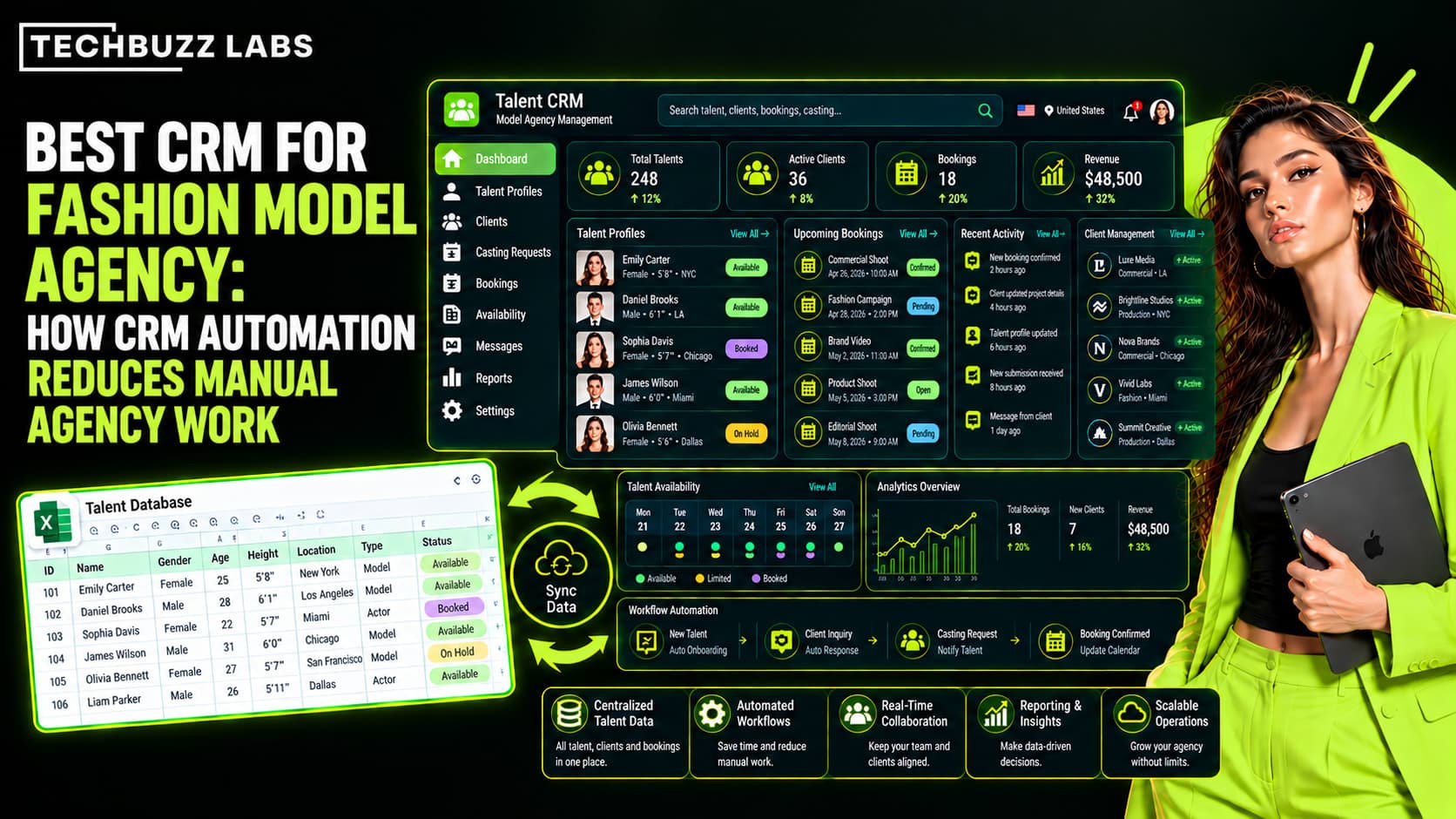
When these activities are handled manually, the workload can increase quickly as the agency's talent roster and client base grow. A CRM with automation capabilities can help reduce repetitive tasks by connecting information and triggering routine actions based on defined workflows.
The best CRM for fashion model agency operations should therefore do more than store talent and client information. It should help automate repetitive processes while keeping agents in control of important decisions and relationships.
Why Manual Work Becomes a Problem for Growing Agencies
Manual processes may seem manageable when an agency has a small number of models and clients. As activity increases, however, the same tasks may need to be repeated hundreds of times.
This creates two challenges: time consumption and the possibility of inconsistent information.
A centralized CRM can reduce some of this workload by keeping agency information connected and allowing selected tasks to happen automatically. TechBuzzLabs' existing CRM content similarly identifies repetitive administrative work as an area where automation can help modeling agencies.
Automating Talent Profile Updates
Talent profiles require regular maintenance.
Models may update their contact details, portfolio images, measurements, experience, availability, or other professional information. When information is stored across different documents, agents may need to update several places manually.
A CRM can centralize these records and provide structured workflows for profile management.
Depending on the system, certain updates can also trigger related actions. For example, when a profile is updated, authorized team members can be notified or the latest information can become available immediately within relevant casting workflows.
This reduces the need to maintain duplicate records.
Automating Talent Search and Shortlisting Workflows
Finding suitable models for a casting can involve reviewing a large number of profiles.
CRM search and filtering tools can reduce the manual effort involved in this process by allowing agents to narrow the database based on relevant requirements.
For example, an agent may need models with specific experience, location, availability, skills, or other characteristics.
Automation can support the process by organizing matching profiles and making relevant information easier to access.
The final decision can remain with the agent, while the software handles the repetitive task of searching through large amounts of structured data.
Reducing Manual Availability Checks
Availability can become a significant administrative task when an agency manages many models.
Agents may repeatedly contact talent to determine whether they are available for specific casting dates.
A CRM can make availability information part of the central talent record. Where appropriate, automated requests or reminders can also help collect updated availability information.
For example, the system could notify relevant talent about an upcoming availability request and record responses within the appropriate project.
This can reduce unnecessary back-and-forth communication.
Automating Casting Notifications
Fashion modeling agencies may receive several casting requests at the same time.
Once a casting project has been created, the CRM can support notifications and task assignments for the relevant team members.
Instead of manually informing every person involved, the system can trigger internal notifications based on predefined workflow rules.
For example, a team member could receive an alert when a new casting requires attention or when a project reaches a specific stage.
This helps reduce the need for manual internal communication.
Making Submissions Easier to Track
Submitting models to clients creates another layer of administrative work.
Agents need to know which models were submitted, when submissions were sent, what the client responded, and which candidates remain active.
A CRM can automatically maintain submission records as part of the casting project.
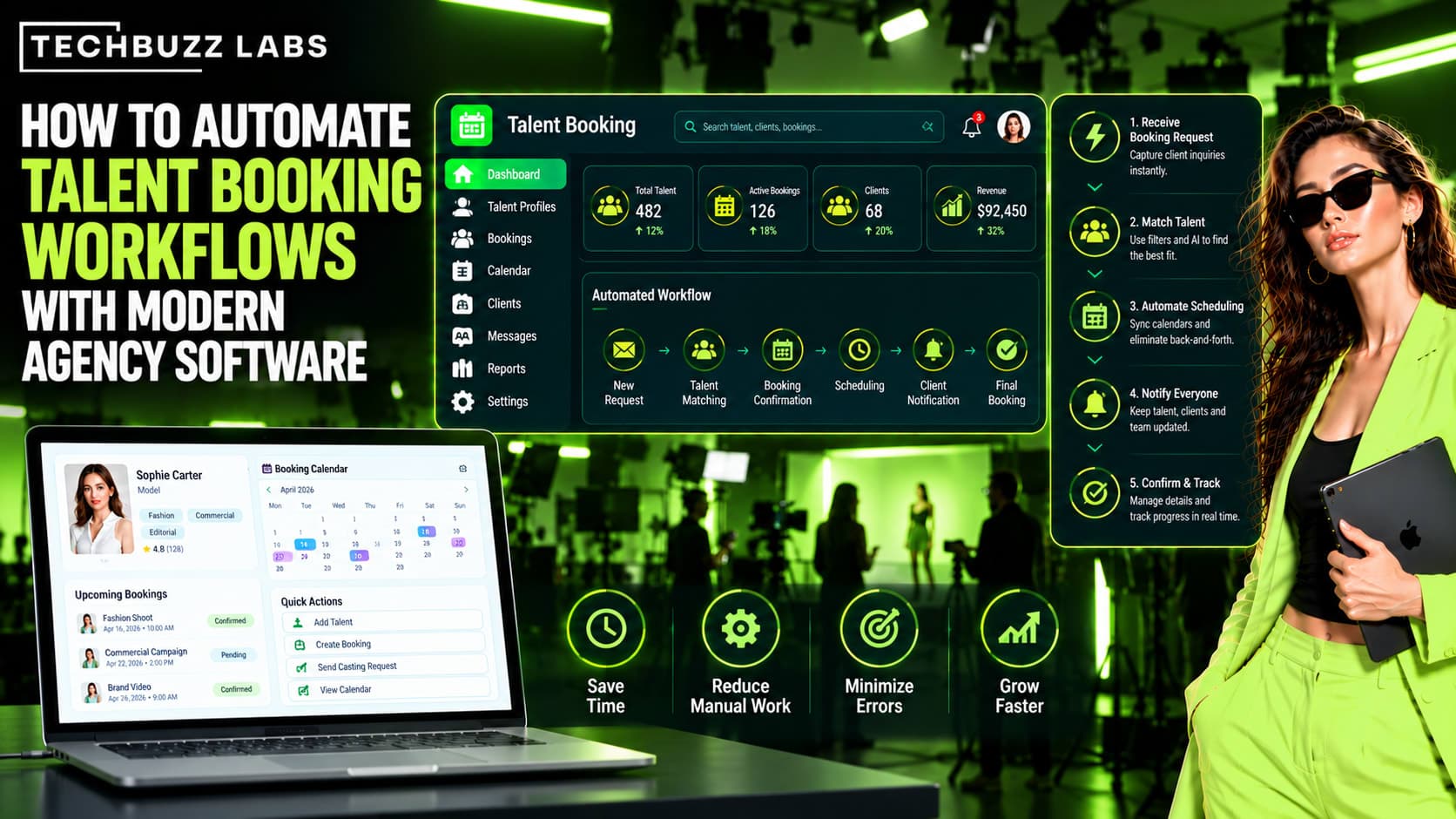
Statuses can be updated as the project progresses, such as:
Draft → Submitted → Under Review → Shortlisted → Approved → Booked
Some status changes may also trigger notifications or tasks.
This means agents do not have to manually create a separate reminder for every stage of every casting.
Automating Client Follow-Ups
Client follow-ups are important, but manually remembering every follow-up can be difficult when an agency is managing multiple projects.
CRM automation can create reminders based on project dates, submission status, or other predefined conditions.
For example, if a client has not responded to a submission after a certain period, the system can create a follow-up task for the responsible agent.
The agent still controls the communication, but the CRM helps ensure that the follow-up does not depend entirely on memory or separate notes.
Automating Booking Updates
Once a model is selected, several records may need to be updated.
The booking may need to be connected with the model profile, client record, project, dates, and other relevant information.
A connected CRM workflow can reduce duplicate data entry by carrying information from the casting project into the booking record.
For example, when a casting moves to a confirmed booking stage, relevant project and talent information can remain connected rather than being manually entered again.
This can reduce repetitive administrative work and help maintain more consistent records.
Reducing Duplicate Data Entry
One of the biggest advantages of CRM automation is reducing the need to enter the same information repeatedly.
Consider a client who submits a casting request.
Without a connected system, an agent might record the client information in one place, create a separate casting spreadsheet, copy model information into another file, and then create a booking record after selection.
A CRM can connect these records.
The client, project, talent, submission, and booking can remain part of the same workflow, reducing unnecessary duplication.
Automating Internal Tasks and Reminders
Not every automation needs to be client-facing.
Internal tasks can also be automated.
A CRM may create reminders for agents when:
A casting deadline is approaching
Client feedback is pending
Model availability needs confirmation
A booking requires attention
A profile needs updating
A follow-up is due
A project moves to another stage
These reminders can help teams maintain workflow consistency without relying entirely on individual calendars or personal notes.
Improving Team Handoffs
Manual work can become particularly difficult when responsibilities move between team members.
For example, one agent may manage the client while another handles talent submissions and another coordinates booking details.
A centralized CRM can keep the project's information accessible to authorized team members.
Automation can also notify the next person when a workflow stage is completed.
This can make handoffs more structured because the next team member receives the relevant task and project context instead of having to ask for updates manually.
Reducing Errors Caused by Manual Processes
Automation is not only about saving time.
Repeated manual data entry can create inconsistencies. A model's availability may be updated in one spreadsheet but remain outdated in another. A booking status may be changed in an email but not in the central record.
A connected CRM can reduce some of these issues by maintaining information within a shared system.
Automation can also ensure that certain actions happen consistently when predefined conditions are met.
This can make workflows easier to monitor and maintain.
Giving Agents More Time for High-Value Work
The purpose of automation is not to remove the human element from fashion modeling.
Agent relationships, client communication, talent development, casting judgment, and negotiation still require human involvement.
The value of automation is that it can handle selected repetitive administrative processes.
TechBuzzLabs describes this approach as using CRM and workflow automation to reduce repetitive work while allowing agency teams to spend more time on talent and client relationships.
What to Automate First
Agencies do not need to automate every process immediately.
A practical approach is to identify repetitive tasks that happen frequently and require limited judgment.
Good candidates may include profile notifications, follow-up reminders, availability requests, casting status updates, task assignments, and booking notifications.
Tasks that require professional judgment, sensitive client communication, or creative casting decisions should generally remain under direct human control.
The goal should be purposeful automation rather than automation for its own sake.
When Custom CRM Automation Makes Sense
Standard CRM platforms may provide useful automation features, but fashion modeling agencies can have specialized workflows that require more flexibility.
An agency may need custom triggers, unique talent fields, specialized casting stages, automated availability workflows, custom booking processes, or integrations with other systems.
In these situations, custom CRM development can allow automation to be built around the agency's actual workflow.
TechBuzzLabs focuses on custom technology solutions for modeling and talent agencies, including CRM, casting management, talent databases, workflow automation, and related agency systems.
Choosing a CRM With Useful Automation
When evaluating the best CRM for fashion model agency operations, agencies should look beyond the number of automation features.
Consider whether the platform can automate the tasks that actually consume time.
Important areas include talent profile management, casting workflows, availability requests, submission tracking, client follow-ups, booking updates, internal notifications, task assignments, reporting, user permissions, and integrations.
The system should also allow agents to understand what automation is happening and make changes when workflows evolve.
Final Thoughts
The best CRM for fashion model agency operations can help reduce the administrative workload created by repetitive processes.
From talent profile updates and availability checks to casting notifications, submissions, client follow-ups, and booking updates, CRM automation can connect routine tasks and reduce unnecessary manual work.
The most effective approach is not to automate everything. Instead, agencies should identify repetitive processes where automation can provide clear operational value while keeping important talent and client decisions under human control.
For growing modeling agencies, this balance can create a more organized workflow and allow agents to spend less time managing repetitive administrative tasks and more time focusing on the relationships and decisions that drive the agency forward.