Best Model Portfolio Management Software: Features Every Modeling Agency Needs
For modeling agencies in the United States, choosing the right software can improve daily organization and support growth. This guide explains the essential features agencies should evaluate when selecting a portfolio management solution.
Managing a modeling agency involves more than discovering new talent. Agencies must organize model portfolios, update profile information, respond to casting requests, share images with clients, and coordinate bookings. When these activities rely on separate spreadsheets, folders, emails, and messaging tools, finding the right information can become time-consuming.
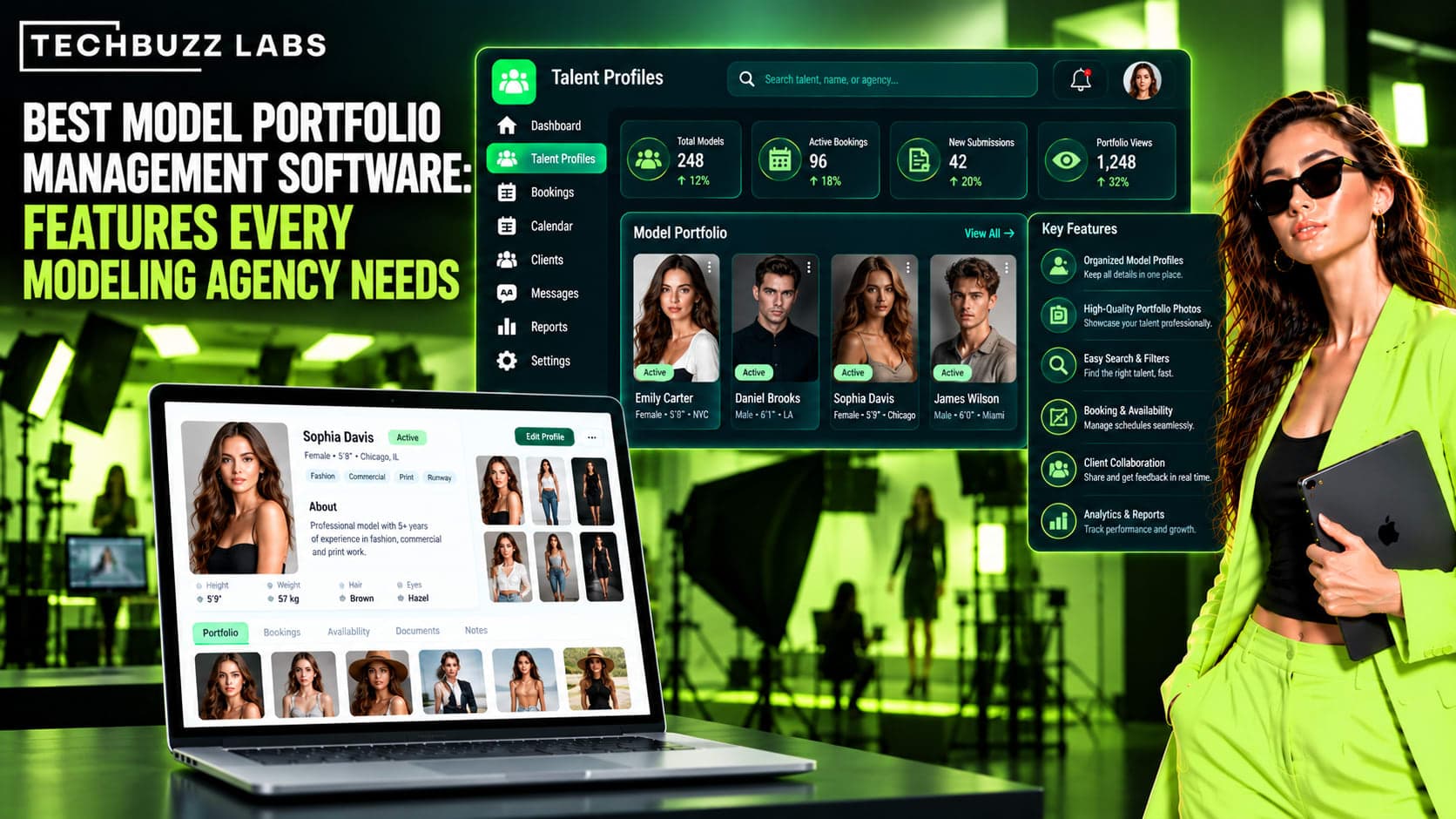
Model portfolio management software helps agencies organize model profiles, photographs, experience, and other essential information in a centralized digital system. When connected with casting and booking tools, it can also help agents prepare talent submissions, track client feedback, and manage ongoing opportunities more efficiently.
What Is Model Portfolio Management Software?
Model portfolio management software is a digital platform that helps modeling agencies store, organize, update, and share model portfolios. Depending on the solution, it may also include talent database management, casting workflows, client relationship management (CRM), scheduling, and booking administration.
Instead of searching through multiple folders for photographs or relying on outdated profile documents, agents can access structured talent records from one location.
A well-designed system can help agencies manage:
Model photographs, digitals, and portfolio collections
Measurements, skills, experience, and profile details
Contact information and representation records
Portfolio updates and image selection
Client requests and talent submissions
Casting feedback and booking history
The goal is to keep portfolio information accurate, accessible, and ready for use when new opportunities arise.
1. Centralized Model Profiles and Portfolio Storage
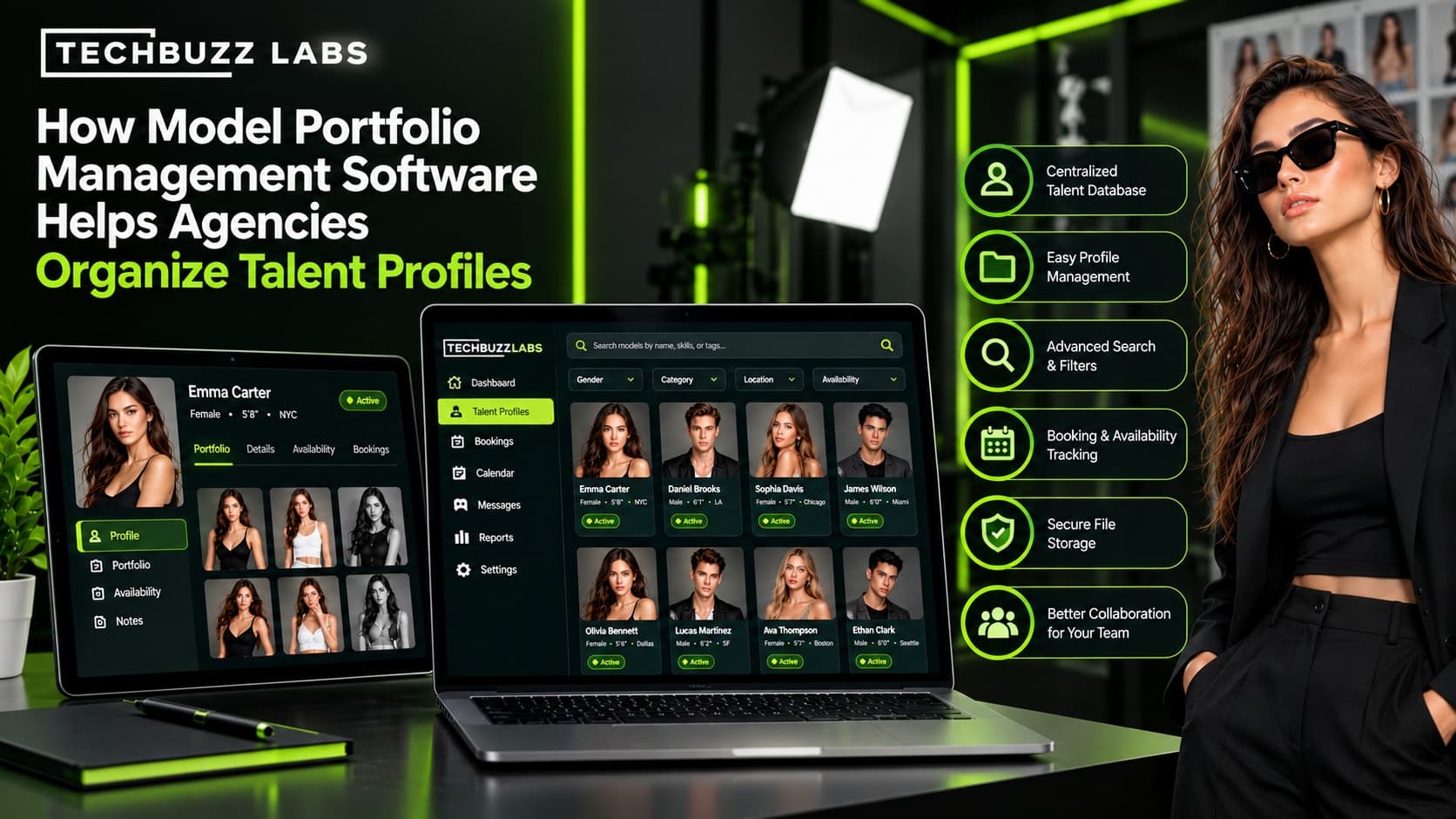
A centralized talent database is one of the most important features to look for.
Each model should have an organized profile containing relevant information, such as photographs, measurements, experience, location, skills, and contact details. Agents should be able to locate the right profile quickly without searching through multiple folders or asking colleagues for updated files.
The system should also make it straightforward to update profile information and replace outdated photographs.
For agencies representing a large roster, consistent profile organization can improve internal coordination and help ensure that clients receive current information.
2. High-Quality Image and Media Management
Photographs are central to a model's professional portfolio. Agencies may manage headshots, digitals, editorial images, commercial work, comp cards, and other portfolio assets.
Look for software that supports organized image collections, practical preview options, clear file naming, and efficient uploading. Depending on the platform, agents may also be able to create selected image sets for different clients or projects.
Important considerations include image quality, upload limits, storage capacity, searchability, and the ability to replace outdated files without losing track of current portfolio materials.
Agencies should also confirm how the platform handles image permissions, confidential material, and access to photographs shared with clients.
3. Advanced Search and Filtering
Clients often request models based on specific project requirements. These may include experience, location, skills, availability, portfolio characteristics, or other relevant attributes.
Advanced search and filtering allow agents to narrow a talent database instead of manually reviewing every profile.
For example, an agent working on a commercial campaign could filter the roster by relevant experience and location before reviewing the shortlisted portfolios.
The software should allow agencies to organize profile fields around their actual casting requirements. Search functionality is most useful when model records are consistently maintained and the available filters reflect meaningful information.
4. Portfolio Sharing and Client Presentation
Agencies frequently need to share selected portfolios with brands, photographers, casting directors, and production teams.
A good portfolio management platform should make it easy to prepare and present relevant talent profiles. Depending on the product, features may include shareable portfolio links, downloadable presentation materials, client-specific shortlists, or branded portfolio pages.
Before selecting a platform, review its sharing permissions. Agencies should be able to understand who can view portfolio content and whether shared links can be restricted or revoked.
A professional presentation process can make it easier for clients to review talent and provide feedback without receiving multiple disconnected files.
5. Casting and Submission Tracking
Portfolio management becomes more valuable when it connects directly with casting workflows.
Agents should be able to associate talent profiles with specific casting requests, record which models have been submitted, and track client responses.
Useful features include:
Casting brief and deadline management
Model shortlists for individual projects
Submission status tracking
Client feedback and approval records
Follow-up reminders
Links between submissions and confirmed bookings
These capabilities help teams understand where each casting opportunity stands and reduce the need to maintain separate tracking spreadsheets.
For agencies that manage multiple campaigns simultaneously, connected casting records can improve visibility across the entire process.
6. Integration With Booking and Scheduling Tools
A model's portfolio is only one part of the agency's workflow. Agents also need to know whether a model is available, which projects they have completed, and whether a new opportunity can be scheduled.
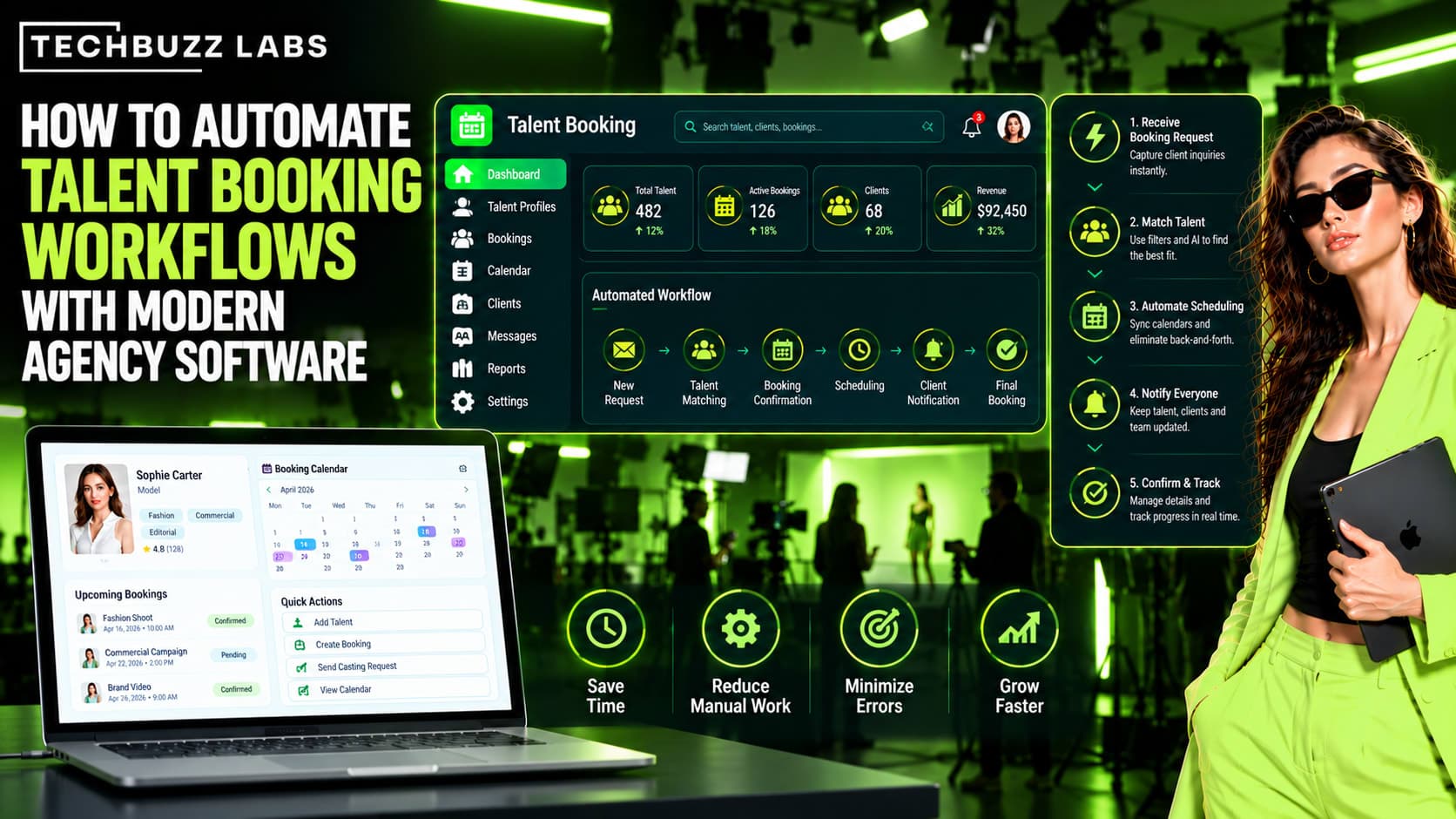
Software that connects portfolios with booking calendars and availability records can help agencies move from talent discovery to booking coordination.
Look for features such as shared calendars, booking histories, availability tracking, and project status updates. Integrations with existing calendar or agency management tools may also be useful.
Keep in mind that accurate scheduling depends on timely updates from the agency and its talent. Software can support coordination, but it cannot guarantee availability when records are incomplete.
7. CRM and Client Relationship Management
A strong client management system can help agencies connect portfolios with business opportunities.
CRM features may store client contact details, project requirements, communication history, previous bookings, and follow-up tasks. When a returning client requests models for a new campaign, agents can review relevant information before preparing a shortlist.
This reduces the need to search through old email threads and can help agencies maintain more consistent communication.
For agencies evaluating related solutions, TechBuzz Labs has also published a guide to the best CRM for modeling agencies.
8. Security, Permissions, and Data Management
Modeling agencies handle personal information and professional images, so security should be a key selection criterion.
Before choosing a platform, review its access controls, data backup procedures, security practices, and options for exporting records. Consider whether agents, managers, models, and external clients need different permission levels.
Agencies should also understand how photographs and personal information are stored, who can access them, and how access can be removed when necessary.
A clear process for updating, archiving, and reviewing profile information helps keep the database organized over time.
9. Reporting and Workflow Automation
As an agency grows, managers may need better visibility into portfolio updates, casting activity, and booking outcomes.
Reporting tools can help track measures such as profile completeness, submission activity, casting progress, and booking volume. Automation may also support routine tasks, including reminders to update portfolios, notifications when client feedback arrives, and prompts to follow up on pending submissions.
The most useful features are those that reduce repetitive work and provide information that supports practical decisions.
Agencies should prioritize relevant reports and automations instead of selecting a platform solely because it offers the largest number of features.
How to Choose the Right Software for Your Agency
Before investing in model portfolio management software, consider the following questions:
Roster size: Can the platform manage your current talent database and expected growth?
Ease of use: Can agents upload, update, search, and share portfolios without unnecessary steps?
Workflow fit: Does the software support your casting and booking process?
Customization: Can you configure profile fields, permissions, and reporting?
Integrations: Does it work with your existing tools?
Total cost: What are the subscription, setup, storage, training, and maintenance costs?
Support and scalability: Can the provider support your agency as requirements change?
Request a demonstration and test the system using real agency scenarios before making a final decision.
How TechBuzz Labs Can Help
TechBuzz Labs focuses on technology solutions relevant to talent and modeling agencies, including CRM, talent management, and agency workflow software.
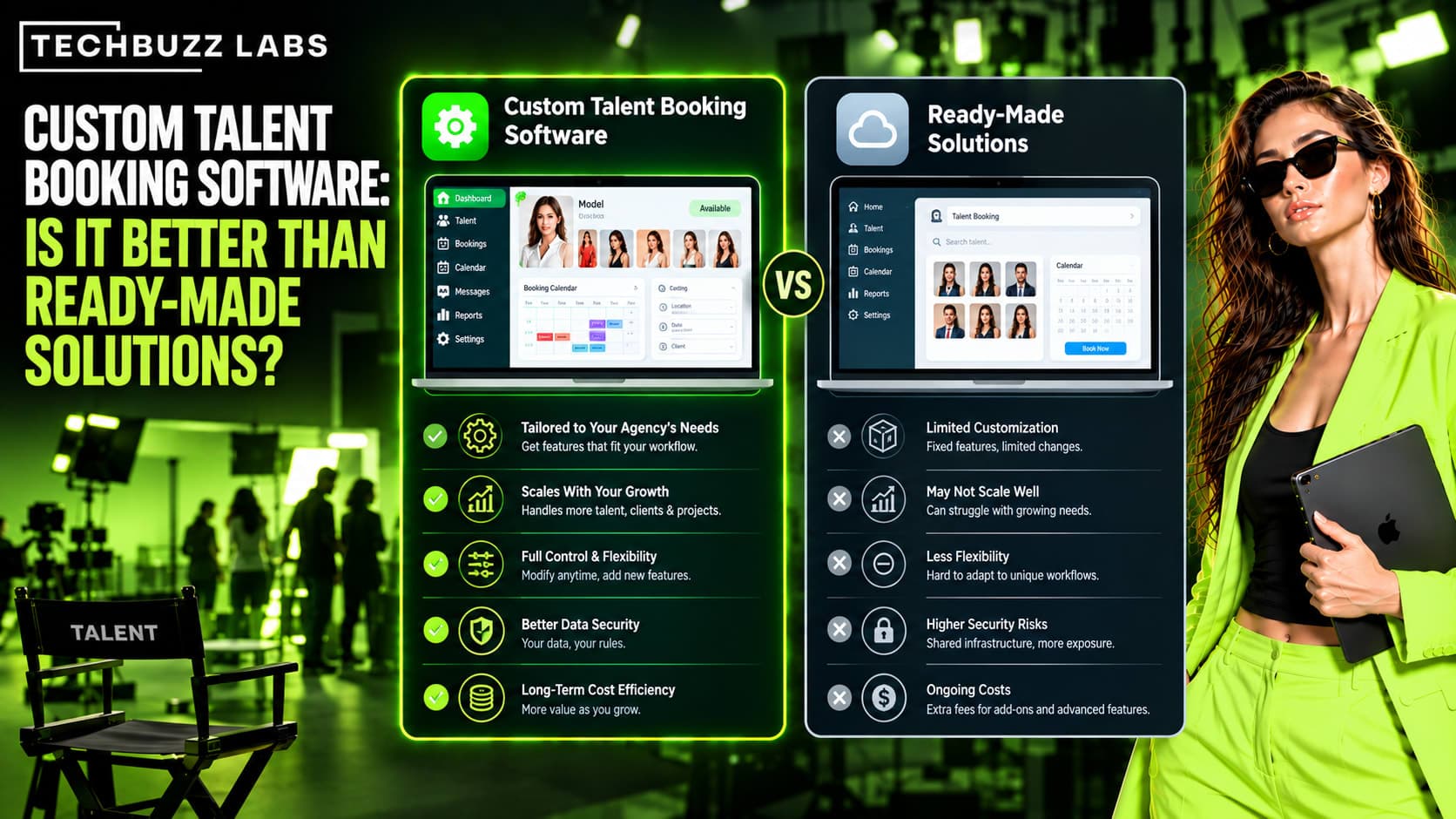
For agencies whose portfolio management needs extend beyond standard features, custom software may provide a way to connect model profiles, media assets, casting submissions, client records, and booking workflows within one system.
A sensible starting point is to identify the biggest operational challenges, define the features required for an initial release, and compare the cost of customization with suitable ready-made platforms.
This approach helps agencies invest in capabilities that solve genuine problems rather than adding complexity without a clear benefit.
Final Thoughts
The best model portfolio management software should do more than store photographs. It should help agencies maintain accurate model profiles, find relevant talent, share portfolios professionally, and connect portfolio information with casting and booking activities.
Prioritize centralized records, image management, search and filtering, controlled sharing, CRM capabilities, security, and integration options. Then compare shortlisted platforms against your agency's real workflow and future plans.
With the right system and consistent data management, modeling agencies can spend less time searching for information and more time developing talent, responding to clients, and managing new opportunities.