How Model Portfolio Management Software Helps Agencies Organize Talent Profiles
For modeling agencies in the United States, an organized talent database can also support better collaboration, more consistent portfolio presentation, and scalable agency management.
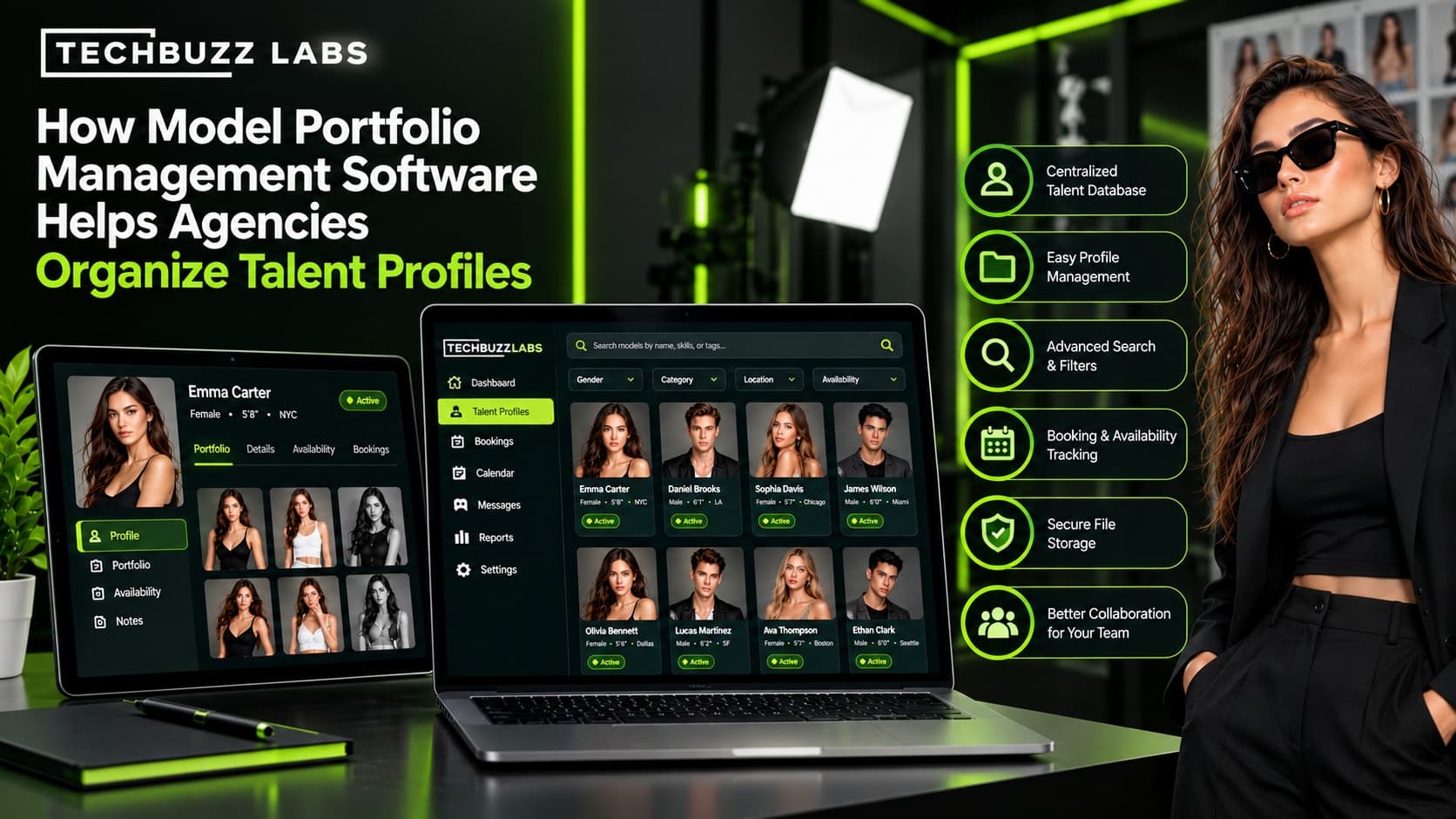
Managing a growing roster of models requires more than collecting photographs and contact details. Modeling agencies must maintain accurate profiles, organize portfolio images, track experience, respond to casting requests, and make relevant talent information accessible to their teams. When these details are scattered across spreadsheets, folders, and email conversations, finding the right information can become time-consuming.
Model portfolio management software helps agencies organize talent profiles in a centralized digital system. By keeping essential information structured, searchable, and easy to update, the right platform can simplify daily operations and help agents respond to client requests more efficiently.
What Is Model Portfolio Management Software?
Model portfolio management software is a digital platform that helps agencies store, update, organize, and share information about the talent they represent.
Depending on the platform, it may include model profiles, image libraries, advanced search, casting submissions, client management, and booking records. Some solutions focus mainly on portfolio presentation, while broader agency management systems connect portfolios with scheduling and business workflows.
Instead of maintaining separate files for every model, agencies can create a structured profile that brings relevant information together.
Typical profile details include:
Model name and contact information
Portfolio photographs and digitals
Measurements and relevant physical attributes
Experience, skills, and specializations
Location and travel availability
Portfolio links and professional credits
Casting submissions and booking history
The exact fields should reflect the agency's business model and the information genuinely required for representation and casting.
1. Keep All Talent Information in One Place
One of the biggest challenges for modeling agencies is fragmented information. An agent may have a model's latest photographs in one folder, contact details in a spreadsheet, and previous booking information in an email thread.
A centralized portfolio management system connects these details through a single profile.
When an agent needs to review a model before responding to a client, the essential information is easier to locate. Team members can also work from a shared record instead of maintaining separate versions of the same profile.
This approach can reduce duplicate data entry and make it easier to maintain consistent information across the agency.
2. Organize Portfolio Photographs and Digital Assets
Professional images are essential for presenting models to prospective clients. Agencies may manage headshots, digitals, editorial photographs, commercial work, comp cards, and other portfolio materials.
Without a clear structure, images can become difficult to identify, especially when several versions exist.
Portfolio management software can help agencies organize images by model, category, project, or date. Depending on the platform, users may be able to create image collections, preview files, update photographs, and prepare selected portfolios for specific client requests.
Agencies should also consider image quality, storage limits, file organization, and permissions when evaluating a platform.
A consistent image-management process helps agents access relevant portfolio material without repeatedly searching through folders.
3. Find Suitable Talent With Search and Filtering
When a client requests models for a campaign, agents need to identify candidates who match the project's requirements.
Searching a large roster manually can take considerable time. Software with advanced search and filtering can make the process more manageable.
Depending on the available profile fields, agents may be able to filter by:
Experience and professional background
Location and relevant travel requirements
Skills or specialized experience
Availability for a particular project
Portfolio categories and client requirements
For example, an agency responding to a commercial photoshoot request could narrow its roster by location, relevant experience, and availability before reviewing the shortlisted portfolios.
Search results are only as reliable as the underlying data, so regular profile updates and consistent recordkeeping remain important.
4. Make Profile Updates Easier to Manage
A model's portfolio changes over time. New photographs are added, professional experience grows, contact details change, and previously listed information may become outdated.
An organized system makes it easier to identify and update the relevant profile instead of editing several disconnected documents.
Agencies can establish a regular review process for portfolio images, contact information, experience, and other relevant details. Some platforms may also support reminders or workflows for requesting updated materials from represented talent.
Maintaining current profiles helps agents prepare accurate submissions and present models professionally.
5. Improve Team Collaboration
Modeling agencies often have several agents handling different clients, projects, or talent categories. If profile information is managed independently by each person, important updates may not reach the entire team.
A shared database can give authorized team members access to consistent information. Permission settings can help ensure that agents, managers, and external users see only the information appropriate to their roles.
For example, an agent could update a model's portfolio while another team member reviews the same profile to prepare a casting shortlist.
Clear ownership of profile updates and well-defined access rules help prevent confusion and maintain data quality.
6. Connect Talent Profiles With Casting and Booking Workflows
Organizing profiles becomes even more valuable when portfolio management connects with other agency operations.
A broader agency platform may allow agents to associate a model's profile with a casting brief, track submissions, record client feedback, check availability, and review previous bookings.
This creates a more connected workflow:
Talent Profile → Casting Search → Client Submission → Feedback → Booking
Instead of recreating talent information for every new opportunity, agents can use existing records to support each stage of the process.
Not every portfolio tool includes all these capabilities. Agencies should confirm whether casting and booking management are built in or require separate software and integrations.
7. Protect Talent Information and Portfolio Assets
Talent profiles may contain personal contact information, professional images, and other sensitive business records. Agencies should therefore evaluate security alongside convenience.
Important considerations include user permissions, secure access, data backup procedures, file-sharing controls, and the ability to export records when changing platforms.
Agencies should also establish clear policies for image use, client access, and removing access when a project or business relationship ends.
A centralized system can make information easier to manage, but security depends on the software's safeguards and the agency's own practices.
8. Choose Software That Fits Your Agency's Needs
The best model portfolio management software depends on roster size, workflow complexity, budget, and future plans.
Before selecting a platform, evaluate:
Ease of use: Can agents quickly create, update, and search profiles?
Image management: Does the platform support your portfolio and storage requirements?
Customization: Can you configure profile fields and categories?
Casting support: Can you connect profiles with submissions and client feedback?
Integrations: Does it work with your existing calendars, CRM, or booking tools?
Scalability: Can it accommodate a larger roster and additional users?
Total cost: What are the subscription, setup, training, and ongoing maintenance costs?
Smaller agencies may find that ready-made software provides everything they need. Agencies with specialized processes or complex integrations may want to evaluate custom solutions.
How TechBuzz Labs Can Help Modeling Agencies
TechBuzz Labs focuses on technology solutions relevant to modeling and talent agencies, including CRM, talent management, and workflow software.
For agencies whose requirements extend beyond basic portfolio storage, custom software can be designed to connect model profiles, image libraries, casting submissions, client records, and booking information within a coordinated system.
The first step is to identify where the current process creates delays or duplication. Agencies can then prioritize essential features and compare a tailored platform with existing software before committing to development.
This helps ensure that technology investments address practical operational needs and support the agency's long-term goals.
Final Thoughts
Model portfolio management software helps agencies move beyond scattered folders and disconnected records by organizing talent information in a searchable, structured system.
Centralized profiles, image management, advanced search, regular updates, collaboration tools, and controlled access can make everyday agency operations easier to manage. Connecting portfolios with casting and booking workflows can provide additional value as the agency grows.
The best approach is to choose software that fits your current process, keeps talent information accurate, and can support future requirements without unnecessary complexity. With consistent data management and the right tools, agencies can spend less time searching for information and more time matching talent with relevant opportunities.