How to Automate Talent Booking Workflows With Modern Agency Software
For modeling and talent agencies across the United States, the right software can provide a more consistent process from the first client inquiry to the final booking.
Managing a modeling or talent agency involves much more than finding the right talent for a client. Agencies must organize portfolios, respond to casting requests, check availability, coordinate schedules, send submissions, manage client feedback, and confirm bookings. When these activities rely on spreadsheets, emails, and separate applications, routine administrative work can slow the entire process.
Talent booking workflow automation helps agencies connect these tasks through modern agency software. By automating repetitive actions and centralizing information, agencies can improve coordination, reduce manual data entry, and manage growing booking volumes more effectively.
What Is Talent Booking Workflow Automation?
Talent booking workflow automation uses software to organize booking activities and automatically perform selected routine tasks based on predefined rules.
For example, when a client submits a casting request, an agency system could create a project record, notify the relevant agent, set a submission deadline, and schedule follow-up reminders. Once talent is selected, the workflow could help move the project into booking coordination.
The exact capabilities depend on the platform and its integrations. Automation should support the agency's workflow while leaving important decisions, such as talent selection and final booking approval, to the appropriate people.
1. Centralize Talent Profiles and Client Information
The first step toward automation is bringing important information into one reliable system.
Many agencies manage model portfolios in folders, client contacts in spreadsheets, and booking details in separate calendars. This fragmentation makes it harder to find current information and increases the chance of duplicate data entry.
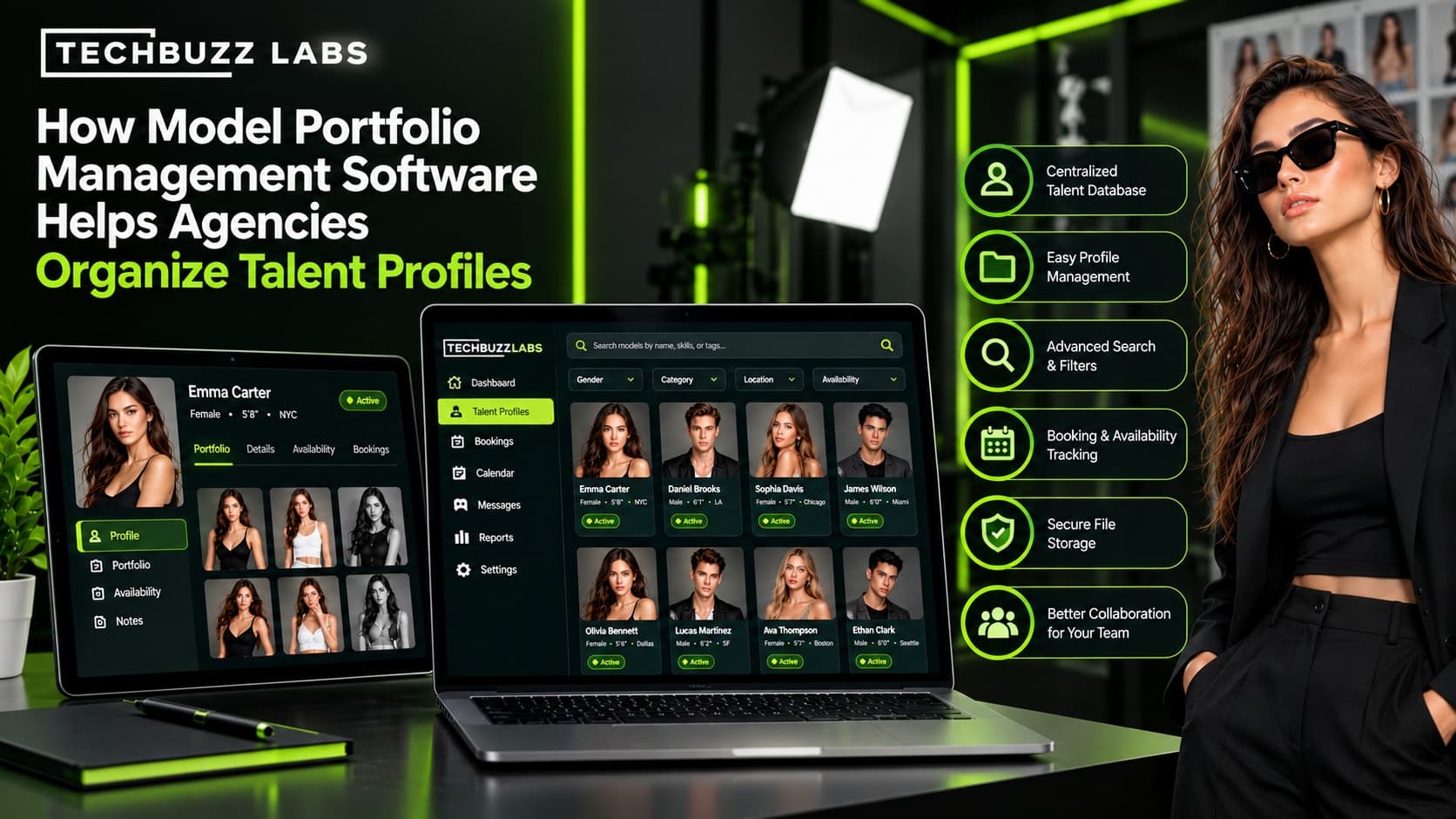
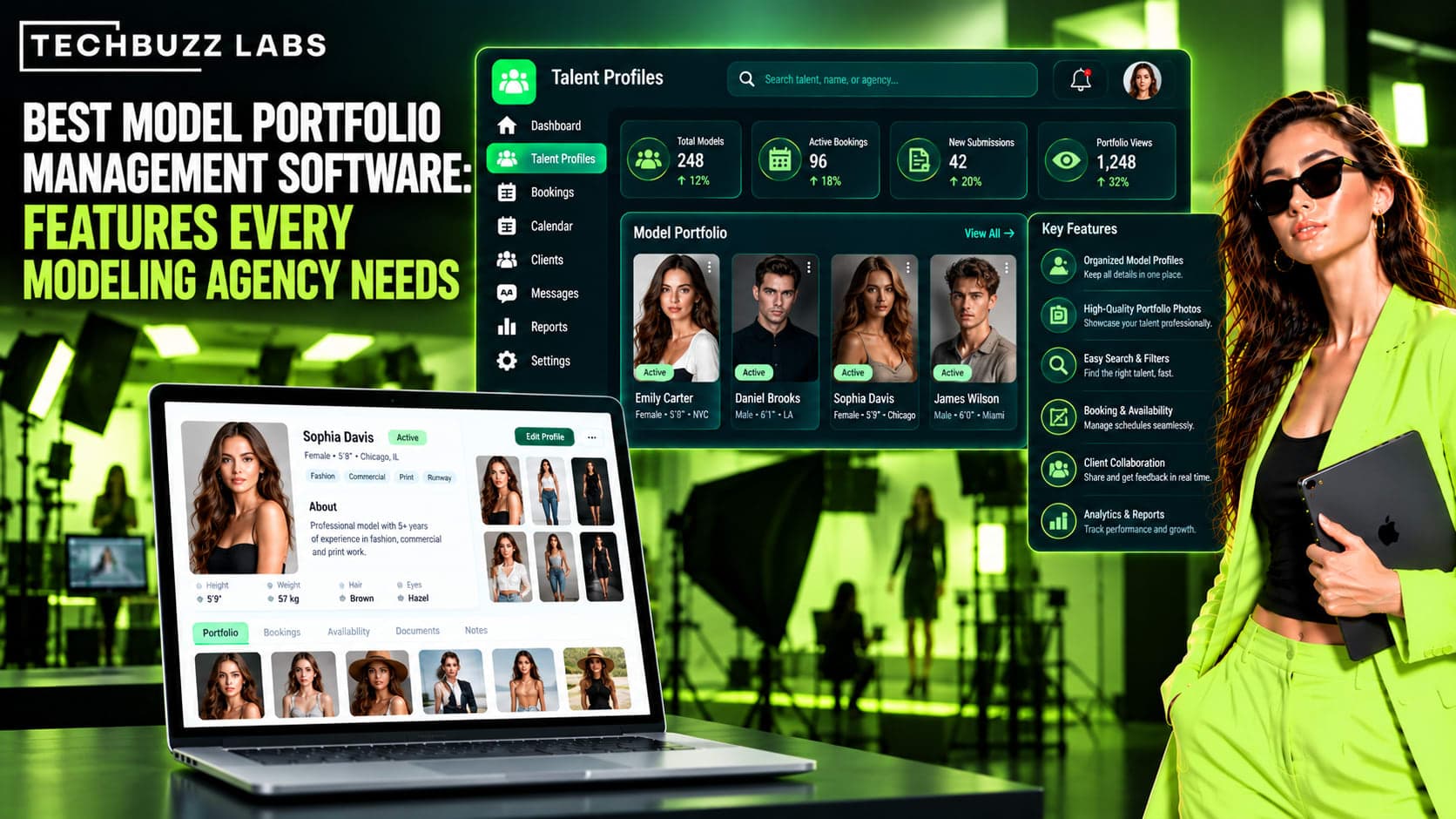
Modern agency software can centralize information such as:
Model profiles, photographs, and portfolio links
Talent experience, skills, and relevant attributes
Client contacts and communication history
Casting briefs and project requirements
Availability, schedules, and booking records
Submission statuses and client feedback
With centralized records, agents can access the information they need without repeatedly searching through disconnected tools.
For more details, read TechBuzz Labs' guide to casting workflow software for modern talent agencies.
2. Automate Casting Request Management
Casting requests often arrive through email, phone calls, client portals, or messaging applications. Manually transferring every request into a tracking system can create unnecessary work.
Agency software can help standardize the process by organizing casting briefs into structured project records. These records may include project dates, location, talent requirements, submission deadlines, rates, and usage details.
Depending on the system, automation can then:
Assign a new casting project to the appropriate agent.
Create tasks for reviewing client requirements.
Set reminders for upcoming submission deadlines.
Notify team members when project details change.
Track the progress of each casting opportunity.
This creates a clearer process for handling multiple projects at once and helps reduce the risk of overlooked tasks.
3. Make Talent Search and Shortlisting More Efficient
Finding suitable talent is one of the most time-sensitive parts of the booking process. Agents may need to review numerous profiles before creating a shortlist that meets a client's requirements.
A centralized talent database with search and filtering capabilities can simplify this process. Agents may be able to filter profiles using relevant criteria such as experience, location, skills, availability, and portfolio information.
Some platforms also offer AI-assisted matching to help identify potentially suitable profiles. These tools can support discovery, but their recommendations should be reviewed by agents to ensure that talent meets the actual project brief.
Automation is most effective when it reduces time spent searching and organizing information without replacing professional judgment.
4. Connect Availability Tracking With Scheduling
Scheduling errors can affect agency operations and client relationships. A model may be considered for multiple projects, dates may change, or an agent may confirm a booking without seeing the latest availability information.
Modern agency software can connect talent availability with casting and booking records.
Useful capabilities may include shared calendars, availability requests, booking reminders, schedule-change notifications, and conflict alerts. When supported, calendar integrations can also help teams coordinate schedules across different tools.
For these features to work reliably, agents and talent must keep availability information up to date. Software can highlight potential conflicts, but agencies still need a clear process for confirming commitments.
5. Automate Client Follow-Ups and Booking Notifications
Consistent communication is important for maintaining strong client relationships. However, manually tracking every pending response, submission, and confirmation can become difficult as the agency grows.
CRM-enabled agency software can connect client records with project activity and automate selected reminders.
For example, an agency could configure the system to:
Remind an agent to follow up when a client has not responded.
Notify the team when feedback is received.
Send booking reminders before a scheduled project.
Alert relevant staff when a deadline is approaching.
Create tasks when a booking requires confirmation.
Automated communication should be carefully configured. Client-facing messages may need approval, and reminders should reflect the agency's preferred communication style and timing.
6. Connect Casting, Booking, and Administrative Tasks
Automation creates greater value when information flows between stages instead of remaining trapped in separate systems.
When a client approves a model, for example, the agency may need to confirm dates, rates, location, call time, contract terms, and usage requirements. If casting and booking systems are connected, relevant project information can be carried forward instead of being entered again.
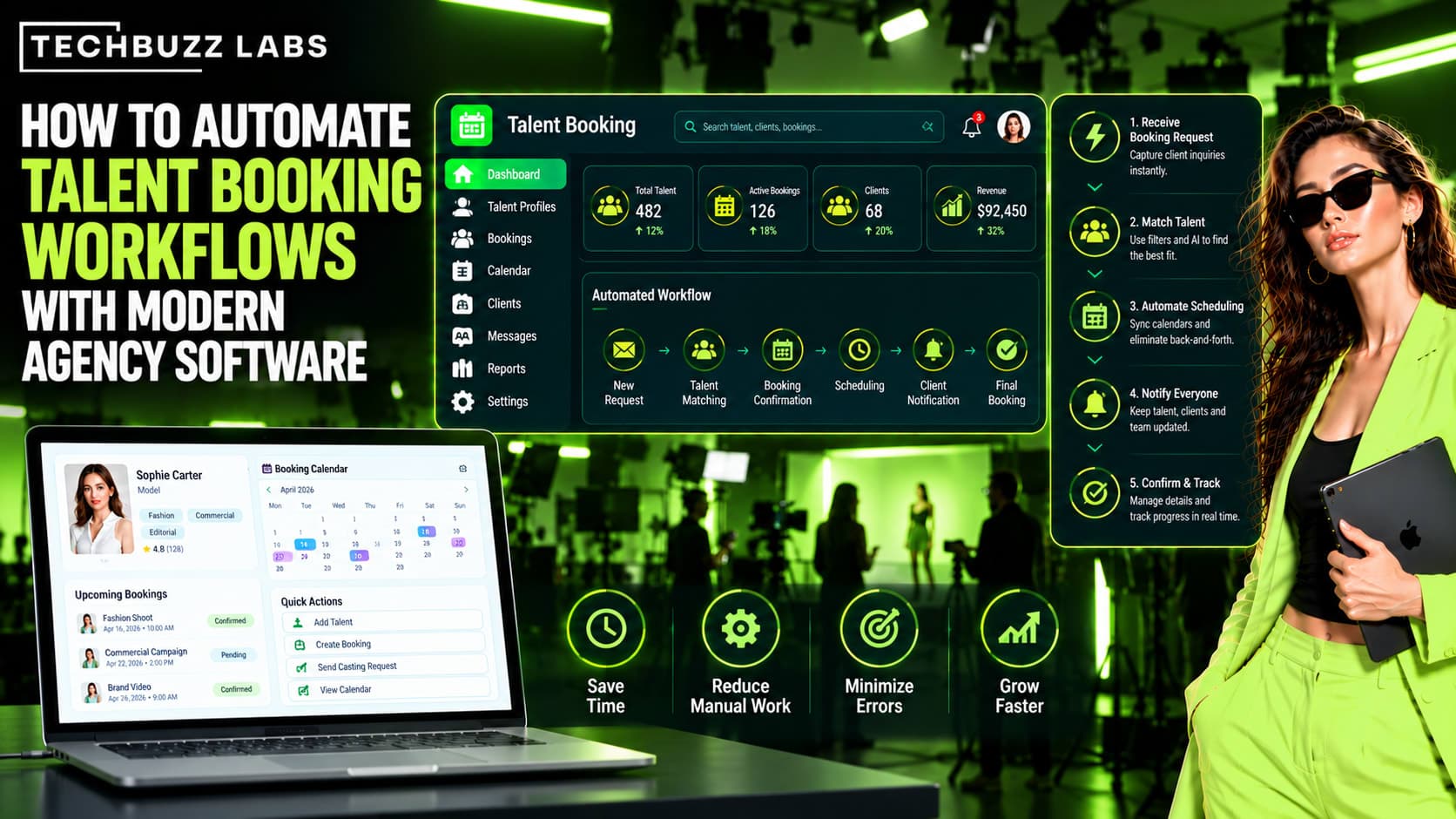
A connected workflow may look like this:
Client Request → Casting Brief → Talent Search → Submission → Client Approval → Booking Confirmation → Project Completion
Depending on the software, additional steps can support contracts, invoicing, payment tracking, and reporting.
This approach can help agents understand what has been completed, what remains outstanding, and who is responsible for the next action.
7. Use Reporting to Improve Agency Operations
Automation can also create useful operational data. By tracking activity across the booking process, agency managers can identify bottlenecks and make more informed decisions.
Useful metrics may include:
Time taken to respond to new client inquiries
Number of casting projects handled
Submission-to-booking conversion rates
Average time required to confirm bookings
Outstanding client responses and follow-ups
Booking activity by client, project, or talent category
These metrics should be interpreted in context. For example, a lower conversion rate may reflect changes in client demand or project requirements rather than a problem with the agency team.
The purpose of reporting is to identify where processes can improve, not simply to collect more data.
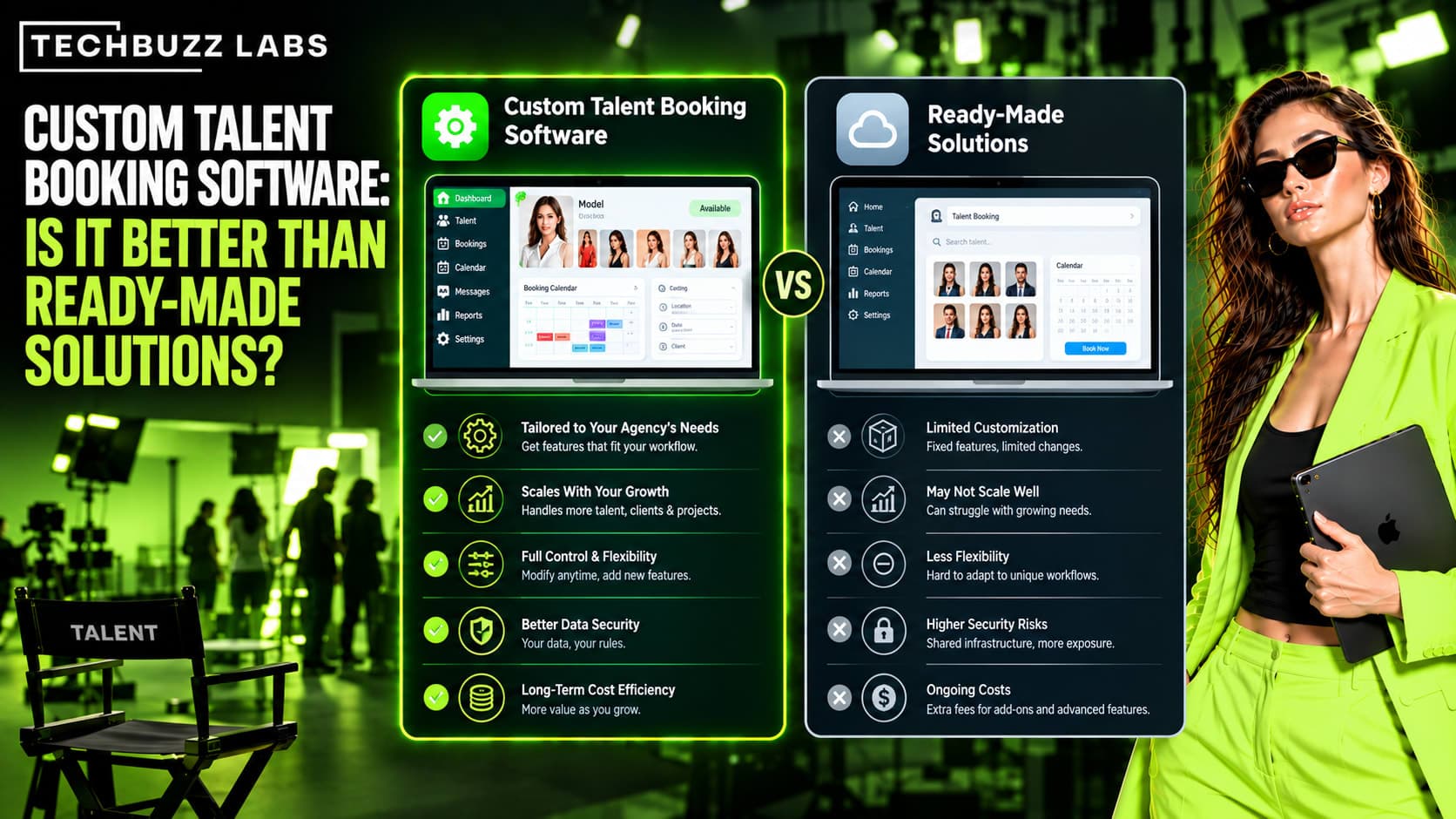
8. Should You Choose Ready-Made or Custom Agency Software?
Ready-made agency software can be a practical option when its existing features match your booking process. It may provide faster implementation and predictable subscription pricing.
Custom agency software may be more suitable when your business has specialized casting stages, unique approval rules, multiple locations, or integration requirements that existing platforms cannot adequately support.
TechBuzz Labs focuses on technology solutions relevant to talent and modeling agencies, including CRM, talent management, and casting workflow processes. A custom system can be planned around an agency's requirements, connecting talent profiles, client records, casting projects, availability, and booking tasks.
Before investing, document your current workflow, identify repetitive tasks, and prioritize the automations that would provide the greatest benefit. Agencies should also consider implementation costs, data security, staff training, maintenance, and future scalability.
For related guidance, explore TechBuzz Labs' article on how CRM software helps agencies automate casting workflows.
Final Thoughts
Automating talent booking workflows can help modeling and talent agencies reduce repetitive administration, improve scheduling visibility, and coordinate casting and client communication more consistently.
The best approach starts with a clear understanding of how your agency operates. Centralize essential information, standardize casting stages, automate routine reminders, connect booking records, and measure the results.
Modern agency software should make the booking process easier to manage—not introduce unnecessary complexity. With the right combination of technology, reliable data, and clear team procedures, agencies can build a workflow that supports both current operations and future growth.