Best CRM for Fashion Model Agency: Streamlining Casting and Booking Workflows
A specialized CRM can connect these stages so that a casting opportunity, selected models, client information, availability, submissions, feedback, and booking remain associated with the same project.
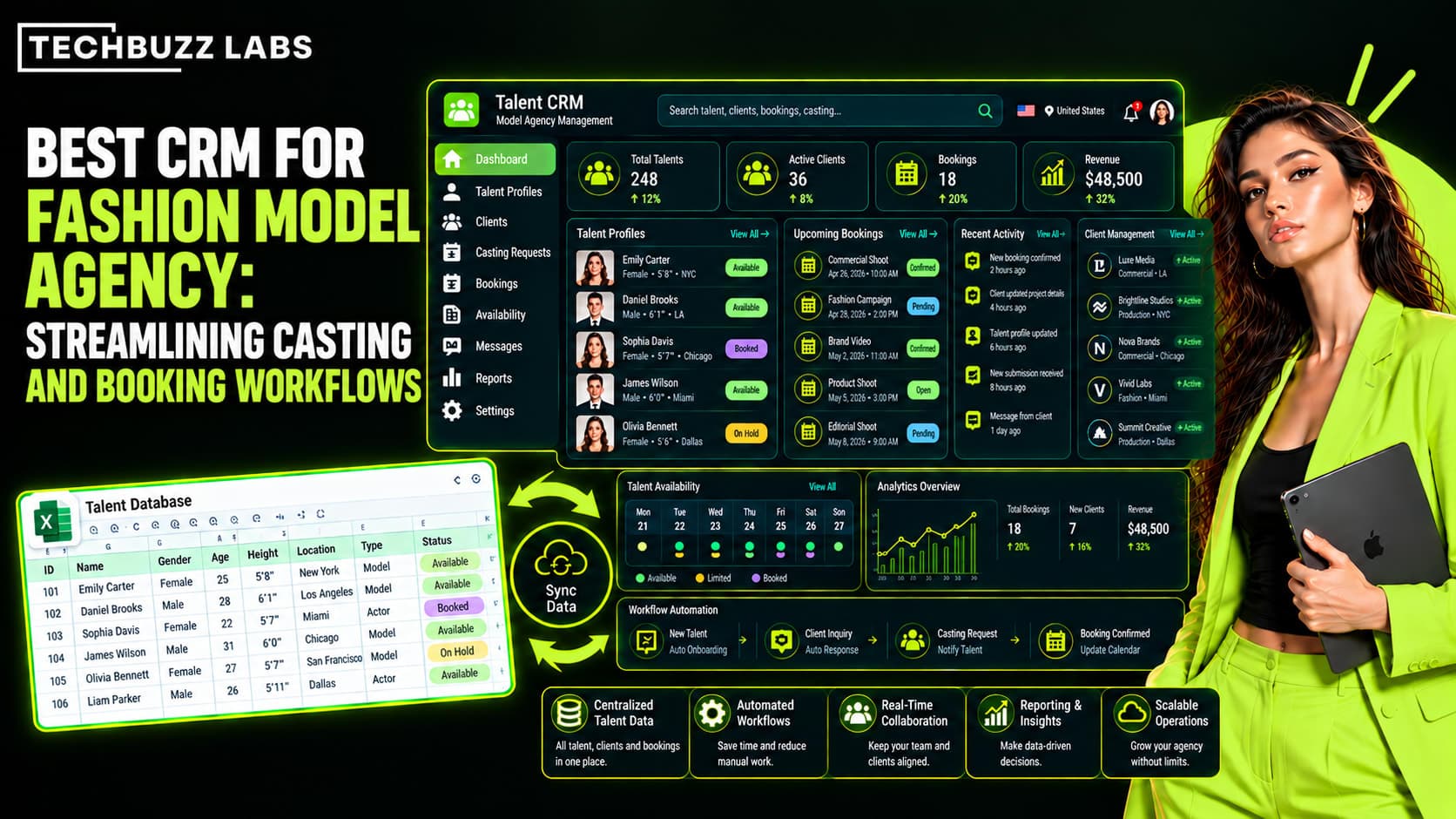
For a fashion modeling agency, the journey from a client's first casting request to a confirmed booking can involve many moving parts. Agents need to understand the client's requirements, identify suitable models, check availability, prepare submissions, collect feedback, confirm selections, and finalize booking details.
When these activities are managed through spreadsheets, emails, messaging apps, and separate files, it can become difficult to maintain a clear view of every project. A CRM designed for fashion modeling agencies can connect these stages and create a more organized workflow.
The best CRM for fashion model agency operations should do more than store model and client information. It should help teams manage the complete casting-to-booking process while keeping important information connected.
Why Casting and Booking Need a Connected Workflow
Casting and booking are closely related, but agencies sometimes manage them as separate processes.
A client may send a casting brief through email, while talent information exists in a spreadsheet and availability is tracked somewhere else. After a model is selected, booking details may then be recorded in another document.
This fragmented workflow can make it harder to determine the current status of a project.
This creates a more continuous workflow from the original request to the final booking. TechBuzzLabs' existing casting CRM content similarly describes connecting client requests, talent profiles, availability, submissions, and bookings within one system.
Step 1: Capture the Client Casting Request
The workflow begins when a fashion client contacts the agency.
The request may include information such as:
Campaign or project type
Required number of models
Location
Shooting dates
Talent requirements
Experience or skills
Project deadline
Other client preferences
A CRM can turn this information into a structured casting project rather than leaving it inside an email conversation.
Once the request is organized, agents can begin managing the opportunity from a central location.
Step 2: Build a Relevant Talent Shortlist
After understanding the client's requirements, agents need to identify suitable models.
A centralized talent database can make this process easier by allowing agents to search and filter profiles according to relevant criteria.
Depending on the CRM, filters may include location, experience, availability, skills, measurements, modeling category, and other profile attributes.
The objective is not to automatically decide which model should be selected. Instead, the system helps agents quickly identify relevant candidates while professional judgment remains an important part of the process.
Step 3: Check Model Availability
Finding a suitable model is only part of the casting process.
The model also needs to be available for the required dates and location.
A CRM can connect availability information with talent profiles and casting projects. Agents can therefore consider scheduling requirements before submitting a model to the client.
This can reduce unnecessary communication and prevent situations where a model is presented for a project they cannot accept.
For growing agencies, connecting availability with casting activity can become particularly useful when several projects are being handled simultaneously.
Step 4: Prepare and Track Submissions
Once a shortlist has been created, agents can prepare the talent submission.
The CRM can keep the submitted models connected to the relevant casting project and client.
This creates a record of which models were presented and when.
Instead of searching through email threads later, agents can review the casting project and see its submission history in one place.
This can also make internal collaboration easier because different team members can understand what has already been submitted.
Step 5: Manage Client Feedback
The next stage is client feedback.
A client may approve a model, request additional options, shortlist certain talent, or reject submissions.
If this information is not tracked systematically, agents may need to search through messages to determine the current project status.
A CRM can organize feedback within the casting workflow.
For example, submitted models can move through statuses such as:
Submitted → Under Review → Shortlisted → Approved → Booked
The exact stages can be customized according to the agency's workflow.
This gives agents a clearer picture of which opportunities require action.
Step 6: Move From Casting to Booking
When the client selects a model, the workflow should transition naturally into booking.
Instead of creating a completely new record, the CRM can connect the booking with the original casting project, client, and model profile.
Booking information may include dates, location, project details, client information, rates, usage requirements, and other relevant notes.
This connection creates continuity between the initial casting request and the final booking.
It also means the agency can maintain a useful historical record of how the opportunity progressed.
Managing Multiple Bookings Without Losing Visibility
Fashion modeling agencies may manage multiple campaigns and bookings at the same time.
Without centralized workflow management, it can become difficult to determine which projects are awaiting client feedback, which models are confirmed, and which bookings still require attention.
A CRM dashboard can provide a broader operational view.
Agents and managers may be able to see active castings, upcoming bookings, pending submissions, client responses, and other workflow stages from one interface.
This can help teams prioritize work without relying entirely on individual notes or memory.
Reducing Manual Follow-Ups
Casting workflows often involve repeated follow-ups.
Agents may need to remind clients about pending submissions, confirm model availability, follow up on casting decisions, or check booking details.
CRM automation can help with some of these repetitive tasks.
For example, the system could generate a reminder when a client has not responded within a specified period or notify an agent when an upcoming booking requires attention.
Automation does not replace the relationship between agents and clients. Instead, it can reduce the amount of manual tracking required behind the scenes.
Keeping Talent and Client Data Connected
One of the main advantages of a specialized CRM is that it connects information that would otherwise remain separate.
A model profile can be connected to casting projects and booking history. A client record can be connected to previous projects, submissions, and bookings.
This creates a more complete picture of agency activity.
For example, when a returning client sends a new request, an agent may be able to review previous projects and booking history before building a new shortlist.
This can provide useful context without requiring the team to search through old files.
Improving Team Coordination
Casting and booking often involve more than one person.
One agent may manage the client relationship, another may search for talent, while another team member handles booking administration.
A centralized CRM can give authorized team members access to the same project information.
This can make handoffs more efficient and reduce the risk of duplicate work.
If an agent is unavailable, another team member can review the project's current status, submitted models, client feedback, and booking details without having to reconstruct the entire history.
Using Workflow Data for Better Operations
A CRM can also provide useful operational data.
Agencies can potentially track how many casting requests are received, how many models are submitted, how many opportunities reach the booking stage, and where projects commonly experience delays.
Over time, this information can help managers understand their workflow.
The value is not simply in collecting more data. The important part is connecting casting and booking records so the agency can understand the complete journey of each opportunity.
When a Custom CRM May Be Useful
Standard CRM platforms can work well for agencies with straightforward requirements. However, fashion modeling agencies may have specialized workflows that require more flexibility.
An agency may need custom talent fields, specific casting stages, advanced availability management, specialized booking workflows, custom dashboards, or integrations with existing systems.
In such cases, custom CRM development can allow the software to be structured around the agency's actual processes.
TechBuzzLabs focuses on custom technology solutions for modeling and talent agencies, including CRM, casting management, talent databases, workflow automation, and connected booking processes.
What to Look for in a Fashion Modeling CRM
Before selecting a CRM, agencies should evaluate whether it can support the complete workflow.
Important areas include centralized model profiles, advanced talent search, casting project management, availability tracking, submissions, client feedback, booking management, automation, dashboards, user permissions, security, integrations, and scalability.
Ease of use should also be considered. A CRM only creates value when agents and other team members can use it consistently in their daily work.
Final Thoughts
The best CRM for fashion model agency operations should connect casting and booking rather than treating them as unrelated activities.
From the initial client request to talent search, availability checks, submissions, feedback, selection, and final booking, a connected CRM can give agencies greater visibility over every stage of the workflow.
For growing fashion modeling agencies, this can reduce fragmented processes, simplify coordination, and make it easier to manage multiple opportunities at the same time.
The goal is not simply to add another software tool. It is to create a connected operational workflow where talent, clients, castings, and bookings can be managed from a structured system.