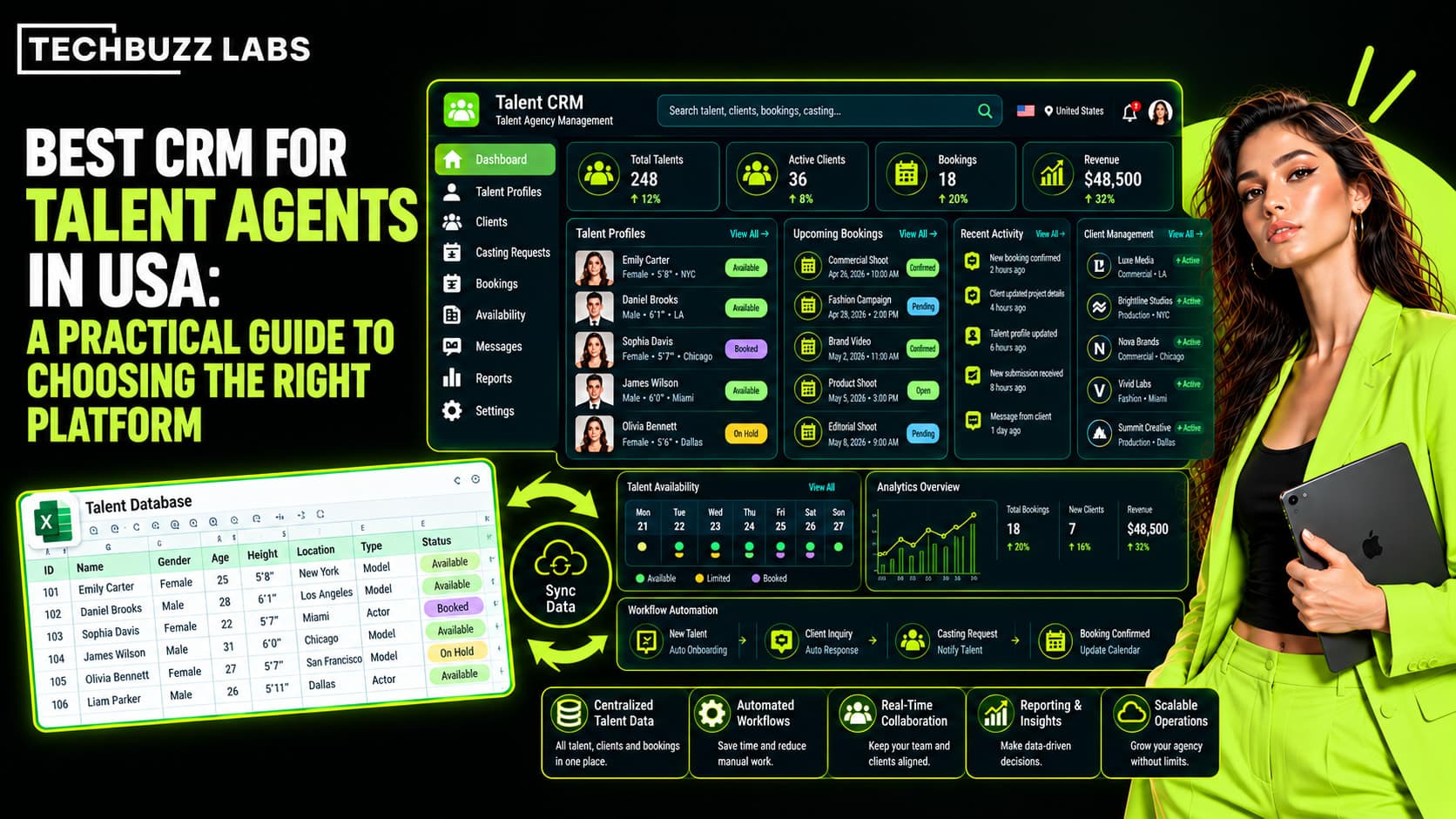
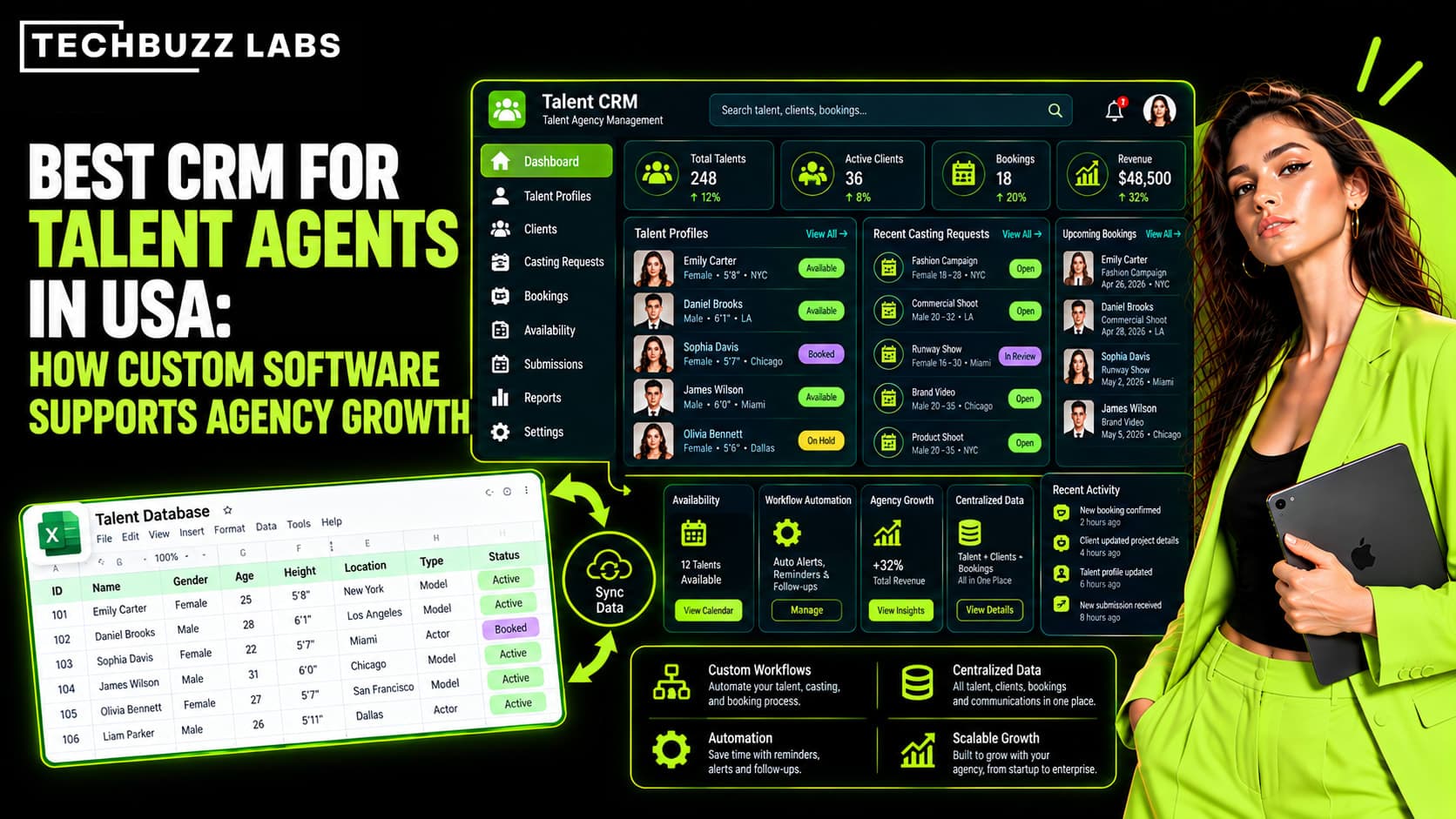
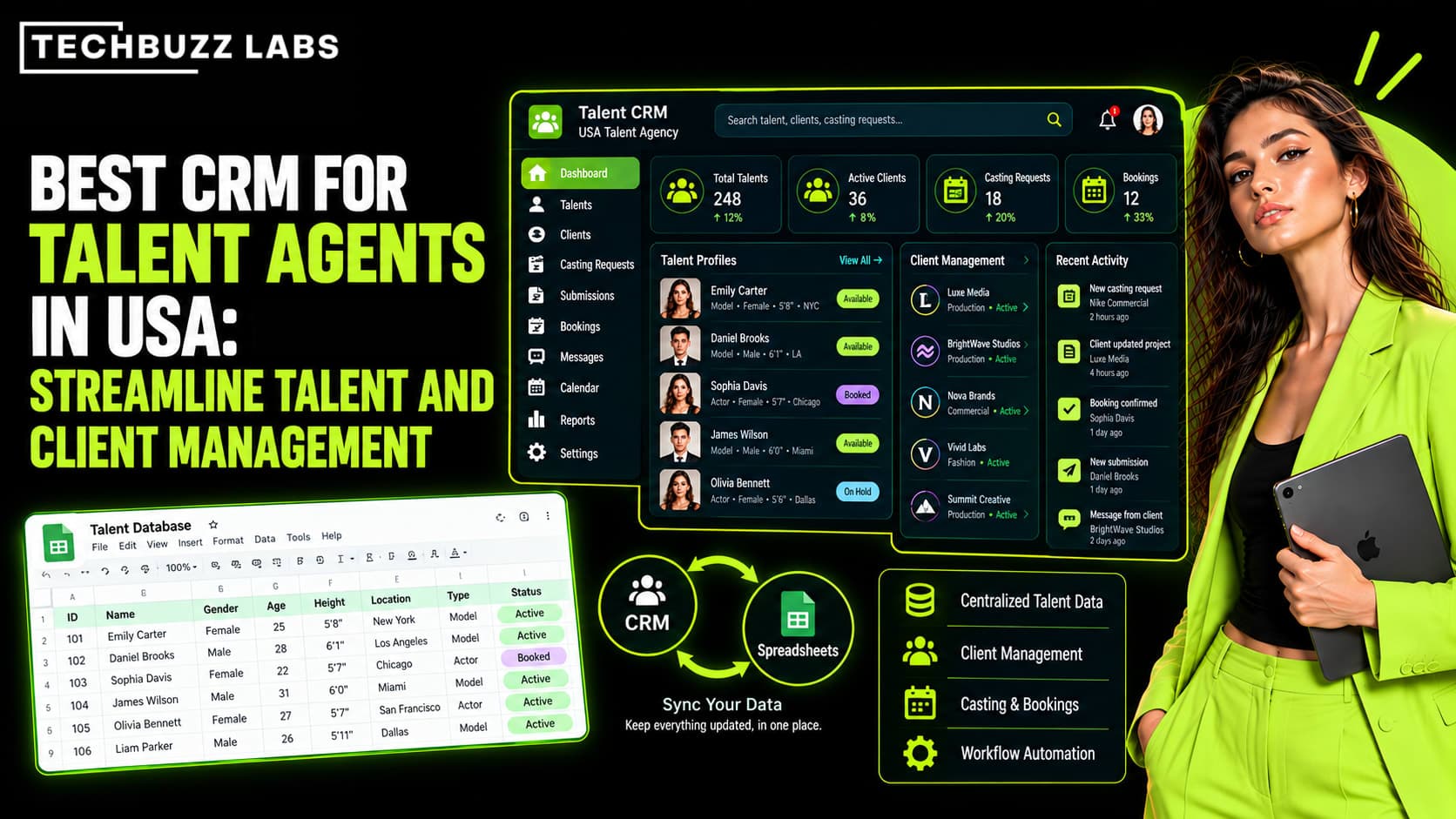
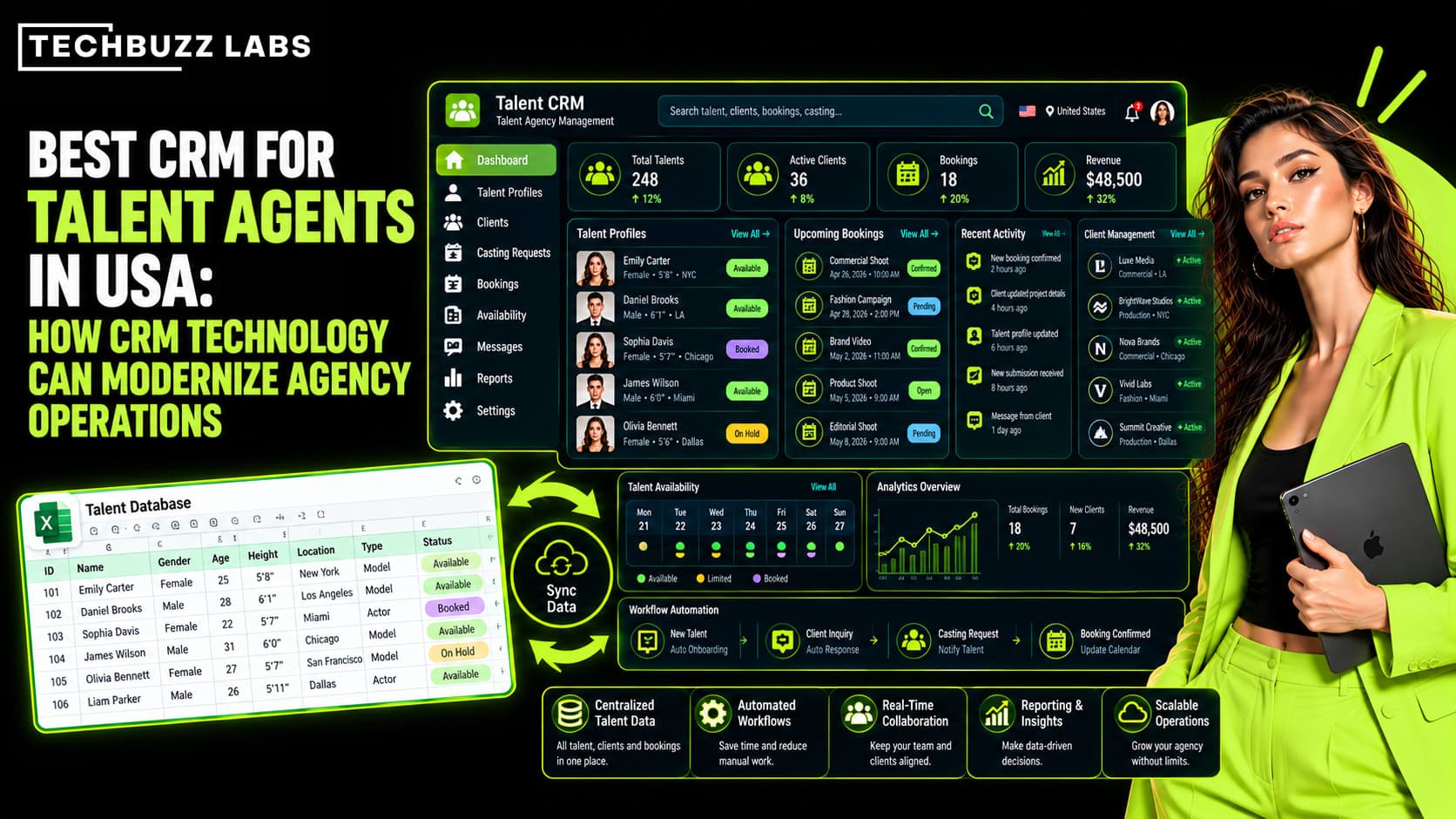
Best CRM for Talent Agents in USA: How CRM Technology Can Modernize Agency Operations
Different team members may maintain different files, information can become outdated, and agents may need to search through multiple locations before finding the details they need.
Talent agencies in the USA are managing more information and more complex workflows than ever before. Agents may need to handle talent profiles, client relationships, casting requests, availability, submissions, bookings, communications, and project details throughout the same day. When this information is spread across spreadsheets, emails, messaging platforms, and separate folders, managing everyday operations can become increasingly difficult.
The best CRM for talent agents in USA can provide a more connected way to manage these activities. Modern CRM technology can bring important agency information into one system, helping teams replace fragmented processes with organized digital workflows.
Rather than simply storing contact information, an agency CRM can become a central operational platform for managing talent, clients, casting activity, and bookings.
Moving Beyond Spreadsheets and Disconnected Tools
Spreadsheets can be useful when an agency is small and its operations are relatively simple. However, they can become harder to manage when the number of talent profiles, clients, projects, and bookings increases.
CRM technology provides a different approach by connecting related information within one system. A talent profile can be connected to casting opportunities, client requests, availability, submissions, communication history, and bookings.
This connected structure can give agents a clearer view of agency activity. TechBuzzLabs has similarly highlighted how moving from spreadsheets to CRM can connect models, clients, castings, and bookings within one operational system.
Creating a Centralized Talent Management System
Talent information is one of the most important assets for an agency.
A modern CRM can provide centralized profiles containing information such as experience, skills, location, portfolio details, measurements, availability, contact information, and booking history.
Instead of repeatedly checking different files, agents can search the database and access relevant information from a single location.
As the talent pool grows, advanced search and filtering can become particularly useful. Agents may be able to narrow profiles according to project requirements, location, experience, availability, or other criteria.
This makes the talent database more useful for everyday agency operations rather than simply acting as a storage system.
Modernizing Client Relationship Management
Talent agencies also need an organized way to manage relationships with clients.
A CRM can maintain client records along with previous inquiries, project information, casting requests, submissions, communication, and booking history.
This allows agents to understand the context of an existing relationship before responding to a new request.
For example, if a client returns with another campaign, the agent can review previous projects and preferences before identifying suitable talent. This creates a more connected client-management process.
A centralized client database can also make it easier for different team members to understand ongoing relationships when responsibilities are shared.
Organizing the Casting Process
Casting is another area where CRM technology can modernize agency operations.
A client brief may contain project requirements, dates, location, talent characteristics, experience, skills, budget, and other specifications. Managing these requirements manually can become challenging when multiple briefs arrive at the same time.
A CRM can organize each request as a structured project and connect it with relevant talent profiles.
Agents can move a casting through different stages, such as request received, talent search, shortlist, availability confirmation, submission, client feedback, and booking.
This gives teams a clearer understanding of where each opportunity stands.
Improving Talent Availability Management
Availability is essential when matching talent with opportunities.
A profile may appear to be a strong match for a project, but the talent may already be committed elsewhere. Without organized availability information, agents may spend unnecessary time confirming schedules manually.
CRM technology can make availability part of the talent-management workflow.
When availability information is connected to profiles and casting projects, agents can consider scheduling requirements while building a shortlist.
This can help create a more practical connection between talent discovery and actual booking opportunities.
Connecting Submissions With Client Feedback
Another advantage of modern CRM technology is the ability to track what happens after talent is submitted.
Without structured tracking, agents may rely on emails or personal notes to remember which talent was submitted for which project.
A CRM can maintain submission records and connect them with the relevant casting and client.
Teams can then track whether a submission is awaiting feedback, shortlisted, rejected, approved, or converted into a booking.
Over time, this creates a useful history of agency activity and reduces the need to reconstruct project information from separate communication channels.
Reducing Repetitive Administrative Work
Modernization is not only about storing information digitally. It is also about reducing unnecessary manual processes.
CRM platforms can support automation for selected tasks such as reminders, status updates, follow-ups, notifications, and internal workflow actions.
For example, an agent could receive a reminder when client feedback is overdue or when a casting deadline is approaching.
Automation can help reduce repetitive administrative tasks while allowing agents to focus more attention on talent relationships, client communication, and business development.
Giving Managers Better Operational Visibility
A modern CRM can also provide dashboards and reporting tools that help agency managers understand what is happening across the business.
Instead of relying entirely on individual updates from team members, managers can review information such as active casting projects, submissions, bookings, client activity, talent availability, and workflow stages.
This creates a more centralized view of operations.
The purpose of these dashboards is not simply to produce more data. The value comes from organizing information in a way that helps teams understand current activity and identify areas that may require attention.
Supporting Collaboration Across the Agency
As an agency grows, multiple agents may work with the same talent, clients, and projects.
A centralized CRM can help create a shared source of operational information.
When appropriate permissions are configured, team members can access updated talent profiles, client records, casting activity, submissions, and booking information without relying on separate personal files.
This can make internal collaboration more structured and reduce duplicated work.
Making Agency Technology More Flexible
Every talent agency has its own processes.
Some agencies may focus heavily on modeling, while others may represent actors, influencers, commercial talent, or multiple categories. Their onboarding, casting, client management, and booking workflows may also differ.
This is why customization can be valuable.
Instead of forcing every agency to follow exactly the same workflow, customizable CRM technology can be configured around specific operational requirements.
TechBuzzLabs focuses on custom technology solutions for agencies, including CRM systems, talent management, casting workflows, automation, and related digital tools.
Preparing for Future Agency Operations
Modern CRM technology can also provide a foundation for future capabilities.
As agencies become more digital, CRM platforms can potentially integrate with other business tools, analytics systems, communication platforms, automation features, and AI-assisted workflows.
For example, AI may eventually support areas such as talent matching, data organization, or workflow recommendations while agents continue to make the final professional decisions.
The important point is that modernization should focus on solving current operational problems while creating a system that can adapt to future requirements.
What to Look for in the Best CRM for Talent Agents in USA
When evaluating CRM technology, talent agencies should look beyond basic contact management.
Important areas to consider include centralized talent profiles, advanced search, client management, casting workflows, availability tracking, submissions, booking management, communication history, automation, dashboards, user permissions, integrations, security, scalability, and customization.
The right solution should fit the agency's actual workflow rather than adding unnecessary complexity.
Google's guidance also emphasizes creating useful, comprehensive content for people rather than producing repetitive pages primarily to attract search traffic.
Final Thoughts
The best CRM for talent agents in USA is not simply a database for storing contacts. Modern CRM technology can connect the different operational areas that talent agencies manage every day.
From talent profiles and client relationships to casting requests, availability, submissions, bookings, automation, and reporting, a centralized CRM can help agencies create a more organized digital workflow.
For agencies looking to modernize their operations, the goal should be clear: use technology to reduce fragmented processes, improve access to information, support collaboration, and create a scalable foundation for future agency needs.
TechBuzzLabs can be positioned within this transformation by helping talent and modeling agencies develop custom technology around their specific workflows and operational requirements.