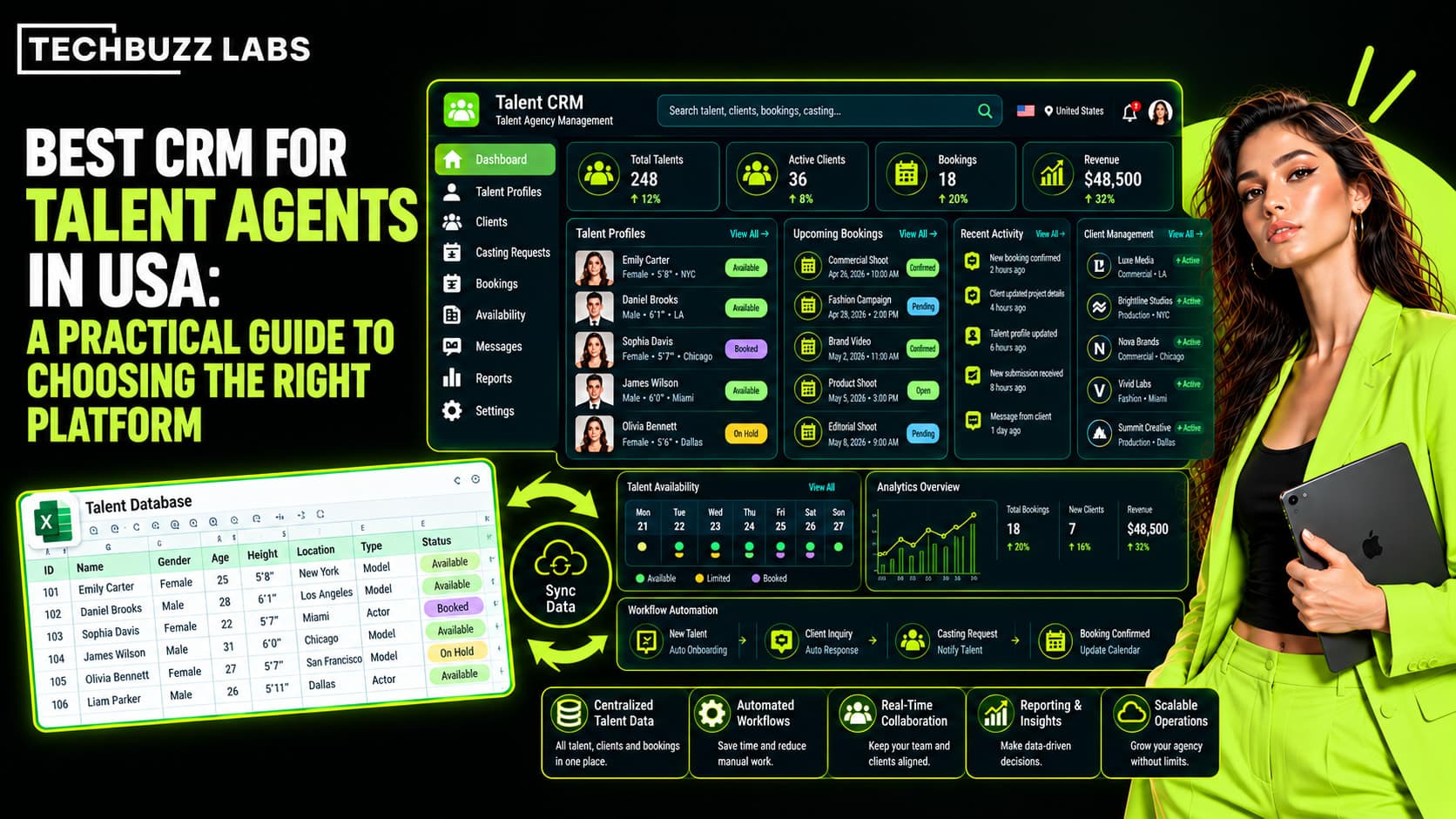
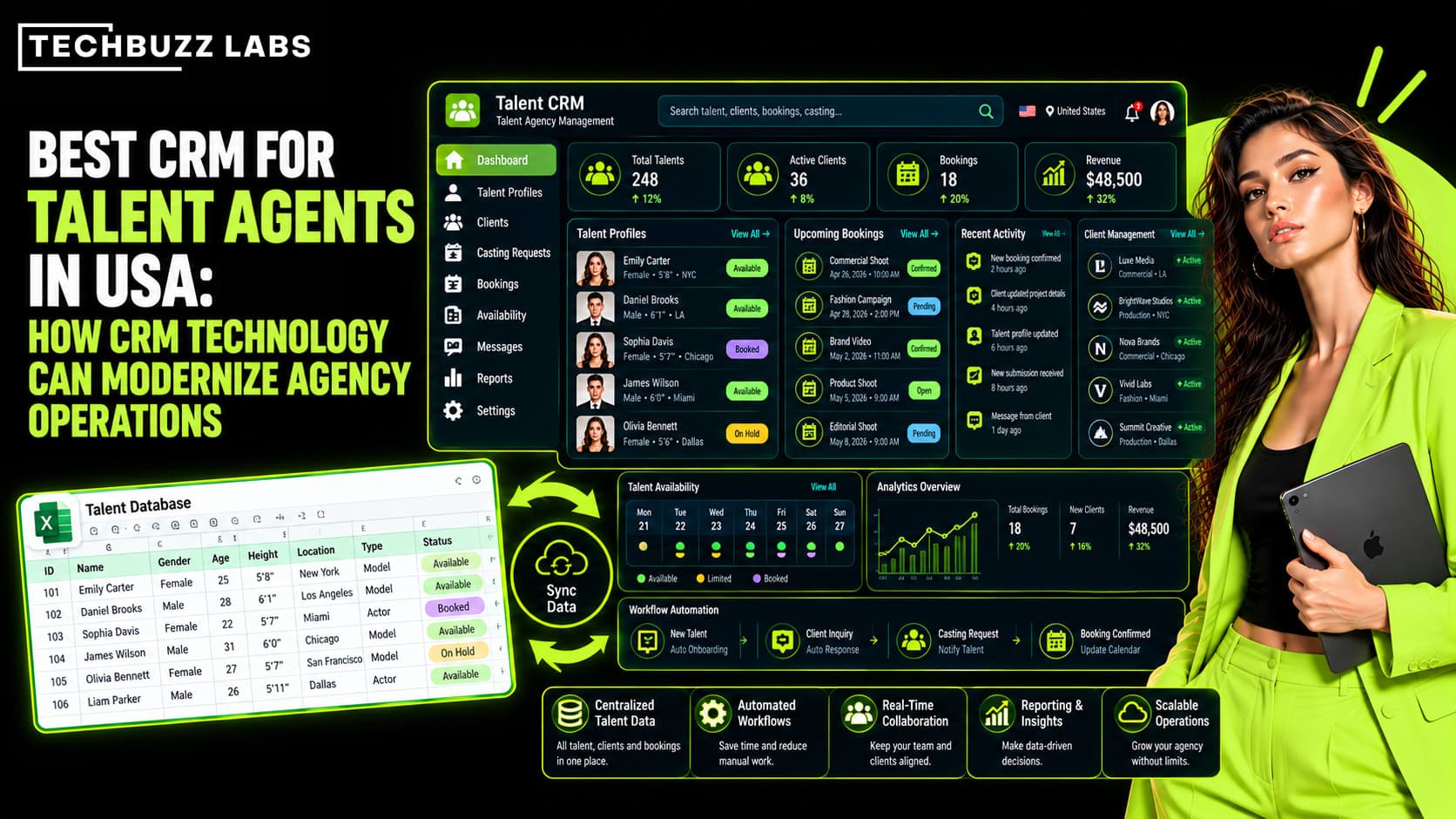
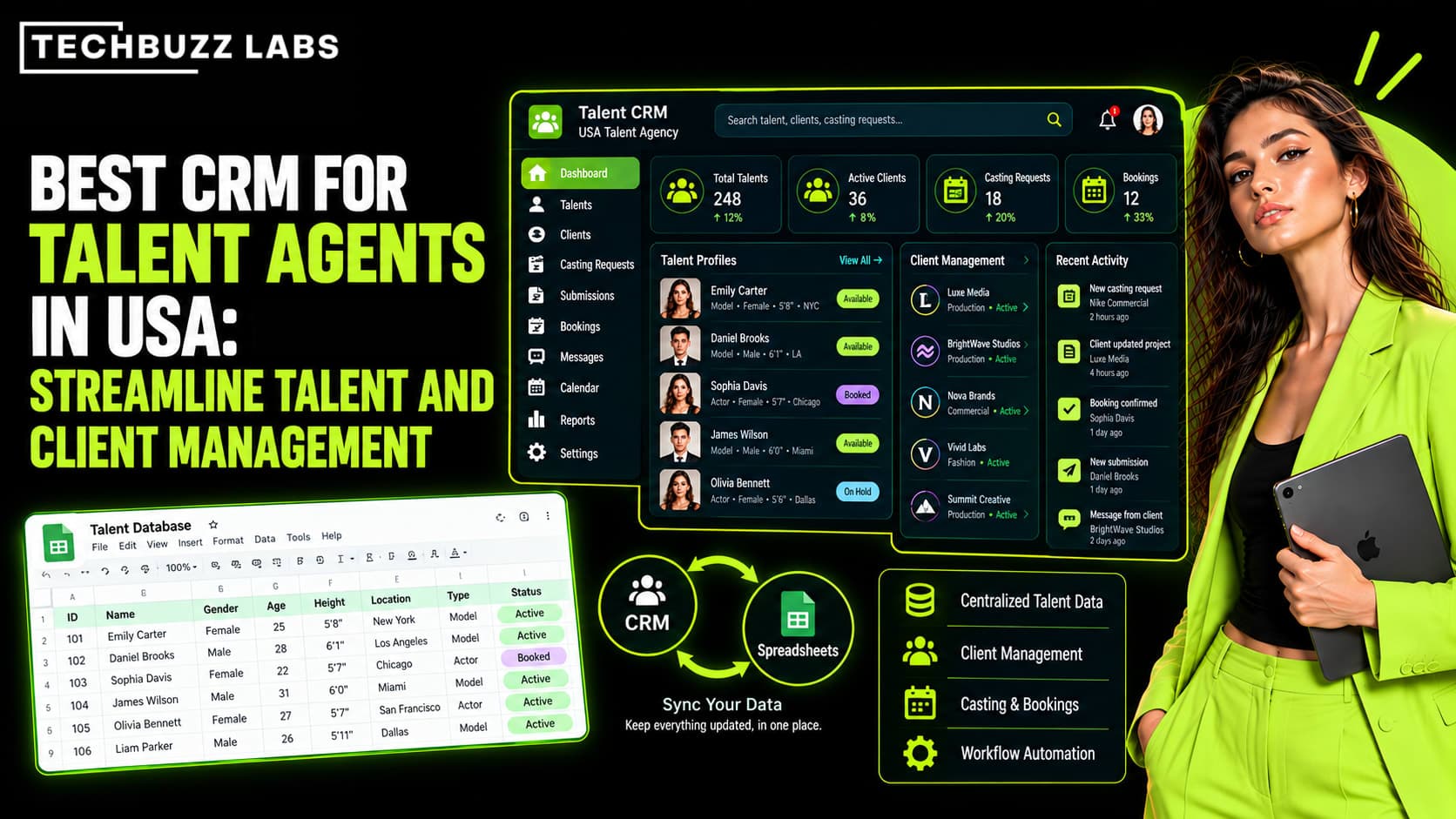
Best CRM for Talent Agents in USA: How Custom Software Supports Agency Growth
A custom CRM allows an agency to build its technology around these specific operational requirements rather than forcing its existing workflow into a generic structure.
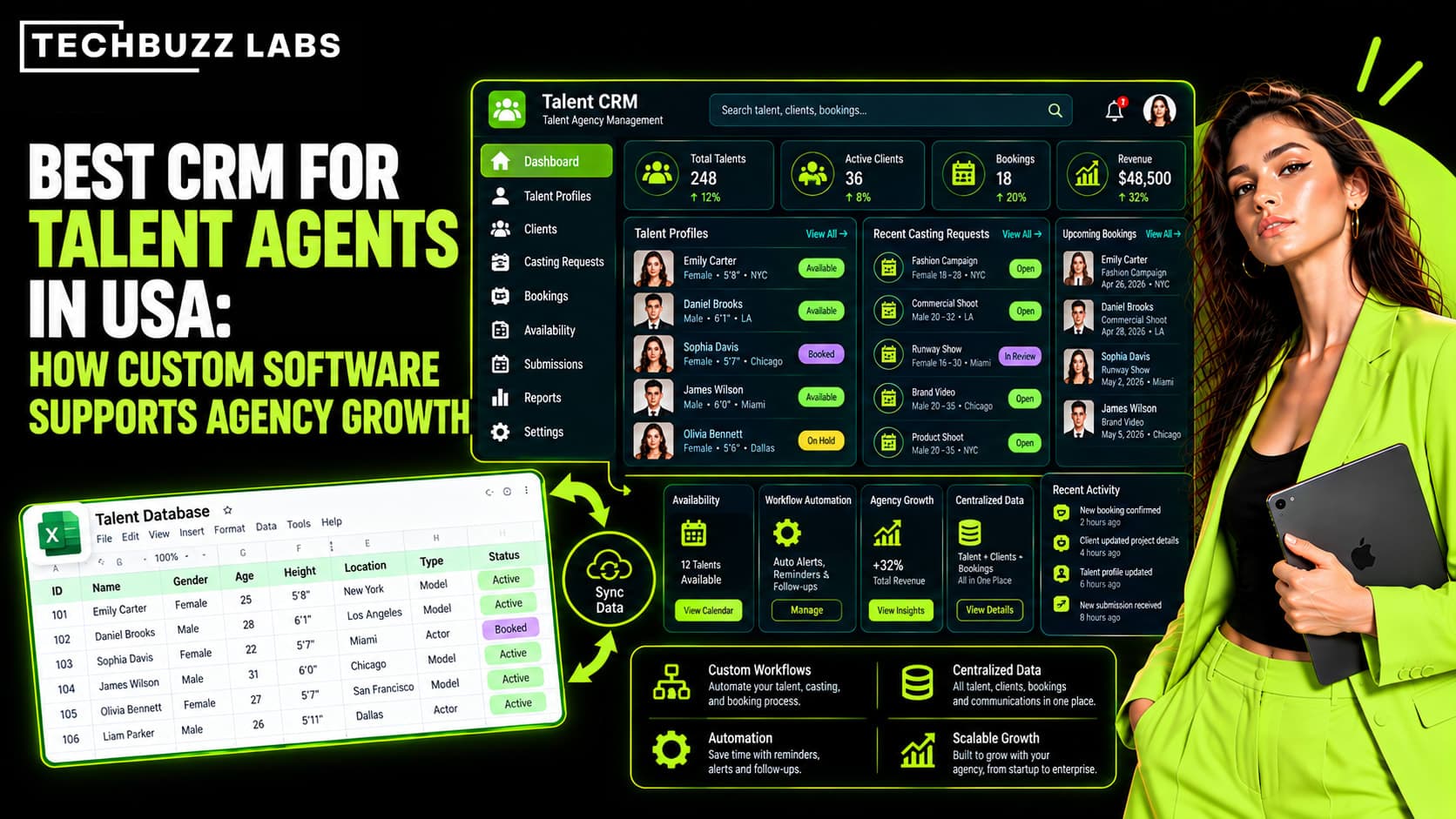
For talent agencies in the USA, growth often means managing more talent, more clients, more casting opportunities, and more bookings at the same time. While this growth can create new revenue opportunities, it can also make daily operations harder to manage. Spreadsheets, email threads, shared folders, and disconnected applications may work for a small agency, but they can become difficult to scale as the business expands.
This is where the best CRM for talent agents in USA can play an important role. A custom CRM can be designed around an agency's actual workflow, helping agents organize talent information, manage client relationships, track casting opportunities, monitor bookings, and automate repetitive processes.
Why Growing Talent Agencies Need More Than a Basic CRM
Traditional CRM platforms are generally designed around sales pipelines and customer relationships. Talent agencies, however, manage two connected sides of the business: talent and clients.
Agents need to maintain detailed talent profiles while also managing client inquiries, casting briefs, submissions, availability, communication, and bookings. These processes are closely connected, which means information stored in separate systems can create unnecessary work.
Centralizing the Talent Database
One of the first ways custom CRM software can support agency growth is by creating a centralized talent database.
Instead of storing photographs, experience, skills, measurements, locations, availability, and other professional information across different files, an agency can organize this information within structured digital profiles.
As the roster grows, agents can use search and filtering features to identify suitable talent based on specific casting requirements. This can reduce the time spent manually reviewing large numbers of profiles.
Accurate and accessible talent data also gives agents a stronger foundation for making casting and submission decisions.
Connecting Client Relationships With Talent
Growth is not only about increasing the number of models or other talent represented by an agency. Agencies also need to build and maintain relationships with clients.
A custom CRM can connect client records with their previous projects, preferences, inquiries, casting briefs, submissions, and bookings.
For example, when an existing client sends a new request, an agent can review previous project information before responding. The agent can then connect the client's requirements with appropriate talent from the agency's database.
This creates a more connected process between client management and talent management.
Supporting Faster Casting Workflows
As an agency grows, the number of casting requests can increase significantly. Managing each request manually can place additional pressure on agents and administrative teams.
A custom CRM can organize the casting process into structured stages.
A typical workflow could move from:
Client Request → Casting Brief → Talent Search → Shortlist → Availability Check → Submission → Client Feedback → Booking
Each stage can be tracked within the system. This gives agents greater visibility into what has already been completed and what still requires attention.
For agencies handling multiple opportunities at the same time, this type of workflow structure can make daily operations easier to manage.
Managing Talent Availability More Efficiently
Availability is an important part of talent management. A suitable model or performer may not be available for the dates required by a client.
A custom CRM can connect talent profiles with availability information, allowing agents to consider scheduling requirements during the selection process.
Instead of repeatedly contacting talent just to confirm basic availability, agencies can create structured processes for collecting and updating availability.
This can be especially useful as the agency's roster becomes larger and multiple bookings are being managed simultaneously.
Automating Repetitive Administrative Tasks
Agency growth can create a common problem: administrative work grows along with the business.
Agents may spend significant amounts of time updating records, sending follow-ups, changing casting statuses, checking information, and moving projects between workflow stages.
Custom CRM software can automate selected repetitive activities.
For example, the system could trigger notifications when a casting deadline approaches, remind agents to follow up with clients, update project statuses, or notify team members when new information is added.
Automation does not replace the role of an agent. Instead, it can reduce repetitive administrative work so the team can spend more time on talent relationships, client communication, and business development.
Improving Team Collaboration
As an agency expands, multiple agents and team members may work with the same talent and clients.
Without a centralized system, different team members may have different versions of information. This can result in duplicate work or communication gaps.
A custom CRM provides a shared operational environment where authorized users can access relevant records.
Team members can see casting activity, client information, talent profiles, availability, submissions, and booking progress according to their assigned permissions.
This can make collaboration more structured as the organization grows.
Building a CRM That Can Scale With the Agency
One major advantage of custom software is scalability.
An agency's requirements today may be very different from its requirements several years from now. A growing agency may eventually need additional dashboards, integrations, automated workflows, advanced reporting, mobile functionality, AI-assisted tools, or specialized user permissions.
Custom CRM development allows these requirements to be considered as part of the platform's long-term architecture.
Instead of replacing the entire system every time the agency reaches a new stage of growth, the technology can potentially evolve alongside the business.
Using Data to Understand Agency Growth
A growing talent agency generates valuable operational data.
The CRM can potentially provide information about casting activity, submissions, bookings, client activity, talent availability, project categories, and workflow performance.
Dashboards and reports can help agency managers understand where activity is increasing and where operational bottlenecks may exist.
For example, an agency could monitor the number of active casting projects, submission activity, booking trends, response times, or client activity.
This turns the CRM from a simple database into a broader operational tool for understanding how the agency is working.
Why Customization Matters for U.S. Talent Agencies
There is no single workflow that applies to every talent agency.
An agency representing models may have different requirements from one representing actors, influencers, commercial talent, or other professionals. Even agencies within the same industry may have different processes for onboarding talent, handling client briefs, managing submissions, and completing bookings.
Custom CRM software gives agencies the opportunity to define workflows around their own requirements.
TechBuzzLabs focuses on custom technology solutions for modeling and talent agencies, including CRM, casting management, talent management, workflow automation, and related agency systems.
Choosing the Best CRM for Talent Agents in USA
The best CRM should not simply provide the largest number of features. Agencies should consider whether the platform actually supports their workflow and future growth.
Important areas to evaluate include talent profile management, advanced search, client relationship management, casting workflows, availability tracking, submissions, bookings, automation, reporting, integrations, security, user permissions, and scalability.
For agencies considering custom development, it is also important to understand which current operational problems the software needs to solve before development begins.
Final Thoughts
The best CRM for talent agents in USA should help an agency manage its current operations while creating a foundation for future growth.
Custom CRM software can connect talent management, client relationships, casting workflows, availability, submissions, bookings, automation, and reporting within one structured system.
For growing agencies, the value of customization is not simply having more features. It is having technology that reflects the way the agency actually works.
By building CRM software around real operational requirements, talent agencies can create a more scalable technology foundation for managing larger talent rosters, expanding client relationships, and handling increasingly complex agency workflows.