Best Model Casting Workflow Automation: How to Streamline Casting for Modeling Agencies
In this guide, we explore how casting workflow automation works, which features matter most, and how technology can support growing modeling agencies across the USA.
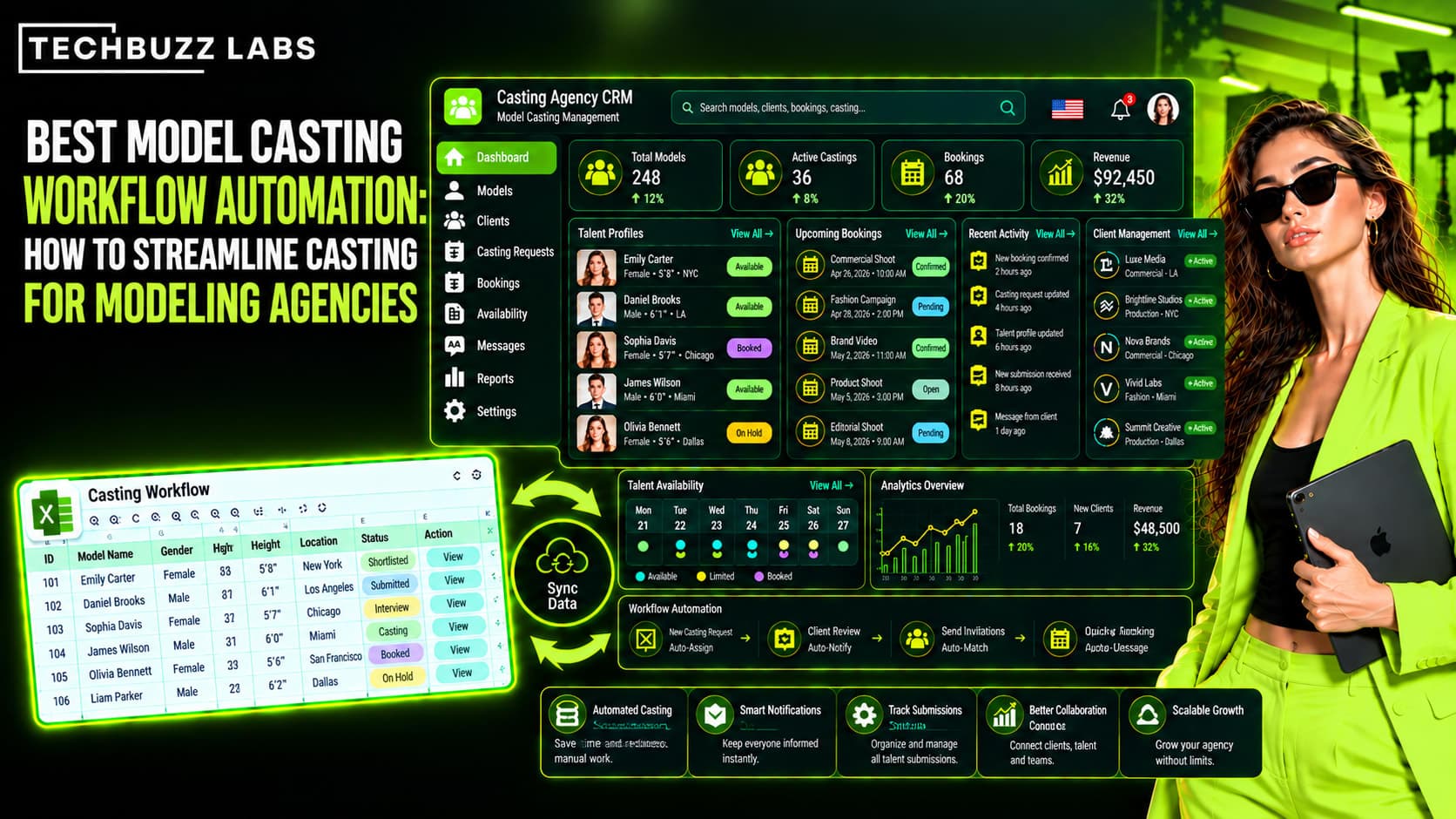
Modeling agencies in the United States manage multiple casting requests, client requirements, model submissions, auditions, and booking deadlines every day. As an agency grows, handling these activities manually can lead to missed opportunities, delayed responses, scheduling conflicts, and unnecessary administrative work.
Model casting workflow automation offers a practical way to organize these processes, reduce repetitive tasks, and help agencies manage casting projects more efficiently. By using custom agency software and connected CRM tools, modeling agencies can streamline communication, improve talent selection, and deliver a better experience to clients and models.
What Is Model Casting Workflow Automation?
Model casting workflow automation uses software to manage repetitive tasks throughout the casting process. These tasks may include receiving client briefs, identifying suitable models, sending casting invitations, collecting submissions, scheduling auditions, tracking client feedback, and confirming final selections.
Instead of coordinating every step through spreadsheets, emails, and separate applications, agencies can manage casting activities through a centralized system.
For example, when a US clothing brand requests models for a new campaign, an automated workflow can help the agency record the brief, filter its talent database, notify suitable candidates, organize submissions, and track the client's final decision.
The goal is not to eliminate human judgment. It is to reduce administrative work so casting teams can focus on talent evaluation and client relationships.
Why Modeling Agencies Need Casting Automation
Manual casting processes become more difficult as agencies handle more clients, models, and projects. A team may need to review hundreds of profiles while keeping track of submission deadlines and changing client requirements.
Without an organized workflow, common challenges include:
Slow talent searches: Staff spend too much time locating suitable models.
Scattered communication: Casting details and feedback are spread across emails and messages.
Missed deadlines: Teams may overlook submission dates or audition reminders.
Scheduling conflicts: Models may receive overlapping invitations or bookings.
Limited project visibility: Managers may struggle to identify which castings need immediate attention.
Automating routine tasks helps agencies create a more consistent process, improve response times, and manage multiple casting projects with greater confidence.
Essential Features of Model Casting Workflow Automation
1. Centralized Client Brief Management
Every casting project begins with a client brief. It may include the campaign concept, required talent characteristics, location, shoot dates, budget, usage requirements, and submission deadline.
Casting workflow software can store these details in a centralized project record. Team members can review the brief, assign responsibilities, track changes, and access the latest requirements without searching through separate conversations.
A standardized brief template can also help agencies collect complete information before beginning a talent search. This reduces misunderstandings and unnecessary back-and-forth communication.
2. Automated Model Matching and Shortlisting
Finding suitable talent is one of the most time-consuming parts of casting. A searchable model database allows agencies to filter profiles by relevant criteria such as experience, location, availability, portfolio category, and client-defined requirements.
More advanced systems may support rule-based matching or AI-assisted recommendations to help identify potentially suitable candidates.
For example, an agency handling a lifestyle campaign in Miami could filter its database for available models with relevant commercial experience and portfolios.
Automated matching should support—not replace—professional review. Casting teams should verify profile accuracy, assess portfolio suitability, and apply fair, job-related selection criteria before submitting candidates to clients.
3. Automated Casting Invitations and Notifications
Contacting models individually can consume significant time, particularly when a project requires many submissions.
Automation can help send casting invitations, submission instructions, deadline reminders, and schedule updates to selected candidates. Messages can include project details, required materials, response deadlines, and relevant contact information.
Agencies should use customizable templates and appropriate communication preferences to keep messages clear and professional.
Timely notifications make it easier for models to understand expectations and help casting teams collect responses before the client deadline.
4. Centralized Submission Tracking
Once models receive invitations, agencies need to track who has responded, submitted a portfolio, confirmed availability, or declined the opportunity.
A centralized submission dashboard can organize candidates by status, such as:
Invitation sent
Awaiting response
Submitted for client review
Shortlisted
Selected or declined
Booking confirmed
These stages can be customized to match the agency's workflow. Automated status updates help team members identify outstanding tasks and reduce the risk of overlooking suitable candidates.
5. Audition and Scheduling Automation
Some casting projects require auditions, video submissions, callbacks, or in-person meetings. Coordinating these activities across different schedules can be challenging, especially when agencies work with clients and talent across multiple US time zones.
Casting software can support calendar synchronization, appointment scheduling, automated reminders, and availability tracking. Teams can also record schedule changes and notify affected participants.
For agencies managing projects in New York, Los Angeles, Chicago, or other markets, accurate time-zone handling can reduce confusion and improve coordination.
6. Client Feedback and Approval Workflows
After reviewing submissions, clients may request additional photographs, shortlist specific models, schedule callbacks, or change campaign requirements.
A centralized approval workflow allows agencies to record client comments, track selection decisions, and identify which candidates require follow-up.
Instead of relying on disconnected email threads, authorized team members can review feedback alongside each model's profile and submission history.
This creates a clearer record of the decision-making process and helps agencies respond to client requests more quickly.
7. CRM Integration and Booking Management
Casting does not end when a client selects a model. The agency may still need to confirm availability, finalize rates, coordinate contracts, record usage terms, and communicate the assignment details.
Integrating casting automation with a customer relationship management (CRM) system connects the casting process with client records and booking operations.
For example, once a model is approved, the system can create a follow-up task, update the project status, or initiate the agency's booking confirmation process.
This connected approach helps reduce duplicate data entry and makes it easier to manage the entire process from initial inquiry to confirmed booking.
How to Implement Casting Workflow Automation
Modeling agencies do not need to automate every activity at once. A phased approach can make implementation more manageable.
Step 1: Map the current workflow. Document how casting requests move from client inquiry to final selection and booking.
Step 2: Identify repetitive tasks. Prioritize processes such as model invitations, reminders, submission tracking, and status updates.
Step 3: Choose suitable software. Evaluate casting tools, CRM platforms, or custom agency software according to your agency's size, budget, and integration needs.
Step 4: Standardize templates and statuses. Establish consistent client briefs, candidate stages, communication templates, and approval procedures.
Step 5: Test and measure results. Start with a limited number of projects and monitor response times, missed deadlines, administrative effort, and booking conversion rates.
Agencies should also establish appropriate access controls, data retention practices, and procedures for protecting model photographs and personal information.
How Techbuzz Labs Can Support Modeling Agencies
Techbuzz Labs is a technology partner agencies can explore when evaluating custom software development, CRM solutions, and business workflow improvements.
For modeling agencies with complex casting requirements, a tailored platform could connect talent databases, client briefs, model submissions, automated notifications, approval stages, and booking records within a centralized system.
The right solution depends on the agency's existing processes and operational priorities. Before selecting Techbuzz Labs or another development partner, agencies should discuss required features, integration options, project scope, security requirements, implementation costs, and ongoing maintenance.
A clearly defined plan helps ensure that automation addresses real workflow challenges rather than introducing unnecessary complexity.
Conclusion
Model casting workflow automation can help modeling agencies reduce repetitive tasks, improve talent coordination, and manage casting projects more consistently. Features such as centralized client briefs, searchable model databases, automated invitations, submission tracking, scheduling tools, and CRM integration can make a meaningful difference as an agency grows.
For modeling agencies across the USA, the best approach is to automate administrative tasks while keeping professional judgment and personal communication at the center of casting decisions.
By identifying workflow bottlenecks and exploring suitable technology solutions with partners such as Techbuzz Labs, agencies can build a more organized casting process, strengthen client relationships, and create a scalable foundation for future growth.