Best Talent Booking Software: Top Features Every Talent Agency Needs
Depending on the platform, it may include talent databases, client relationship management (CRM), booking calendars, casting management, availability tracking, contract administration, invoicing, and reporting.
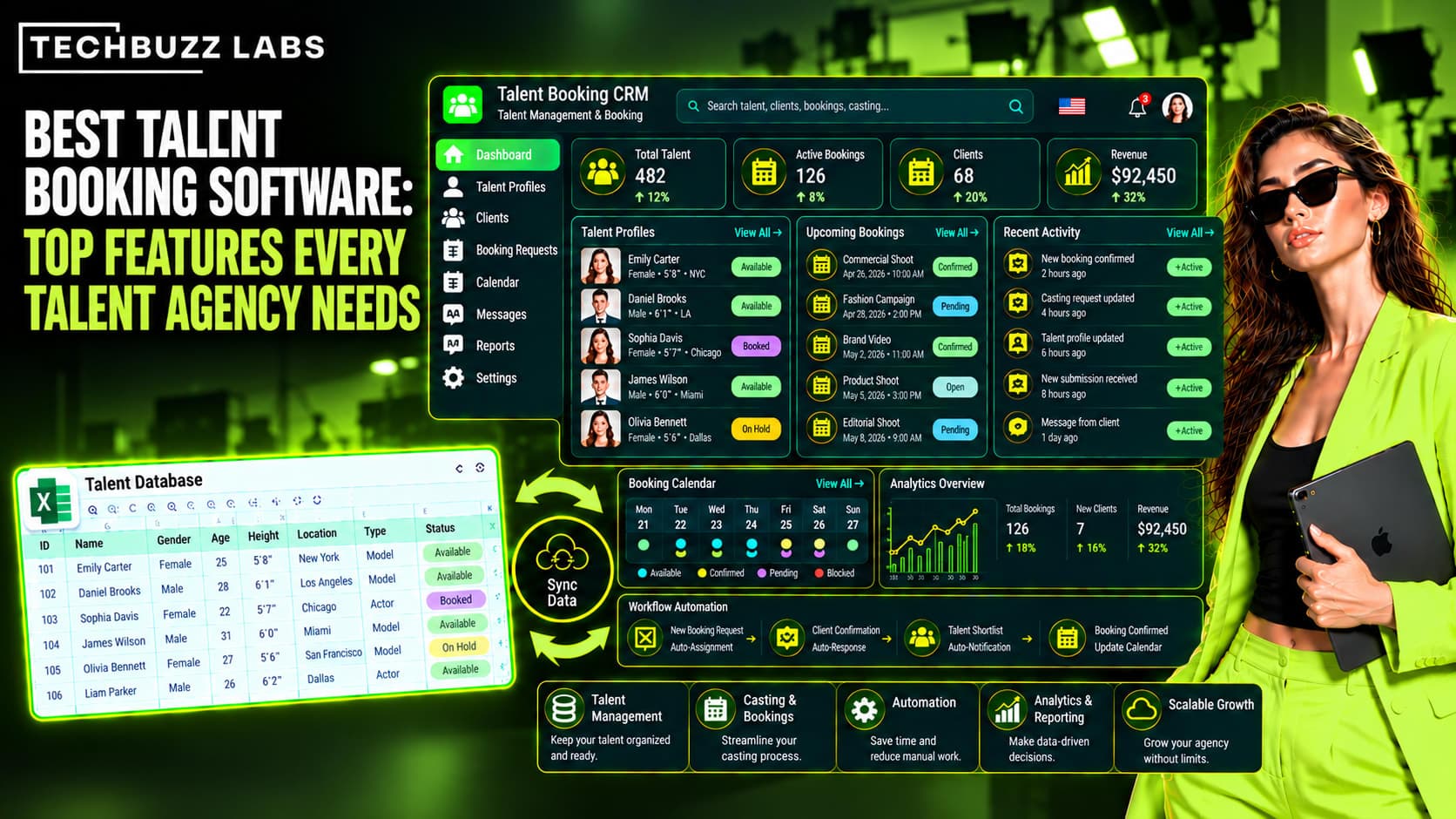
Talent agencies in the United States manage a wide range of responsibilities, including talent profiles, client inquiries, casting opportunities, booking schedules, contracts, and payments. As an agency grows, managing these activities through spreadsheets, emails, and disconnected applications can become time-consuming and difficult to maintain.
Talent booking software helps agencies organize these operations in one centralized platform. The right solution can simplify booking coordination, improve communication, reduce repetitive administrative work, and help agents manage growing talent rosters more efficiently.
For modeling agencies, entertainment agencies, and talent management companies across the USA, choosing software with the right features is an important step toward building a more scalable business.
What Is Talent Booking Software?
Talent booking software is a digital solution that helps agencies manage the process of matching talent with client opportunities and coordinating confirmed assignments.
For example, when an advertising agency in New York requests talent for a commercial campaign, a booking platform can help the agency review suitable profiles, confirm availability, share submissions, track client approvals, and organize the final booking.
Connecting these activities reduces the need to transfer information manually between different tools.
7 Essential Features Every Talent Agency Needs
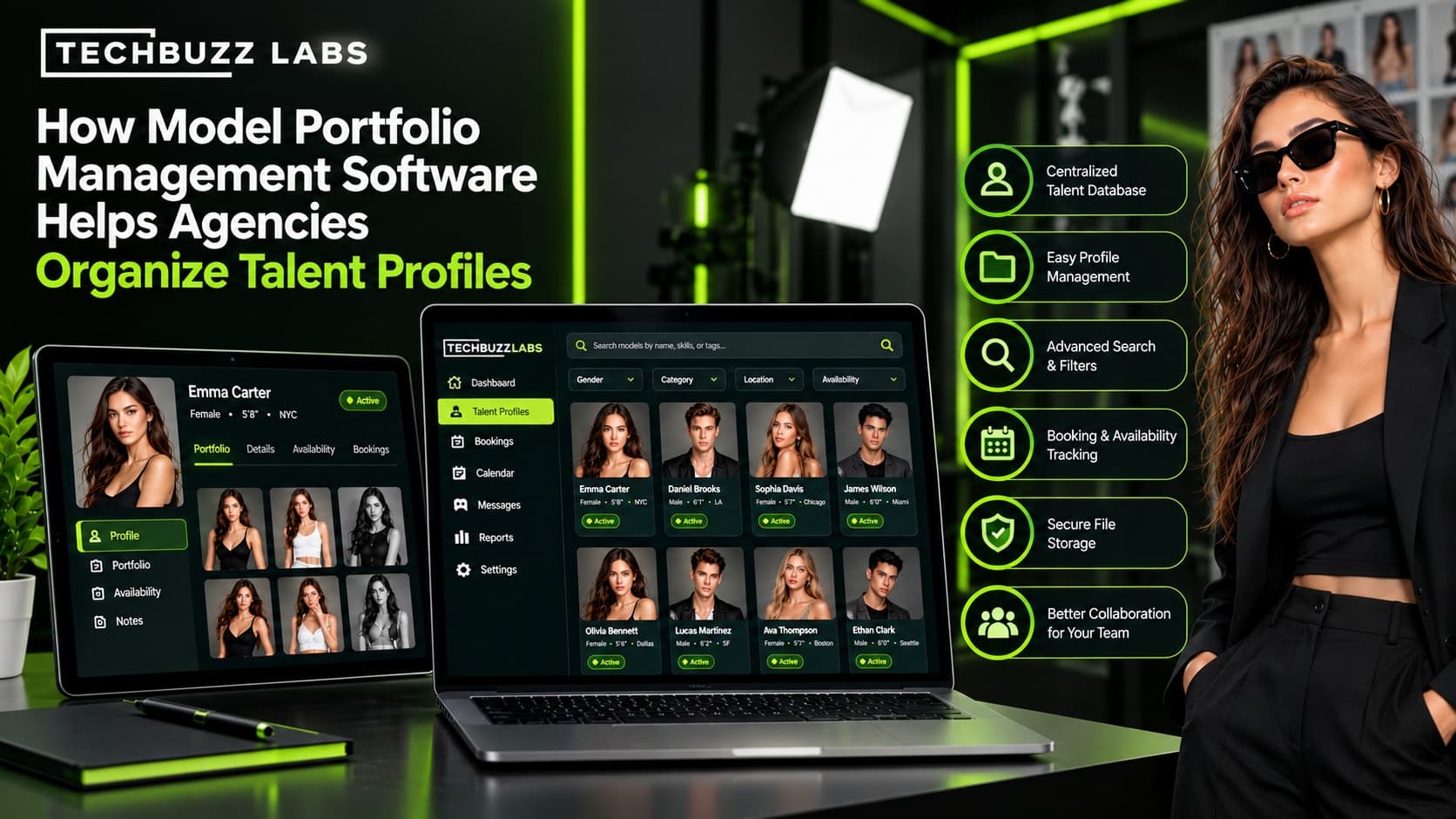
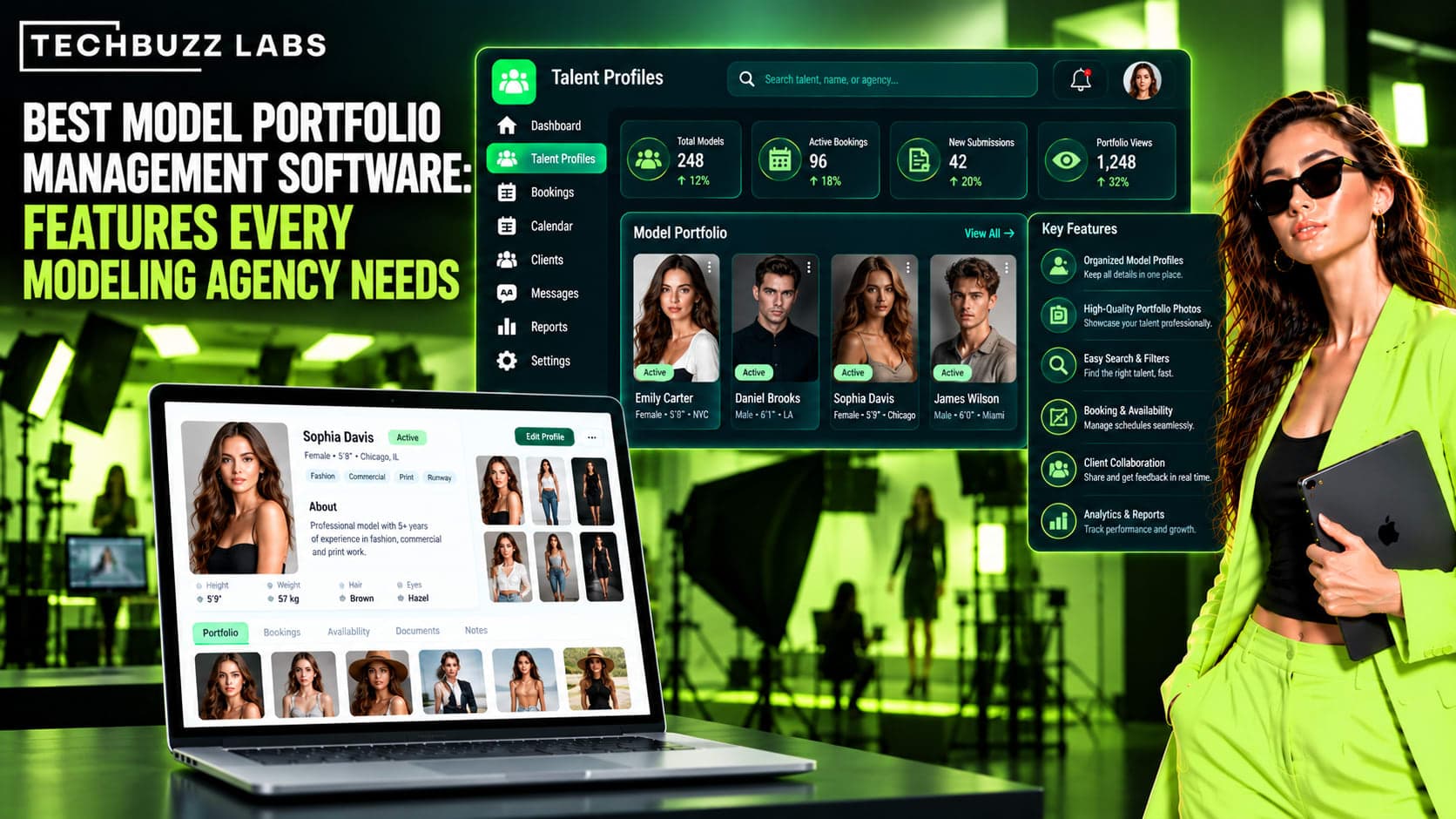
1. Centralized Talent Database
A searchable talent database is one of the most important features of any talent booking platform.
Agencies need a reliable way to organize professional profiles, photographs, portfolios, experience, skills, locations, and contact information. A centralized database allows agents to find suitable talent without searching through multiple folders or spreadsheets.
For agencies representing models, actors, performers, and other professionals, flexible profile categories can make talent discovery more efficient.
The system should also support regular profile updates to ensure that agents work with accurate information.
2. Advanced Search and Talent Matching
Finding the right talent for a specific project can take considerable time when an agency manages a large roster.
Advanced search filters help agents identify candidates based on relevant criteria such as availability, experience, location, skills, and project requirements.
Some platforms also provide AI-assisted matching to recommend potentially suitable candidates.
For example, an agency handling a commercial shoot in Los Angeles could search for talent with relevant experience who are available during the requested dates.
Automated recommendations should support professional judgment rather than replace the agent's final selection.
3. Booking Calendar and Availability Management
Scheduling is a central part of talent booking. Agents need to coordinate client requests, tentative holds, confirmed assignments, auditions, and schedule changes.
A shared booking calendar provides visibility into upcoming commitments and helps teams identify potential conflicts before confirming an assignment.
For agencies serving clients across New York, Miami, Chicago, and Los Angeles, time-zone support can also simplify coordination.
Look for a system that distinguishes tentative bookings from confirmed commitments and allows authorized staff to update availability promptly.
4. Client Relationship Management (CRM)
Talent agencies manage relationships with both talent and clients. A built-in CRM helps organize client contacts, project requests, communication history, previous bookings, and follow-up tasks.
When a returning client requests talent for another campaign, agents can review previous assignments and preferences before preparing recommendations.
CRM functionality also helps agencies track opportunities from the initial inquiry through the final booking.
By keeping client information and booking activity connected, agencies can improve follow-up consistency and provide a more professional client experience.
5. Casting and Submission Management
Casting often involves collecting portfolios, preparing shortlists, sending submissions, reviewing feedback, and confirming selections.
Talent booking software should help agencies organize these activities within individual project records.
Useful features include digital portfolio sharing, submission tracking, client feedback, audition scheduling, and status updates.
For example, an agency managing a fashion campaign can track which models have been submitted, which candidates have been shortlisted, and which selections require booking confirmation.
This structured process reduces confusion and helps teams manage multiple projects simultaneously.
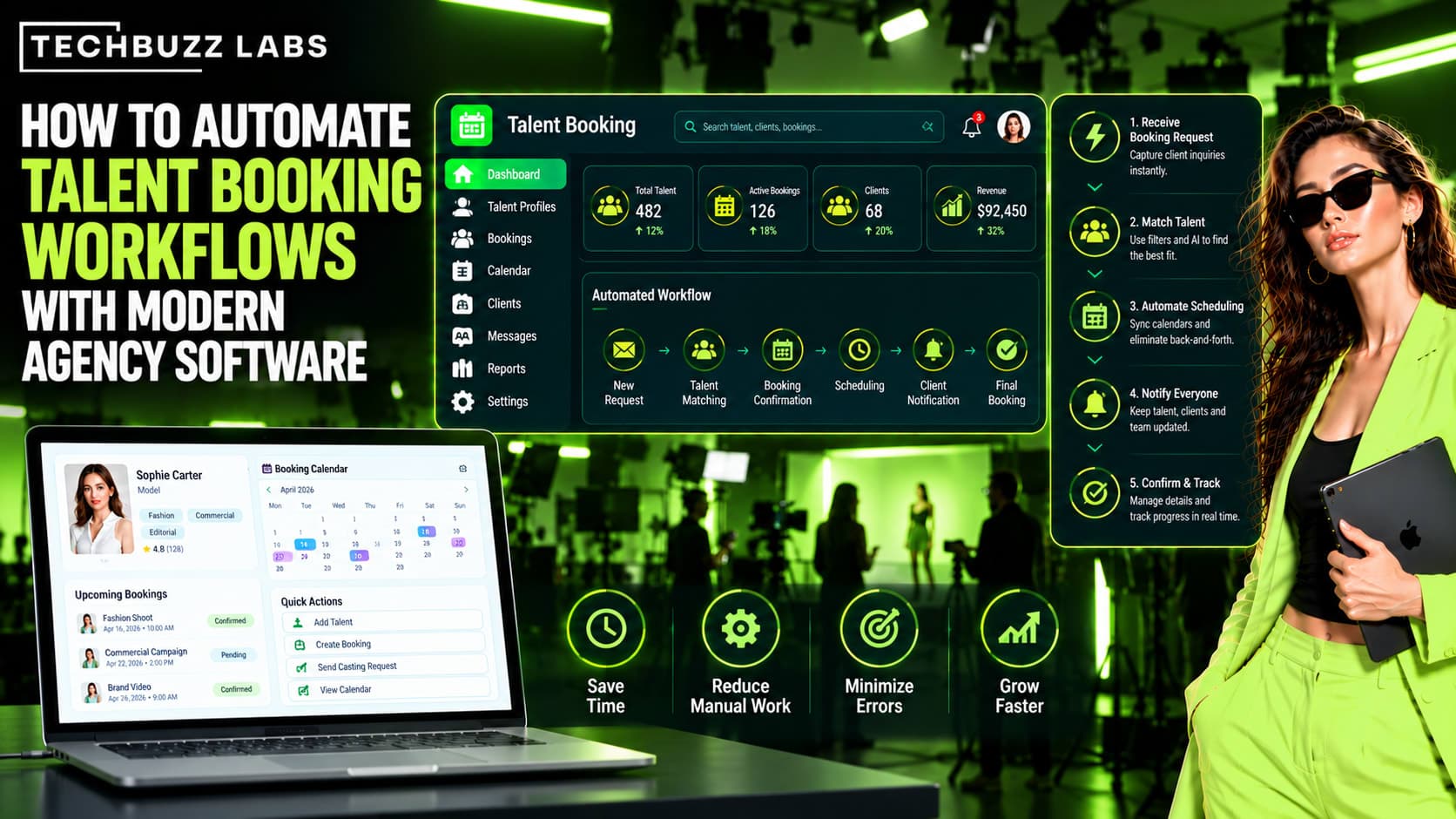
6. Workflow Automation and Notifications
Repetitive administrative tasks can consume valuable time as an agency grows.
Automation can help send booking confirmations, create follow-up reminders, notify staff about schedule changes, and alert agents when client feedback is overdue.
Some systems also support automated task assignments when a booking reaches a particular stage.
Agencies should choose configurable automation that reflects their real processes and allows staff to review important decisions before messages or changes are finalized.
The goal is to reduce routine work without sacrificing personal communication or operational control.
7. Contracts, Invoicing, and Reporting
A confirmed booking often creates additional administrative responsibilities. Agencies may need to manage agreements, rates, commissions, invoices, payment records, and project expenses.
Software that connects booking records with contract and financial workflows can reduce duplicate data entry and improve recordkeeping.
Reporting tools can also help managers review booking activity, revenue, outstanding invoices, client engagement, and talent utilization.
US agencies should evaluate whether their chosen platform supports their accounting processes, applicable documentation requirements, and preferred integrations.
How to Choose the Best Talent Booking Software
The best platform depends on your agency's size, talent categories, booking volume, budget, and existing systems.
Before making a decision, consider these questions:
Ease of use: Can agents manage everyday tasks without extensive training?
Customization: Can the software support your booking and casting workflows?
Integration: Does it connect with your calendar, email, accounting, and other business tools?
Scalability: Can it accommodate more talent, clients, users, and locations?
Security: Does it provide suitable access controls, data protection, and backup procedures?
Total cost: Have you considered subscriptions, setup, customization, integrations, and ongoing maintenance?
Request a demonstration and test a realistic booking scenario before committing to a long-term solution.
Generic CRM software may work for agencies with simple requirements, while businesses with specialized workflows may benefit from a more tailored platform.
How Techbuzz Labs Can Help Talent Agencies
Techbuzz Labs is a technology partner agencies can explore when considering custom software development, CRM solutions, and workflow automation.
For talent and modeling agencies that have outgrown spreadsheets and disconnected tools, a tailored platform could connect talent profiles, client inquiries, casting submissions, availability calendars, and booking records in one system.
The development process should begin by identifying the agency's operational challenges and prioritizing the features that will provide the greatest practical value.
When evaluating Techbuzz Labs, agencies should discuss project scope, customization options, integrations, data security, implementation timelines, budget, and ongoing maintenance requirements.
A clearly defined plan can help agencies determine whether a customized solution is appropriate for their current operations and future growth.
Conclusion
The best talent booking software helps agencies manage more than schedules. It connects talent profiles, client relationships, casting activities, bookings, financial records, and reporting within a more organized workflow.
For talent agencies across the United States, essential features include a centralized talent database, advanced search, availability tracking, CRM functionality, casting management, workflow automation, and financial administration.
By evaluating these features against their actual business needs and exploring suitable technology solutions with partners such as Techbuzz Labs, agencies can reduce administrative complexity, improve coordination, and build a stronger foundation for sustainable growth.