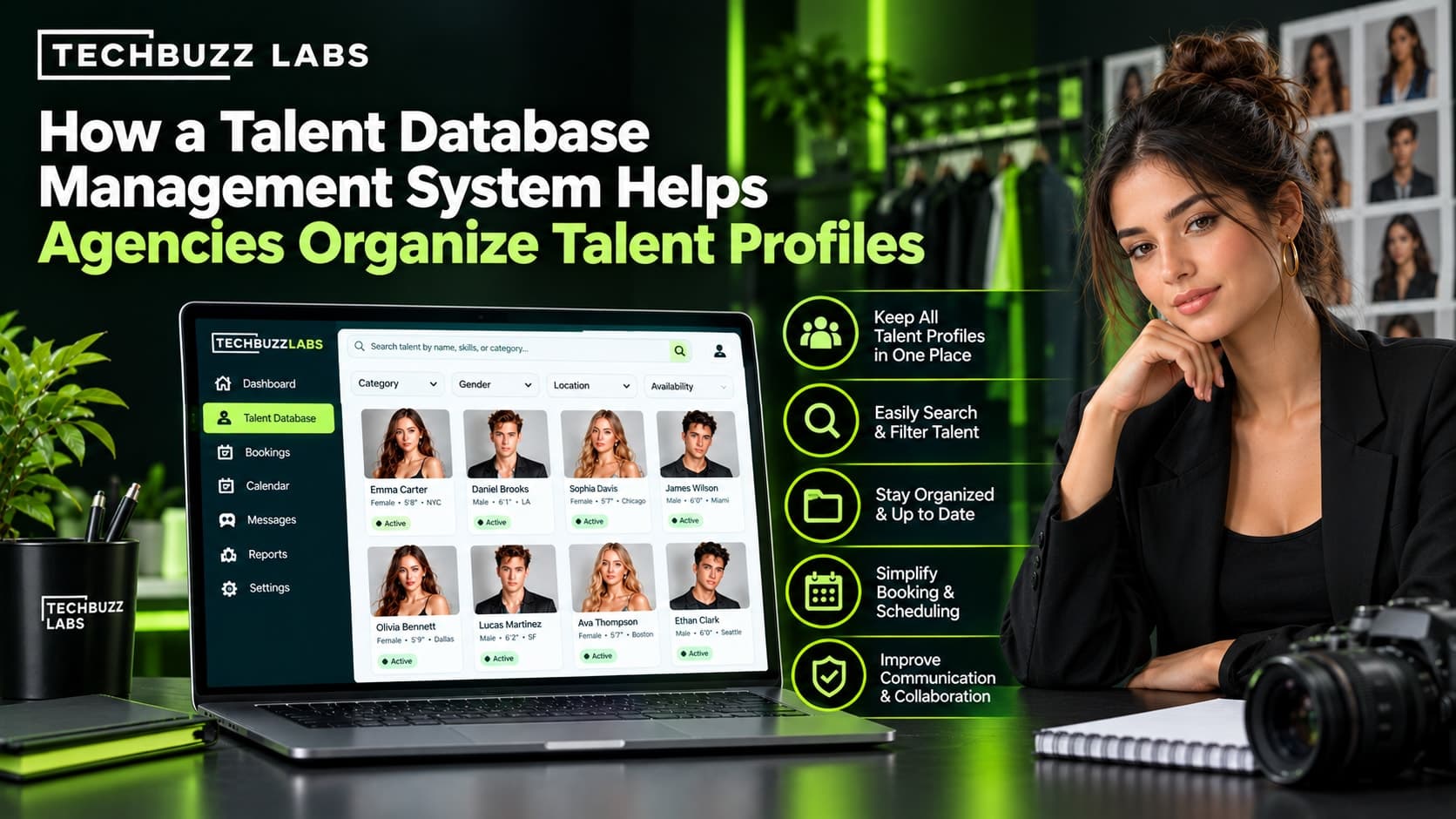
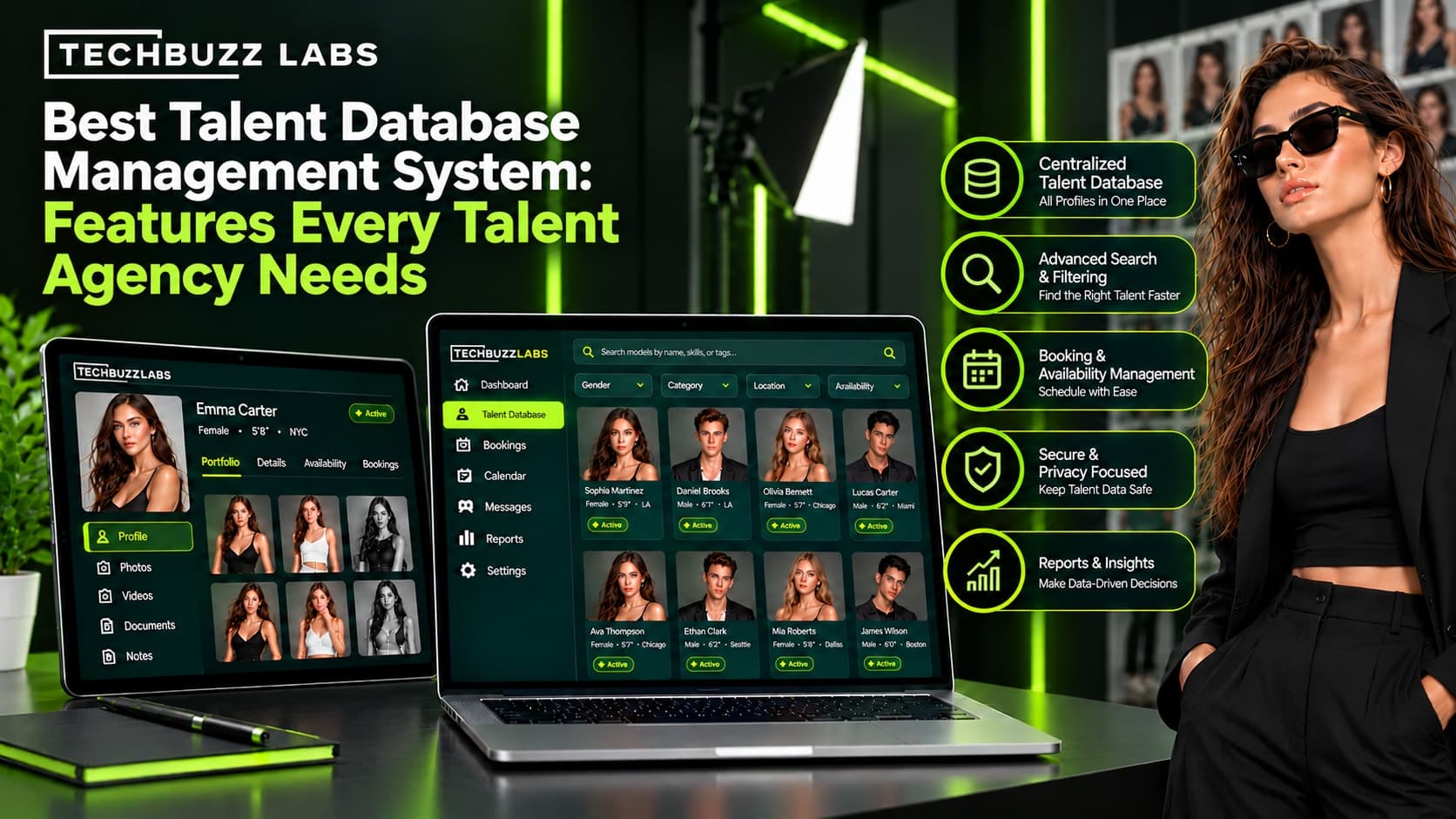
Best Talent Database Management System: Features Every Talent Agency Needs
For talent agencies across the United States, choosing the right system means looking beyond basic contact storage and evaluating how the software supports daily operations.
Managing talent is a central part of running a successful agency. Whether an agency represents models, actors, influencers, performers, or other professionals, keeping talent information organized is essential for responding to client requests and coordinating projects.
As an agency grows, spreadsheets, email threads, and disconnected folders can make everyday work increasingly complicated. Agents may struggle to find suitable talent, update contact details, track availability, or remember which profiles have already been submitted to clients.
A talent database management system helps agencies centralize talent records and organize important information in one place. With features such as advanced search, client relationship management, casting workflow tracking, and reporting, the right platform can help agencies work more efficiently and prepare for growth.
What Is a Talent Database Management System?
A talent database management system is software that helps agencies store, organize, search, and maintain information about the people they represent or work with.
Depending on the agency's needs, a talent record may contain contact details, professional experience, photographs, skills, location, availability, portfolio links, contracts, and booking history.
More advanced platforms may connect talent records with client information, casting submissions, project schedules, and booking workflows.
The goal is to create a reliable source of information that authorized team members can access without searching across multiple tools.
1. Centralized Talent Profile Management
A centralized database is the foundation of an effective talent management system. Each person should have a dedicated profile containing structured, relevant information.
For modeling agencies, profiles may include photographs, measurements, experience, portfolio links, and representation details. Other talent agencies may need acting credits, performance skills, demo reels, or professional resumes.
A well-organized system allows agencies to customize profile fields to match their business model.
Centralization also helps reduce duplicate records and inconsistent information. Instead of maintaining separate spreadsheets for different departments, authorized team members can work from the same profile.
2. Advanced Talent Search and Filtering
A database containing hundreds or thousands of talent profiles is useful only if agents can find suitable candidates quickly.
Advanced search and filtering can help agencies narrow their database according to relevant requirements, including:
Talent category and professional skills
Location and travel availability
Relevant experience and portfolio type
Availability for specific dates
Client or project requirements
Current representation and booking status
For example, if a client requests talent for a commercial campaign in New York, an agent can filter the database by location, availability, and relevant experience before reviewing a shortlist.
Search tools work best when profile information is accurate and consistently maintained. Agencies should establish clear data-entry standards so employees use fields and categories in the same way.
3. Portfolio, Image, and Document Management
Talent agencies often manage more than contact information. They may also store photographs, resumes, demo reels, comp cards, contracts, releases, and other professional documents.
A capable database system should make these materials easy to organize and retrieve.
Useful features may include image galleries, document attachments, portfolio links, file labels, and clear indicators for updated materials. Agencies should also consider storage capacity, backup procedures, file access permissions, and how outdated assets are replaced.
For modeling agencies, organized digital portfolios can make it easier to prepare client presentations. For acting and entertainment agencies, searchable resumes and demo reels may be equally important.
4. Client Relationship Management (CRM)
Talent management involves relationships with both talent and clients. Agencies need to maintain records of brands, casting directors, production companies, photographers, and other business contacts.
CRM functionality connects client records with communication history, project opportunities, follow-up tasks, and relevant talent submissions.
For example, an agent could review a client's previous projects, record feedback from a recent submission, and schedule a follow-up without searching through multiple email conversations.
When talent information and client relationships are connected, agencies can maintain better context around ongoing opportunities and reduce missed follow-ups.
5. Casting and Submission Tracking
Casting and submission management are important for agencies that regularly match talent with project opportunities.
A suitable system should help agents record client briefs, identify potential candidates, prepare shortlists, and track submission progress.
Depending on the platform, submission statuses might include prepared, submitted, under review, shortlisted, selected, or declined.
This provides visibility into the progress of each opportunity and helps prevent confusion when several agents work on the same project.
Agencies should look for a system that connects submissions to talent profiles and client records, allowing team members to review relevant history without manually rebuilding the information.
6. Booking and Availability Management
Once talent is selected, agencies may need to coordinate dates, locations, schedules, confirmations, and booking details.
Booking management features can help teams maintain a shared view of assignments and reduce scheduling conflicts. Availability tracking can also help agents determine whether a person is suitable for a new opportunity.
Depending on the agency's workflow, useful capabilities may include calendar views, booking status updates, project deadlines, reminders, and links between bookings and talent profiles.
Agencies should verify whether these functions are built into the software or require third-party integrations.
7. Workflow Automation and Notifications
Many agency tasks are repetitive. Staff may need to request updated information, follow up with clients, notify colleagues about submissions, or update records when a booking changes.
Workflow automation can reduce manual steps by triggering reminders, notifications, or status updates based on predefined rules.
Examples include:
Reminding staff to review outdated talent profiles
Notifying agents when client feedback arrives
Creating follow-up tasks after a submission
Alerting team members when booking details change
Routing new talent applications for review
Automation should be designed around real business processes. Agencies should test workflows carefully and retain human oversight for important decisions and sensitive information.
8. Reporting and Performance Dashboards
As an agency expands, managers need visibility into how its operations are performing.
Reporting features can help teams understand the number of active talent profiles, submission activity, booking progress, client engagement, and workload distribution.
Depending on the system, dashboards may help managers identify bottlenecks, compare activity across periods, and determine where processes need improvement.
For example, reviewing submission outcomes can help an agency understand whether its current process provides sufficient visibility into client decisions.
Choose reporting features that support specific management questions rather than collecting metrics that do not inform business decisions.
9. Data Security and User Permissions
Talent databases can contain personal information, professional photographs, contracts, and private client records. Protecting these details should be a priority.
Look for software that supports appropriate access controls, secure authentication, backup and recovery procedures, and clear data retention options.
Role-based permissions can help ensure that employees only access information required for their responsibilities. Agencies should also consider consent, image usage rights, applicable privacy laws, and procedures for correcting or deleting records when appropriate.
Security requirements should be evaluated before implementation, particularly when information is shared with external clients or collaborators.
10. Integrations and Scalability
A database should fit into the agency's wider technology environment.
Depending on existing tools, integrations may be useful for calendars, email, document management, accounting, websites, CRM systems, and casting platforms.
Scalability is equally important. A system that works for a small roster should continue to support additional profiles, users, projects, and data as the business expands.
Before purchasing software, ask vendors about integration availability, data export options, performance limits, ongoing support, and the process for migrating information to another platform.
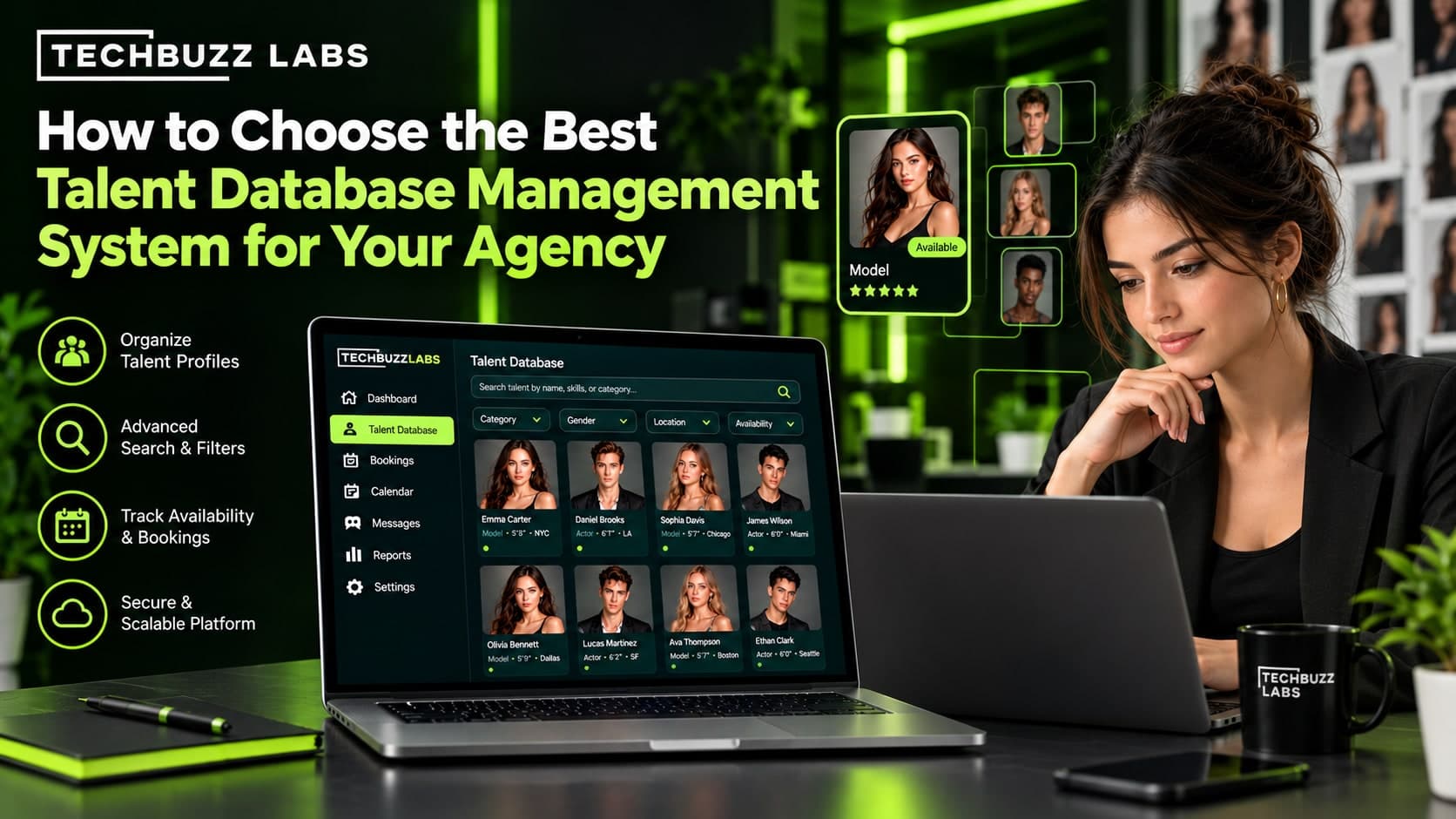
How to Choose the Best Talent Database Management System
The best system depends on the agency's size, talent category, budget, and operating processes. Before making a decision, consider these steps:
Review your current workflow. Identify where staff lose time, duplicate information, or miss updates.
Define essential features. Prioritize searchable profiles, document storage, CRM, casting, or booking features according to your needs.
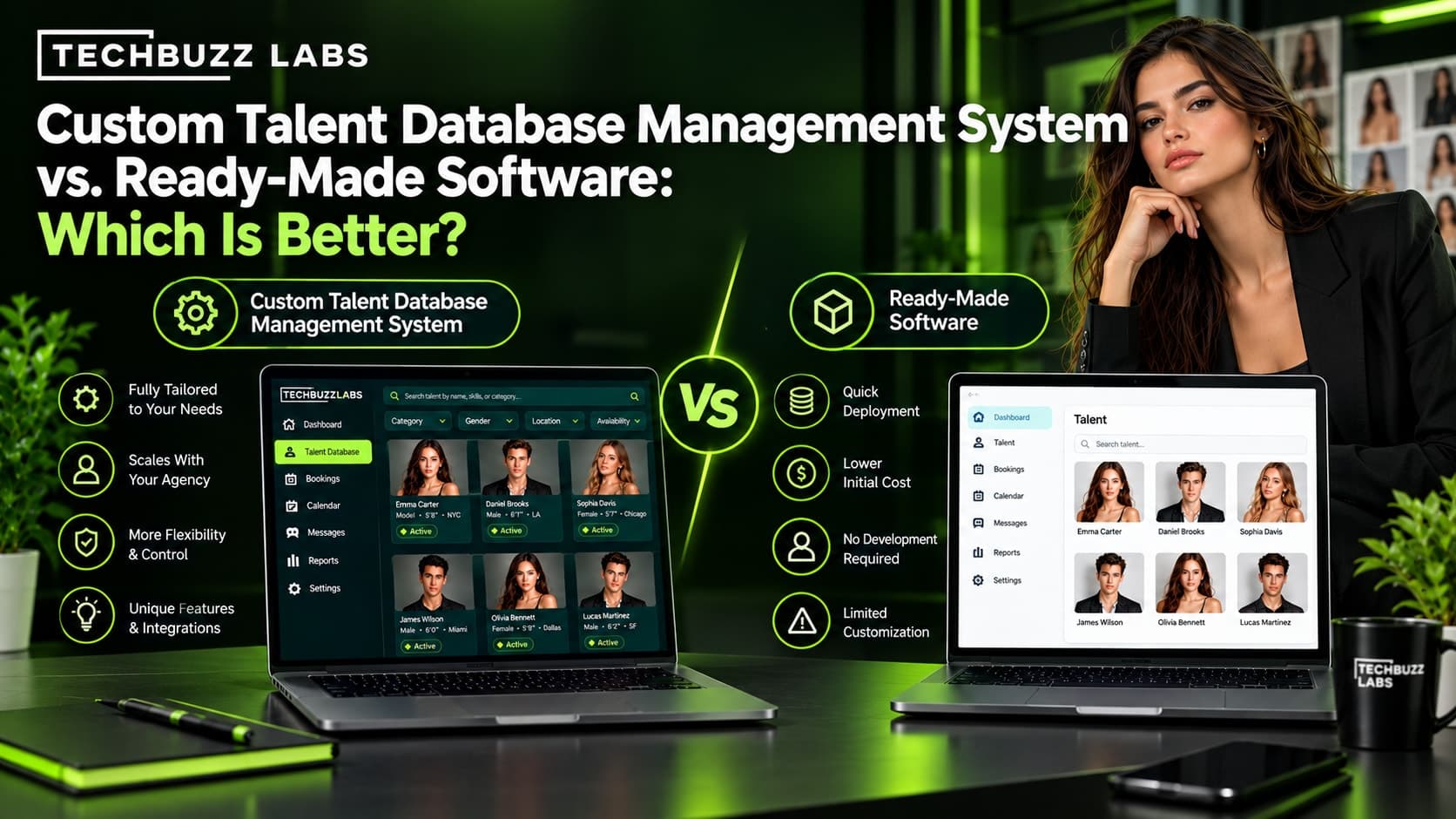
Compare ready-made and custom solutions. Standard platforms may suit common workflows, while custom software may support specialized processes.
Test realistic scenarios. Ask for a demonstration using tasks your team performs every day.
Evaluate total cost. Include setup, migration, training, integrations, support, and maintenance.
Plan for adoption. Assign responsibility for data quality and train employees before a full rollout.
A phased implementation can help agencies clean up existing records and introduce new processes without disrupting every department at once.
How TechBuzz Labs Can Help Talent Agencies
TechBuzz Labs is a technology option for agencies exploring custom software, CRM solutions, and workflow improvements.
For agencies managing large talent databases, a tailored system may help connect talent profiles, client relationships, casting submissions, and booking records within a more coordinated workflow.
The right starting point is to identify operational challenges and determine which capabilities would deliver practical value. Agencies can then define their software requirements, integration needs, user permissions, and plans for future growth.
Rather than adding unnecessary complexity, the focus should remain on building a system that supports the agency's actual business processes.
Conclusion
The best talent database management system does more than store contact information. It helps agencies organize profiles, find suitable talent, manage portfolios, track casting submissions, coordinate bookings, and maintain client relationships.
For growing U.S. talent agencies, features such as advanced search, workflow automation, reporting, security, and integration support can make a meaningful difference to everyday operations.
By evaluating software against real agency requirements, businesses can choose a platform that improves organization today and supports sustainable growth in the future.