How a Talent Database Management System Helps Agencies Organize Talent Profiles
In this guide, we explore how talent database management software works, which features matter most, and how agencies can use it to build a more organized talent management process.
Managing talent requires more than collecting names, phone numbers, and photographs. Modeling agencies, casting companies, and talent management businesses must keep professional profiles accurate, organize portfolios, track experience, and find suitable candidates for client opportunities.
As an agency expands, these responsibilities become harder to manage through spreadsheets, email threads, and separate folders. Important information can become outdated, duplicate records may accumulate, and agents can spend valuable time searching for profiles instead of responding to client requests.
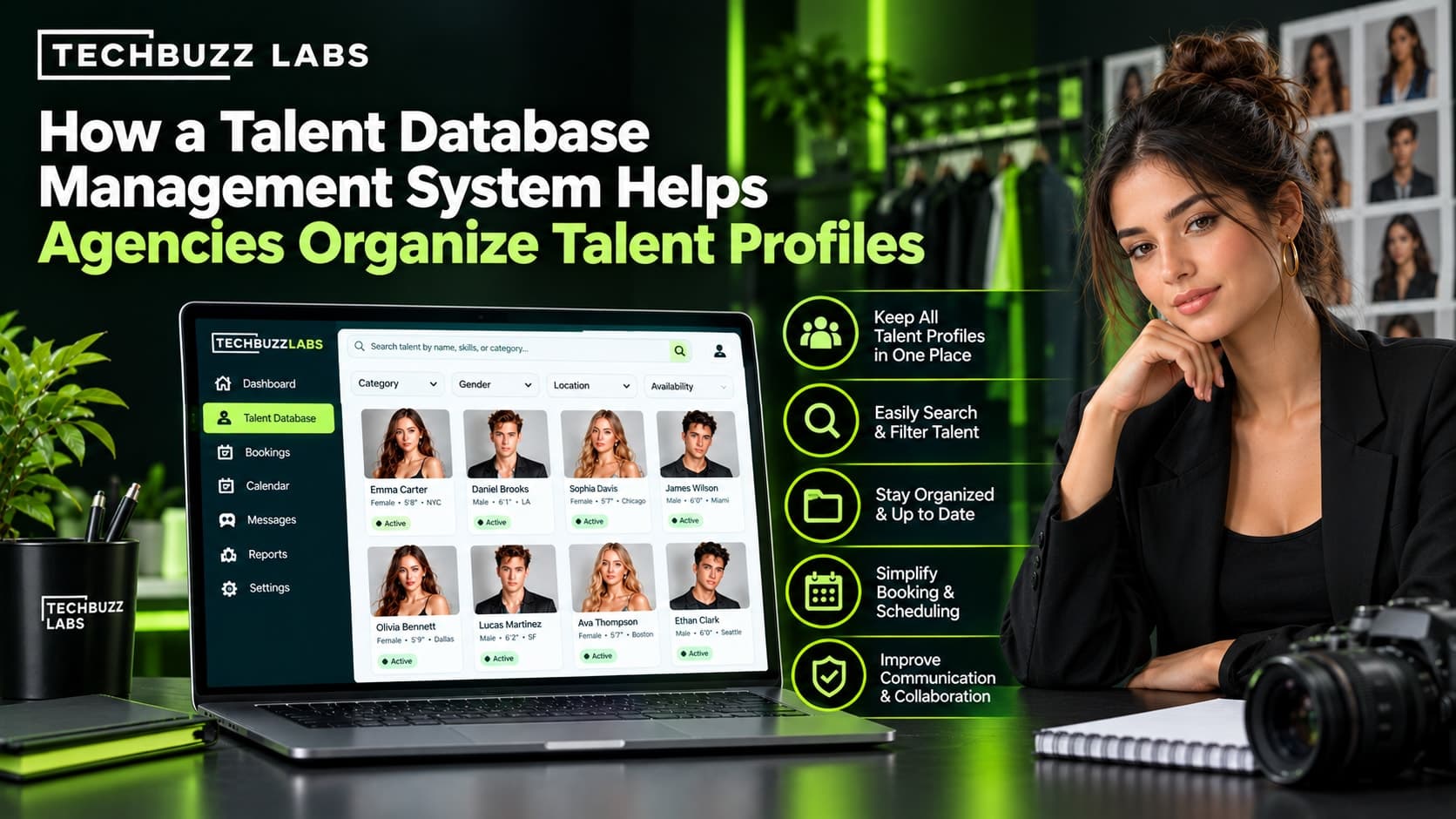
A talent database management system helps solve these challenges by bringing essential talent information into one structured, searchable platform. For agencies in the United States, the right system can improve profile organization, support casting decisions, and create a more consistent approach to managing a growing talent roster.
What Is a Talent Database Management System?
A talent database management system is software designed to store, organize, search, update, and manage information about the individuals an agency represents or works with.
Depending on the agency's specialty, a profile may contain:
Contact information and professional representation details
Portfolio photographs, headshots, and digital images
Skills, experience, and professional credits
Location and relevant availability information
Resumes, videos, and portfolio links
Casting submissions and client feedback
Booking history and project-related notes
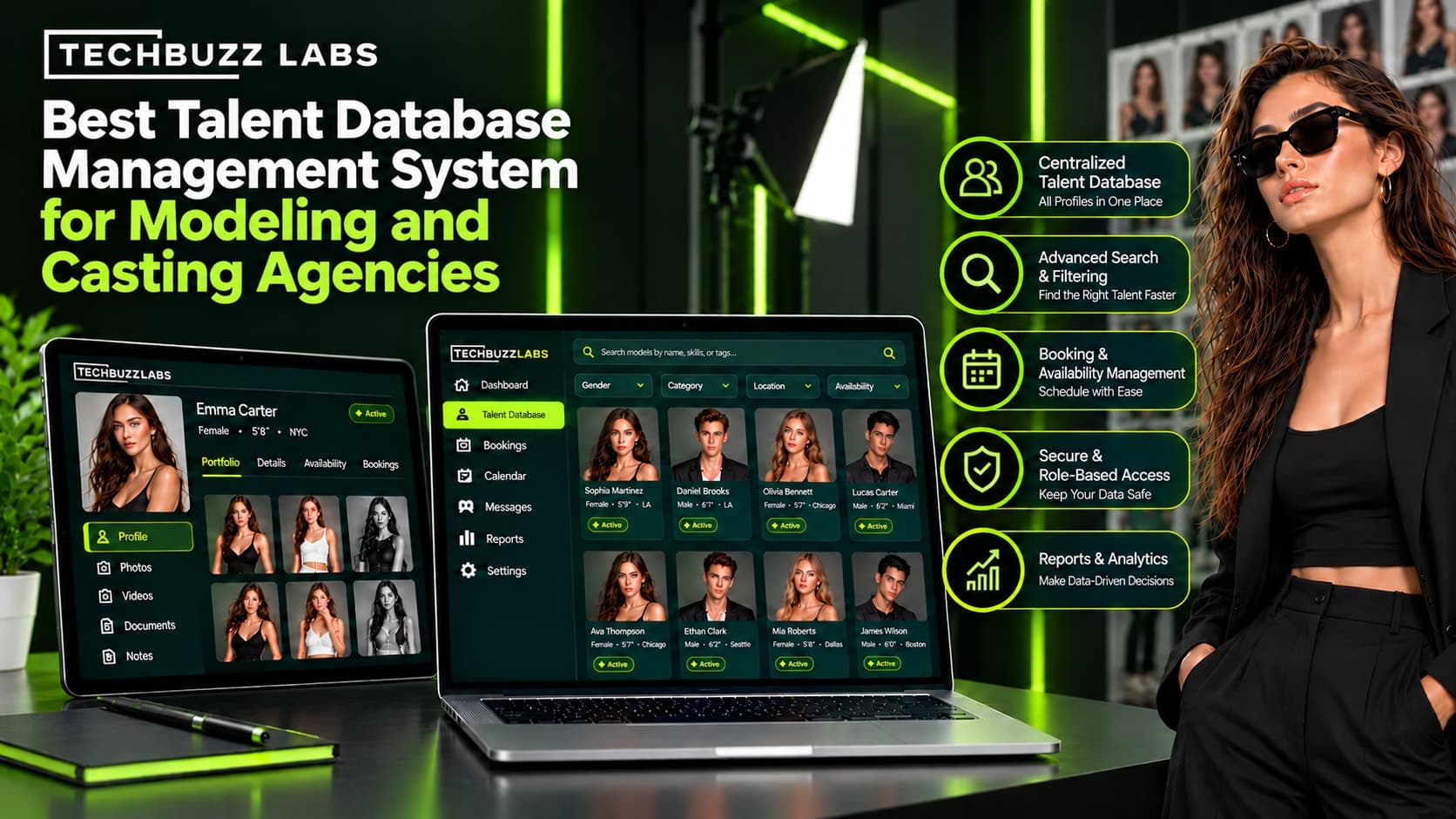
For modeling agencies, the system may focus on portfolios, measurements, categories, and commercial experience. Acting and casting agencies may need additional information about resumes, audition materials, performance skills, and previous productions.
Unlike a basic contact list, a dedicated talent database can connect these profiles with casting projects, client records, and booking workflows. The result is a more organized source of information for authorized team members.
1. Centralizes Talent Information in One Place
One of the biggest challenges agencies face is fragmented information. A model's contact details might be stored in a spreadsheet, recent photographs in a shared folder, and booking history in an email conversation.
When employees need to gather information from several locations, even routine tasks can take longer than necessary.
A talent database management system brings these records together under individual profiles. Team members can access relevant details from a central location rather than searching across disconnected tools.
For example, when a client requests models for an upcoming commercial campaign, an agent can review professional experience, portfolio images, location, and other relevant criteria from the same record.
Centralized information also makes it easier to establish consistent recordkeeping practices across departments.
2. Creates Structured and Consistent Talent Profiles
An organized database depends on consistent information. If every agent records talent details differently, searching and comparing profiles becomes more difficult.
Talent database software allows agencies to define standard fields for the information they regularly use.
A modeling agency might organize profiles by:
Model category and professional experience
Portfolio and digitals
Measurements relevant to specific bookings
Location and travel availability
Skills, specializations, and previous assignments
A casting agency may prioritize performance credits, resumes, demo reels, audition materials, and role-specific skills.
Standardized profiles make it easier to review candidates and identify missing information. Agencies can also establish guidelines for updating records so that essential details remain accurate as talent portfolios evolve.
The key is to collect information relevant to the agency's work rather than adding unnecessary fields that make profiles harder to maintain.
3. Makes Finding Suitable Talent Faster
Finding the right person for a project is easier when talent information is searchable.
Advanced search and filtering features allow agents to narrow a large database according to the client's requirements. Depending on the software, filters may include location, experience, category, skills, availability, and other relevant profile attributes.
Consider a client looking for talent for a regional advertising campaign. An agent could filter the database by location, relevant commercial experience, and availability before reviewing individual portfolios.
Instead of manually opening hundreds of records, the team can begin with a more focused selection.
The usefulness of these features depends on data quality. Accurate profile fields, consistent categories, and regularly updated records help ensure that search results remain relevant.
4. Keeps Portfolio Images and Documents Organized
Visual materials are essential for many modeling and casting agencies. These businesses may manage headshots, professional photographs, digitals, comp cards, resumes, video reels, and other documents for each person they represent.
Without an organized structure, employees may struggle to identify the latest approved images or determine which materials are appropriate for a particular client.
A suitable talent database can associate digital assets with the correct profile and help staff organize files by category, date, or other available attributes.
Useful capabilities may include:
Multiple images and document attachments per profile
Portfolio categories and file labels
Clear distinctions between current and outdated materials
Controlled sharing of approved portfolio assets
Links to external portfolios or media, where supported
Agencies should also establish clear procedures for reviewing new materials and managing image-sharing permissions. This helps reduce the risk of sending outdated or unauthorized assets to clients.
5. Simplifies Profile Updates and Data Accuracy
Talent information changes regularly. Professionals gain experience, update their photographs, change contact details, and become available for different types of work.
When records are spread across multiple systems, updating the same information everywhere can become repetitive and inconsistent.
A centralized database gives staff a designated record to maintain. Depending on the platform, reminders, review queues, or update workflows can help identify incomplete and outdated profiles.
Agencies can strengthen this process by assigning responsibility for profile maintenance and scheduling regular reviews.
For example, an agent reviewing a roster before a new casting season might check portfolio images, contact information, professional credits, and relevant availability.
Maintaining accurate records helps agencies prepare better submissions and reduces the likelihood of relying on outdated information.
6. Improves Collaboration Across the Agency
Talent management often involves multiple employees handling different clients, talent categories, and casting opportunities.
When each person maintains separate spreadsheets or private folders, important updates may not reach the rest of the team. This can result in duplicated work, inconsistent information, and confusion over which record is current.
A shared talent database gives authorized employees access to consistent profile information.
With appropriate permissions, different team members can manage profile updates, review talent for projects, and coordinate submissions using the same underlying records.
For example, one agent might update a professional portfolio while another searches the roster for a suitable client brief. A shared system can make the updated information available without requiring separate copies to be distributed manually.
Clear permissions and responsibilities remain important. Agencies should define who can edit profiles, approve portfolio materials, and access confidential notes.
7. Connects Talent Profiles With Casting Opportunities
Organized profiles become more useful when they connect with active projects.
A talent database management system with casting functionality can help agencies link suitable candidates to client briefs, track submissions, and record selection decisions.
A typical process may look like this:
Record the client's requirements and project deadlines.
Search the talent database for suitable candidates.
Review profiles and prepare a shortlist.
Submit approved talent to the client.
Record feedback and update each candidate's status.
Coordinate the next stage for selected candidates.
Keeping this information connected helps agents understand which candidates have been considered for each opportunity and what action is required next.
Not every database includes full casting management. Agencies should confirm whether these features are built into the platform or require a separate application or integration.
8. Supports Better Client Communication and Booking Coordination
A well-organized talent profile can support more informed client communication, particularly when it connects with customer relationship management (CRM) and booking tools.
When the system links talent records with client details, previous submissions, feedback, and booking history, agents can review relevant context before responding to a request.
This can help agencies prepare appropriate talent selections and coordinate follow-ups more consistently.
For example, if a client requests talent with experience in a specific type of campaign, an agent may be able to review relevant profiles and previous project records without searching through separate email conversations.
When availability and booking information are also connected, the agency can coordinate next steps more effectively. Actual booking confirmation should still follow the agency's established approval process.
9. Helps Agencies Maintain Security and Control Access
Talent profiles may contain personal information, professional documents, portfolio images, and internal business notes. Keeping this information organized also means managing access responsibly.
When evaluating talent database software, agencies should consider:
Role-based permissions for employees and managers
Secure authentication and account controls
Backup and recovery procedures
Controlled access to shared portfolios and documents
Data export and deletion capabilities
Clear retention policies and applicable privacy obligations
Agencies should collect only the information they genuinely need and ensure that access aligns with each person's responsibilities.
A centralized database can simplify administration, but it does not automatically guarantee security. Proper configuration, staff training, and ongoing maintenance remain essential.
10. Makes It Easier to Scale Talent Operations
An agency's recordkeeping needs often change as its roster expands. More talent can mean additional photographs, client requests, casting projects, and booking records to manage.
A system that works for a small roster may become difficult to maintain if it lacks flexible categories, reliable search, sufficient storage, or suitable access controls.
Agencies should evaluate whether a platform can support their anticipated growth without introducing unnecessary complexity.
Depending on requirements, useful capabilities may include customizable profile fields, bulk data updates, integrations, automated reminders, reporting, and additional user permissions.
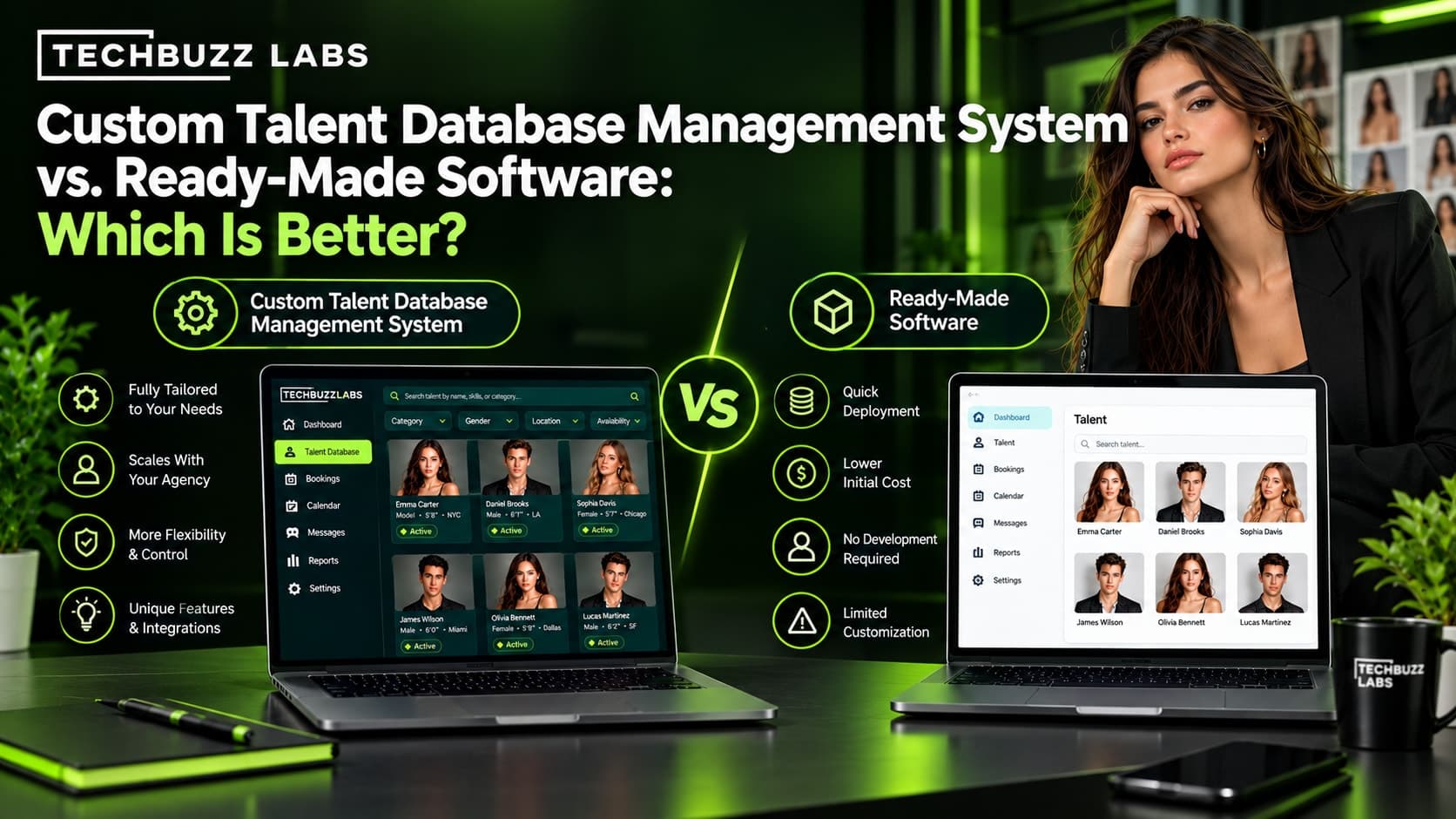
Some agencies may be well served by ready-made software, while others may benefit from a tailored database that supports specialized processes. The right decision depends on operational needs, budget, and the cost of maintaining the system over time.
How TechBuzz Labs Can Help Agencies Improve Talent Management
TechBuzz Labs provides technology and software solutions relevant to businesses exploring custom software, CRM, and workflow improvements.
For talent, modeling, and casting agencies, the first step toward a better-organized database is identifying where current processes create delays or inconsistencies.
An agency may need to centralize profile information, improve talent search, organize portfolio assets, connect casting records, or reduce repetitive administrative work. Defining these requirements helps determine whether existing software is sufficient or a custom solution deserves consideration.
TechBuzz Labs can be explored as a potential technology partner when evaluating custom agency software and related workflow needs.
The focus should remain on practical business outcomes: accurate talent profiles, easier access to information, consistent processes, and a system that can support the agency as it grows.
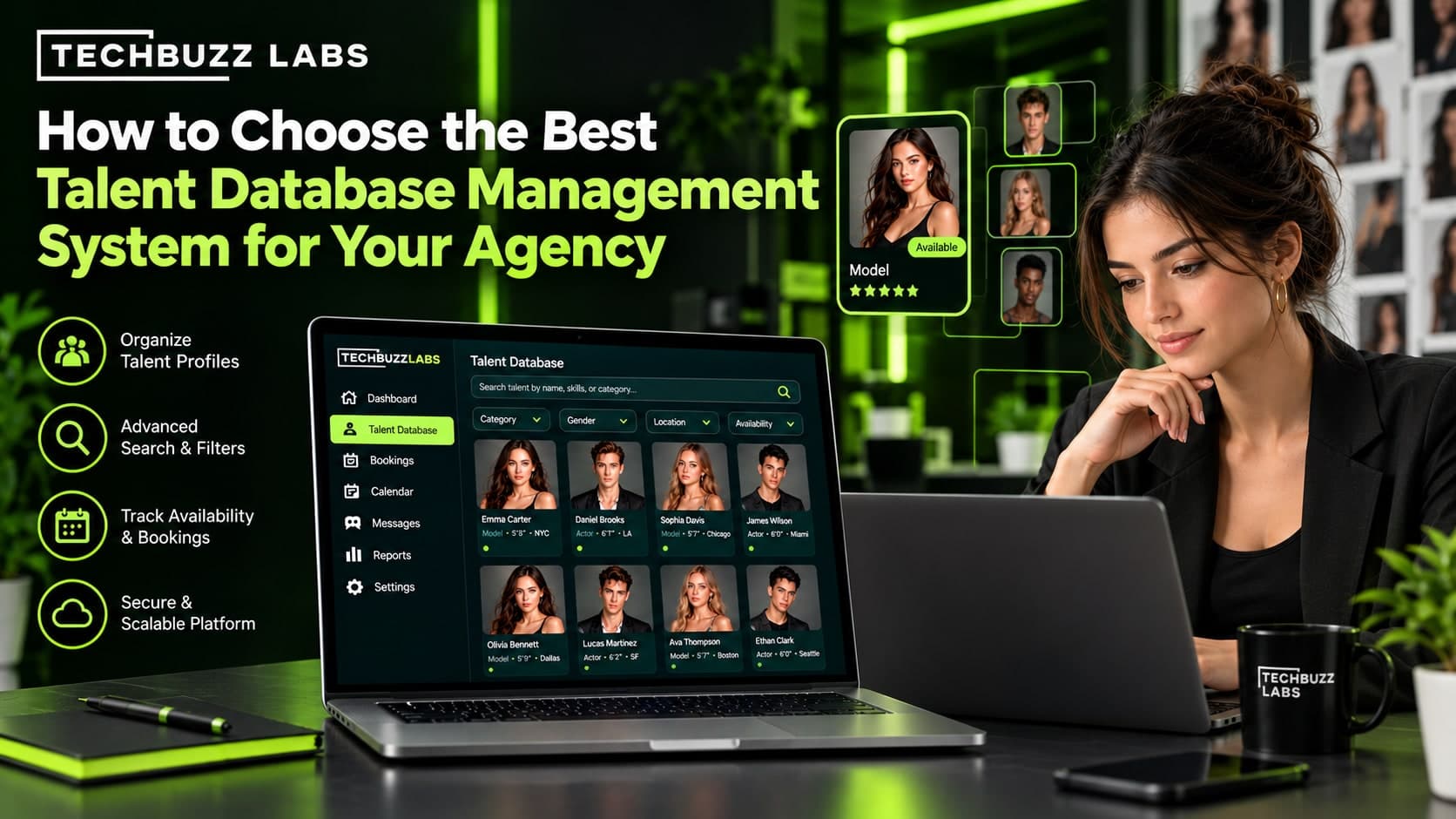
How to Choose the Right Talent Database Management System
Before selecting a platform, agencies should evaluate software against the tasks employees perform every day.
Start by identifying essential profile fields, portfolio requirements, search filters, casting workflows, and integration needs. Then compare available products and test them using realistic agency scenarios.
Consider these questions:
Can employees find relevant profiles without complicated workarounds?
Can the system organize images, videos, resumes, and documents?
Are profile updates straightforward and traceable where needed?
Can talent records connect with casting and booking workflows?
Are permissions, backups, and data exports appropriate?
Will the software accommodate future requirements?
What are the total costs of implementation, subscriptions, training, and maintenance?
A demonstration using real-world scenarios can reveal limitations that may not be apparent from a feature list.
Agencies should also plan for data cleanup and employee training. Even capable software will struggle to deliver value when records are incomplete or employees follow inconsistent processes.
Conclusion
A talent database management system helps agencies organize talent profiles by centralizing information, standardizing records, improving search, managing portfolios, and connecting profiles with casting and client workflows.
For U.S. modeling, talent, and casting agencies, these capabilities can make day-to-day operations more manageable while supporting more consistent communication and informed casting decisions.
The best results come from combining suitable technology with accurate data, clear ownership, and regular profile maintenance. By choosing software that fits their workflows and future goals, agencies can build a more reliable talent database and create a stronger foundation for growth.