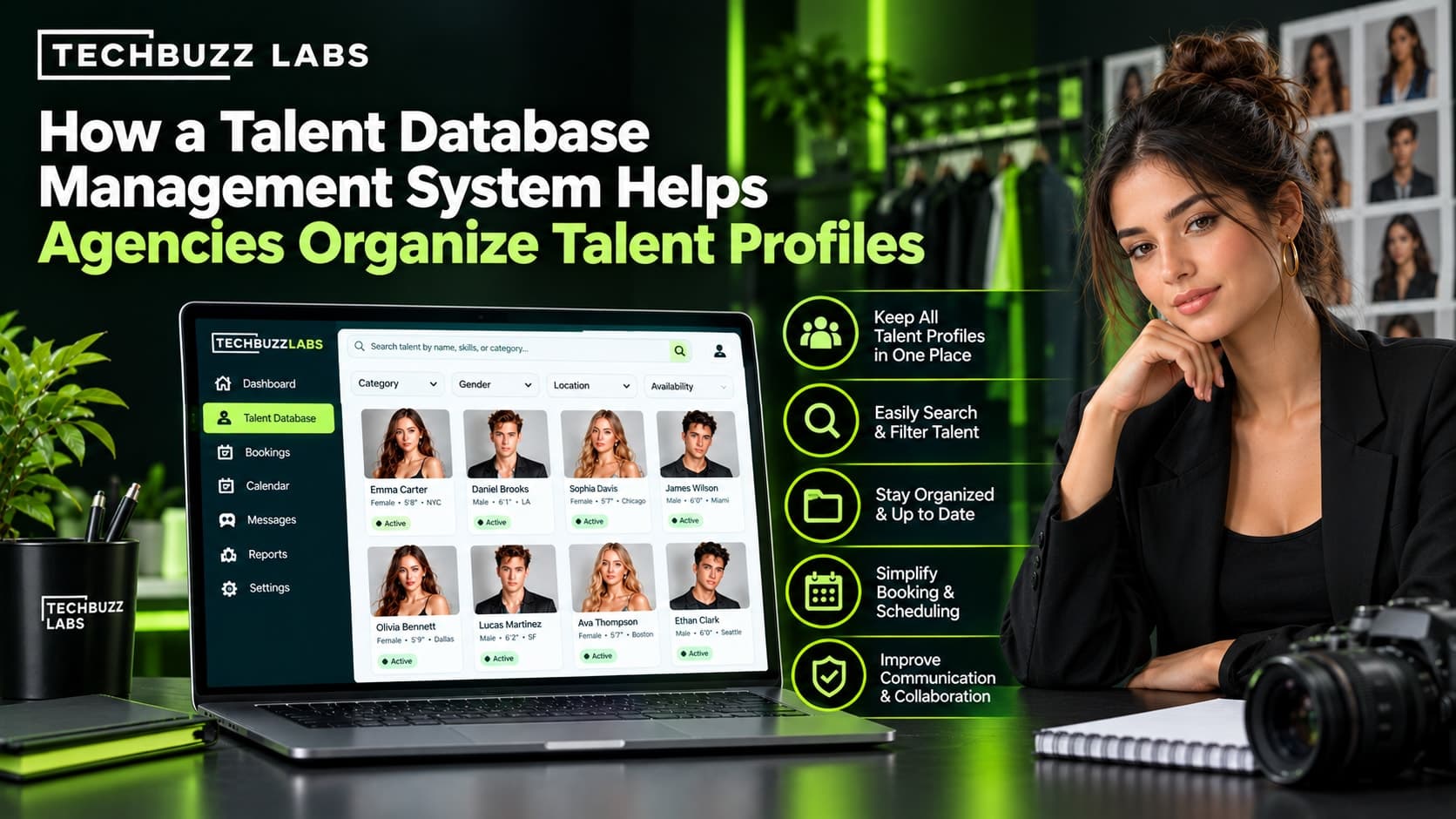
Best Talent Database Management System for Modeling and Casting Agencies
For agencies across the United States, choosing the right system can improve organization, reduce repetitive administrative work, and support a more scalable approach to talent management.
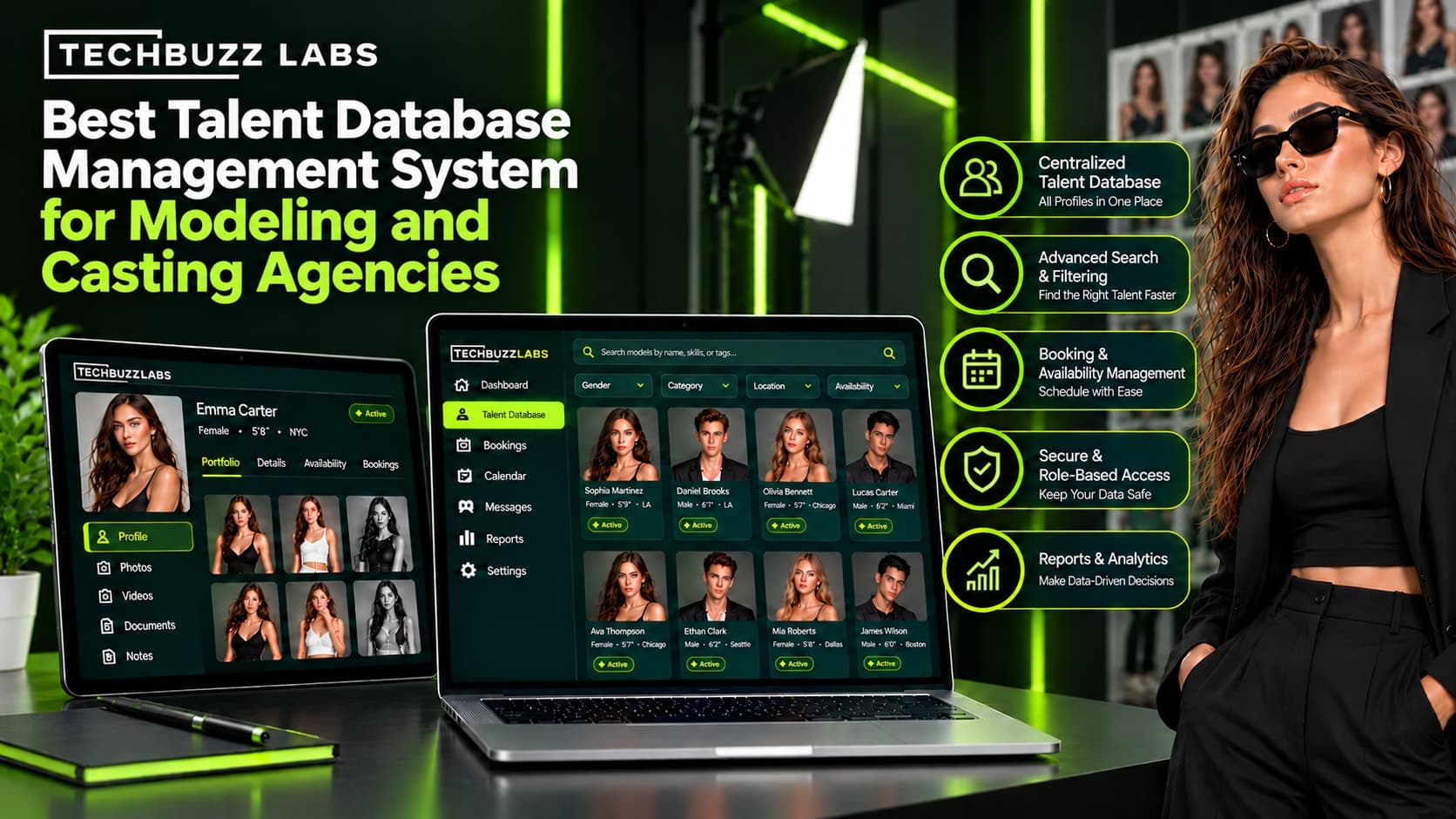
Modeling and casting agencies manage large amounts of talent information every day. From model portfolios and professional photographs to casting submissions, client requirements, availability, and booking records, every detail plays a role in keeping agency operations organized.
As an agency grows, managing this information through spreadsheets, email threads, and separate folders can become inefficient. Agents may struggle to find suitable talent for a casting call, verify availability, update portfolios, or track which candidates have been submitted to a client.
A talent database management system for modeling and casting agencies helps centralize these activities in one organized platform. Instead of simply storing contact information, specialized agency software can connect talent profiles with casting workflows, client relationships, submissions, and bookings.
What Is a Talent Database Management System?
A talent database management system is software that helps agencies collect, organize, search, update, and manage information about the talent they represent or work with.
For modeling agencies, this may include model profiles, measurements, photographs, portfolio links, experience, and availability. Casting agencies may also need to manage actor profiles, resumes, demo reels, audition information, casting requirements, and selection status.
A specialized system can connect these records with client details, casting projects, communication history, and booking information.
The main advantage is having a centralized source of information that authorized team members can access instead of searching through disconnected tools.
Why Modeling and Casting Agencies Need Specialized Software
Generic contact management tools can store names, phone numbers, and basic notes, but modeling and casting agencies often require more specialized workflows.
For example, a modeling agency may need to find models by location, experience, portfolio category, and availability. A casting agency may need to organize audition submissions, compare candidates against a brief, and track casting decisions.
Without an organized system, these activities can create several challenges:
Scattered talent information: Profiles and photographs are stored in different locations.
Slow candidate searches: Agents spend time reviewing records manually.
Outdated information: Old photographs or incorrect availability may lead to unsuitable submissions.
Unclear casting progress: Teams may lose track of shortlisted, submitted, or selected candidates.
Booking conflicts: Separate calendars and communication channels can make scheduling more difficult.
Limited reporting: Managers may struggle to understand submission activity and booking performance.
A specialized talent database can help bring these processes together and give agencies better visibility into daily operations.
1. Centralized Talent Profiles
Every talent record should contain the information an agency needs to evaluate and represent that person professionally.
For modeling agencies, this may include photographs, measurements, experience, skills, location, portfolio links, and representation details. Casting agencies may require resumes, demo reels, audition records, and relevant professional credits.
A centralized profile system allows authorized employees to access and update information in one place.
Agencies should look for customizable profile fields, duplicate-record detection, organized document storage, and a clear process for updating outdated information.
Consistent profiles also make it easier to compare candidates against specific project requirements.
2. Advanced Search and Talent Filtering
When an agency manages hundreds or thousands of profiles, searching manually becomes impractical.
Advanced search tools allow agents to narrow their talent pool using relevant project criteria.
Depending on the agency's needs, filters may include:
Talent category and professional experience
Location and travel requirements
Skills and portfolio type
Availability for project dates
Relevant credits or qualifications
Current submission or booking status
For example, a commercial casting agency working with a Los Angeles production company could search for suitable talent by location, experience, and availability before creating a shortlist.
The system should make it easy to save relevant results, review profiles, and prepare candidates for submission. Search accuracy depends on consistent data entry, so agencies should establish clear profile maintenance procedures.
3. Portfolio and Digital Asset Management
Photographs, comp cards, resumes, and demo reels are important assets for modeling and casting agencies.
A strong talent database should make these materials easy to store, organize, retrieve, and share.
Useful capabilities may include image galleries, file previews, portfolio links, document attachments, upload dates, and simple replacement of outdated materials.
Modeling agencies may prioritize high-quality image galleries and digital comp cards, while casting agencies may place greater emphasis on resumes, audition materials, and video links.
Agencies should also consider storage limits, backup procedures, image permissions, and controls over externally shared files.
4. Casting Call and Project Management
A talent database becomes more valuable when it connects profiles with active casting opportunities.
Casting project management features can help agencies record client briefs, project requirements, deadlines, submission criteria, and selection progress.
A typical workflow might include:
Create a casting project and record the client's requirements.
Search the talent database for suitable candidates.
Review profiles and create a shortlist.
Submit approved candidates to the client.
Record feedback and update selection status.
Coordinate selected talent for the next stage.
Managing these steps in one system helps agents maintain a clearer record of each casting opportunity.
It also reduces the need to recreate project information in separate spreadsheets and email threads.
5. Submission Tracking and Client Feedback
After identifying suitable talent, agencies need to track which candidates were submitted and what happened next.
Without submission tracking, agents may accidentally send duplicate profiles, overlook client feedback, or struggle to identify the latest status of a candidate.
A specialized system should allow agents to associate talent profiles with specific projects and record submission dates, client responses, shortlist decisions, and outcomes.
Depending on the platform, automated notifications may alert team members when a status changes or a follow-up is due.
This helps agencies maintain visibility across multiple casting projects without relying entirely on individual employees to remember every detail.
6. Availability and Booking Management
Finding a suitable candidate is only part of the process. The talent must also be available for the project.
Availability and booking features can help agencies coordinate dates, schedules, locations, and confirmed assignments. A shared calendar can provide visibility into existing commitments and help identify potential scheduling conflicts.
For example, if a model is already booked for a campaign on a particular date, the system should make that commitment visible to authorized agents before they confirm another assignment.
Agencies should verify whether availability tracking, calendar synchronization, and conflict alerts are included in the platform or require additional integrations.
7. Client Management and CRM Integration
Modeling and casting agencies need to manage relationships with brands, photographers, production companies, casting directors, and other industry contacts.
CRM functionality connects client records with communication history, project requirements, submissions, and previous bookings.
This gives agents better context when responding to repeat clients or preparing for new projects.
For example, an agent could review a client's previous campaigns and feedback before recommending talent for a new brief.
Connecting CRM data with talent profiles and casting records can help create a more coordinated workflow from the initial client inquiry to the final booking.
8. Workflow Automation and Notifications
Many agency tasks involve repetitive administrative steps, including requesting updated photographs, sending reminders, tracking submissions, and coordinating availability.
Workflow automation can help manage these activities through predefined rules and notifications.
Potential use cases include:
Reminders to update incomplete or outdated profiles
Notifications when client feedback arrives
Follow-up tasks for pending submissions
Alerts when availability or booking details change
Approval steps for new portfolio materials
Automation should support the agency's actual workflow rather than introduce unnecessary complexity. Important decisions, profile approvals, and sensitive communications should retain appropriate human oversight.
9. Reporting, Permissions, and Data Security
Agency managers need to understand how their operations are performing while ensuring talent and client information remains appropriately protected.
Reporting dashboards may provide visibility into active profiles, casting activity, submission outcomes, bookings, and team workloads.
At the same time, role-based permissions can control who may view or edit talent records, approve portfolios, access client details, or share information externally.
Agencies should assess secure authentication, backup and recovery procedures, data retention, and applicable privacy requirements before selecting a system.
The right balance of reporting and access control helps agencies make informed decisions while protecting sensitive information.
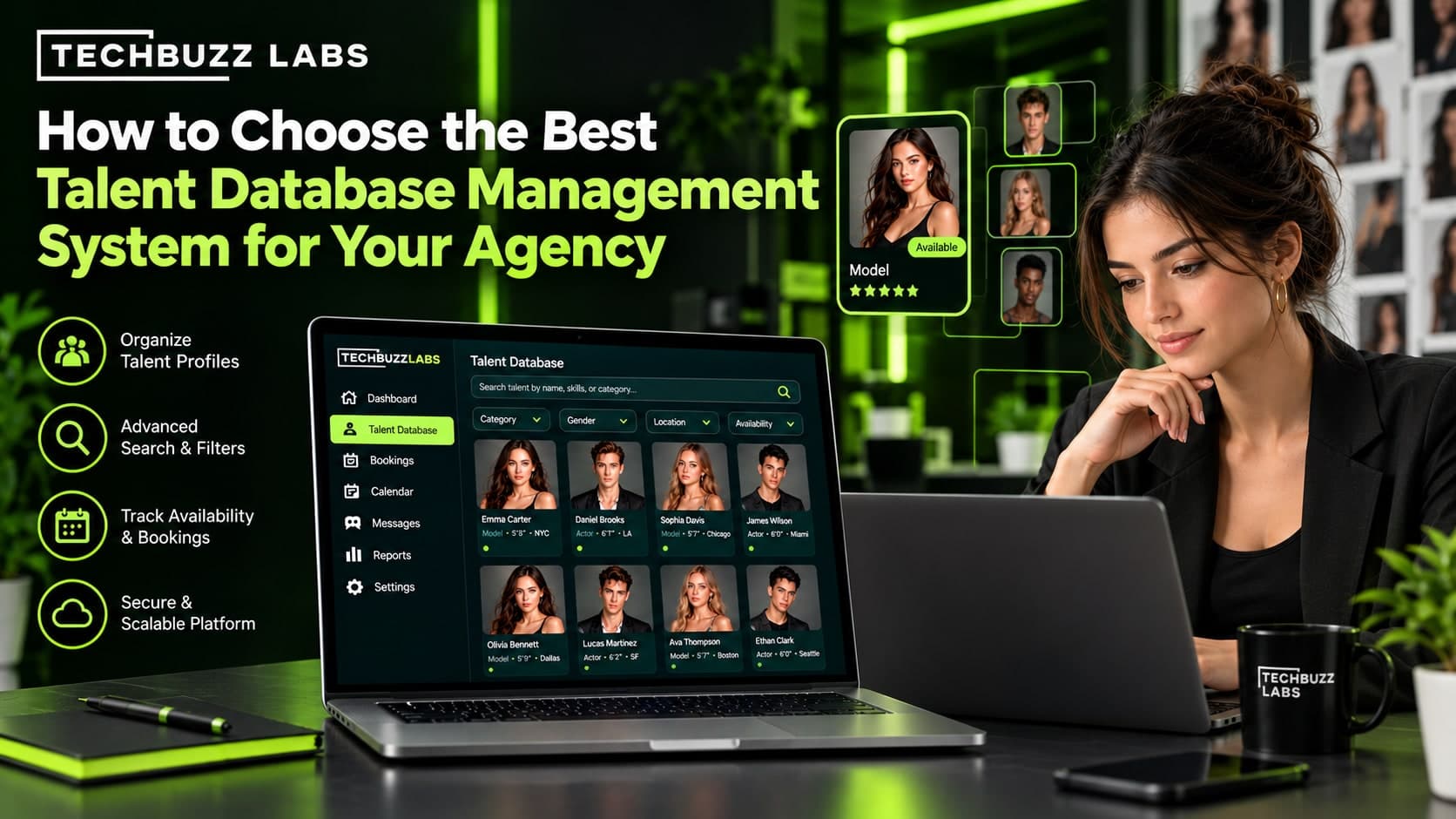
How to Choose the Best Talent Database Management System
The best platform depends on the agency's roster size, casting volume, team structure, budget, and existing tools.
Before committing to a solution, consider the following steps:
Identify your biggest operational challenges. Determine whether the main issue is profile management, casting coordination, client communication, or booking visibility.
Prioritize essential features. Select the capabilities that directly support daily work rather than paying for features the team will rarely use.
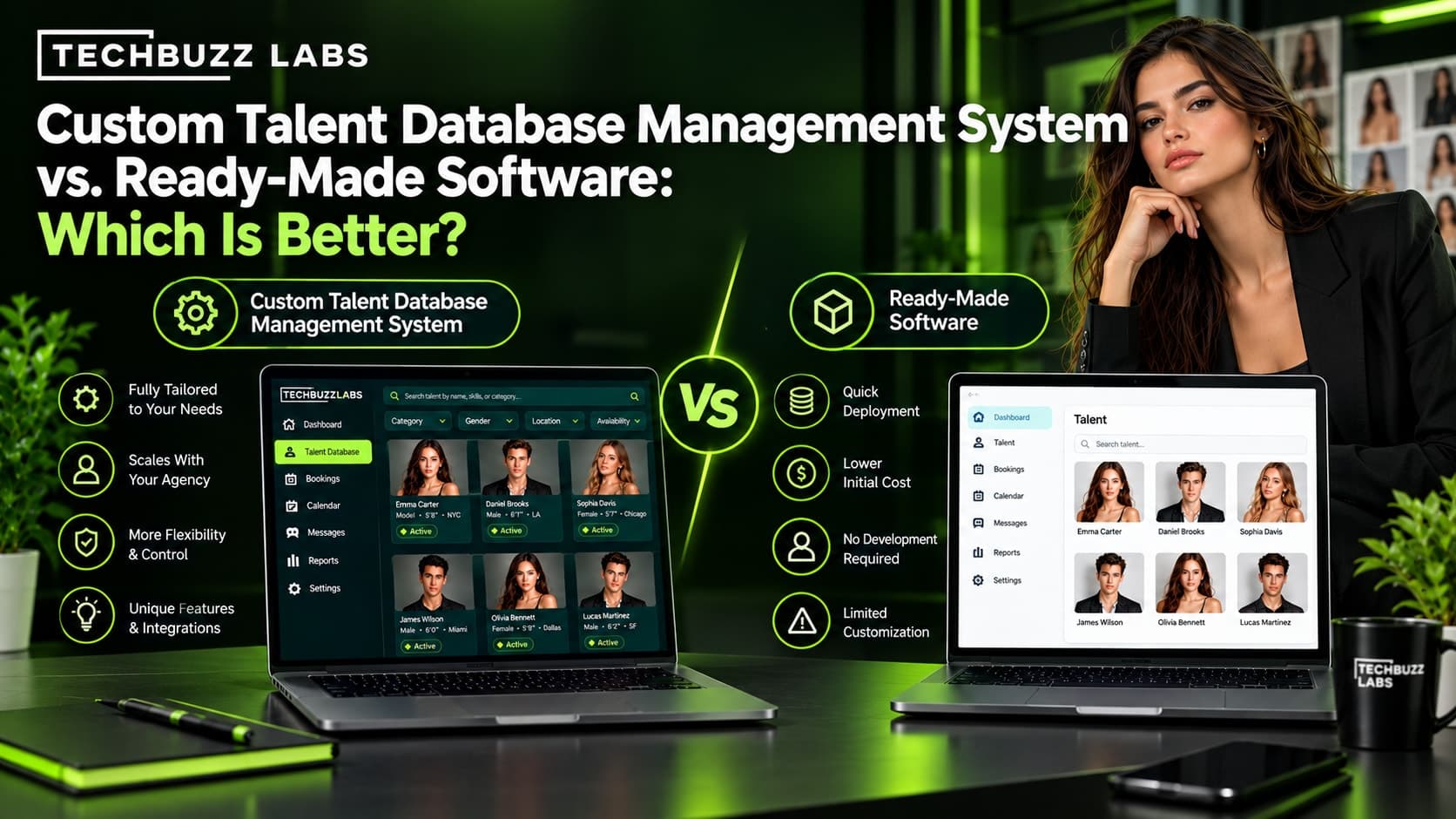
Evaluate customization. Ready-made software may be suitable for standard workflows, while custom agency software can support specialized profile fields, casting stages, client portals, and integrations.
Test realistic workflows. Ask vendors to demonstrate how the system handles a casting brief, talent search, submission, feedback, and booking.
Compare total costs. Consider setup, data migration, training, subscriptions, support, integrations, and ongoing maintenance.
Plan for growth. Choose a platform that can accommodate additional talent profiles, team members, projects, and operational requirements.
A phased rollout can help the agency migrate existing records, train staff, and refine processes before introducing the system across the entire business.
How TechBuzz Labs Supports Modeling and Casting Agencies
TechBuzz Labs focuses on technology solutions for modeling and casting agencies, including custom talent management systems designed around agency workflows.
For agencies that have outgrown spreadsheets and disconnected applications, a customized platform can bring talent profiles, casting pipelines, availability, client information, submissions, and booking records into one coordinated system.
The appropriate solution depends on each agency's requirements. A smaller agency may prioritize a searchable talent database and basic booking records, while a growing agency may need casting pipelines, client portals, digital comp cards, automated notifications, and more advanced reporting.
Agencies can explore the TechBuzz Labs website to learn more about its custom talent management system offering.
The goal is to identify the workflows that consume the most time, define the features that address those challenges, and build a practical system that can adapt as the agency grows.
Conclusion
The best talent database management system for modeling and casting agencies does more than store contact details. It connects talent profiles, portfolios, casting calls, submissions, client feedback, availability, and bookings within an organized workflow.
For U.S. agencies managing growing talent rosters and multiple projects, the right platform can improve information accuracy, reduce repetitive administration, and support more efficient collaboration.
By evaluating search capabilities, portfolio management, casting workflows, CRM integration, automation, security, and scalability, agencies can select a system that meets their current needs and supports future growth.