Best Talent Management Software for Growing Agencies in 2026
But which features should growing agencies prioritize, and how can they choose a platform that supports long-term success?
As modeling agencies, talent agencies, and casting companies expand, managing talent profiles, client relationships, casting requests, and booking schedules becomes increasingly challenging. Spreadsheets and disconnected applications may work for a small team, but they can create delays and communication problems as the business grows.
The best talent management software helps agencies organize their operations, improve talent searches, manage bookings, and coordinate projects from one platform. In 2026, agencies are also looking for smarter automation, AI-assisted matching, and integrations that reduce repetitive administrative work.
What Is Talent Management Software for Agencies?
Talent management software is a digital platform designed to help agencies organize and manage the people they represent. Unlike traditional HR software, which focuses on employees, agency-focused platforms support talent profiles, portfolios, client requests, casting submissions, availability, and bookings.
For example, a modeling agency can use this software to maintain model profiles, upload portfolio images, filter talent according to campaign requirements, and track client selections.
A centralized system makes it easier for agents, bookers, and administrators to access relevant information and coordinate daily activities.
Why Growing Agencies Need Talent Management Software in 2026
As an agency expands, its workload usually becomes more complex. More talent profiles, clients, projects, and booking requests require better organization.
Without an effective system, employees may spend too much time searching through files, updating spreadsheets, sending individual emails, and checking availability manually.
Talent management software can help agencies:
Organize large talent databases.
Reduce repetitive administrative tasks.
Improve communication between teams.
Track casting and booking activities.
Maintain accurate talent information.
Monitor project progress.
Support business expansion.
In 2026, AI and workflow automation are also becoming important considerations when agencies evaluate recruitment and talent-related technology. However, agencies should prioritize practical improvements rather than choosing software simply because it advertises AI features.
Essential Features of the Best Talent Management Software
Not every platform provides the same capabilities. Growing agencies should evaluate software based on the features that directly support their operations.
1. Centralized Talent Database Management
A centralized database is one of the most important features for any growing agency. It allows employees to store and manage talent information in one organized location.
Look for features such as:
Detailed talent profiles
Contact information and experience
Portfolio images and videos
Skills, measurements, and categories
Custom profile fields
Advanced search and filtering
For modeling agencies, these capabilities make it easier to identify suitable models for fashion campaigns, commercial projects, lifestyle advertisements, and other assignments.
2. Model Portfolio Management
Digital portfolios help agencies present talent professionally to potential clients. Instead of sharing images and profile information through separate files, employees can manage portfolios within the platform.
Useful capabilities include image and video uploads, profile editing, portfolio categorization, document storage, and controlled profile sharing.
An organized portfolio system also makes it easier to update talent information when new photographs, measurements, or professional experience become available.
3. Casting and Booking Management
Casting and booking workflows can become complicated when agencies handle multiple projects simultaneously.
The software should allow teams to create casting projects, review submissions, build shortlists, track client feedback, and confirm bookings.
Availability calendars and scheduling tools are particularly useful because they help agents identify potential conflicts before confirming assignments.
For example, when a fashion brand requests models for an upcoming campaign, an agent should be able to search the database, shortlist suitable candidates, share profiles, and track client decisions through a connected workflow.
4. Client Relationship Management
Client management is another essential requirement for growing talent agencies.
A built-in CRM system can organize client contact information, inquiries, communication histories, preferences, and previous projects.
It can also help teams track new opportunities and follow up on outstanding requests.
When client information is connected to casting and booking records, employees can understand previous interactions without searching through multiple applications.
5. AI-Powered Talent Matching
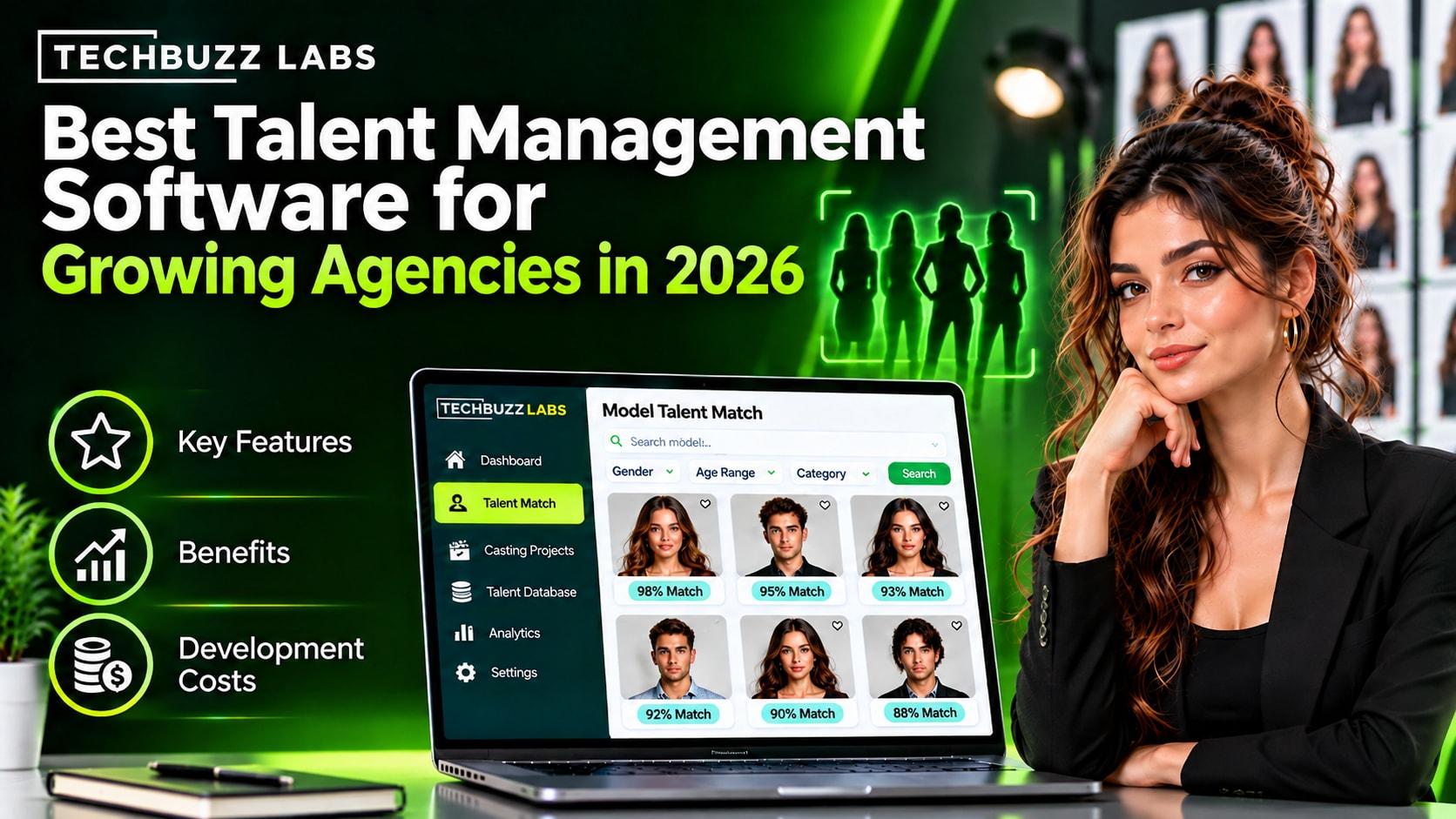
AI-assisted matching is an increasingly relevant feature in 2026. It can help agencies identify potential talent based on project requirements and information stored in their databases.
For example, an agency may need models with particular experience, location, measurements, or availability. Matching tools can help narrow the search and suggest relevant profiles.
However, AI recommendations should support professional judgment rather than replace it. Agencies should check how matching criteria work, whether recommendations can be reviewed, and how personal information is handled.
6. Workflow Automation and Reporting
Automation can reduce repetitive tasks such as sending booking reminders, updating submission statuses, notifying agents about profile changes, and following up with clients.
Reporting dashboards can also help agency managers monitor booking activity, project progress, database growth, and team performance.
These insights make it easier to identify operational bottlenecks and decide where additional improvements are needed.
How to Choose the Right Software for a Growing Agency
Before selecting a platform, evaluate your agency's current operations and future requirements.
Consider these factors:
Ease of use: Employees should be able to navigate the platform without extensive technical training.
Scalability: The system should support additional users, talent profiles, clients, and projects as your agency grows.
Customization: Check whether the software can accommodate your specific casting, booking, and portfolio workflows.
Integrations: Review whether it connects with your existing email, calendar, file storage, and business applications.
Security: Look for access permissions, secure authentication, backups, and clear data protection policies.
Total cost: Compare subscription fees, implementation costs, additional user charges, training, integrations, and ongoing maintenance.
It is also useful to request a demonstration and test the platform using a realistic agency workflow before making a final decision.
Ready-Made vs. Custom Talent Management Software
Ready-made platforms can be suitable for agencies that need standard features and want to start quickly. They generally require less initial investment, although customization may be limited.
Custom talent management software is designed around an agency's specific requirements. It can include specialized talent databases, portfolio management, casting workflows, client portals, AI-assisted matching, and customized reporting.
Custom development may be particularly useful when an agency manages a large database, operates across multiple locations, or needs integrations and workflows that existing platforms cannot adequately support.
The right choice depends on the agency's budget, operational complexity, and long-term plans.
How TechBuzz Labs Supports Growing Talent Agencies
Growing agencies sometimes discover that standard software does not fully support their working processes. They may need more advanced database management, customized booking workflows, specialized portfolio tools, or better connections between different business operations.
TechBuzz Labs helps businesses explore custom software development solutions based on their operational requirements.
For modeling and talent agencies, a tailored platform can bring talent profiles, digital portfolios, casting management, client communication, booking operations, and reporting into one connected system.
By identifying essential requirements before development begins, agencies can invest in software that addresses real workflow challenges and supports future expansion.
Final Thoughts
The best talent management software for growing agencies in 2026 should do more than store contact information. It should help teams manage talent databases, organize portfolios, coordinate casting projects, maintain client relationships, and streamline bookings.
Agencies should compare platforms based on usability, automation, security, scalability, and long-term costs. While ready-made software can be a practical starting point, custom solutions may offer greater flexibility for businesses with specialized requirements.
Ultimately, the right platform is one that simplifies daily operations, helps employees work efficiently, and gives the agency a stronger foundation for sustainable growth.