How to Choose the Best Talent Management Software for Your Agency
A well-designed software solution brings these activities together and helps your team work more efficiently.
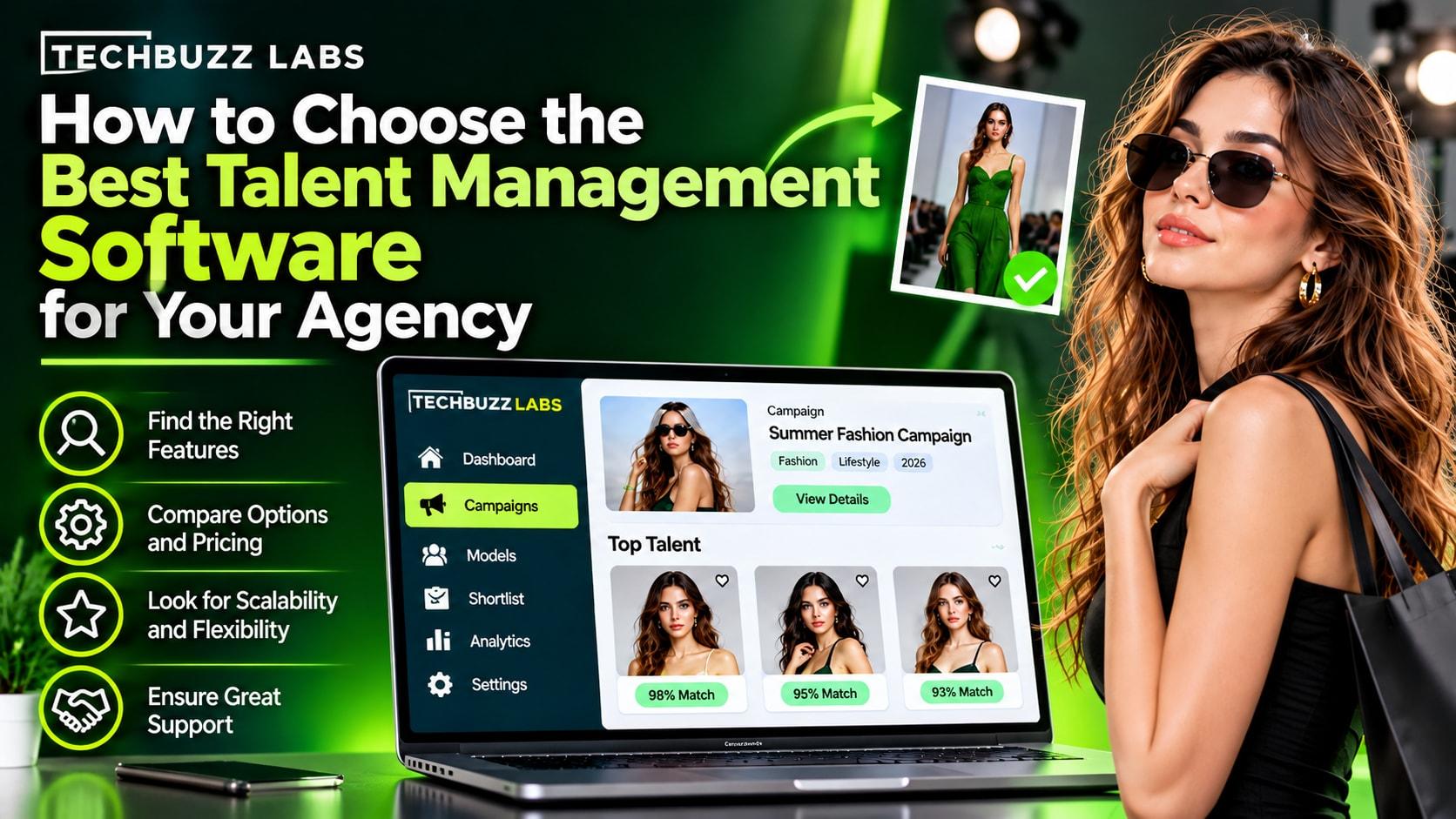
The right talent management software can help an agency organize its talent database, manage client relationships, streamline bookings, and reduce time spent on repetitive administrative tasks. Whether you operate a modeling agency, talent agency, casting company, or staffing business, choosing the right platform is important for long-term growth.
As your agency expands, managing talent profiles, availability, client requests, submissions, and booking schedules through spreadsheets and separate tools can become difficult. But with so many platforms available, how do you choose the best talent management software for your agency? Here are the key factors to consider.
1. Understand Your Agency's Specific Requirements
Before comparing software providers, identify the challenges your agency wants to solve. Different agencies have different operational needs.
For example, a modeling agency may need detailed model portfolios, measurements, photos, videos, and availability tracking. A casting agency may prioritize casting submissions, client shortlists, project management, and feedback collection. A staffing agency may need candidate tracking, job orders, placement management, and timesheets.
Start by reviewing your current workflow and identifying where delays or manual work occur.
Consider questions such as:
How many talent profiles does your agency manage?
Do you handle multiple client projects simultaneously?
How do you track talent availability and bookings?
Do you need automated communication?
Which reports would help you make better business decisions?
Understanding these requirements will help you avoid paying for features your agency does not need.
2. Look for a Centralized Talent Database
A centralized talent database is one of the most important features of agency management software. It allows your team to store and manage talent information in one organized location.
Look for a platform that supports:
Detailed talent profiles and contact information
Portfolio images and video uploads
Skills, measurements, experience, and categories
Custom profile fields
Advanced search and filtering
Profile updates and internal notes
For modeling and talent agencies, advanced filtering is particularly useful. Agents should be able to find suitable talent based on specific project requirements without manually reviewing hundreds of profiles.
A well-organized database also reduces duplicate records and helps employees access accurate information when communicating with clients.
3. Evaluate Booking and Casting Management Features
Managing talent is not limited to maintaining profiles. Agencies also need to coordinate auditions, castings, client selections, bookings, and schedules.
The software should allow your team to track each project from the initial client request to the final booking confirmation.
Important features include:
Casting and project creation
Talent submission tracking
Client shortlists and selection management
Availability calendars
Booking confirmations
Scheduling and reminders
Project status updates
For example, when a fashion brand requests models for a campaign, agents should be able to search the database, create a shortlist, share profiles with the client, and track responses within the same platform.
Connecting these activities can reduce communication gaps and make the booking process easier to manage.
4. Check Client and Communication Management
Strong client relationships are essential for agencies that regularly work with brands, photographers, production companies, casting directors, and other businesses.
Choose software that includes client relationship management (CRM) features. These tools help agencies organize client records, track inquiries, maintain communication histories, and monitor project opportunities.
Useful capabilities include:
Centralized client and contact records
Communication history
Inquiry and lead tracking
Client preferences and requirements
Automated email notifications
Submission feedback tracking
When client information is connected to casting and booking records, agents can understand previous interactions and respond more effectively to new opportunities.
5. Consider Automation and AI-Powered Features
Automation can help agencies reduce repetitive administrative work. Instead of manually updating every project or sending individual notifications, teams can use automated workflows for routine tasks.
Depending on the platform, automation may support booking reminders, profile update notifications, submission status changes, and client follow-ups.
AI-powered features can also help identify potential talent matches by comparing profile information with project requirements. For example, an agency may use matching tools to shortlist models based on experience, location, availability, and other relevant criteria.
However, do not select software simply because it advertises AI. Ask vendors to demonstrate how their matching features work with realistic agency data. Human review should remain part of important casting and selection decisions.
6. Prioritize Security and Data Protection
Talent management platforms store valuable information, including personal details, portfolios, contracts, and client records. Protecting this information should be a priority.
Before choosing a provider, review its security measures and data management policies.
Look for:
Role-based access permissions
Secure authentication options
Data encryption
Regular backups
Audit logs
Clear data retention and deletion controls
If your agency represents minors, ask how the platform restricts access to their information and supports guardian contact records. Agencies serving US clients should also review applicable privacy, contractual, and industry requirements rather than assuming one security feature covers every obligation.
7. Compare Pricing, Scalability, and Integrations
The cheapest software is not always the most cost-effective option. Compare the complete cost of using each platform, including subscriptions, setup, onboarding, training, integrations, and additional storage or user fees.
Scalability is equally important. Your software should support a growing talent database, additional employees, more clients, and increasing project volumes without creating unnecessary complexity.
Also check whether the platform integrates with tools your agency already uses, such as email services, calendars, accounting software, and file storage systems.
A connected technology setup can reduce duplicate data entry and make daily operations more consistent.
8. Test the Software Before Making a Decision
A product demonstration or free trial can reveal whether a platform actually fits your agency's workflow.
Rather than focusing only on the features shown in a sales presentation, test a realistic process. Add a talent profile, search for suitable candidates, create a casting project, share a shortlist, record client feedback, and confirm a booking.
Ask your team to evaluate the platform as well. Agents, bookers, and administrators may use different features throughout the day, so their feedback matters.
You should also ask the vendor about onboarding support, data migration, training, technical assistance, and response times when problems occur.
How TechBuzz Labs Can Support Agency Software Development
For agencies with specialized workflows, standard software may not provide every feature they need. Custom talent management software offers another option by allowing businesses to build functionality around their own processes.
TechBuzz Labs helps businesses explore custom software development solutions designed around operational requirements. For modeling and talent agencies, a tailored platform can bring together talent databases, portfolio management, casting workflows, client communication, booking operations, and reporting.
The goal is to create a system that supports the agency's actual working process instead of forcing employees to adapt to unnecessary limitations.
Final Thoughts
Choosing the best talent management software requires more than comparing feature lists. Agencies should evaluate database management, casting and booking workflows, client communication, automation, security, scalability, and overall cost.
Start with your most important operational challenges, shortlist platforms that address them, and test each option using real agency scenarios.
The right solution should make talent information easier to manage, improve coordination between teams, and support your agency as its client base and talent roster grow.