How Talent Management Software Helps Agencies Organize and Manage Talent
The best approach is to evaluate your agency's current challenges, identify the features you genuinely need, and choose a solution that can support your operations as the business expands.
Managing a growing talent database can become challenging for modeling agencies, talent agencies, and casting companies. As agencies represent more models, actors, performers, and other professionals, keeping profiles, portfolios, contact information, availability, and booking records organized requires significant time and coordination.
Traditional methods such as spreadsheets, email folders, and separate document storage systems may work when an agency has a small roster. However, as the business grows, these methods can lead to duplicate records, outdated information, missed opportunities, and communication delays.
Talent management software provides a centralized way to organize talent information and manage daily agency operations. By bringing important activities into one platform, agencies can improve their workflows, find suitable talent faster, and maintain better relationships with clients and represented professionals.
What Is Talent Management Software?
Talent management software is a digital platform that helps agencies manage the people they represent and the activities associated with their work.
For modeling and talent agencies, it can include tools for storing talent profiles, managing digital portfolios, tracking availability, organizing casting submissions, coordinating bookings, and maintaining client records.
Instead of switching between multiple applications, employees can access important information through a centralized system.
The exact features depend on the software provider and the agency's requirements, but the main objective is to make talent information easier to organize, update, search, and manage.
1. Centralizes All Talent Information
One of the biggest challenges for growing agencies is keeping talent information in different locations. An agent might have contact details in a spreadsheet, portfolio photographs in cloud storage, and booking history in email conversations.
This makes it difficult for employees to find accurate information quickly.
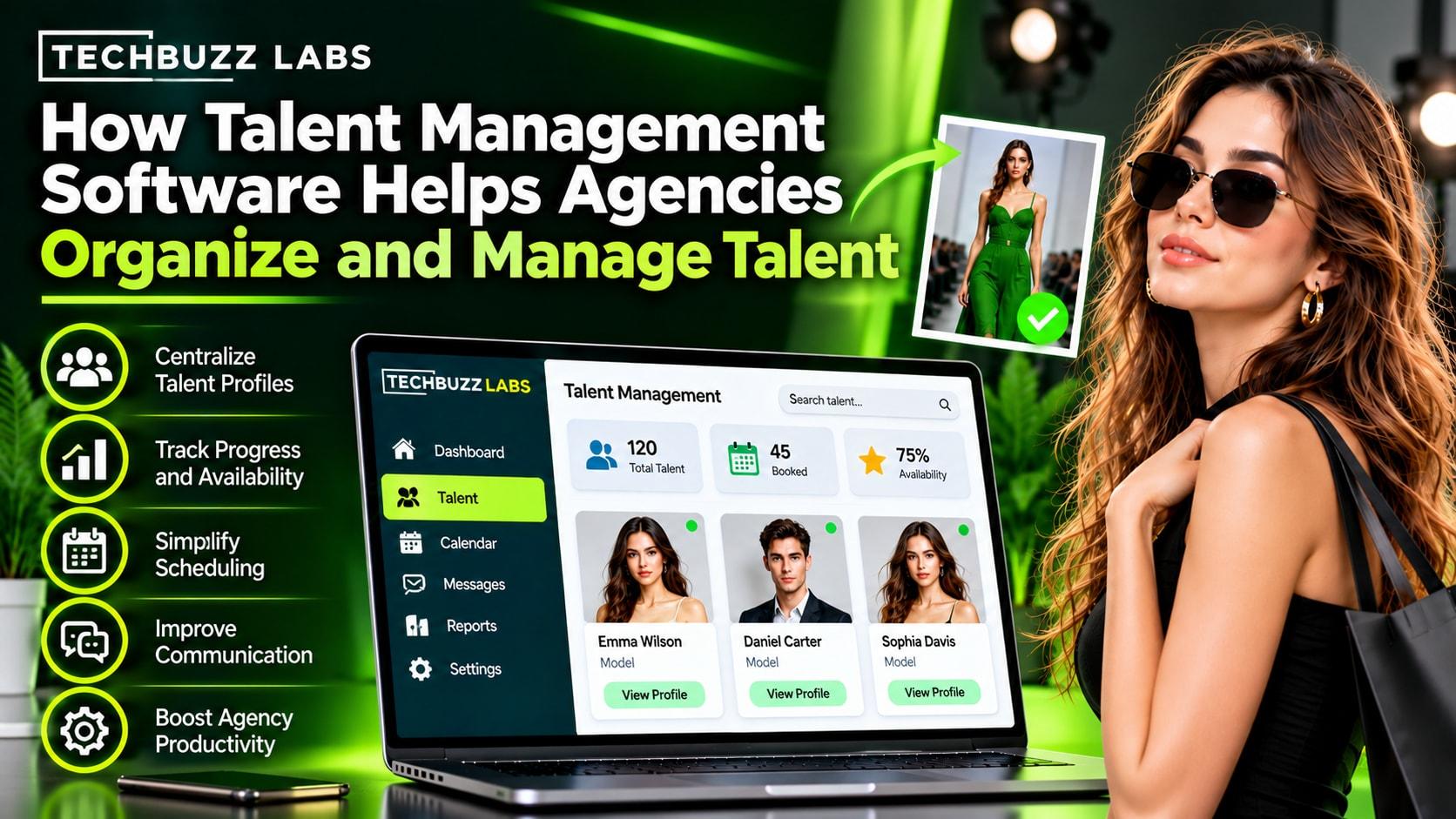
Talent management software solves this problem by creating centralized talent profiles. Each profile can contain:
Full name and contact information
Professional experience and skills
Portfolio photographs and videos
Measurements and physical attributes where relevant
Location and availability
Previous projects and booking history
Internal notes and documents
When information is stored in one organized location, employees can access the details they need without searching through multiple files.
2. Makes Talent Searching Faster and Easier
Finding the right talent for a client project can take considerable time, particularly when an agency manages hundreds or thousands of profiles.
Talent management software often includes advanced search and filtering capabilities that allow agents to narrow down profiles based on specific requirements.
For example, a fashion brand may need models in a particular location with commercial modeling experience and availability during a specific campaign period.
Instead of reviewing every profile manually, an agent can use available filters to identify potential candidates.
Useful search criteria may include:
Talent category and professional skills
Location and travel preferences
Experience and portfolio type
Availability
Relevant project history
This makes the selection process more organized and helps agents respond to client requests more efficiently.
3. Keeps Talent Portfolios Organized and Updated
Professional portfolios are important for modeling agencies, casting companies, and other talent businesses. Clients often need to review photographs, videos, experience, and professional details before selecting candidates.
A talent management platform can keep these materials connected to individual profiles.
Depending on the system, agencies may be able to upload new images, replace outdated photographs, organize portfolio categories, update professional information, and share selected profiles with clients.
This reduces the need to collect portfolio materials manually whenever a new casting opportunity arrives.
It also helps agencies present more consistent and up-to-date talent information.
4. Improves Availability and Booking Management
Managing talent availability becomes more complicated when an agency handles several projects at the same time.
Without a centralized system, agents may need to contact multiple people to confirm schedules or check previous booking records before offering someone for a new assignment.
Talent management software can provide availability calendars, booking records, scheduling tools, and project status updates.
For example, when a client requests talent for a commercial advertisement, an agent can review potential candidates and check their recorded availability before proceeding.
Some platforms also support automated reminders and booking notifications, helping employees stay informed about important schedule changes.
5. Simplifies Casting and Client Coordination
Talent management involves more than maintaining profiles. Agencies also need to manage client requests, casting submissions, shortlists, feedback, and final selections.
A connected platform can help organize these activities in a structured workflow.
Common capabilities include:
Creating and managing casting projects
Selecting suitable talent profiles
Sharing submissions with clients
Tracking client feedback
Monitoring selection progress
Recording booking confirmations
For example, an agency working with a fashion brand can create a casting project, shortlist suitable models, share their portfolios, and track the client's decisions.
This reduces communication gaps and gives team members a clearer view of each project's progress.
6. Reduces Repetitive Administrative Work
Manual administration can consume a significant portion of an agency's working hours.
Employees may repeatedly update records, send booking confirmations, organize documents, follow up on submissions, and notify talent about project changes.
Talent management software can automate some of these routine activities.
Depending on available features, automation may support:
Booking reminders
Submission status notifications
Profile update alerts
Client follow-up reminders
Automated workflow updates
Scheduled reports
Reducing repetitive work gives agents more time to focus on talent relationships, client communication, and business development.
7. Supports Better Team Collaboration
In growing agencies, multiple employees may work with the same talent profiles, clients, and casting projects.
Without shared information, one employee might not know that another agent has already contacted a model or updated a booking.
A centralized platform can improve collaboration by giving authorized team members access to relevant records and project updates.
Role-based permissions can also help agencies control which employees can view, edit, or manage specific information.
This creates a more organized working environment and reduces confusion between departments.
8. Provides Useful Business Insights
Agency managers need to understand how their business is performing. Talent management software with reporting and analytics can help organize information about bookings, client activity, casting projects, and talent database growth.
Depending on the platform, reports may help managers evaluate:
Booking activity over time
Active and completed projects
Client inquiry trends
Talent availability
Submission and selection progress
Team workload
These insights can help agencies identify workflow problems and make more informed operational decisions.
Why Growing Agencies May Need Custom Talent Management Software
Ready-made platforms can provide useful features for agencies with standard requirements. However, some businesses need more flexibility as their operations become complex.
For example, a modeling agency may require specialized portfolio categories, advanced talent filters, custom client portals, and unique booking approval processes.
Custom talent management software can be developed around these specific requirements rather than forcing the agency to adapt every workflow to an existing platform.
TechBuzz Labs helps businesses explore custom software development solutions designed around their operational needs. For talent and modeling agencies, a tailored platform can connect talent databases, portfolio management, casting workflows, client communication, booking operations, and reporting.
The development process should begin by identifying the agency's challenges and prioritizing the features that provide the most practical value.
Final Thoughts
Talent management software helps agencies organize and manage talent by bringing important information and daily workflows into one connected platform.
From centralized profiles and digital portfolios to availability tracking, casting management, and automated notifications, the right solution can reduce administrative complexity and improve team coordination.
For growing modeling and talent agencies, investing in an appropriate software platform can create a more reliable foundation for managing larger talent databases and handling more client projects.