Bubble.io vs Custom Code: Which Is Right for Your Startup MVP in 2026?
Launching a startup in 2026 requires speed, smart budgeting, and fast validation. For most founders, one of the first major decisions is choosing how to build the MVP.
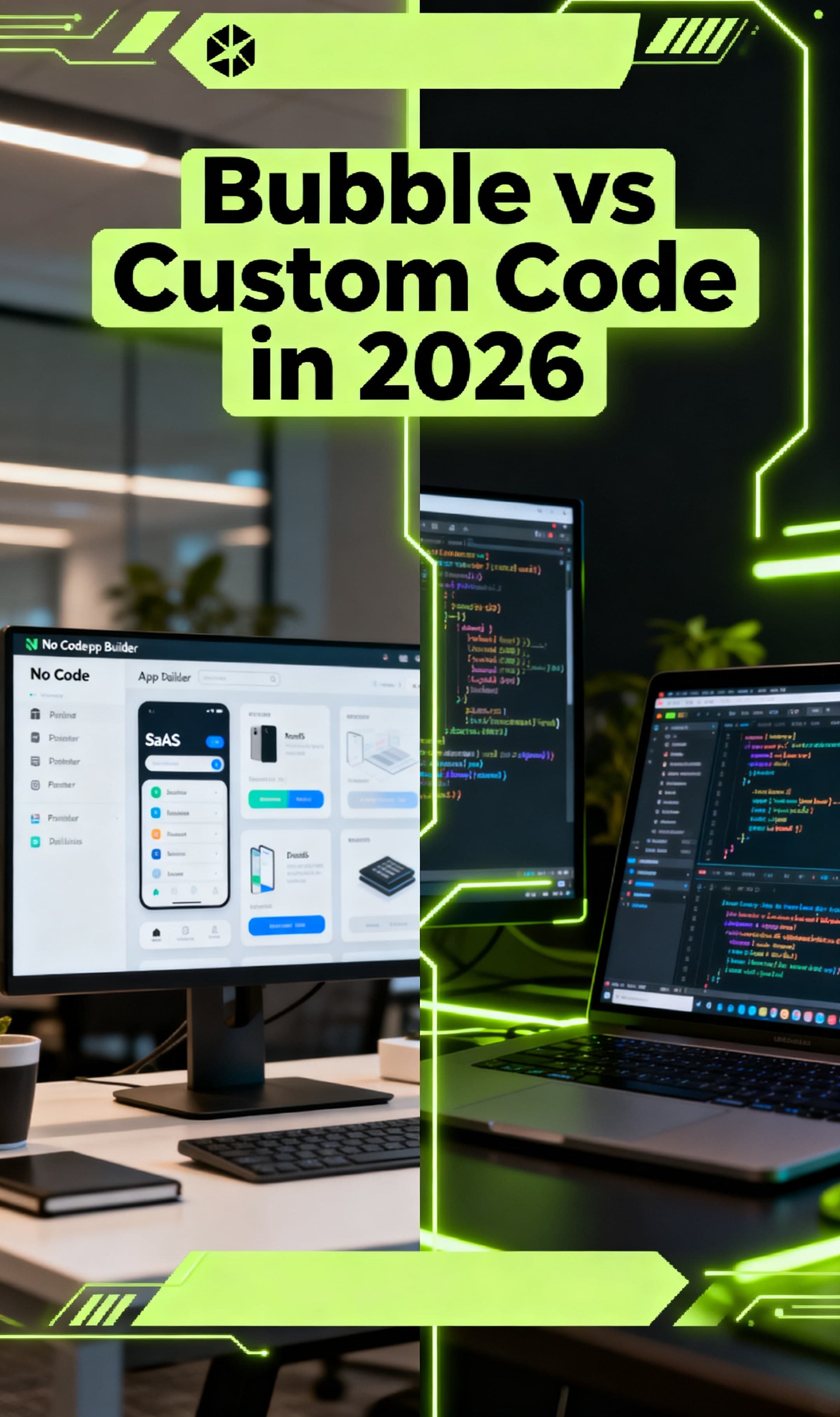
Bubble.io vs Custom Code: Which Is Right for Your Startup MVP in 2026?
Launching a startup in 2026 requires speed, smart budgeting, and fast validation.
For most founders, one of the first major decisions is choosing how to build the MVP.
Should you use Bubble.io or invest in custom code?
Across the USA startup ecosystem, and increasingly in innovation hubs like Dallas Texas, this question has become one of the most searched topics among founders, SaaS builders, and early stage entrepreneurs.
The right choice depends on your product goals.
Bubble.io continues to be one of the strongest no code platforms for MVP development.
Its biggest advantage is speed.
A founder can move from idea to working product in weeks rather than months.
This is especially useful when the goal is validation.
If you need to test market demand, show traction to investors, or onboard your first users quickly, Bubble allows you to launch much faster than traditional development.
For example, SaaS dashboards, marketplaces, CRM tools, service platforms, and internal workflow systems can all be built without hiring a full engineering team.
This significantly reduces cost.
For startups with limited capital, this can be the difference between launching and never getting started.
Another major advantage is iteration speed.
In early stage startups, ideas evolve quickly.
Features change.
User feedback reshapes the roadmap.
Bubble makes it easy to test new workflows without waiting on long development cycles.
This agility is often critical in the first six months of a startup.
However, custom code becomes more valuable as the business grows.
If your product requires complex backend logic, advanced security layers, real time performance, or large scale traffic handling, custom development may be the better long term solution.
Products such as fintech tools, AI powered SaaS platforms, data heavy systems, or enterprise workflow software often need deeper technical control.
Custom code gives complete ownership over the architecture.
It also allows better scalability over time.
The challenge is cost.
For many USA startups, custom MVP development can easily range from tens of thousands of dollars depending on scope.
This is why many founders now follow a hybrid approach.
They launch first with Bubble.
Then they migrate to custom code after achieving product market fit.
For Dallas based founders and Texas startups, the smartest approach in 2026 is often validation first.
Perfection can come later.
The key question is not which platform is technically superior.
The key question is which option gets real users into your product fastest.
For most early stage MVPs, Bubble wins that race.