Model Talent Matching Software vs. Manual Talent Search: Which Saves More Time?
But which approach actually saves more time: dedicated software or traditional manual talent search? Let's compare both methods and understand what growing modeling agencies should consider.
Finding the right models for a fashion campaign, commercial advertisement, or promotional project requires time, organization, and careful evaluation. Modeling agencies must review portfolios, compare experience, check availability, and identify candidates who meet specific client requirements.
When an agency manages hundreds or thousands of model profiles, manual talent searches can become increasingly difficult. Agents may spend hours reviewing spreadsheets, opening individual portfolios, and contacting models to confirm their availability.
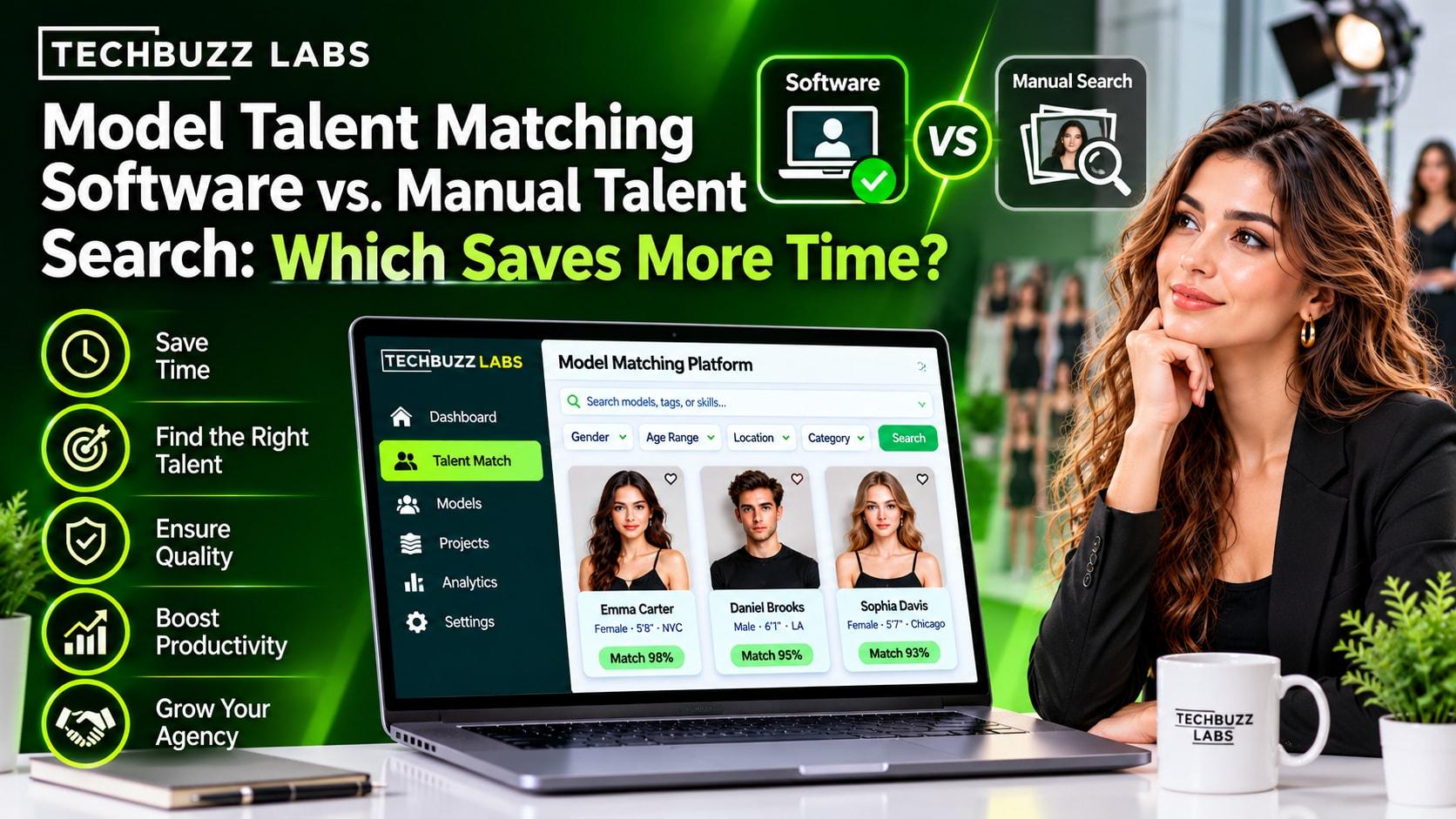
Model talent matching software offers a more organized alternative by combining searchable talent databases, advanced filters, AI-assisted recommendations, and casting management tools.
What Is Manual Talent Search?
Manual talent search involves finding suitable models without using a dedicated automated matching platform. Agency employees typically review talent databases, spreadsheets, emails, portfolios, and other records to identify potential candidates.
For example, a fashion brand may need commercial models in Los Angeles for an upcoming campaign. An agent might manually search the agency's records, review photographs, compare experience, contact potential candidates, and prepare a shortlist.
This approach can work for smaller agencies with limited talent databases. However, as the number of models and casting requests increases, the process becomes more time-consuming.
What Is Model Talent Matching Software?
Model talent matching software is a digital platform designed to connect model profiles with client casting requirements.
It allows agencies to organize talent information, search using multiple criteria, and identify potentially suitable candidates from a centralized database.
Depending on the platform, features may include:
Centralized model profile management
Advanced search and filtering
AI-assisted talent recommendations
Digital portfolio management
Availability tracking
Casting submissions and client feedback
Booking and scheduling management
Instead of reviewing every profile individually, agents can use these tools to narrow down their search and focus on relevant candidates.
Model Talent Matching Software vs. Manual Search: Key Differences
Comparison factorManual talent searchMatching softwareProfile searchingIndividual review and spreadsheetsCentralized search and filtersCandidate selectionMostly manual comparisonFilters and AI-assisted recommendationsPortfolio managementSeparate files and foldersOrganized digital portfoliosAvailability checksCalls, emails, and messagesConnected availability recordsClient submissionsManual preparationDigital shortlists and submissionsFollow-upsIndividual remindersAutomated notificationsReportingManual trackingCentralized reports and analyticsScalabilityIncreasing administrative workloadMore structured workflows
The main difference is how much repetitive work the agency needs to perform manually.
6 Ways Matching Software Saves Time for Modeling Agencies
1. Faster Searches Across Large Talent Databases
Searching through hundreds of model profiles manually can take considerable time. Agents may need to open records individually and compare details before identifying suitable candidates.
Talent matching software makes the process faster through advanced filters.
Agents can search by location, modeling category, experience, skills, availability, and other project-specific criteria.
For example, an agency receiving a fashion campaign request in New York can combine relevant filters to narrow its database to a smaller group of potential candidates.
This reduces unnecessary profile reviews and helps agents focus on relevant talent.
2. Less Time Spent Reviewing Portfolios
Portfolio review is an essential part of model selection. However, finding the right photographs and professional experience can become difficult when information is scattered across different folders and applications.
Matching software connects digital portfolios with individual talent profiles.
Agents can organize photographs, experience details, and portfolio links in one place. Some advanced platforms also support image tagging and AI-assisted portfolio search.
This makes it easier to locate relevant portfolio materials and prepare client presentations.
3. Faster Candidate Recommendations With AI
AI-assisted matching can compare casting requirements with information stored in model profiles.
For instance, a client may request commercial models with previous advertising experience who are available for a campaign during a particular week.
An AI-enabled platform can analyze these requirements and recommend potentially relevant candidates.
This reduces the time needed for initial candidate discovery. Agents should still review recommendations to ensure that candidates meet creative requirements and client expectations.
4. Reduced Time Spent Checking Availability
In manual workflows, agents may need to contact several models individually to confirm whether they are available.
Software with availability tracking can make scheduling information easier to access.
Agents can review model calendars, identify potential conflicts, and send automated casting notifications.
The benefit depends on accurate and regularly updated availability records, but the system can reduce repeated communication and unnecessary scheduling work.
5. Faster Client Submissions and Feedback
Preparing candidate shortlists manually often involves collecting photographs, creating presentations, and sending separate emails.
Matching software can organize these activities through digital submission tools and client portals.
Clients can review profiles, shortlist candidates, provide feedback, and request alternatives through a connected system.
This reduces the time agency employees spend organizing submissions and searching through email conversations.
6. Less Administrative Work Across Casting Projects
Casting involves several activities beyond finding models. Agencies must manage project information, communicate with talent, track client decisions, and coordinate bookings.
A connected software platform can automate repetitive tasks such as notifications, reminders, status updates, and follow-up activities.
This allows agency teams to spend more time evaluating candidates, developing client relationships, and managing business operations.
Which Method Saves More Time?
For agencies managing large talent databases or multiple casting projects, model talent matching software generally offers greater time-saving potential.
Manual searches may be sufficient when an agency represents a small number of models and receives occasional casting requests. However, the administrative workload can increase significantly as the business expands.
Software helps reduce repetitive activities by organizing information and connecting different stages of the casting process.
The biggest advantage is not simply faster searching. It is reducing the time spent moving between disconnected tasks, from reviewing profiles to confirming bookings.
Actual time savings depend on database quality, platform functionality, staff adoption, and how well the software fits the agency's workflow.
Is Custom Model Talent Matching Software Worth the Investment?
Ready-made platforms may be suitable for agencies with standard requirements. They can provide basic talent management and casting functionality without requiring a fully customized development project.
However, growing agencies may need specialized search filters, unique matching rules, custom client portals, or integrations with existing business systems.
Custom model talent matching software allows agencies to build features around their specific operations.
A practical approach is to begin with essential functionality, such as centralized profiles, advanced search, portfolio management, and casting submissions. AI-assisted matching and advanced automation can be introduced as the agency grows.
How TechBuzz Labs Helps Agencies Improve Talent Matching
Choosing the right technology can help modeling agencies reduce manual work and improve casting operations.
TechBuzz Labs helps businesses explore custom software solutions designed around their operational requirements. For modeling agencies, this can include centralized talent databases, intelligent search, AI-assisted recommendations, digital portfolio management, casting automation, and booking workflows.
A tailored solution can help agencies replace disconnected processes with a connected platform that supports both current operations and future growth.
Conclusion
Manual talent searches can work for smaller modeling agencies, but they become increasingly difficult to manage as talent databases and casting requirements grow.
Model talent matching software helps agencies save time through advanced search, organized portfolios, AI-assisted recommendations, availability tracking, and automated casting workflows.
For modeling agencies in the USA, investing in the right platform can reduce repetitive administrative work and create a more efficient approach to talent selection.
The best solution is one that matches the agency's actual workflow, supports its current needs, and provides room for future expansion.