How to Build a Model Talent Matching System for a Modern Modeling Agency
Traditional methods such as spreadsheets, emails, and manual profile searches may work for smaller businesses. However, as an agency expands, these processes can slow down casting decisions and increase administrative workloads.
The modeling industry is becoming more competitive, and agencies need efficient ways to connect models with the right casting opportunities. Managing talent profiles, reviewing portfolios, checking availability, and responding to client requirements can become complicated when an agency works with hundreds of models and multiple brands.
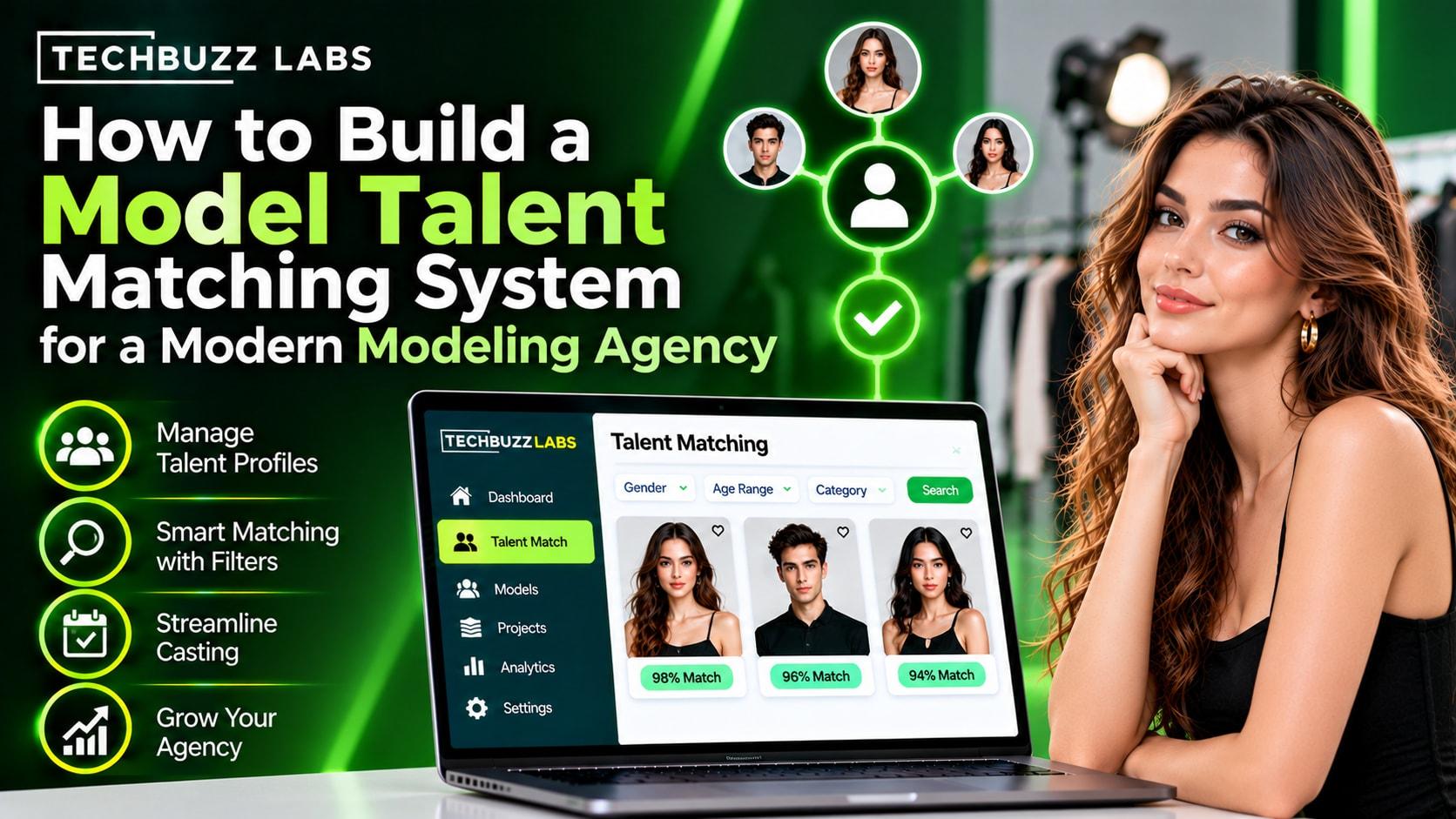
A model talent matching system helps agencies organize talent information and identify suitable candidates based on client requirements. By combining centralized databases, advanced search, AI-assisted recommendations, and casting management tools, agencies can build a more efficient selection process.
For modern modeling agencies in the USA, developing the right system can improve daily operations and support long-term business growth.
What Is a Model Talent Matching System?
A model talent matching system is a digital platform that connects model profiles with casting requirements. It allows agency teams to search their talent database, compare candidate information, create shortlists, and manage casting opportunities.
For example, a fashion brand may need commercial models in Los Angeles for an upcoming advertising campaign. The agency can enter requirements such as location, experience, modeling category, and availability. The system then helps identify profiles that match those criteria.
Depending on its features, the platform may also support portfolio management, client submissions, communication, scheduling, and booking coordination.
Step 1: Identify Your Agency's Requirements
Before development begins, an agency should understand its existing casting and talent management processes.
Start by identifying common operational challenges:
Difficulty searching large model databases.
Incomplete or outdated model profiles.
Time-consuming portfolio reviews.
Manual availability checks.
Disorganized casting submissions.
Delayed client feedback and booking confirmations.
Next, determine who will use the system. Typical users include administrators, talent managers, casting agents, models, and clients.
Each user may require different permissions and functionality. Defining these requirements early helps create a platform that supports actual agency workflows.
Step 2: Build a Centralized Model Database
The talent database is the foundation of a successful matching system.
Every model should have a structured digital profile containing relevant information, such as:
Professional photographs and portfolio links.
Modeling experience and categories.
Measurements and other relevant project details.
Location and travel preferences.
Skills and qualifications.
Availability and booking information.
Contact and agency management details.
The system should allow authorized employees to update profiles and maintain accurate records.
A centralized database reduces information duplication and gives agents a consistent place to find talent information.
Step 3: Develop Advanced Search and Filtering
Once the database is organized, the next step is creating a flexible search system.
Agents should be able to filter candidates according to the requirements of each casting project.
Useful filters may include location, modeling category, experience, skills, availability, and other relevant criteria.
For example, if a client needs lifestyle models for a campaign in Chicago, an agent can combine location, experience, and availability filters to narrow the search.
The platform should also support multiple filters at once and allow users to save useful searches or candidate shortlists.
Step 4: Add AI-Powered Matching Capabilities
AI can make talent discovery more efficient by comparing client requirements with information stored in model profiles.
An AI-assisted system may analyze casting briefs, identify relevant criteria, and recommend candidates based on profile information.
For example, a fashion campaign may require models with commercial experience, a particular location, and availability during specific dates. The system can compare these requirements with the talent database and generate a shortlist for agent review.
Potential AI features include:
Casting brief analysis.
Automated profile recommendations.
Candidate ranking based on relevant criteria.
Search assistance using natural language.
Identification of missing profile information.
AI should support the agency's decision-making process rather than make final casting decisions independently. Human review remains essential for evaluating creative suitability and client expectations.
Step 5: Include Digital Portfolio Management
Portfolio management is another important part of a modern model matching system.
Agents and clients need access to professional photographs, experience details, and relevant portfolio materials when reviewing candidates.
A good platform should support image uploads, portfolio categorization, digital comp cards, profile updates, and secure sharing.
Agencies may also consider image tagging to make portfolio searches easier. Any automated image analysis should be used carefully and transparently, with appropriate privacy protections.
Step 6: Develop Casting and Client Management Tools
Finding suitable models is only one stage of the casting process. Agencies also need to manage client requests, submissions, approvals, and project updates.
A modern matching system can include:
Digital casting brief management.
Candidate shortlist creation.
Client submission portals.
Feedback and approval tracking.
Casting status updates.
Automated notifications and reminders.
These features help agency employees understand the status of every project without searching through multiple email conversations.
Step 7: Connect Availability and Booking Management
A model may match a campaign perfectly but still be unavailable for the required dates.
Connecting availability calendars with talent profiles helps agents check scheduling information before submitting candidates.
Once a client approves a model, the system can move the candidate into a booking workflow. Features may include confirmation records, project schedules, reminders, and booking status updates.
This creates a more connected process from talent discovery to final confirmation.
Step 8: Prioritize Security, Testing, and Scalability
A model talent matching system may contain personal information, professional photographs, contact details, and booking records. Agencies should consider security from the beginning.
Important requirements include:
Role-based access permissions.
Secure authentication.
Appropriate data storage and backups.
Controlled portfolio sharing.
Privacy-conscious handling of personal information.
Regular security updates.
Before launch, test the platform with realistic casting scenarios. Check search accuracy, profile updates, user permissions, notifications, and booking workflows.
The system should also be designed to accommodate future growth, including additional models, users, clients, and integrations.
How Much Does It Cost to Build a Model Talent Matching System?
Development costs depend on functionality, technical complexity, integrations, and the development team's location.
The following are illustrative planning ranges for custom software development, not fixed quotations:
Development levelEstimated cost (USD)FeaturesBasic system$15,000–$40,000Talent database, profiles, and basic searchMid-level system$40,000–$100,000Advanced filters, portfolios, client portals, and casting workflowsAdvanced system$100,000–$250,000+AI-assisted matching, automation, integrations, and analytics
Agencies should also account for hosting, maintenance, security updates, and ongoing improvements.
A phased development approach can help control initial costs. Start with the features that solve the biggest operational problems and introduce advanced functionality as the business grows.
How TechBuzz Labs Helps Build Custom Agency Software
Developing an effective talent matching system requires an understanding of both technology and modeling agency workflows.
TechBuzz Labs helps businesses explore custom software solutions tailored to their operational requirements. Modeling agencies can consider platforms that combine centralized talent databases, digital portfolio management, intelligent search, AI-assisted recommendations, casting management, and booking automation.
By prioritizing essential features and planning for future expansion, agencies can develop software that supports their business rather than relying on disconnected tools.
Conclusion
Building a model talent matching system requires more than creating a searchable database. Agencies need a connected platform that organizes model profiles, evaluates client requirements, supports casting decisions, and manages bookings.
With advanced search, AI-assisted recommendations, digital portfolios, and automated workflows, modern modeling agencies can reduce manual work and improve talent selection.
For agencies in the USA, the right custom software solution can create a stronger foundation for efficient casting, better client communication, and sustainable business growth.