Custom CRM Development for Talent Agencies: What Should Agencies Consider?
A custom CRM should solve these operational problems rather than simply reproduce existing processes in a new software system.
alent agencies manage a large amount of information every day. From talent profiles and client inquiries to casting opportunities, availability, submissions, bookings, and communication, every part of the agency workflow depends on accurate and accessible data. As a talent agency grows, managing these activities through spreadsheets, email, messaging applications, and multiple disconnected platforms can become increasingly difficult.
For talent agencies in the USA, custom CRM development can provide an opportunity to build a system around the agency's actual workflow. Instead of adapting business processes to a generic CRM, agencies can create technology that supports their specific requirements. However, developing a custom CRM requires careful planning. Agencies need to consider their workflows, features, scalability, integrations, data security, usability, and long-term goals before starting development.
Understand the Agency's Current Workflow
The first step in custom CRM development is understanding how the agency currently operates.
A talent agency may have different processes for onboarding talent, managing profiles, receiving casting requests, communicating with clients, checking availability, submitting talent, confirming bookings, and handling follow-ups.
Before development begins, agencies should map these processes and identify where problems currently occur. For example, agents may spend too much time searching for talent, manually updating availability, transferring information between platforms, or following up with clients.
A custom CRM should solve these operational problems rather than simply reproduce existing processes in a new software system.
Identify the Most Important CRM Features
Every talent agency has different requirements, so agencies should determine which features are essential before development.
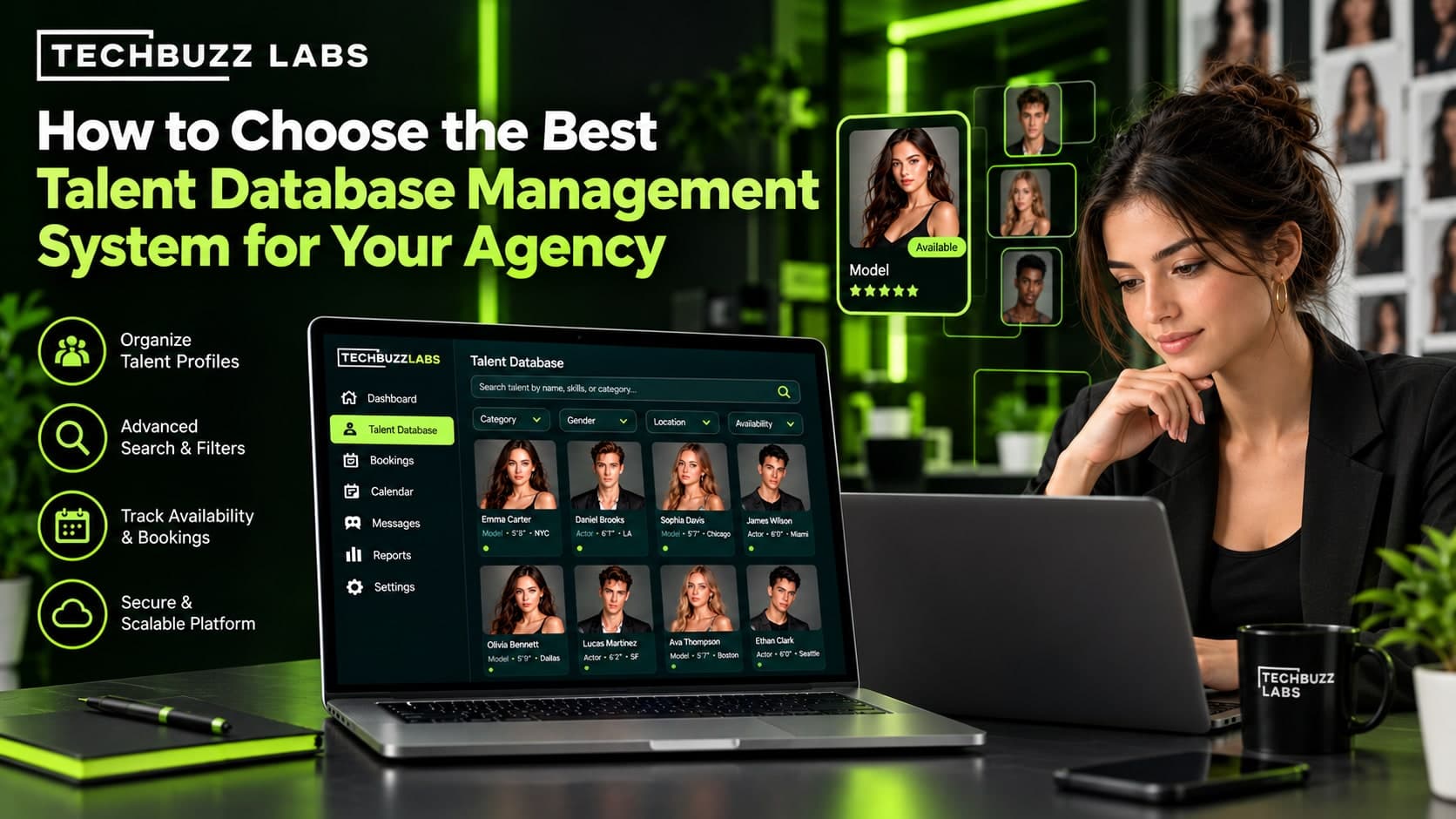
A custom talent agency CRM may include centralized talent profiles, advanced search and filtering, client management, casting management, availability tracking, submissions, booking management, communication records, notifications, reporting, and workflow automation.
For agencies working with models, actors, influencers, performers, or other types of talent, the database should also be structured around the information that matters most to their business.
The goal is to create a system that gives agents quick access to the information they need without overwhelming them with unnecessary features.
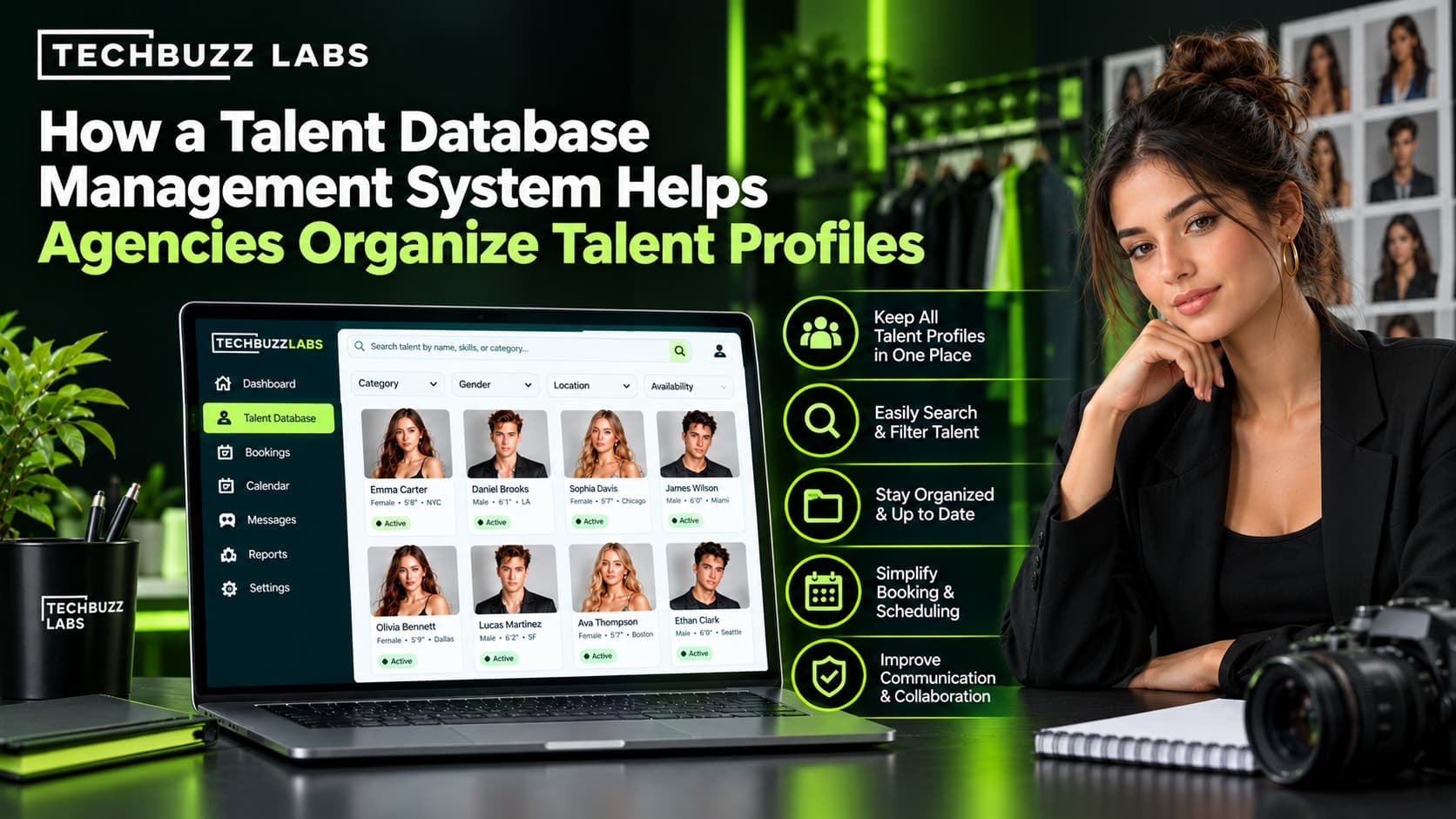
Build a Centralized Talent Database
Talent information is at the center of most agency operations.
A custom CRM should provide a reliable location for managing talent profiles. Depending on the agency's needs, profiles may include professional experience, portfolio images, measurements, skills, location, availability, contact information, booking history, and other relevant details.
Centralizing this information makes it easier for agents to search for suitable talent when a client submits a new request.
It can also reduce the risk of outdated or inconsistent information appearing across different systems.
Consider Advanced Search and Filtering
A large talent database is only useful if agents can quickly find the right people.
Custom CRM development allows agencies to define search and filtering options based on their specific casting requirements. Agents may need to search talent by location, experience, skills, availability, measurements, portfolio characteristics, or other attributes.
For U.S. agencies operating in competitive markets such as New York, Los Angeles, Miami, Chicago, and Atlanta, efficient talent discovery can save valuable time when handling casting requests with tight deadlines.
Connect Client Management With Talent
Client information should not exist separately from the talent database.
When a client submits a request, agents need to understand the client's requirements and then identify suitable talent. A custom CRM can connect client records with casting projects, talent profiles, submissions, and bookings.
This creates a connected workflow from the initial inquiry through the final booking.
Agents can also maintain client preferences and previous booking information, helping them understand what specific clients typically look for when new opportunities arise.
Manage Availability and Bookings
Availability is another important consideration during CRM development.
A talent agency may have hundreds or thousands of professionals whose schedules change regularly. If availability information is outdated, agents can waste time contacting unavailable talent or submitting unsuitable candidates.
A custom CRM can connect availability with talent profiles and booking records. When a client requests talent for a specific date, agents can check relevant availability as part of the search process.
Once talent is selected and a booking is confirmed, the booking information can remain connected to the same profile and project.
Plan for Automation
Custom CRM development should also consider repetitive tasks that consume agents' time.
Agencies may want to automate reminders, notifications, follow-ups, status changes, internal assignments, or other routine activities.
For example, an agency could create a workflow that reminds an agent to follow up when a client has not responded to a submission. Another workflow could notify relevant team members when a booking status changes.
Automation should support the agency's workflow without making the system unnecessarily complicated.
Prioritize Data Security
Talent agencies handle sensitive business and personal information, making data security an important consideration.
A custom CRM should include appropriate access controls so that employees only have access to information relevant to their responsibilities. Agencies should also consider authentication, backups, permissions, secure data handling, and ongoing system maintenance.
For U.S. agencies working with talent and clients across different locations, establishing clear policies around data access and management can become increasingly important as the organization grows.
Make the CRM Easy for Agents to Use
Even a powerful CRM will not deliver its full value if employees find it difficult to use.
The interface should be intuitive and designed around the daily activities of agents and agency staff. Common actions such as searching for talent, reviewing a profile, checking availability, updating a booking, or viewing a client request should be easy to complete.
User experience should therefore be considered during the development process rather than treated as an afterthought.
Think About Scalability
A CRM that works for a small agency may not be sufficient when the agency has thousands of talent profiles, more clients, and a larger internal team.
Custom CRM development should account for future growth. Agencies should consider whether the system can support additional users, larger databases, new workflows, additional locations, and new business services.
Building with scalability in mind can help agencies avoid replacing the system when their operations expand.
Consider Integrations
Talent agencies may already use other tools for accounting, email, calendars, file storage, communication, or other business functions.
Before developing a custom CRM, agencies should determine which existing systems need to connect with the new platform.
Integrations can reduce duplicate data entry and allow information to move between systems more efficiently. However, agencies should only integrate tools that genuinely support their workflow rather than adding unnecessary complexity.
How TechBuzzLabs Can Help
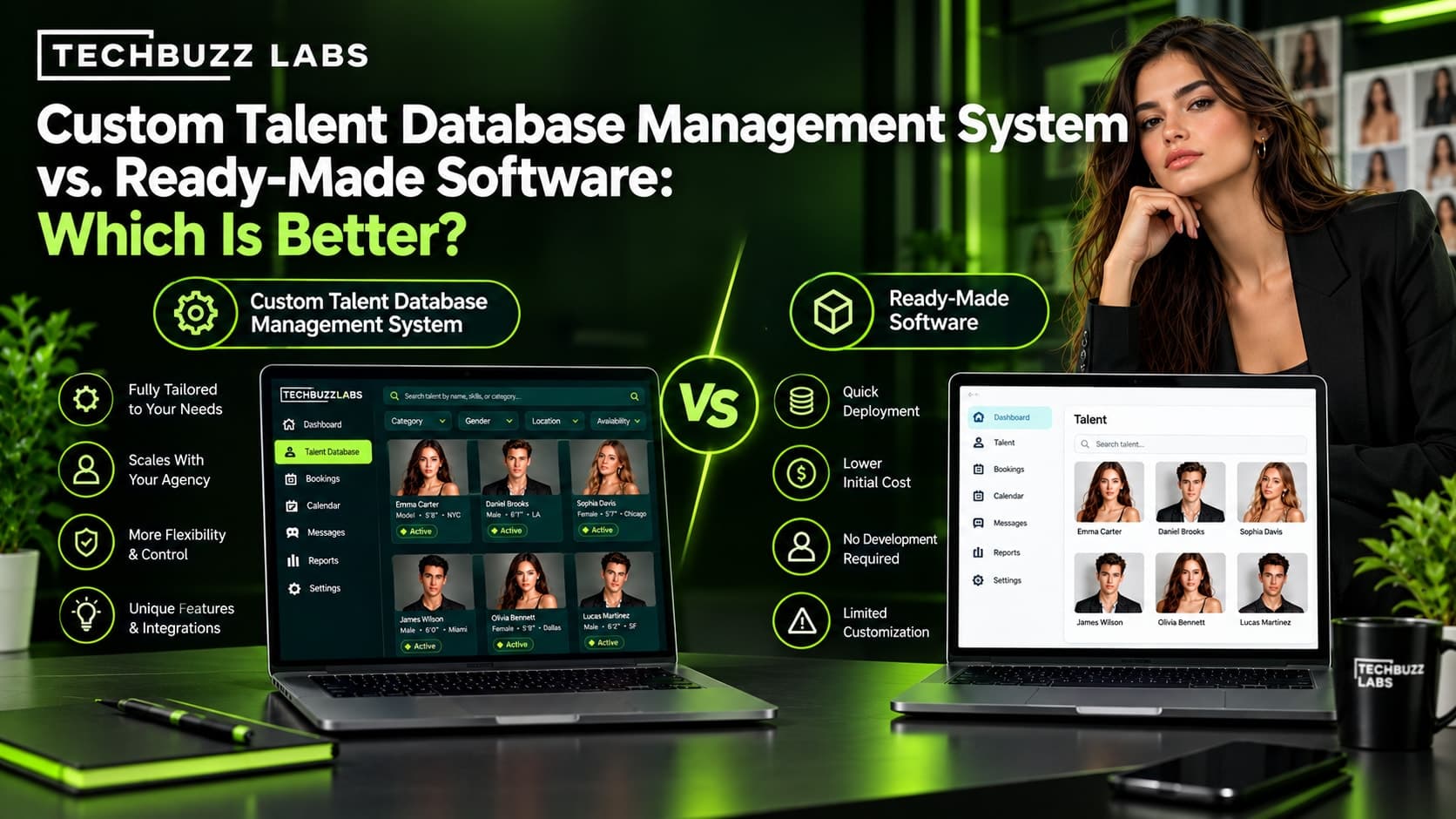
TechBuzzLabs focuses on building custom technology solutions for talent and casting agencies. Its approach is centered on creating systems around an agency's actual workflow rather than forcing businesses to rely on disconnected tools.
For a U.S. talent agency, a custom platform can bring together talent profiles, client requests, casting workflows, availability, bookings, and automation within one centralized environment.
TechBuzzLabs can also support agencies that want to incorporate AI applications or other custom functionality into their systems. This allows agencies to consider future technology needs while building a platform that addresses their current operational challenges.
Calculate the Long-Term Value
Custom CRM development requires an investment of time and resources, so agencies should consider the long-term value rather than focusing only on initial development costs.
The right system can reduce administrative work, improve information accuracy, speed up responses, simplify talent searches, and help teams manage more client and booking activity.
Agencies should compare these potential benefits with the costs of continuing to operate multiple disconnected tools and manually manage repetitive processes.
Conclusion
Custom CRM development can give talent agencies greater control over how they manage talent, clients, castings, and bookings. However, successful development starts with understanding the agency's workflow and identifying the problems that technology needs to solve.
U.S. talent agencies should consider centralized talent data, advanced search, client management, availability, booking workflows, automation, security, usability, scalability, and integrations when planning a custom CRM.
With a customized solution from a technology provider such as TechBuzzLabs, agencies can build a platform around their specific operations and create a more connected foundation for long-term growth.